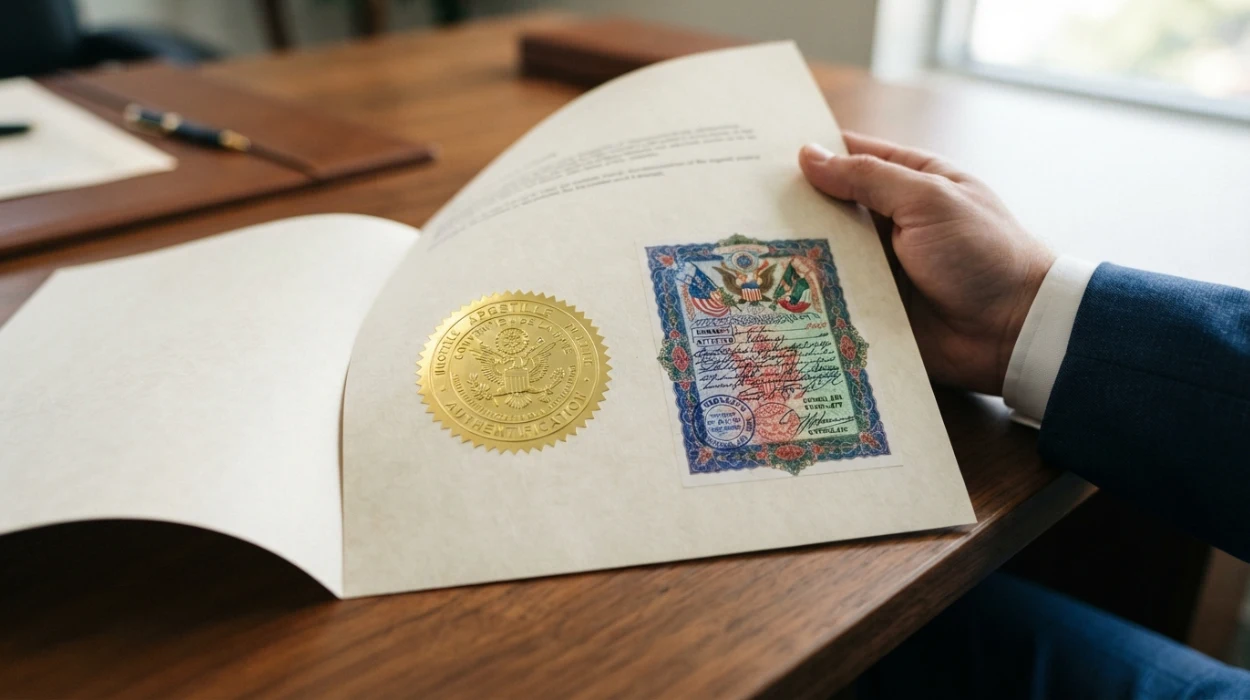
To legalise documents for non-Hague Convention countries, businesses must complete a three-stage authentication process involving a solicitor certification, UK Foreign, Office and Development Office attestation, and final legalisation by the destination country embassy in London.
This comprehensive authentication protocol ensures that commercial documents, corporate certificates, and legal agreements gain official recognition in jurisdictions that do not accept standard apostilles. Understanding this complex diplomatic chain prevents costly administrative delays during international expansion.
Why Do Non-Hague Convention Countries Require Embassy Attestation?
Non-Hague Convention countries require embassy attestation because they are not signatories to the 1961 Apostille Convention, meaning foreign public documents require diplomatic verification from their specific sovereign government representatives before local legal validity is granted.
When businesses expand into markets outside the 126 member states of the Hague Apostille Convention, standard certificates lack mutual recognition treaties. Jurisdictions such as the United Arab Emirates, China, and Qatar operate under distinct diplomatic frameworks. These nations mandate that domestic consulates review paperwork to confirm compliance with national statutory requirements.
Without this multi-tier verification process, foreign authorities reject corporate resolutions, powers of attorney, and commercial invoices. Sovereign states protect their legal systems by ensuring that foreign paperwork undergoes scrutiny by their appointed consular officials stationed in London.
What Is the Multi-Step Document Legalisation Process?
The multi-step document legalisation process requires notarisation by a UK solicitor, attestation by the UK government, and final consular stamping by the destination embassy to establish cross-border legal validity.
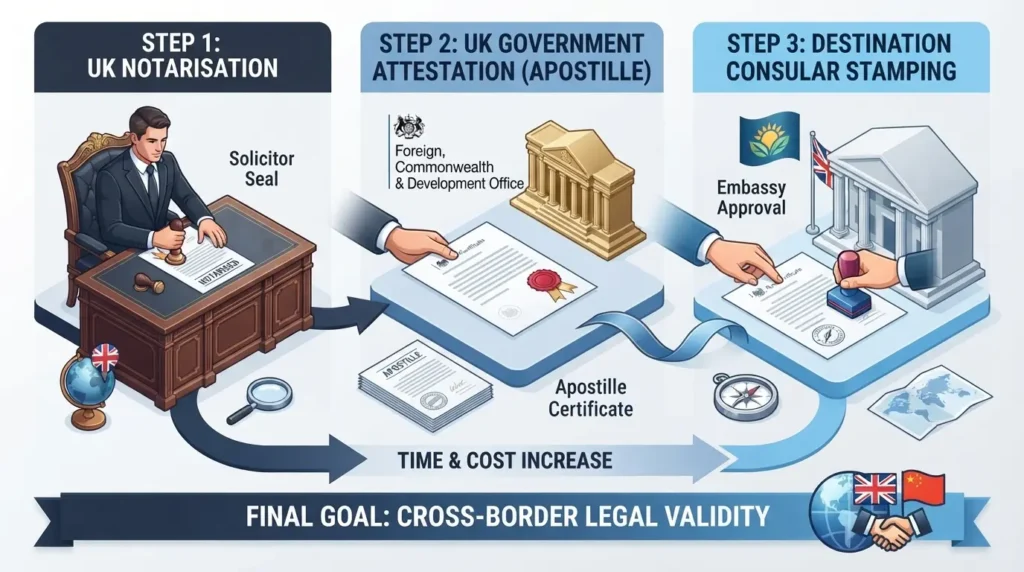
Executing this protocol requires strict adherence to institutional sequences. First, a certified UK notary public or solicitor inspects the original paperwork, verifies corporate signatories, and affixes a formal notarial seal. Second, the UK Foreign, Office and Development Office examines the solicitor signature and issues an official apostille certificate.
Third, the documents travel to the diplomatic mission of the destination country. Consular officers verify the government stamp and apply their own diplomatic seal or consular sticker. Completing these sequential phases transforms domestic UK paperwork into internationally enforceable legal instruments for overseas commercial operations.
Which Documents Require Complete Consular Legalisation?
Corporate documents requiring complete consular legalisation include certificates of incorporation, memoranda of association, board resolutions, and commercial agency agreements destined for non-apostille nations.
International trade expansion relies heavily on official corporate paperwork. For example, three primary corporate records routinely require embassy handling: certificates of incorporation issued by Companies House, audited financial statements, and notarised board resolutions. Foreign regulatory bodies inspect these documents to verify company existence, directorship structures, and financial standing before granting operating licenses.
Furthermore, intellectual property assignments, trademarks, and commercial distribution contracts demand identical authentication. When corporations manage these critical filings through professional channels like Apostilled Documents, compliance teams eliminate errors that trigger immediate rejection by foreign consular desks.
How Long Does the Embassy Attestation Procedure Take?
The embassy attestation procedure takes between 10 and 25 working days depending on the specific diplomatic mission, current consular backlogs, and seasonal holiday closures.
Timeframes vary significantly across different foreign embassies operating in London. Standard UK government apostille processing takes approximately 5 working days. However, individual diplomatic missions maintain independent schedules. For instance, some embassies complete consular legalisation within 3 working days using express services, while complex diplomatic clearances require up to 3 weeks.
Businesses planning international transactions must factor these variables into project timelines. Delays occur when consular offices reject paperwork due to minor discrepancies in notary signatures or corporate seals. Establishing reliable administrative timelines protects cross-border commercial ventures from unexpected operational halts.
What Common Pitfalls Cause Document Rejection?
Common pitfalls causing document rejection include missing solicitor signatures, expired corporate certificates, and discrepancies between company names listed on paperwork and official registries.
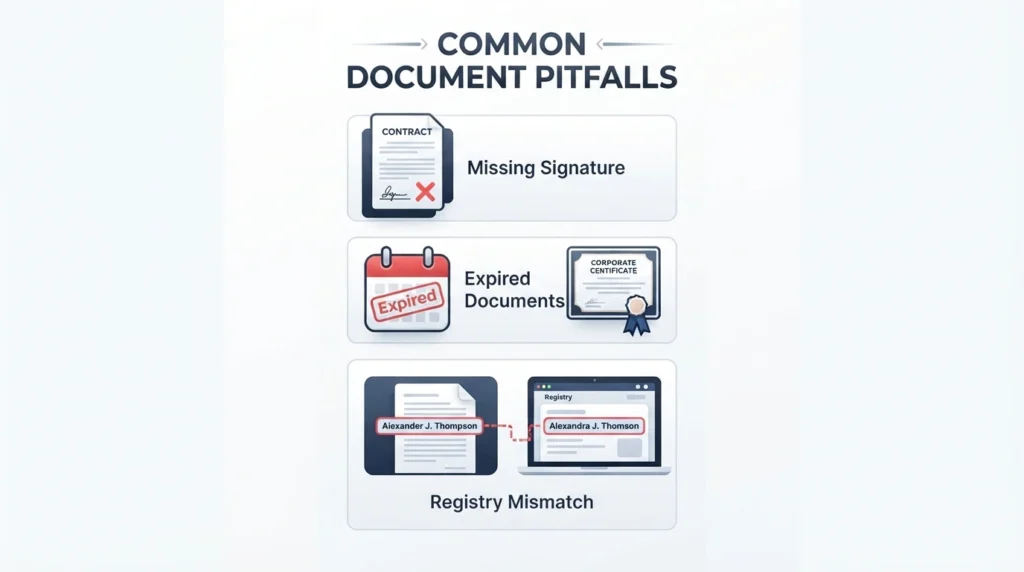
Foreign embassies enforce rigorous administrative standards. When documents contain mismatched director names, outdated corporate addresses, or unverified notarisation stamps, consular officials reject the application instantly. Additionally, many countries require certified Arabic or Mandarin translations attached to the original English text before they accept submissions.
Navigating these regulatory nuances demands meticulous preparation. Companies reviewing foundational requirements through resources such as When Does a Document Need Embassy Attestation as Well as an Apostille? avoid common compliance traps. Ensuring absolute alignment between corporate records and international legal standards guarantees successful document attestation on the first submission.
How Can Businesses Streamline Cross-Border Document Legalisation?
Businesses streamline cross-border document legalisation by partnering with corporate compliance specialists who manage solicitor notarisation, government attestation, and embassy submissions simultaneously.
Managing international paperwork internally creates substantial administrative burdens for corporate legal teams. Professional service providers coordinate every phase of the diplomatic chain. When organizations utilize specialized solutions like Get Translation, Apostille and Attestation Handled by Form My Company, compliance experts oversee document collection, certified translations, and consular dispatch.
Form My Company coordinates directly with UK government departments and London-based embassies to secure legalisation efficiently. This structured approach safeguards corporate expansion initiatives, eliminates bureaucratic friction, and ensures absolute compliance across non-Hague Convention jurisdictions.
Legalising documents for non-Hague Convention countries requires a structured, multi-stage compliance strategy involving solicitor notarisation, government attestation, and consular stamping. Form My Company delivers comprehensive document legalisation solutions, managing every regulatory detail from initial verification to final embassy delivery. This professional oversight empowers enterprises to expand globally with absolute legal confidence.
Explore More Apostilled Documents Guide,
Want to Get Your Articles of Association Apostilled Through Form My Company?
How Can You Suppress a PSC Home Address With Form My Company?
Frequently Asked Questions
How long does it take to get documents apostilled in the UK?
The standard UK government apostille service typically takes approximately 3 to 5 working days to process after submission. Through professional handlers like Form My Company, clients can access streamlined Apostilled Documents services that expedite handling for urgent international business filings.
Can personal and corporate documents both receive an apostille?
Yes, both personal documents—such as birth certificates, marriage certificates, and degrees—and corporate documents like certificates of incorporation are eligible for an apostille. Form My Company assists clients in verifying that all paperwork meets official compliance standards before submitting them for government authentication.
What is the difference between an apostille and embassy attestation?
An apostille validates a document for use in countries that are members of the 1961 Hague Convention through a single government certificate. Documents destined for non-Hague nations require additional embassy attestation after receiving an apostille to gain legal recognition abroad.
Do apostilled documents ever expire?
An apostille itself does not have a formal expiration date, but the underlying document it is attached to often does. Foreign authorities frequently require corporate certificates or background checks to be issued within the last 3 to 6 months to remain valid.
How do I submit my original documents for apostille processing?
Original documents must be physically mailed or delivered to an authorized authentication service for official verification and stamping. Form My Company manages the secure collection and submission of Apostilled Documents to ensure they are processed safely through official channels.