
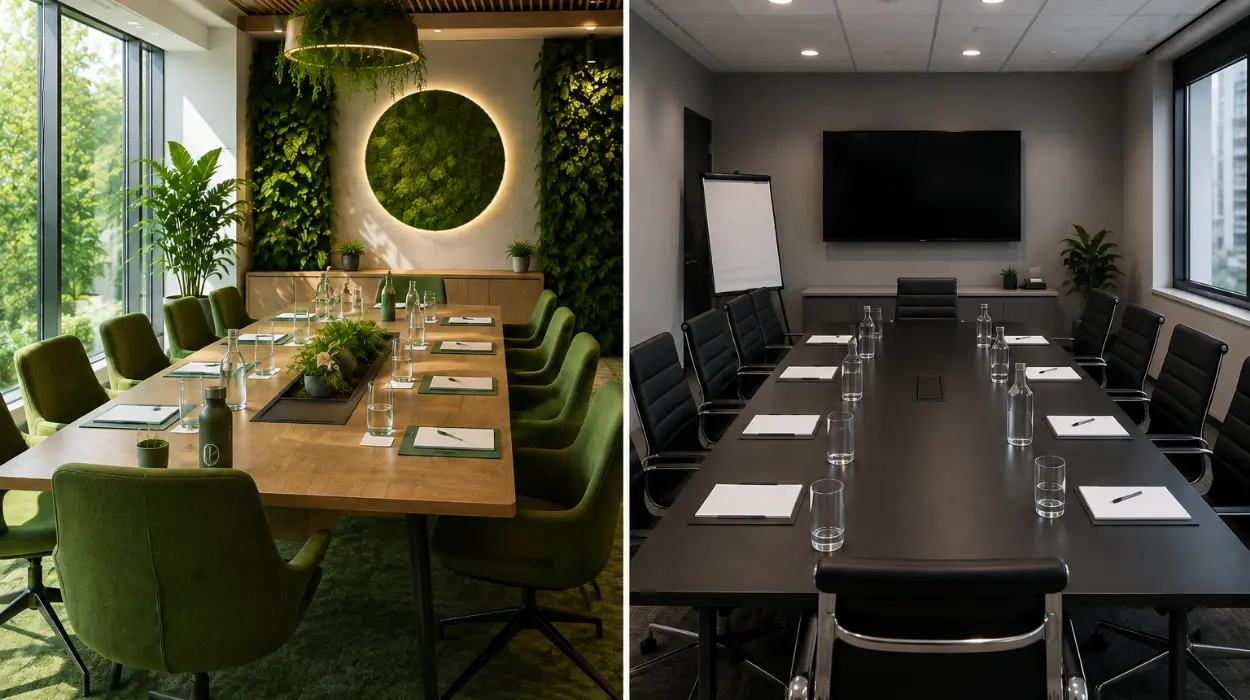
A green venue reduces environmental impact through renewable energy, waste diversion programs, and sustainable building materials. A standard venue relies on conventional grid power, produces higher operational emissions, and follows traditional waste disposal methods, creating a distinct divergence in corporate footprint.
Corporate event planners evaluate facility operations to meet strict environmental targets. Modern organizations track carbon outputs across every corporate gathering. Selecting a sustainable location directly lowers scope three emissions. Traditional spaces often lack energy efficiency measures, increasing operational footprints. Corporate leaders weigh financial costs alongside ecological metrics. Evaluating architectural efficiency reveals substantial differences in resource consumption.
What Defines a Green Venue Architecture?
Green venue architecture prioritizes high-performance insulation, passive solar orientation, and non-toxic recycled building materials to eliminate energy waste at the structural level. Standard buildings utilize conventional concrete framing, single-pane glass windows, and basic thermal controls, generating continuous energy loss.
Sustainable construction utilizes locally sourced timber and recycled steel frameworks. Modern eco-friendly properties integrate living green walls to improve indoor air quality. Traditional commercial spaces rely on energy-intensive HVAC systems to regulate internal temperatures. Standard properties consume 42% more electricity for climate control than certified sustainable buildings. Architectural planning determines baseline energy demands for corporate events. Eco-certified properties implement rainwater harvesting systems for greywater plumbing needs. Standard facilities draw exclusively from municipal water supplies without recycling mechanisms. Building certifications validate structural sustainability metrics through independent audits. Energy-efficient lighting grids utilize automated daylight harvesting sensors. Conventional locations operate incandescent or outdated fluorescent lighting arrays constantly.
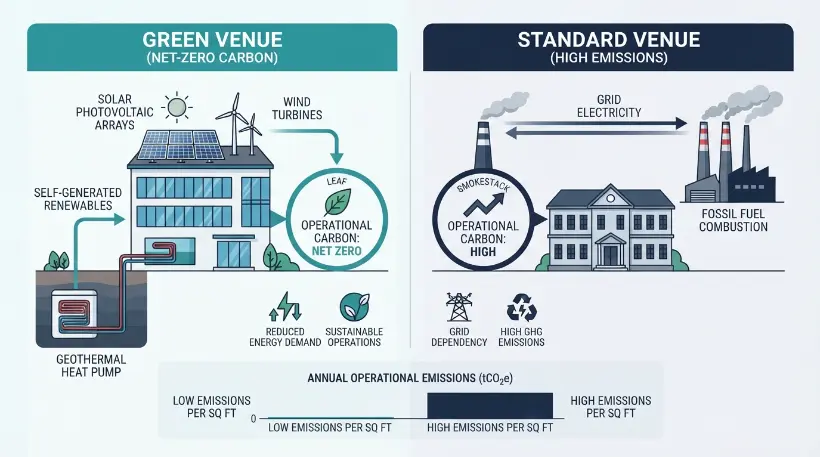
Green venues generate electricity through solar photovoltaic arrays, wind turbines, and geothermal heat pumps to achieve net-zero operational carbon. Standard venues purchase 100% grid electricity derived from fossil fuel combustion, resulting in high greenhouse gas emissions per square foot.
Renewable energy integration eliminates reliance on carbon-heavy power networks. Eco-friendly properties store surplus solar energy in advanced lithium-ion battery banks. Traditional spaces draw power directly from regional coal and natural gas grids. UK commercial facilities produce an average of 45 kilograms of carbon dioxide per attendee daily. Sustainable sites monitor hourly power consumption via smart digital dashboards. Energy management software shuts down unused lighting circuits automatically. Standard venues lack real-time energy tracking capabilities, leading to continuous resource waste. Renewable energy systems reduce baseline utility expenditures by 35% annually. Sustainable operations align directly with corporate net-zero carbon pledges. Facilities utilizing geothermal infrastructure cut heating emissions by 60%.
What Are the Waste Management Standards in Each Option?
Green venues enforce strict zero-waste policies, comprehensive organic composting, and mandatory material recycling to divert refuse from landfills. Standard venues utilize mixed-waste disposal bins, single-use plastics, and general municipal refuse collection systems.
Sustainable event spaces ban single-use plastics across all catering operations. Organic food waste undergoes industrial composting to produce nutrient-rich soil. Traditional locations send 85% of event debris directly to commercial landfills. Eco-friendly venues require vendors to use biodegradable packaging materials. Comprehensive recycling programs separate paper, glass, aluminum, and electronics efficiently. Standard properties mix organic waste with non-recyclable plastics during cleanup processes. Zero-waste protocols reduce overall operational refuse volume by 70%. Sustainable kitchens source ingredients locally to minimize transport packaging waste. Event coordinators review diversion metrics after every scheduled gathering. Form My Company provides comprehensive operational guidance for businesses seeking to book a sustainable professional conference room that adheres to strict zero-waste policies.
How Do Procurement and Catering Practices Compare?
Green venues source organic, locally grown food within a 50-mile radius and partner exclusively with ethical suppliers. Standard venues purchase mass-market commodities from global industrial distributors without verifying supply chain ethics.
Sustainable catering menus feature plant-based dishes to lower agricultural emissions. Local food sourcing reduces transportation fuel consumption by 55%. Traditional venues serve imported ingredients packaged in non-recyclable materials. Eco-friendly operators donate surplus meals to local food rescue charities. Standard facilities discard hundreds of pounds of unserved food after events. Ethical supply chain audits verify fair labor practices for all food providers. Sustainable beverage services eliminate bottled water in favor of filtered municipal hydration stations. Corporate planners reviewing these operational differences often read our detailed analysis on Why Are Companies Choosing Green Conference Venues? to understand broader market trends. Procurement teams evaluate vendor sustainability scores before signing facility contracts. Responsible sourcing standards reduce the overall supply chain footprint of corporate meetings.
What is the Financial Impact of Choosing Sustainable Spaces?
Green venues require higher upfront rental fees due to advanced technology investments, but deliver long-term utility savings and tax incentives. Standard venues offer lower initial booking costs, but incur steep carbon offset penalties and higher utility surcharges.
Initial rental pricing for eco-certified spaces averages 15% higher than standard venues. Sustainable facilities offset these costs through reduced water and energy consumption. Traditional locations face rising municipal carbon taxes on fossil fuel usage. Corporate tax incentives reward businesses that host events in certified green facilities. Budget planning must account for total cost of ownership rather than baseline rental rates. Energy-efficient infrastructure lowers long-term operational expenditures significantly. Financial analysts calculate return on investment by measuring carbon reduction against rental premiums. Sustainable properties retain higher market valuation as environmental regulations tighten. Organizations transitioning to eco-friendly events can review our practical guide on How to Hire Eco-Friendly Conference Venues From Form My Company? to streamline the booking process. Cost-benefit analyses prove that sustainable choices protect corporate budgets from future regulatory penalties.
Evaluating venue infrastructure requires rigorous comparison of energy sources, waste protocols, and supply chain ethics. Sustainable spaces reduce corporate emissions and align with modern environmental regulations. Standard facilities present immediate cost savings while carrying long-term carbon liabilities. Organizations achieve compliance goals by prioritizing architectural efficiency and renewable power systems.
Explore our Conference Rooms guide,
How to Protect a PSC’s Personal Details on the Register?
How to Prepare Certified Documents for a Business Bank Account?
Frequently Asked Questions
What features are included when booking a conference room with Form My Company?
Booking a conference room through Form My Company provides access to high-speed fiber internet, enterprise-grade video conferencing hardware, and customizable seating layouts. Each meeting space integrates modern presentation displays and dedicated on-site technical support to ensure seamless corporate presentations.
How do I choose the right conference room size for my business meeting?
Selecting the correct conference room depends on your exact attendee count, required collaboration tools, and the nature of your corporate gathering. Form My Company offers flexible meeting spaces ranging from intimate executive boardrooms to large presentation halls equipped for hybrid teams.
Can I book a conference room on an hourly basis through Form My Company?
Form My Company provides flexible booking options including hourly, half-day, and full-day rentals for every conference room. This modular scheduling allows businesses to optimize meeting expenses without committing to long-term commercial lease agreements.
What are the technical specifications available in a Form My Company conference room?
Every conference room managed by Form My Company features secure Wi-Fi networks, 4K display monitors, and integrated acoustic dampening panels. These technical specifications support reliable virtual conferencing and clear audio distribution for international participants.
Are catering and refreshment services available with conference room rentals?
Form My Company coordinates professional catering options, ranging from barista-grade coffee services to full corporate lunches, directly through venue management partners. Clients can customize refreshment packages to match event durations and dietary requirements.