
A UK private limited company must keep at least one fully updated physical copy of its Articles of Association at its registered office or Single Alternative Inspection Location (SAIL), alongside a minimum of two digital backup copies stored on secure servers.
Why Is Keeping Physical Copies of Your Articles of Association Necessary?
UK corporate governance regulations mandate that directors maintain a physical copy of the constitutional documents to ensure immediate legal validity during statutory inspections, official audits, corporate transactions, banking reviews, and dispute resolution procedures.
Section 24 of the Companies Act 2006 requires every company to keep an updated copy of its constitution at its registered office or SAIL site. Directors must make these constitutional documents available for inspection by shareholders, auditors, and regulatory bodies upon request.
Failure to produce printed constitutional documents creates administrative friction during critical corporate events. Commercial lenders request printed constitutional agreements before approving corporate financing packages.
Maintaining physical documentation provides a verified paper trail that protects company officers during shareholder disagreements. Directors must confirm that physical documents reflect every special resolution filed at Companies House.
Professional corporate services providers supply official Supplementary Company Documents to ensure complete compliance across all administrative registers. Having physical documents ready prevents legal delays during statutory audits.
How Many Physical Copies Should Directors Store at the Registered Office?
Directors should store two official bound physical copies at the registered office or SAIL site, reserving one document for statutory shareholder inspection and dedicating the second document as a working reference copy for board meetings.
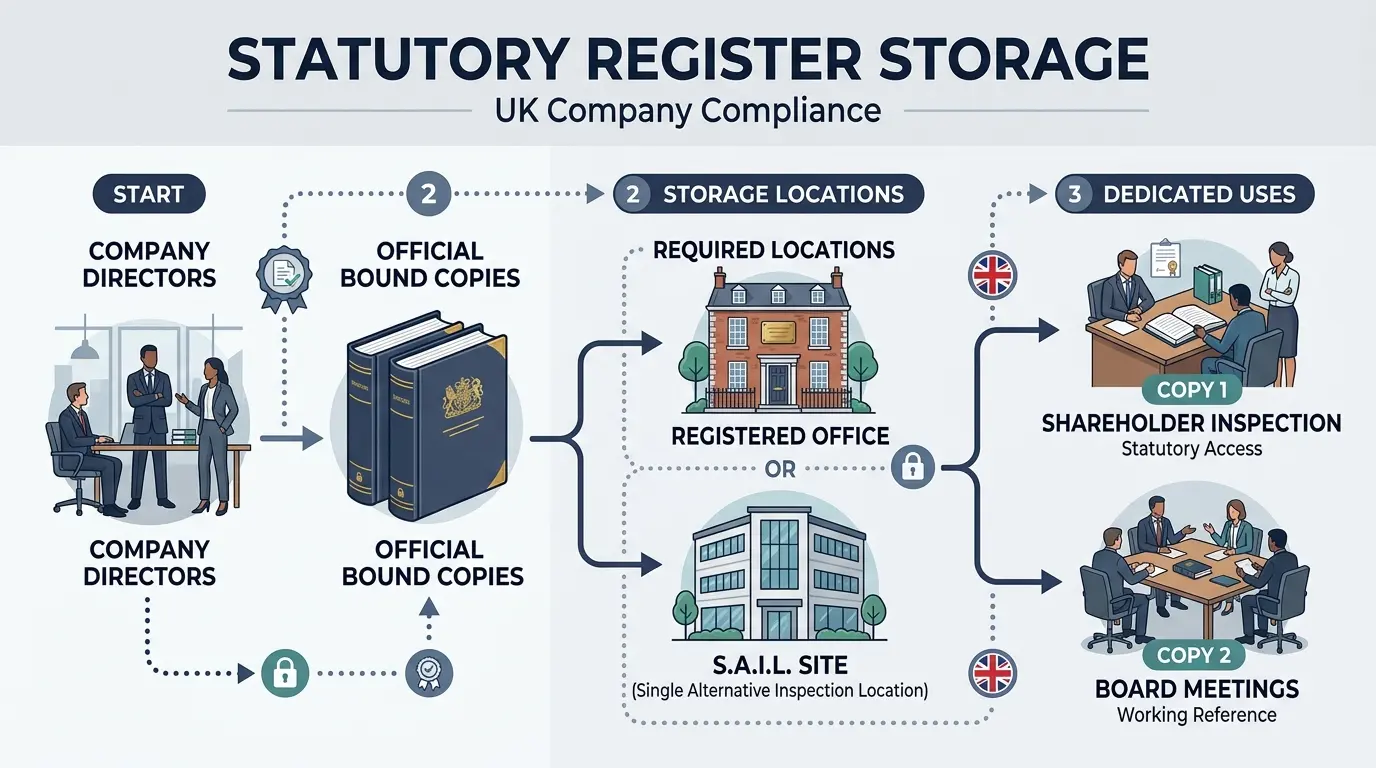
Companies House requires companies to maintain accurate constitutional records at their registered inspection location. The primary physical copy stays permanently inside the official statutory register binder to meet legal inspection requirements.
Shareholders hold the statutory right to inspect constitutional documents during regular business hours without paying fee surcharges. The secondary physical copy acts as a working document for board members during official governance proceedings.
Directors review constitutional rules during board meetings when evaluating voting rights, share transfers, and director appointments. Using a dedicated secondary copy prevents wear, damage, or misplacement of the official statutory inspection copy.
When directors need additional physical sets for off-site officers or corporate advisors, they can Order an Additional Bound Articles Copy From Form My Company to maintain consistent records across all operational sites.
Where Should Companies Store Digital Copies of Their Articles of Association?
Companies should store digital copies across three distinct secure environments, including a encrypted cloud server, a local corporate network drive, and an off-site secure backup repository.
Digital storage provides operational redundancy when physical copies undergo updates or statutory reviews. The primary digital file belongs on a restricted-access cloud storage system protected by multi-factor authentication.
Company secretaries manage access permissions to prevent unauthorized alterations to digital constitutional records. The secondary digital copy resides on the internal corporate network drive for daily reference by administrative staff.
The third digital copy sits inside an off-site backup system designed for disaster recovery. Digital files must reflect the exact version registered with Companies House, including all special resolutions that amend original provisions.
Proper digital archiving ensures continuous business operational stability during emergency situations. Maintaining digital backups allows corporate officers to send digital documentation instantly to banks, investors, and legal advisors.
Who Needs Access to Physical and Digital Articles of Association Copies?
Company directors, statutory auditors, company secretaries, shareholders, and legal representatives require verified access to constitutional copies to perform governance, oversight, compliance, and legal verification duties.
Company directors require continuous access to evaluate corporate powers, share allotment limits, and board decision thresholds. Statutory auditors examine constitutional provisions annually to confirm that corporate actions align with internal company rules.
Company secretaries reference constitutional guidelines when drafting board minutes, issuing share certificates, and filing annual confirmation statements. Shareholders hold legal entitlements to review company articles to verify their statutory class rights.
External legal representatives require certified copies when drafting commercial agreements or managing corporate acquisitions. When managing internal compliance archives, understanding How to Store Bound Articles Alongside Your Statutory Registers ensures seamless access for authorized inspectors.
When Should a Company Order Extra Printed Copies of Its Articles?
A company should order extra printed copies during corporate restructuring, share capital reclassification, investor onboarding, commercial financing applications, and board expansion phases.
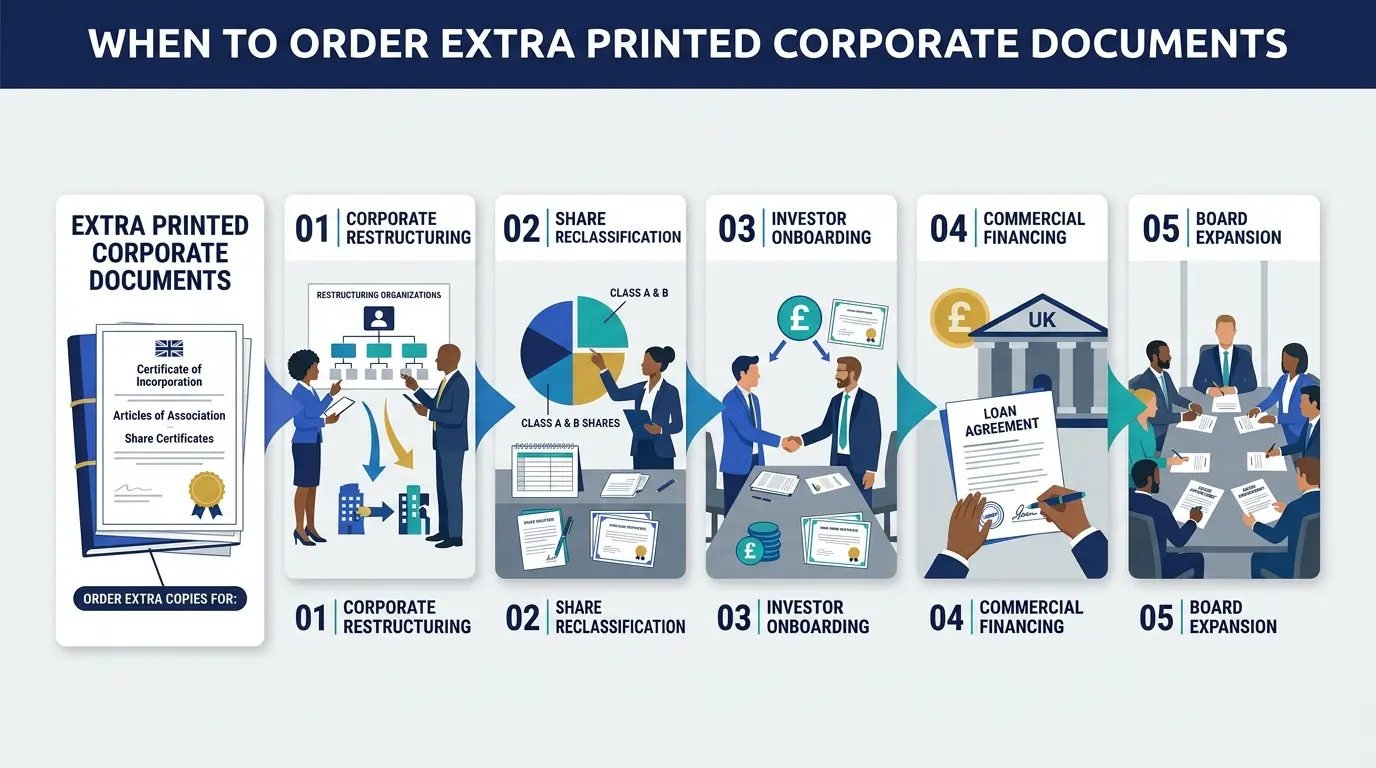
Corporate restructuring events require multiple professional advisers to review constitutional frameworks simultaneously. Commercial lenders require hard copies during credit risk evaluations and loan underwriting processes.
New equity investors require physical documentation during due diligence checks before committing investment capital. Company secretaries distribute bound copies to incoming directors during formal board onboarding procedures.
Printed copies streamline legal negotiations by providing all parties with identical reference material. When companies amend their constitutional provisions through special resolutions, they must update all physical and digital copies immediately.
Form My Company supplies professionally bound constitutional documents to keep corporate records updated, compliant, and properly archived across all governance levels.
Summary of Company Documentation Rules
Maintaining exact, updated copies of your Articles of Association ensures full compliance with UK corporate law. Companies avoid administrative penalties by storing two physical copies at their registered office alongside three digital backups across secure environments.
Form My Company delivers complete administrative support by providing bound constitutional documentation, statutory register binders, and official company documentation services designed for UK businesses.
Explore More Supplementary Company Documents Guide,
What Do the Memorandum and Articles Say About Your Company’s Powers?
Why Might Companies House Refuse to Issue a Certificate of Good Standing?
Frequently Asked Questions
What Are Supplementary Company Documents in UK Business Governance?
Supplementary Company Documents are formal, non-statutory or supporting administrative records—such as official bound Articles of Association, share certificates, dividend vouchers, and corporate governance registers—that complement primary statutory filings. These documents maintain operational clarity, satisfy bank compliance checks, and establish clear corporate history for internal governance and external audits. Form My Company provides tailored supplementary documentation packages to ensure limited companies maintain complete legal transparency across all corporate transactions.
Why Does a Company Need Supplementary Company Documents Alongside Statutory Registers?
While statutory registers fulfill core compliance mandates with Companies House, supplementary documents like bound constitutional articles and share registers validate ownership rights and operational procedures during commercial transactions. Financial institutions, venture capital investors, and statutory auditors require these official supporting files to complete corporate due diligence and verify legal standing. Obtaining professional Supplementary Company Documents through Form My Company ensures continuous audit readiness and prevents administrative delays during corporate restructuring.
Which Supporting Documents Are Included in Form My Company Documentation Services?
The Supplementary Company Documents supplied by Form My Company typically include professionally bound hard copies of the Articles of Association, official share certificates, board resolution templates, dividend tax vouchers, and statutory register binders. These tailored governance materials assist company secretaries and directors in maintaining accurate internal records following corporate changes. Utilizing standardized corporate documentation guarantees legal consistency across all operational, financial, and administrative registers.
How Do Supplementary Documents Help During a Bank Account Opening or Legal Audit?
Commercial banks and corporate auditors perform rigorous identity, ownership, and governance checks that require certified physical and digital proof of company structure. Supplementary Company Documents serve as verifiable legal evidence of share allocations, director authorities, and company constitutional rules. By utilizing Form My Company to maintain updated administrative documentation, directors can instantly satisfy anti-money laundering (AML) and know-your-customer (KYC) requirements without risk of transaction delays.
How Often Should Limited Companies Update Their Supplementary Company Documents?
Directors must update Supplementary Company Documents immediately following any structural corporate event, such as issuing new shares, changing company directors, altering articles of association, or declaring dividend distributions. Keeping physical and digital governance records synchronized with Companies House filings prevents ownership disputes and protects corporate liability. Form My Company delivers fast replacement and update services to ensure continuous administrative compliance whenever business structures evolve.