
Store bound Articles of Association in a dedicated fireproof binder alongside your statutory registers at your registered office address or a Single Alternative Inspection Location (SAIL) to maintain compliance with the Companies Act 2006.
Where Should You Keep Bound Articles and Statutory Registers?
Companies must store bound Articles of Association and statutory registers at their registered office address or an officially notified Single Alternative Inspection Location (SAIL) address in the United Kingdom to comply with statutory inspection requirements.
UK directors must maintain official company records at a single designated physical location. Section 1136 of the Companies Act 2006 allows companies to choose between the registered office address and a SAIL address. Choosing a SAIL address requires submitting Form AD01 or Form AD02 to Companies House within 14 days of moving the physical records.
Storing documents in a physical ring binder or hardbound ledger prevents pages from becoming detached during formal audits. Physical storage units must protect paper documents against moisture damage, fire hazard, and unauthorized physical tampering. Directors must ensure these physical volumes remain accessible during standard business hours for public inspection or member reviews.
Storing official documentation in a secure central archive streamlines corporate governance workflows. Company secretaries access these legal records to verify historical share allocations, check director appointments, and validate shareholder voting rights during board meetings. Keeping all constitutional documents together eliminates administrative delays during due diligence checks executed by corporate lawyers, auditors, or venture capital investors.
How Do You Arrange Bound Articles Inside Statutory Register Binders?
Position bound Articles of Association immediately following the statutory index page or insert them into the front document pocket of your loose-leaf statutory register binder for immediate legal reference.
Corporate governance frameworks require a standardized arrangement inside hardbound compliance ledgers. Placing constitution documents ahead of statutory registers creates a logical hierarchy for legal reviews. Statutory registers record specific corporate ownership data, while Articles of Association define internal rules governing corporate actions.
Organize the internal sections of your statutory ledger binder using three distinct structural components:
Insert heavy-duty section dividers to separate constitution rules from officer registers
Position original constitutional documents before the register of members and register of directors
Secure loose historical amendments behind the main bound articles text using archival sheet protectors
Loose-leaf statutory binders offer internal expansion sleeves specifically designed to hold physical booklets. Bound articles feature permanent stitching or heavy-duty comb binding that prevents document tampering. Inserting the bound booklet directly into a durable sleeve ensures the original text remains intact alongside updated registers.
Companies maintaining heavy volume records often utilize separate matching hardbound volumes for constitutional filings. Maintaining consistent physical bindings across all statutory ledgers protects fragile legal paper against daily wear and tear. Proper internal organization allows company directors to present complete, organized books during official regulatory audits.
Why Must Bound Articles Be Maintained Alongside Statutory Ledgers?
Maintaining bound articles alongside statutory ledgers satisfies UK legal inspection obligations, verifies internal governance rules, and prevents procedural errors during official company decision-making processes.
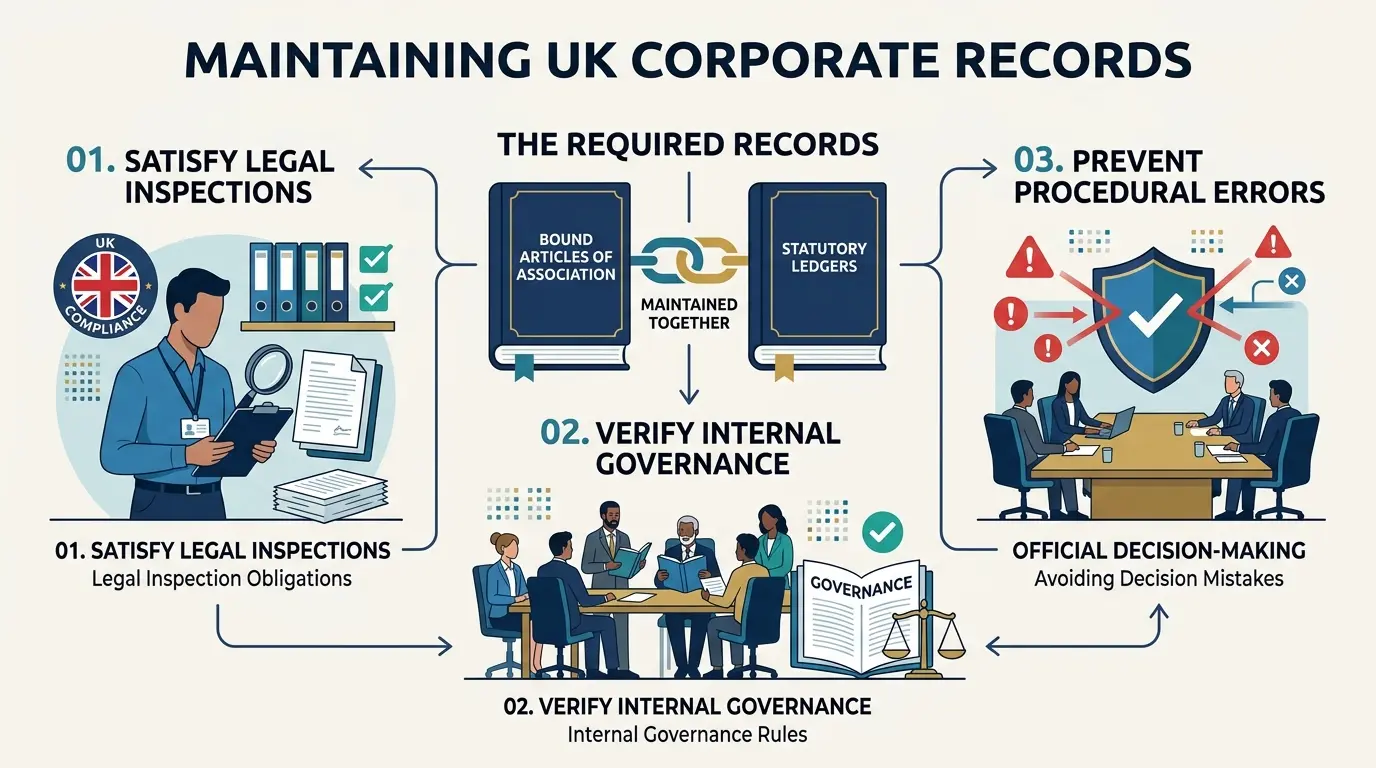
Section 26 of the Companies Act 2006 mandates that every company must provide a copy of its Articles of Association to any member upon request within seven days. Keeping a physical bound copy directly next to statutory records ensures administrative staff locate relevant documentation instantly. Immediate access prevents corporate statutory default fines and legal compliance violations.
Third-party auditors check statutory books during financial reviews to confirm director authority limits. The Articles of Association set clear boundaries regarding borrowing powers, share issuance procedures, and board meeting quorum numbers. Auditors compare register entries against these constitutional parameters to confirm that executive decisions align with corporate regulations.
External commercial transactions require fast verification of company formation records. Buyers reviewing corporate history during acquisitions verify shareholder details alongside company constitution rules. Having clean physical documentation readily accessible reduces deal execution times during corporate mergers, debt financing rounds, or banking setup procedures.
Company officers frequently reference both documents simultaneously when managing share transfers or issuing new equity. To determine how many physical booklets your firm requires for daily operations, review our guide on how many copies of your Articles of Association a company should keep. Aligning daily operational record-keeping with statutory guidelines keeps your corporate structure compliant.
How Do You Secure Statutory Registers and Constitutional Documents?
Secure statutory registers and bound articles inside lockable, fire-resistant storage cabinets located within temperature-controlled rooms at your designated official address.
Paper degradation compromises critical corporate proof over long operational timelines. High humidity, direct sunlight, and extreme temperatures weaken binding adhesives and fade ink markings. Storing volumes inside fireproof safes rated for at least 60 minutes of heat exposure protects vital company history against environmental disasters.
Corporate records contain sensitive private personal data, including director residential addresses, birth dates, and shareholder identification records. Data protection laws mandate strict physical security protocols for paper archives containing personal information. Store statutory compliance volumes inside locked physical cabinets accessible only to authorized corporate officers or company secretaries.
Maintain a physical access logbook adjacent to your document safe to record all physical inspections. The logbook tracks every instance a register or article booklet leaves the secure storage unit. Record four specific details during each event: user name, access reason, removal time, and return timestamp.
Digital redundancy complements physical storage setups without replacing legal paper requirements. Scanning physical bound articles creates searchable electronic backup files for everyday operational work. However, digital files do not replace mandatory hardbound statutory registers required by UK company inspectors during formal proceedings.
When Should You Update Bound Articles in Your Statutory Books?
Update bound articles in your statutory books within 15 days of passing a special resolution that alters company constitutional rules or internal share structures.
Section 30 of the Companies Act 2006 requires companies to file updated Articles of Association with Companies House within 15 days of adopting constitutional changes. Passing a special resolution requires a 75% majority vote from shareholders during a general meeting. Once registered, directors must replace outdated articles in their physical compliance books with newly bound editions.
Failing to update physical statutory books leads to operational errors and conflicting management decisions. Directors relying on outdated constitutional text risk executing unauthorized share transfers or conducting non-compliant board votes. Removing retired editions prevents administrative confusion during internal governance reviews.
Keep retired historical articles inside an archived section at the back of your statutory binder. Label outdated editions clearly with physical archival stamps indicating the exact dates the rules remained active. Preserving historical governance records provides vital evidence during retroactive shareholder disputes or legal ownership audits.
When updated legal changes render old documents obsolete, order fresh hardbound physical volumes to maintain professional archival standards. You can easily order an additional bound articles copy from Form My Company to ensure your physical statutory books stay current and fully compliant.
How Should Companies Handle Public Inspection Requests for Statutory Books?
Companies handle public inspection requests by providing physical access to statutory registers and bound articles at the registered address during regular business hours upon receiving written notice.
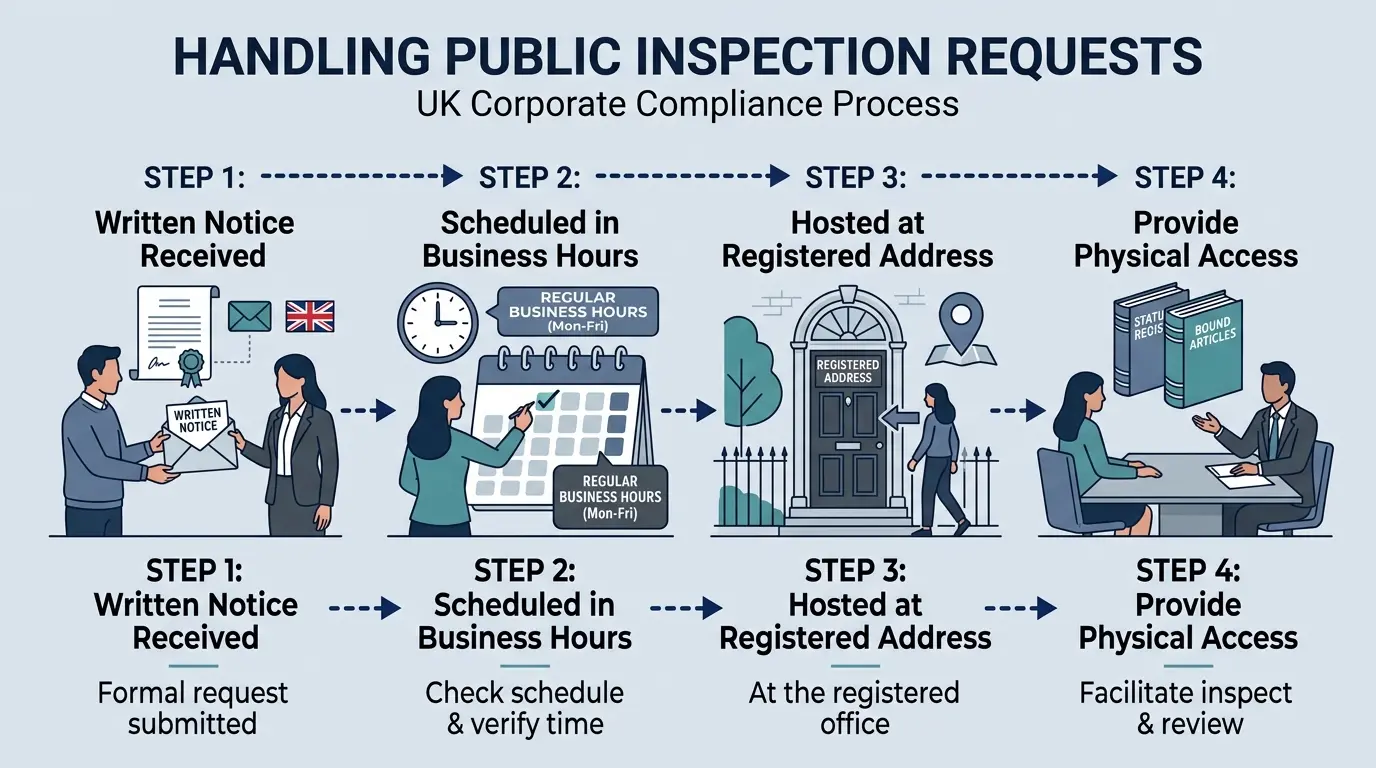
UK company law grants shareholders and members of the public legal rights to inspect company records. Requesters must submit written notice specifying the requested inspection date, purpose, and required document scope. Company secretaries must make statutory volumes available for two consecutive hours during standard operational days.
Prepare a designated private inspection area within your registered office address before visitor arrivals. Ensure visitors review physical statutory books under the supervision of a corporate compliance team member. Supervising inspections prevents accidental page damage, document theft, or unauthorized physical marking on official papers.
Providing clean, professionally bound documents ensures smooth inspection procedures and projects corporate credibility. Loose, unorganized papers create negative impressions during external reviews and increase the risk of lost records. Maintaining structured statutory binders reflects sound management practices and compliance discipline.
If your corporate registers lack proper binder accessories or require fresh legal printing, invest in professional document presentation solutions. You can upgrade your compliance framework by securing Supplementary Company Documents to keep all physical records neatly organized and fully ready for official inspections. Form My Company assists UK directors in maintaining impeccable statutory records that pass every regulatory check. Form My Company supplies high-quality physical presentation materials designed specifically for corporate governance compliance.
Explore More Supplementary Company Documents Guide,
How to Prepare Your Memorandum and Articles for a Commercial Lease
How to Check Your Articles Before Issuing New Shares
Frequently Asked Questions
What Are Supplementary Company Documents in UK Business Formation?
Supplementary Company Documents include essential legal and administrative records such as official Articles of Association, certificates of incorporation, share certificates, and statutory registers. Form My Company provides these documentation sets to help businesses maintain full legal compliance with Companies House regulations and organize corporate records effectively.
Why Do UK Companies Need Official Supplementary Company Documents?
Official Supplementary Company Documents prove corporate authority, outline internal governance rules, and verify business ownership structures during legal or financial reviews. Financial institutions, investors, and auditors require these verified corporate records from Form My Company to validate business status before approving loans, bank accounts, or equity investments.
How Can You Order Replacement Supplementary Company Documents?
You can order professionally bound Supplementary Company Documents directly through Form My Company by submitting your official company registration number. The service prints, binds, and dispatches legally compliant hard copies of your Articles of Association and statutory registers to your registered office address.
Where Should Physical Supplementary Company Documents Be Stored?
Physical Supplementary Company Documents must be stored at the company’s registered office address or an officially registered Single Alternative Inspection Location (SAIL) in the UK. Storing these constitutional records alongside statutory registers ensures compliance with Section 1136 of the Companies Act 2006 for statutory public inspections.
Can Supplementary Company Documents Be Updated After Incorporation?
Yes, Supplementary Company Documents can be updated whenever shareholders pass special resolutions to amend internal rules or alter company share capital structures. Form My Company assists directors in updating and reprinting current bound articles and statutory records to ensure corporate books reflect accurate, compliant governance details.