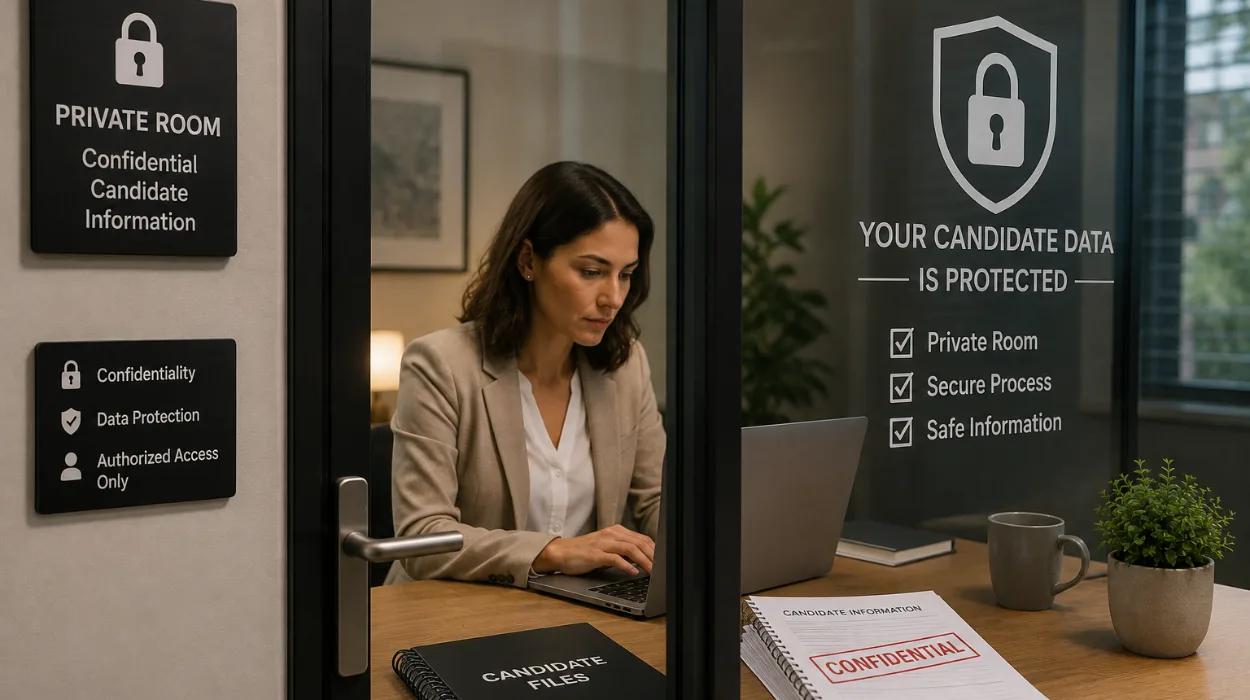
Private rooms protect candidate data during hiring by eliminating digital eavesdropping risks, securing physical interview spaces against unauthorized access, and enforcing strict compliance standards that prevent the accidental exposure of sensitive personally identifiable information to external third parties.
Why Do Open Office Environments Compromise Candidate Confidentiality?
Open office environments compromise candidate confidentiality because ambient audio carries sensitive discussions across shared workspaces, casual foot traffic exposes physical resumes on desks, and lack of soundproofing enables unintended data breaches during video interviews.
Modern recruitment relies heavily on remote technology and collaborative office layouts. Open-plan offices create severe vulnerabilities for human resources teams handling sensitive applicant documents. Ambient noise travels easily across large rooms. Anyone sitting within a 15-meter radius hears confidential salary expectations, health disclosures, and past employment details.
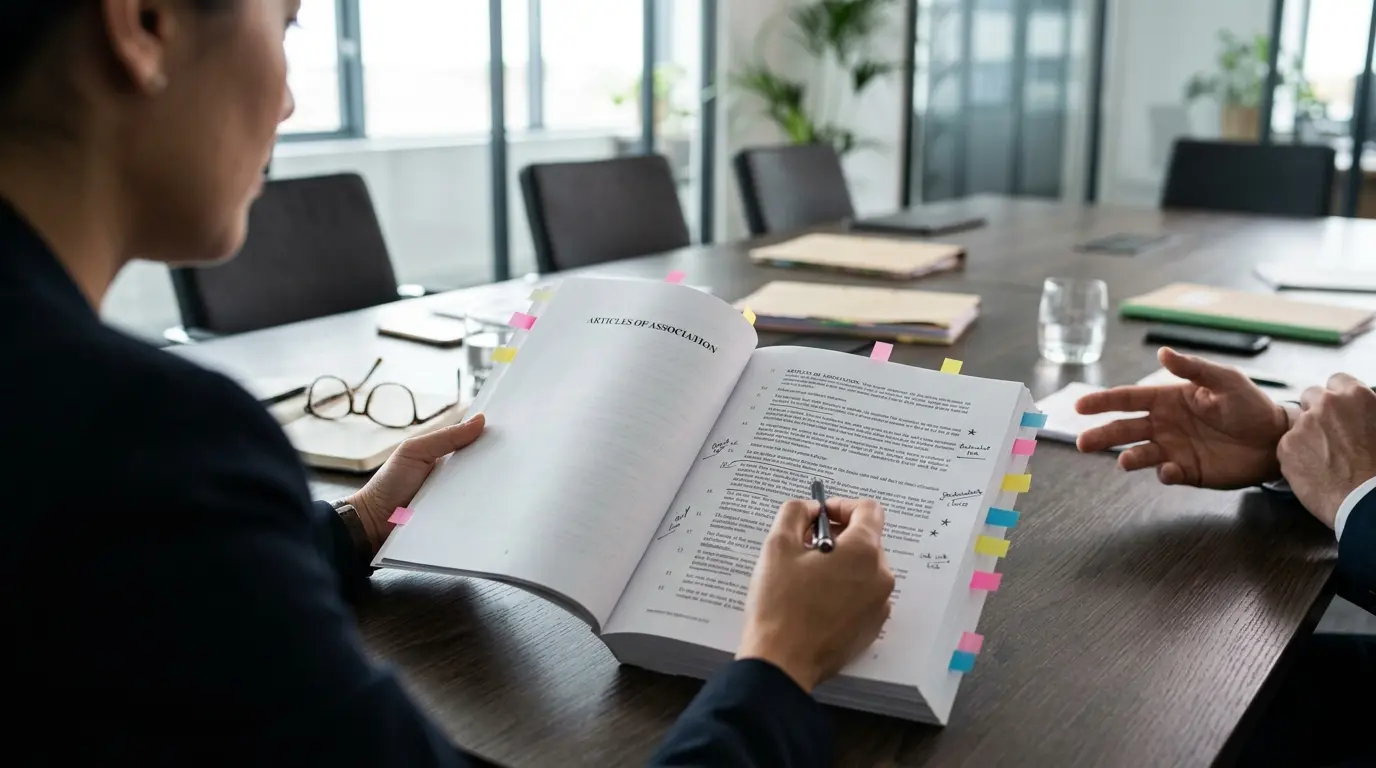
Physical document management fails in open workspaces. Printed CVs, portfolio printouts, and assessment notes remain visible on shared desks. Clean desk policies often fail under high-volume hiring pressures. Visitors, cleaning staff, and cross-functional employees walk past unattended documents daily. This exposure violates core data protection principles established by UK regulations.
Digital surveillance risks multiply in shared environments. Computer monitors face walkways, allowing passersby to read candidate application statuses. Video conferencing tools pick up background conversations from nearby colleagues. Audio leakage during virtual screenings breaches candidate privacy before the formal evaluation even begins.
Organizations face severe financial penalties for data leaks. The Information Commissioner’s Office investigates unauthorized disclosures rigorously. Unsecured interview spaces fail basic compliance audits. Businesses must isolate recruitment discussions inside secure physical boundaries to maintain absolute confidentiality.
How Do Dedicated Interview Rooms Prevent Unauthorized Physical Access?
Dedicated interview rooms prevent unauthorized physical access by utilizing lockable access controls, sound-engineered acoustic partitions, and isolated spatial designs that restrict entry exclusively to authorized hiring managers and interviewed candidates.
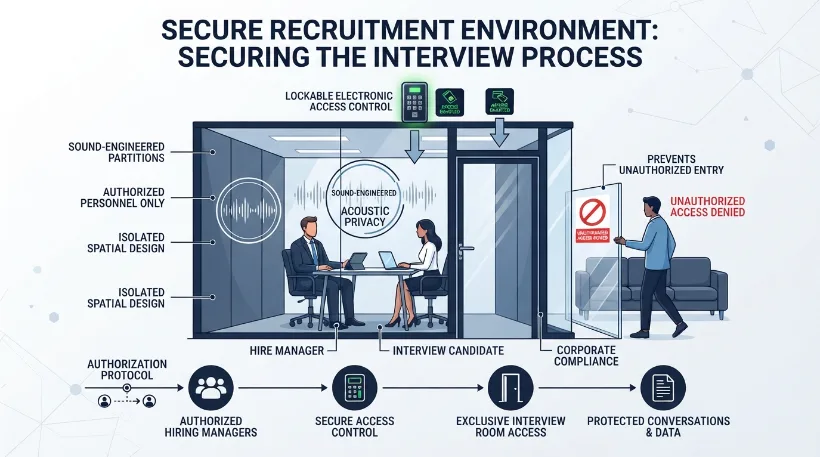
Physical security forms the first line of defense for candidate data protection. Dedicated interview rooms use secure locking mechanisms. Only designated recruitment personnel hold keys or electronic access cards. This strict access control stops unauthorized staff members from entering spaces where sensitive candidate evaluations occur.
Acoustic engineering blocks sound transmission effectively. High-density partition walls and solid core doors prevent private conversations from escaping into public corridors. Sound masking technology adds another layer of acoustic privacy. Interviewers discuss background checks and sensitive qualifications without fear of external eavesdropping.
Spatial layout optimization ensures complete visual privacy. Windows feature frosted glass or privacy blinds. Internal room layouts place computer screens away from door sightlines. Candidates speak freely because they trust the physical environment remains completely secure and closed off from the rest of the company.
Secure physical environments directly support regulatory compliance. UK employers must demonstrate robust administrative and physical safeguards. Utilizing professional Interview Rooms ensures that every face-to-face interaction meets rigorous corporate governance standards for data isolation and privacy protection.
What Security Protocols Govern Digital Data Access Inside Meeting Spaces?
Security protocols govern digital data access inside meeting spaces by enforcing encrypted device connections, requiring multi-factor authentication for application portals, and prohibiting unauthorized personal recording devices during candidate assessments.
Hiring managers often access applicant tracking systems on laptops inside interview spaces. Secure digital protocols dictate that all devices connect via encrypted virtual private networks. Network administrators restrict public Wi-Fi usage for recruitment laptops. This prevents interception of candidate resumes transmitted during live evaluation sessions.
Multi-factor authentication secures access to candidate databases. Interviewers enter verification codes sent to secure hardware tokens before viewing full application histories. Session timeout timers automatically lock screens after five minutes of inactivity. These automated measures prevent unauthorized viewers from accessing candidate files if an interviewer steps away momentarily.
Strict device policies eliminate shadow IT risks. Interviewers cannot plug unauthorized USB drives into evaluation terminals. Recording digital interviews requires explicit written consent from the candidate under strict data minimization rules. Cloud-stored video assessments encrypt files immediately upon completion to prevent unauthorized local downloads.
Comprehensive compliance frameworks require continuous monitoring. IT security teams audit digital access logs weekly. These logs track which hiring managers opened specific candidate files and when. Accountability deters internal data misuse and proves adherence to statutory retention limits.
How Do Compliant Spaces Align With UK Data Protection Regulations?
Compliant spaces align with UK data protection regulations by enforcing data minimization principles, restricting information retention periods, and providing auditable physical environments that satisfy statutory oversight requirements during compliance reviews.
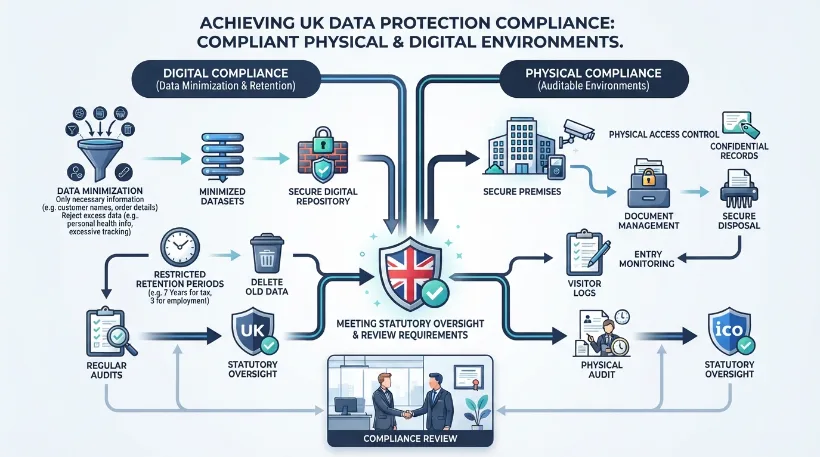
The Data Protection Act and UK GDPR mandate strict handling of all personal identifiable information. Recruitment data includes criminal record checks, right-to-work documentation, and financial background details. Storing or discussing this data requires maximum security. Compliant physical spaces ensure that sensitive processing activities occur away from general business operations.
Data minimization principles govern every stage of the interview process. Interviewers only review documentation relevant to the specific job role. Physical notes taken during assessments must go into secure cross-cut shredders immediately after evaluation scoring finishes. Unnecessary retention of handwritten candidate notes violates statutory storage limitation rules.
Regulatory bodies evaluate both digital and physical security measures during investigations. Form My Company designs specialized facilities to meet these exacting standards. Organizations seeking to understand foundational statutory rules can review legal frameworks detailed in What Are Your Legal Duties for Storing Candidate Information?. Understanding these duties ensures businesses avoid costly regulatory enforcement actions.
Auditable environments simplify compliance verification. When regulators inspect hiring practices, businesses must prove that third parties cannot access candidate evaluations. Dedicated interview spaces provide documented proof of physical segregation. This documentation protects the enterprise during official audits and reinforces corporate integrity.
What Operational Steps Ensure Complete Candidate Privacy Throughout Recruitment?
Operational steps ensure complete candidate privacy throughout recruitment by scheduling staggered arrivals to prevent candidate overlap, sanitizing room surfaces between sessions, and executing secure document destruction protocols immediately following each interview.
Operational workflows dictate the success of data protection strategies. Human resources coordinators schedule candidate arrivals with 15-minute intervals. This staggering prevents applicants from meeting in waiting areas. Preventing applicant interaction eliminates accidental disclosures of identities and interview statuses.
Room sanitization protocols protect digital and physical privacy. Administrative staff clear all whiteboards immediately after each session concludes. They check the room for forgotten resumes, notes, or digital storage media. Professional facilities managed by Form My Company guarantee pristine, secure environments for every scheduled candidate interaction.
Document destruction follows strict corporate guidelines. Interview scoring sheets containing personal opinions and qualification notes undergo immediate secure disposal. Digital feedback uploads directly to encrypted human resources servers. Local device caches clear automatically upon user logout.
Organizations requiring immediate access to secure infrastructure can Reserve Private Compliant Interview Rooms via Form My Company. Outsourcing secure meeting space eliminates the infrastructure burden on internal teams. Businesses maintain flawless candidate confidentiality while scaling recruitment operations efficiently across multiple locations.
Explore our Interview Rooms guide,
How to Handle a Mid-Year Change of Significant Control
PSC Change Notifications: How to Meet the 14-Day Deadline
Frequently Asked Questions
Why do hiring managers need dedicated interview rooms for candidate privacy?
Dedicated interview rooms provide a secure, soundproof environment that prevents sensitive candidate information from being overheard or exposed to unauthorized personnel. By utilizing Form My Company and our professional interview rooms, organizations ensure full compliance with UK data protection regulations while safeguarding applicant confidentiality during face-to-face evaluations.
How do private interview rooms prevent data breaches during recruitment?
Private interview rooms eliminate digital and physical eavesdropping risks by combining acoustic partitions, lockable access controls, and secure layout designs. These controlled spaces protect sensitive personally identifiable information, preventing accidental data disclosures to passing employees or external visitors during hiring assessments.
Are employer meetings required to follow data protection laws in interview spaces?
UK employers must maintain strict confidentiality standards for all recruitment discussions under data protection legislation. Utilizing professional interview rooms through Form My Company helps businesses establish secure, auditable physical boundaries that satisfy statutory oversight requirements during official compliance reviews.
What features should a secure corporate interview room include?
A secure corporate interview room must feature high-density acoustic walls, lockable entry doors, frosted glass or privacy blinds, and secure digital device connectivity. Form My Company equips every interview room with these essential safeguards to protect candidate resumes, background checks, and evaluation notes from unauthorized access.
How does booking professional interview rooms improve the candidate experience?
Professional interview rooms create a distraction-free, highly confidential atmosphere that reassures applicants their personal data and career discussions remain strictly protected. Relying on Form My Company for dedicated interview rooms also helps human resources teams maintain organized, secure, and professional recruitment workflows.