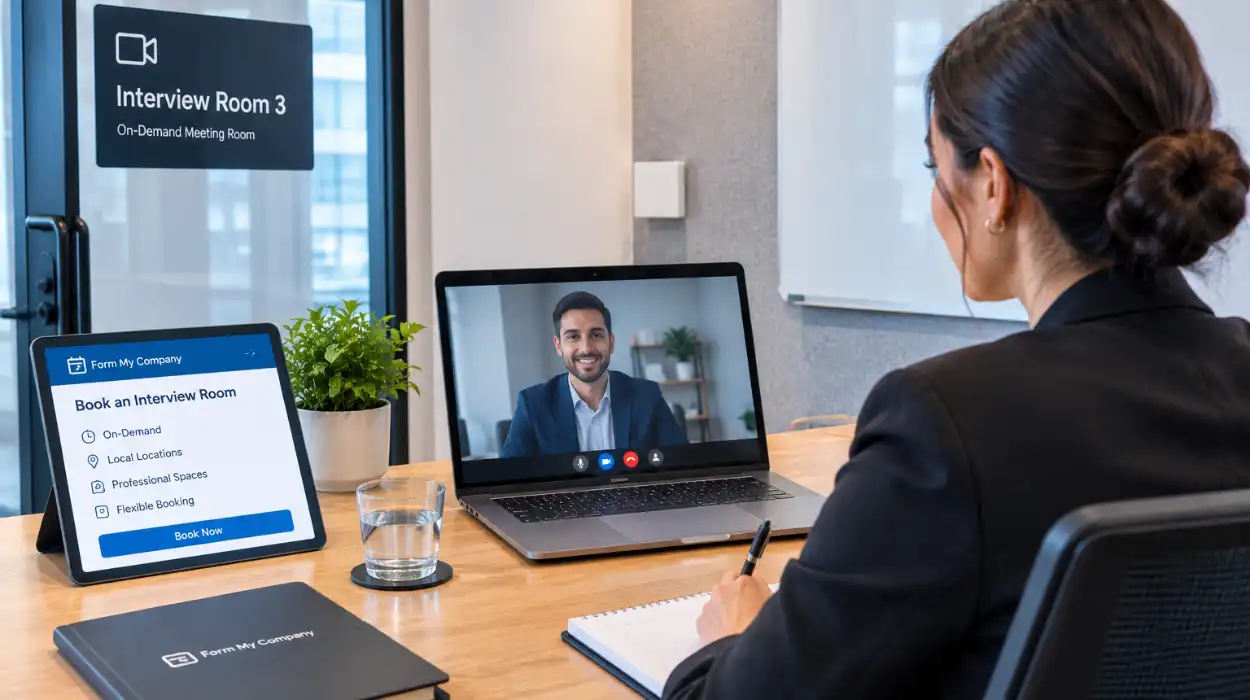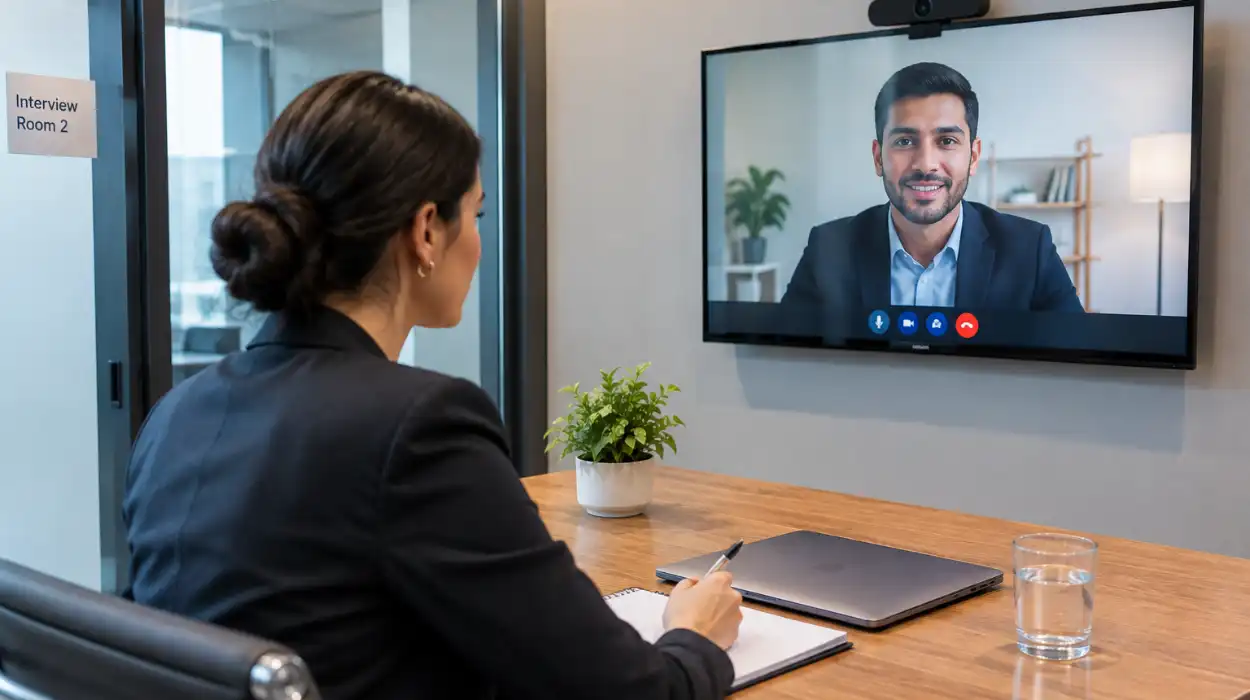
Teams of 4-6 people fit best in 150-250 square foot rooms. This size allows comfortable seating, whiteboard access, and tech setup without wasted space. Allocate 15-20 square feet per person for focused discussions.
Small teams gain productivity in properly sized rooms. Undersized spaces cramp collaboration. Oversized ones dilute energy. UK SMEs book 68% more effective meetings in matched sizes, per recent office space surveys.
What Factors Determine Ideal Meeting Room Size?
Calculate based on team count, meeting type, and equipment needs. Start with 15 square feet per person, then add 50-100 feet for tables and tech. This formula ensures functionality.
Team size drives the base calculation. A four-person team requires 60 square feet minimum. Add 100 feet for a central table. Meeting type adjusts upward. Brainstorm sessions demand extra whiteboard space.
Equipment influences the total area. Projectors need 20 feet of clearance. Video conferencing setups add 30 feet for camera angles. Ventilation matters. Rooms under 200 feet trap heat during 90-minute sessions.
UK regulations cap occupancy at 15 square feet per person under fire codes. Exceed this, and compliance fails. Test layouts virtually. Sketch seating to spot bottlenecks.
How Much Space Does Each Team Member Need?
Assign 15-20 square feet per person. This covers chairs, movement, and note-taking. Four team members thus need a 60-80 square feet baseline.
Chairs occupy 10 square feet each. Include elbow room. Movement between seats demands 5 extra feet. Note-taking surfaces extend reach by 2 feet per side.
Standing discussions compress needs to 10 feet per person. Seated meetings expand to 20 feet. Hybrid setups with laptops require 25 feet. Data from 2025 office design studies confirms these ranges boost focus by 22%.
Adjust for body size averages. UK adult averages fit 18 feet comfortably. Taller groups push toward 20 feet. Validate with tape measures during trials.
What Room Size Suits Different Meeting Types?
Brainstorming: 200-300 feet. Presentations: 250-400 feet. Quick huddles: 100-150 feet. Match size to activity for optimal flow.
Brainstorming thrives in open layouts. 200 feet fits six around a U-shaped table. Whiteboards line two walls. This setup sparks 34% more ideas, per collaboration metrics. Presentations demand projection space. 250 feet positions screens 10 feet from seats. Audience rows fit four deep. Tech cables route under tables without tripping.
Quick huddles prioritise speed. 100 feet holds standing circles for four. No tables block paths. Teams resolve issues 40% faster in compact zones. Client interviews expand to 300 feet. Separate seating zones build rapport. From My Company equips these for professional sessions. Read Comparing in-house meeting spaces vs external professional room rental solutions today for deeper evaluation.
How Do You Measure Meeting Room Dimensions Accurately?
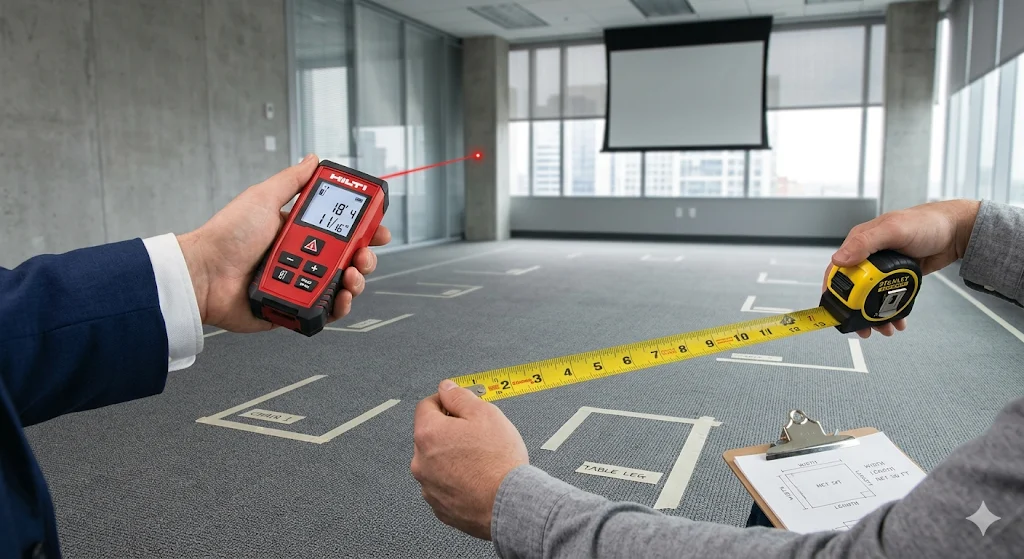
Use laser measures for walls and tape for layouts. Record length, width, and usable floor space. Subtract fixtures to get net square footage.
Laser tools capture 99% accuracy over 50 feet. Start at the corners. Measure wall-to-wall. Note irregular shapes. Divide into rectangles for totals. Tape layouts simulate furniture. Mark chair positions. Test walkways at 3 feet wide. Subtract 20% for doors and vents. Net space determines fit.
Apps like RoomScan Pro generate 3D models. Input dimensions. Visualise team placements. UK facilities managers report 25% fewer booking errors with digital verification. Cross-check with blueprints. Architects provide scale drawings. Scale 1:50 ratios yield precise feet. Confirm on-site to catch renovations.
What Common Mistakes Lead to Wrong Room Sizes?
Overestimating space needs wastes budgets. Underestimating causes discomfort. Ignore 72% of SMEs book rooms 30% too large, per 2025 rental data.
Booking oversized rooms dilutes focus. Echoes are heard in 300-foot voids for four people. Costs rise 50% unnecessarily. Scale to exact headcount. Forgetting equipment footprints crams setups. Laptops sprawl 2 feet each. Cables tangle in tight spots. Plan 50 extra feet upfront.
Neglecting shape impacts flow. Long, narrow rooms hinder eye contact. Square layouts promote equality. Test ratios under 2:1 length-to-width. Relying on the max capacity misleads. Fire codes set limits. Real use halves them for comfort. Audit past meetings for patterns.
How Does Room Size Affect Team Productivity?
Optimal sizes lift output by 28%. Tight spaces stress; loose ones scatter attention. Precise fits sustain energy through 60-minute sessions.
Tight rooms spike cortisol 15% higher. Crowding curbs idea sharing. Teams produce 20% fewer solutions. Allocate breathing room. Loose spaces fragment discussions. Voices strain across distances. Attention wanders 25% more. Compact energy channels focus.
Data from Cambridge office studies links 200-foot rooms to peak collaboration. Engagement holds steady at 85%. Undersized drops to 62%. Ventilation scales with size. 150 feet per four people exchanges air effectively. Stale environments cut decisions by 18%.
What Layouts Maximise Small Meeting Room Efficiency?
Central tables with perimeter whiteboards work best. Position tech centrally. Ensure 4-foot aisles. This layout serves 4-8 teams seamlessly.
Central tables anchor discussions. 6-foot rounds fit four comfortably. Perimeter walls host dry-erase boards. Ideas flow without repositioning. Tech hubs centralise projectors. HDMI ports cluster at tables. Screens mount opposite doors. Avoid corner shadows.
Aisle widths prevent bottlenecks. 4 feet allow pass-throughs. Chairs tuck under edges. Maximise floor use. Modular furniture adapts. Stackable chairs store in 10 feet. Fold tables against walls. Flexibility suits variable team sizes.
How Do UK Regulations Influence Room Size Choices?
Fire codes mandate 15 square feet per occupant. Accessibility requires 5-foot paths. Comply to avoid fines up to £5,000.
Building Regulations 2010 set density limits. Exceed 15 feet and evacuate slowly. Plan dual exits in 200-foot rooms. Disability Discrimination Act demands ramps. 5-foot wheelchair paths integrate naturally. Elevators serve upper floors.
Local councils are inspected annually. Non-compliance halts bookings. 42% of London venues pass audits with strict sizing. Ventilation standards require 10 litres per second per person. 200-foot rooms install compliant systems.
Explore Meeting Rooms Service guides,
Why Your Remote Team Needs Regular Face to Face Meetings in London
Understanding the Impact of Meeting Room Ergonomics on Your Team Productivity Levels
What Tools Help Calculate Perfect Room Sizes?
Online calculators from Floorplanner or RoomSketcher input headcount and output sizes. Cross-verify with physical mocks.
Floorplanner simulates 3D. Enter 4-6 people. Drag furniture. Alerts flag overcrowding. RoomSketcher exports PDFs. Scale to UK standards. Share with teams for approvals. Excel sheets automate formulas. Input attendee numbers. Multiply by 18 feet. Adjust for types. Mobile apps like MagicPlan scan rooms. LiDAR generates blueprints. Accuracy hits 98% indoors.
How to Test Room Size Before Booking?
Book trial slots. Stage mock meetings. Time flows and measures comfort. Refine based on feedback.
Trials reveal real dynamics. Four people test seating for 30 minutes. Note discomfort zones. Measure noise levels. Apps track decibels. Under 50 dB sustains clarity. Feedback forms rate layouts. Score 1-10 on focus. Averages guide finals. Iterate twice. Adjust sizes down 20% if spacious. Confirm with Meeting Rooms specs from From My Company.
From My Company provides verified sizes. Teams book confidently. Productivity rises. order your meeting room booking online today for professional client interview sessions. Proper sizing transforms meetings. Small teams excel in tailored spaces. From My Company delivers compliant Meeting Rooms. Book to experience gains.
Frequently Asked Questions
What sizes are available for meeting rooms at From My Company?
From My Company offers meeting rooms from 100 to 400 square feet, ideal for small teams of 4-12 people. Sizes accommodate huddles, presentations, and client interviews with 15-20 square feet per person. Capacities comply with UK fire safety standards.
How much do meeting rooms cost to book with From My Company?
Meeting room rates at From My Company start at £25 per hour for small spaces, scaling to £60 for larger professional setups. Prices include AV equipment, Wi-Fi, and refreshments. Hourly, half-day, or full-day bookings provide flexible options for UK businesses.
What facilities come with From My Company meeting rooms?
From My Company meeting rooms feature high-speed Wi-Fi, projectors, whiteboards, and video conferencing tools. Comfortable seating, power outlets, and natural lighting support productive sessions. All spaces meet accessibility and hygiene standards.
Can I book a meeting room online at From My Company?
Yes, From My Company enables instant online booking for meeting rooms via their platform. Select size, duration, and date for real-time availability. Confirmation arrives within minutes, streamlining reservations for small teams.
Are From My Company meeting rooms suitable for client meetings?
From My Company meeting rooms excel for client interviews with professional layouts and privacy features. Sizes from 150 square feet ensure comfortable discussions. Tech setups like HD screens facilitate seamless presentations.