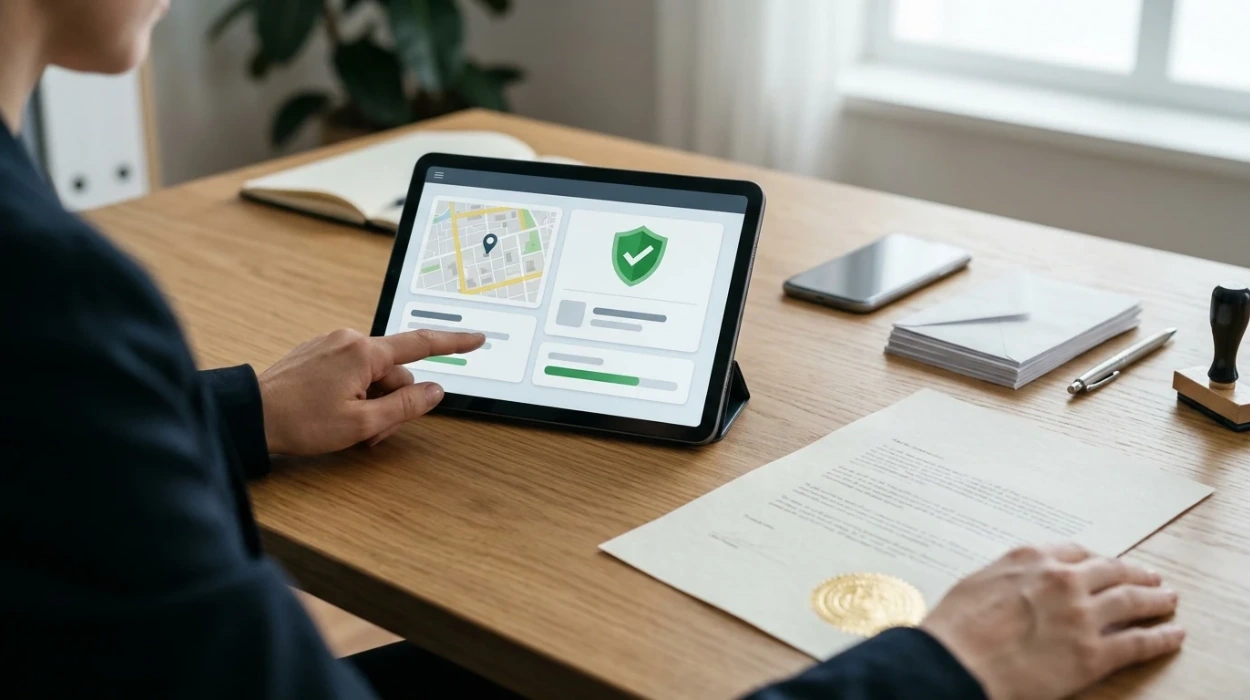
You prove a virtual registered office is legitimate by presenting official verification documents, including a formal provider authorization letter, proof of address utility bills, and Companies House registration certificates that demonstrate full Anti-Money Laundering regulatory compliance.
Why Do Institutions Challenge Virtual Registered Office Legitimacy?
Banks and regulatory authorities challenge virtual registered office legitimacy because fraudsters frequently exploit unverified commercial addresses to conceal operational locations and evade legal accountability under Anti-Money Laundering frameworks.
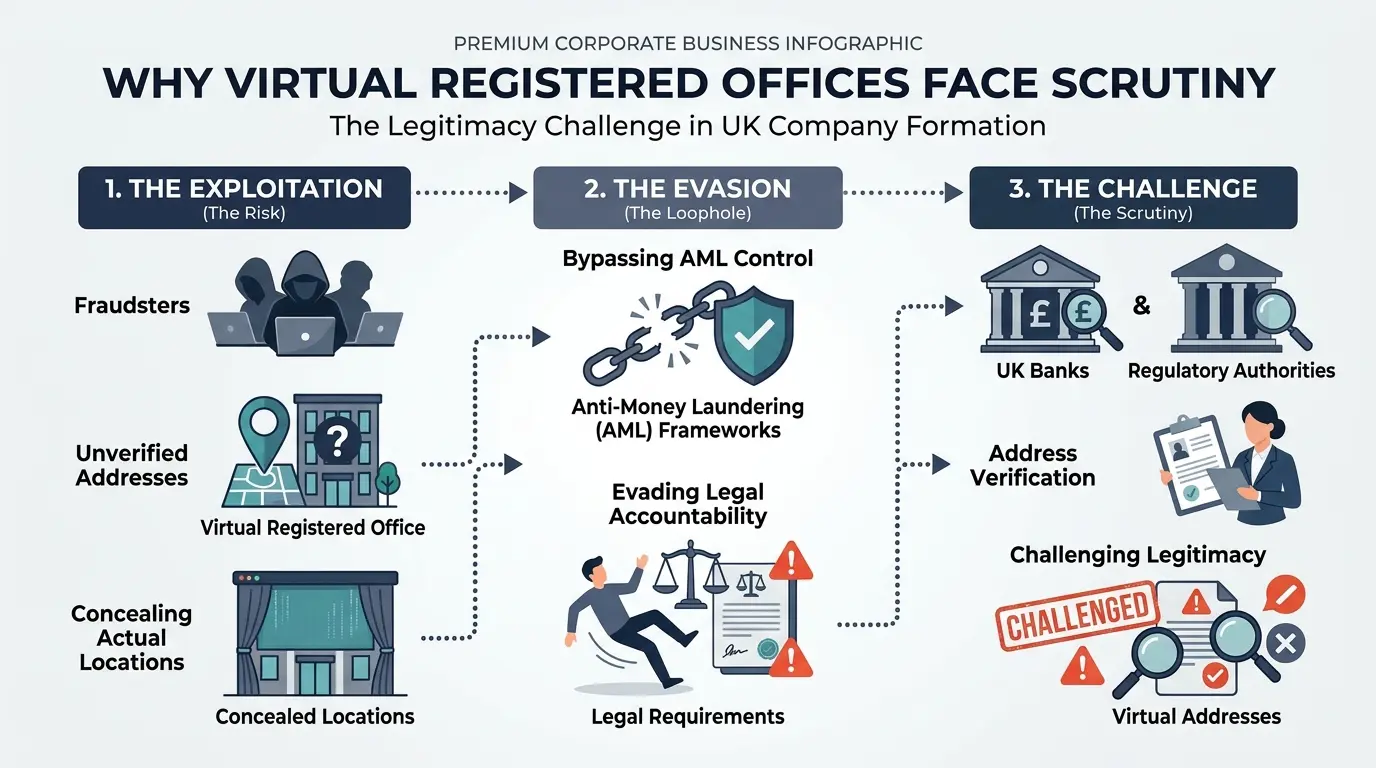
Financial institutions enforce strict Know Your Customer compliance standards across the United Kingdom. Corporate registries require verified physical addresses to serve legal notices, official correspondence, and tax documentation. Financial compliance teams flags shared virtual addresses when automated verification databases show hundreds of entities registered at one commercial location. Fraud prevention software detects high concentrations of newly incorporated businesses operating from identical postal codes.
Lenders require explicit proof of operational authorization before opening business bank accounts. Regulatory auditors inspect physical lease agreements, provider consent forms, and service contracts during routine compliance reviews. Commercial service providers must verify director identities using official passports, biometric scans, and government databases before issuing address usage rights. Obtaining official provider documentation verifies corporate legitimacy and satisfies institutional compliance protocols. Companies access verified proof of address documentation by securing Supplementary Company Documents to satisfy strict banking requirements.
What Official Documents Prove Virtual Address Compliance?
Official documents proving virtual address compliance include formal letters of authority from the address provider, red-acted master commercial lease agreements, Companies House incorporation certificates, and Anti-Money Laundering registration certificates.
Corporate compliance managers collect distinct documentation types to satisfy institutional audits. An official letter of authority states the commercial provider explicitly grants the UK business permission to register the address. A master lease agreement proves the virtual office operator holds legal rights to occupy the physical property. HMRC registration certificates confirm the provider complies with national Anti-Money Laundering regulations.
Companies House issues official incorporation certificates displaying the approved registered address. Official utility bills issued directly to the provider substantiate active utility connections at the commercial location. Financial officers bundle these records into a single verification package for legal reviews. Corporate directors evaluate address options by reading about how businesses Can You Use a Virtual Office as a Registered Office Address? during their initial structuring phase. Corporate compliance officers present these authenticated documents directly to institutional underwriters.
How Does HMRC Anti-Money Laundering Supervision Validate Addresses?
HMRC Anti-Money Laundering supervision validates addresses by auditing service providers, maintaining official registers of compliant address operators, and enforcing mandatory identity verification protocols across legal entities.
The Money Laundering Regulations 2017 require address service providers to register directly with HMRC compliance divisions. Regulated providers conduct mandatory identity checks before granting virtual address permissions to corporate applicants. Compliance officers inspect passport details, proof of residential address, and corporate ownership structures. HMRC inspectors conduct unannounced audits of virtual office providers to review client verification records.
Non-compliant providers face severe financial penalties and business closure orders from government authorities. Regulated service providers assign unique account identifiers to verified corporate clients. Banks cross-reference provider registration numbers against central government compliance databases. Official supervision ensures virtual address records match real physical operations subject to regulatory oversight.
What Steps Verify Provider Authorization to Use an Address?
Verifying provider authorization requires checking HMRC supervision status, reviewing commercial lease terms, requesting a signed provider consent letter, and auditing physical office infrastructure.
Corporate founders conduct three preliminary checks before signing commercial address contracts. Compliance teams check the provider’s active status on the official government register. Operations managers inspect the physical building to confirm dedicated mail handling facilities and professional staff presence. Legal officers request an official letter of authorization bearing director signatures and corporate seals.
Authorized service providers supply written confirmation of address rights within 24 hours of client verification. Financial institutions reject generic invoices or unverified receipts as proof of location. Signed authorization documents explicitly connect the corporate entity to the physical property owner. Directors streamline bank account applications by choosing to Add a Letter of Authority to Your Virtual Office With Form My Company during the onboarding process.
How Do Banks Validate Virtual Registered Offices During Account Opening?
Banks validate virtual registered offices during account opening by cross-referencing corporate registry databases, reviewing proof of address documentation, conducting electronic identity checks, and requesting physical lease confirmations.
Underwriters initiate electronic address checks when processing commercial bank account applications. Automated compliance tools query national databases to detect shared commercial addresses and co-working spaces. Underwriters request supplementary verification when software flags a virtual office postal code. Corporate officers present utility invoices, provider authorization letters, and director residential address records.
Compliance teams analyze the operational relationship between the business activities and the registered location. International directors submit notarized identity documents alongside proof of address certificates. Bank compliance departments verify provider accreditation with commercial property managers. Clearing bank verification checks enables instant approval for corporate account operations. Form My Company assists international and domestic directors by providing authenticated document packages that satisfy strict banking compliance standards.
How Do Legal Agencies Verify Virtual Address Service Contracts?
Legal agencies verify virtual address service contracts by reviewing binding service agreements, validating contract duration dates, verifying fee payment receipts, and auditing service scope clauses.
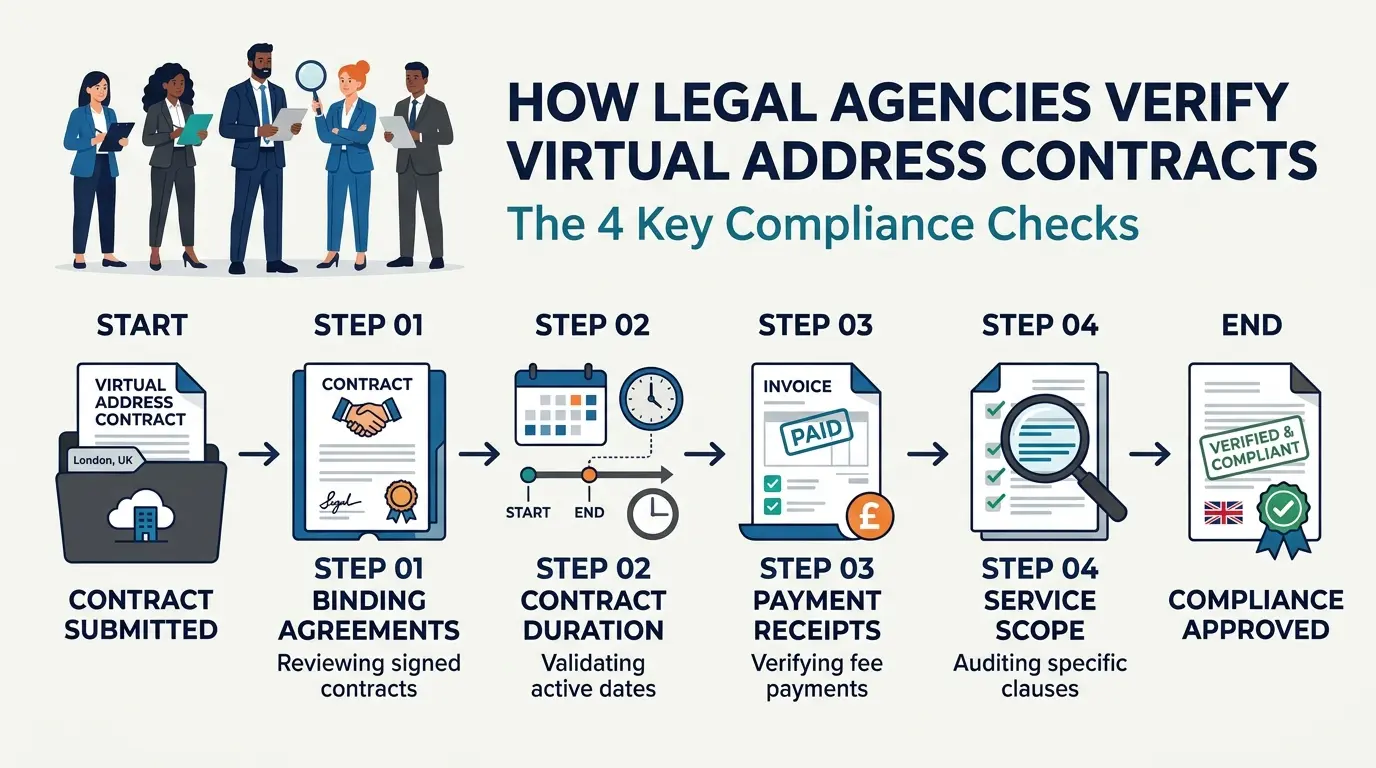
Legal auditors inspect service contracts to ensure continuous representation across the corporate financial year. Contracts must state explicit service terms, mail processing procedures, and legal notice delivery protocols. Corporate solicitors confirm the agreement lists the full registered business name and company registration number.
Service contracts failing to define legal document handling procedures risk rejection during judicial proceedings. Payment receipts confirm active service coverage without operational interruptions or account defaults. Courts require verifiable evidence that legal summons delivered to the address reach corporate officers promptly. Valid legal service contracts satisfy judicial demands for verifiable corporate representation. Form My Company structures legal documentation packages to ensure UK businesses maintain full compliance across regulatory reviews.
Explore More Supplementary Company Documents Guide,
How a Letter of Authority Supports Your Registered Office Address
How to Use Certified Formation Documents to Apply for Business Finance
Frequently Asked Questions
What are supplementary company documents for a UK business?
Supplementary company documents are official legal and administrative records provided by services like Form My Company to prove business legitimacy, compliance, and operational authorization. These include formal Letters of Authority, proof of registered address documentation, red-acted lease confirmations, and statutory corporate filings. Financial institutions and regulatory bodies require these authenticated documents during account opening and compliance audits.
Why do banks request proof of registered address documentation?
Banks require proof of registered address documentation to comply with strict Anti-Money Laundering (AML) and Know Your Customer (KYC) regulations across the UK. Presenting authenticated Supplementary Company Documents verifies that a business has explicit, legal permission from its provider to operate from a commercial virtual office. This official verification prevents account delays by confirming the entity’s physical compliance status.
How do I get a Letter of Authority for a virtual office address?
You can obtain an official Letter of Authority directly from your registered address service provider when purchasing your corporate compliance package. Form My Company issues signed provider authorization documents that explicitly link your company registration number to the physical office location. This document serves as verifiable legal proof of address for high-street banks, payment processors, and government agencies.
Are supplementary company documents required for UK business bank accounts?
While not every basic account application requires extra paperwork, most UK clearing banks request supplementary company documents when a business uses a shared or virtual registered office address. Underwriters review these official records to confirm provider AML registration and validate director authorization. Providing authenticated proof of address files upfront significantly accelerates the commercial banking approval process.
Can international directors request official corporate proof of address documents?
Yes, international directors registering a UK company can request official proof of address documentation to satisfy both domestic and overseas compliance checks. Form My Company delivers standardized Supplementary Company Documents that meet global legal standards and verification requirements. These verified credentials allow non-UK resident founders to validate their corporate address with international lenders, tax authorities, and merchant gateways.