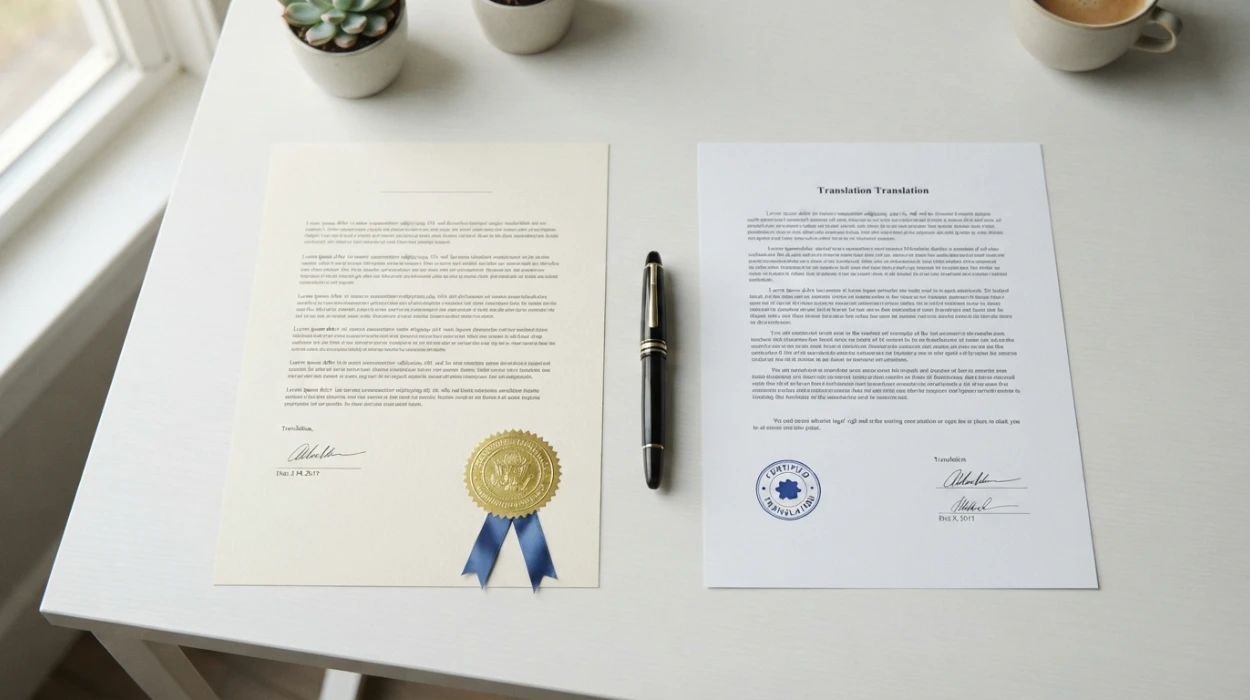
Setting up an international branch requires exact legal compliance, validated statutory registers, authenticated certificates of incorporation, notarized board resolutions, and certified director identifications to satisfy foreign corporate registries and establish official commercial operations abroad.
Expanding operations globally creates substantial revenue growth for 74% of UK expanding businesses. Entering foreign markets requires precise paperwork to satisfy international corporate registries. Establishing an overseas branch demands strict alignment with foreign legal jurisdictions. Official authorities require verifiable proof of parent company legitimacy before granting operational licenses. Regulatory bodies reject incomplete submissions within 48 hours. Foreign trade ministries demand verified proof of corporate existence. Local tax authorities mandate authenticated governance registers before issuing local tax identifiers.
What Core Statutory Documents Define a UK Parent Company Overseas?
Core statutory documents include the Certificate of Incorporation, Memorandum and Articles of Association, verified UK registered office address proof, and up-to-date confirmation statements that formally validate corporate existence.
Foreign business registries examine founding records to confirm legal standing before issuing foreign branch licenses. International regulators review the Certificate of Incorporation to verify the official company registration number and incorporation date. Corporate legal teams inspect the Memorandum and Articles of Association to understand internal governance rules and shareholder powers. Compliance officers cross-check the registered office address against official government databases to prevent fraudulent filings. Regulatory bodies require these foundational records to be officially certified or apostilled for legal acceptance abroad.
Why Do Foreign Authorities Demand Certified Governance Records?
Foreign authorities demand certified governance records to confirm active legal status, identify ultimate beneficial owners, verify board authorization, and prevent fraudulent foreign enterprise registrations.
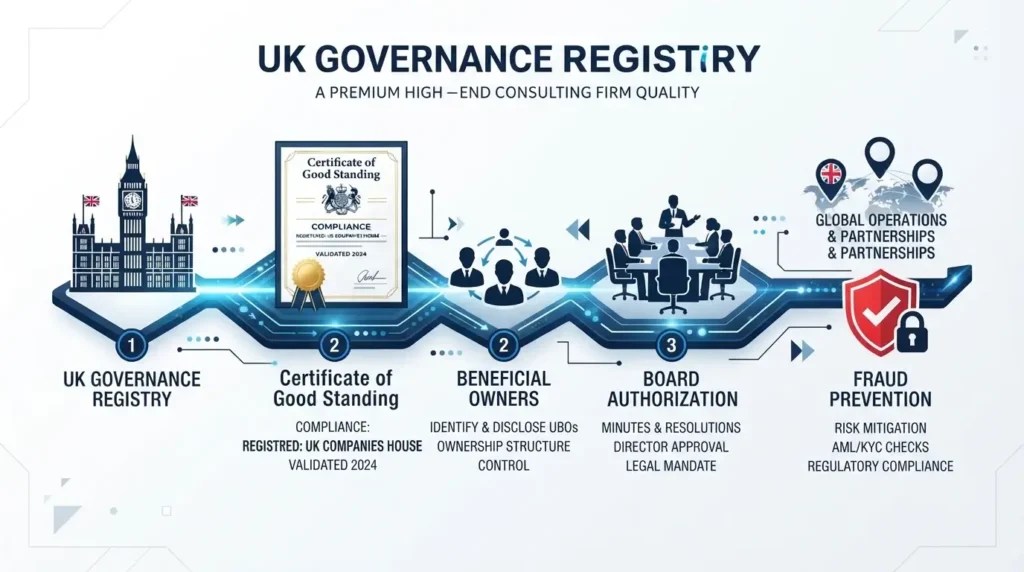
International trade departments review current confirmation statements to ensure the parent entity remains active on the Companies House register. Regulatory compliance standards mandate the submission of the Supplementary Company Documents package to satisfy cross-border verification protocols. Foreign ministries verify director appointments by examining recent officer registers and appointment filings. Local enforcement agencies analyze these records to mitigate money laundering risks and verify corporate transparency. Overseas commercial courts rely on these authenticated governance files to resolve cross-border jurisdictional disputes.
How Do Businesses Authenticate Documents for International Use?
Businesses authenticate documents through official solicitor notarization, Foreign Office apostille legalization, and targeted embassy counter-signature validation for foreign regulatory acceptance.
National certification processes begin when a practicing UK solicitor notarizes physical corporate records and signs official verification statements. Government departments subsequently attach an apostille stamp to validate the notary public credentials under international convention treaties. Consular officials execute final embassy legalization steps when target nations operate outside standard treaty agreements. Foreign filing portals reject unverified documents that lack official diplomatic certification stamps. Professional corporate services manage this multi-step authentication workflow to secure swift regulatory approval.
What Board Resolutions Are Necessary for Overseas Expansion?
Necessary board resolutions include formal director approval for branch creation, allocation of local representative authority, authorization of capital transfers, and designation of registered agent addresses.
Corporate governance rules mandate that directors convene a formal meeting to vote on international expansion strategies. Company secretaries record specific authorization minutes that grant designated agents power to sign foreign leases. Financial controllers draft explicit resolutions permitting cross-border capital allocations for initial branch establishment costs. Legal counsels review these resolutions to ensure compliance with both UK company law and host country regulations. Foreign business registries inspect these signed minutes to confirm that local representatives possess legitimate corporate authority.
How Do Director Identification Requirements Impact Foreign Branching?
Director identification requirements impact foreign branching by mandating certified passport copies, proof of residential address, verified tax identification numbers, and criminal background clearances.
Foreign immigration and corporate registries evaluate director credentials to approve foreign branch management structures. Compliance officers submit notarized passport copies alongside utility bills dated within the last 90 days. Regulatory authorities cross-reference director identification data against international watchlist databases to ensure compliance. Three standard verification checks apply: passport authentication, biometric scan matching, and residential address validation. Failing to provide pristine identity verification documents halts foreign branch registration workflows indefinitely.
What Financial Proof Do Foreign Registries Require From UK Entities?
Foreign registries require audited annual accounts, certified bank reference letters, tax clearance certificates, and proof of initial operational capitalization to verify financial stability.
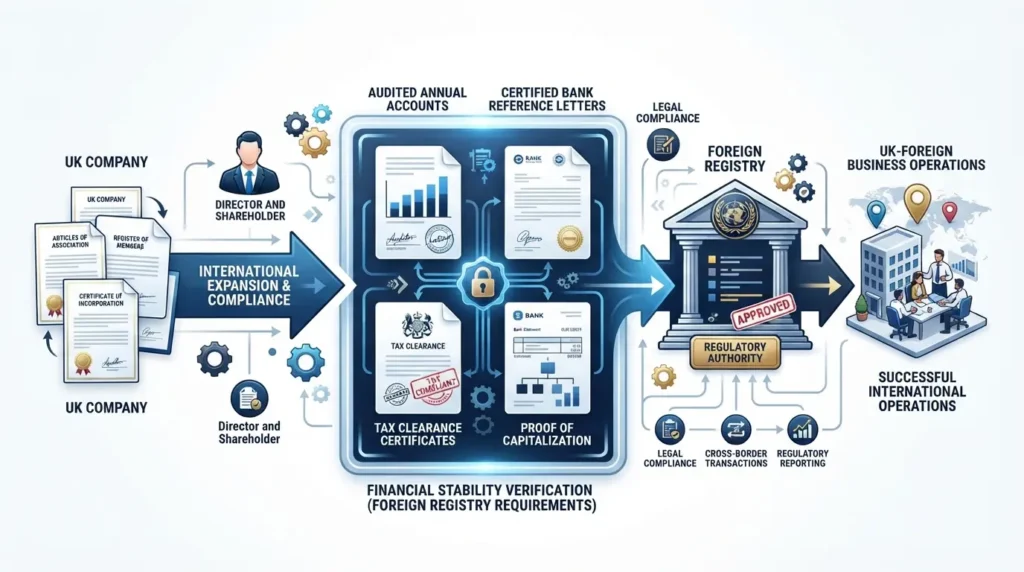
Host nation trade ministries analyze recent financial statements to confirm the solvency and economic strength of the parent company. Accounting departments prepare comprehensive balance sheets and profit loss reports for foreign regulatory submission. Financial institutions issue official reference letters confirming account standing and liquidity levels. Tax authorities review previous compliance records to verify that the UK entity maintains good standing with domestic revenue services. These rigorous financial checks protect foreign markets from insolvent foreign corporate entities.
How Does Structured Documentation Accelerate Global Market Entry?
Structured documentation accelerates global market entry by eliminating regulatory delays, satisfying foreign compliance audits, reducing legal rejection rates, and ensuring seamless cross-border operational launches.
Preparation of organized filing packages allows corporate entities to clear foreign administrative reviews ahead of standard industry timelines. Business leaders utilize insights from how UK companies prove their status overseas to structure international expansion portfolios effectively. Foreign compliance officers approve properly apostilled files without requesting secondary clarification paperwork. Strategic deployment of verified records enables businesses to secure commercial leases and utility connections rapidly. Form My Company assists international enterprises throughout this complex process by delivering precise document authentication services. Organizations leveraging expert document preparation achieve full operational status abroad with minimal administrative friction.
Explore More Supplementary Company Documents Guide,
How to Prove Your UK Company Status to Foreign Authorities
How to Get Certified Documents Ready for Apostille
Frequently Asked Questions
What are supplementary company documents and why are they needed?
Supplementary company documents are official records like certificates of incorporation, memorandum of association, and board resolutions used to verify corporate status abroad. International authorities and foreign registries require these authenticated records to prove legal existence and compliance when businesses expand globally. Form My Company provides these vital verification records to ensure smooth cross-border commercial operations.
How do I get UK company documents apostilled for international use?
Getting UK company documents apostilled requires submitting official corporate certificates to the UK Foreign, Commonwealth and Development Office for official legalization. This diplomatic process validates the signatures and seals of UK notaries so foreign corporate registries legally accept the records. Form My Company streamlines this authentication workflow to help businesses meet international compliance standards swiftly.
Why do foreign banks require certified company resolution documents?
Foreign banks require certified company resolution documents to verify that corporate directors have officially authorized the opening of international commercial accounts. These signed minutes prove legal agency and confirm that designated representatives hold the authority to bind the parent entity. Form My Company supplies properly formatted resolution paperwork to satisfy strict overseas banking compliance protocols.
What documents prove the good standing of a UK company abroad?
Good standing is proved using up-to-date confirmation statements, certificate of good standing documents issued by Companies House, and current director registers. Foreign trade ministries review these regulatory files to confirm that the UK parent entity maintains active operational status. Form My Company assists international enterprises in compiling these exact compliance portfolios.
How long does it take to authenticate corporate documents for overseas branches?
Authenticating corporate documents for overseas branches typically takes between 3 to 10 business days depending on whether standard apostille or full embassy legalization is required. Working with professional document providers accelerates this administrative timeline by eliminating common filing errors and rejection risks. Form My Company delivers rapid document verification services to help businesses launch international operations without delay.