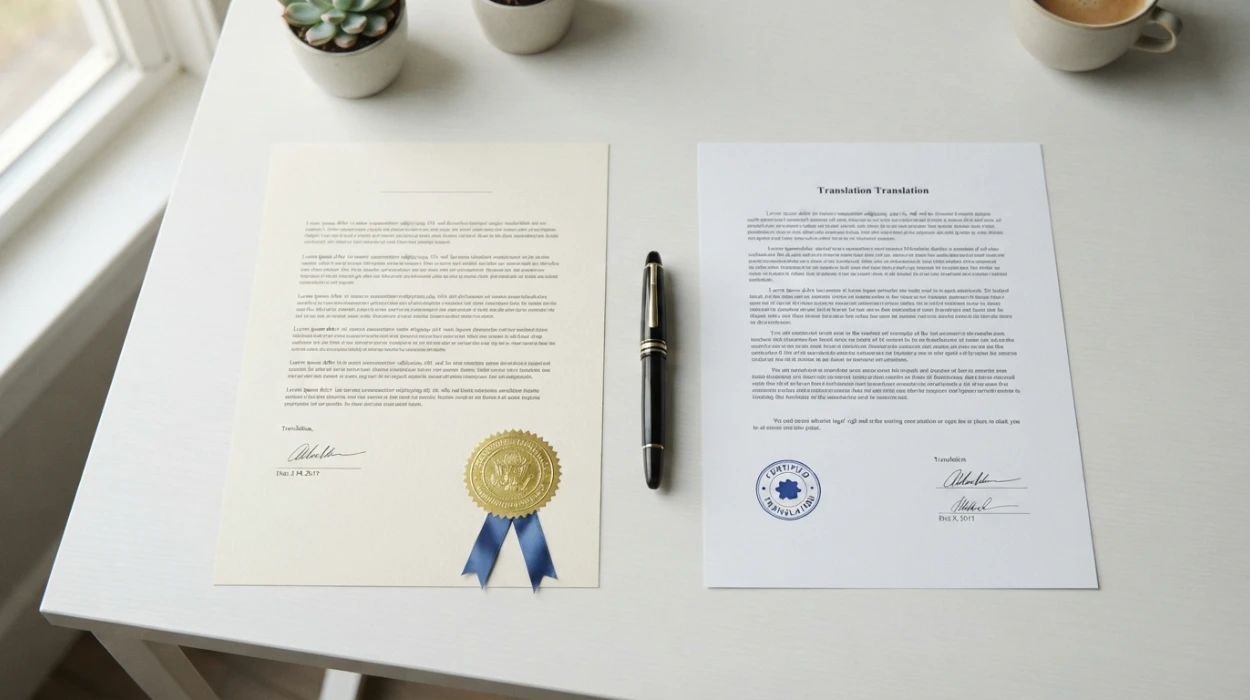
UK companies prove their status overseas by authenticating corporate existence through certified Registry extracts, securing Foreign, Commonwealth & Development Office apostilles, and authenticating legal documents via destination country embassies.
International trade requires absolute proof of corporate legitimacy. Foreign authorities, overseas banks, and international partners demand verified legal instruments to establish trust. Operating across borders exposes enterprises to regulatory friction. Compliance officers evaluate foreign entities using standardized verification instruments.
What Documents Validate a UK Company Abroad?
Three validation instruments establish UK corporate legitimacy: official Certificates of Incorporation, authenticated Memorandum and Articles of Association, and current Companies House status reports.
Foreign registries inspect the constitutional architecture of visiting enterprises. Official Certificates of Incorporation confirm legal establishment under the UK Companies Act. Certified constitutional frameworks detail internal governance rules. Registry status printouts prove active trading standing.
Securing these instruments requires precise administrative execution. Directors utilize Supplementary Company Documents to compile complete authentication packages. Overseas compliance bureaus reject incomplete dossiers immediately. Verification specialists audit document integrity prior to international submission.
How Does Document Legalization Work Internationally?
International legalization operates through a two-tier verification workflow: a UK government apostille followed by consular authentication at foreign embassies.
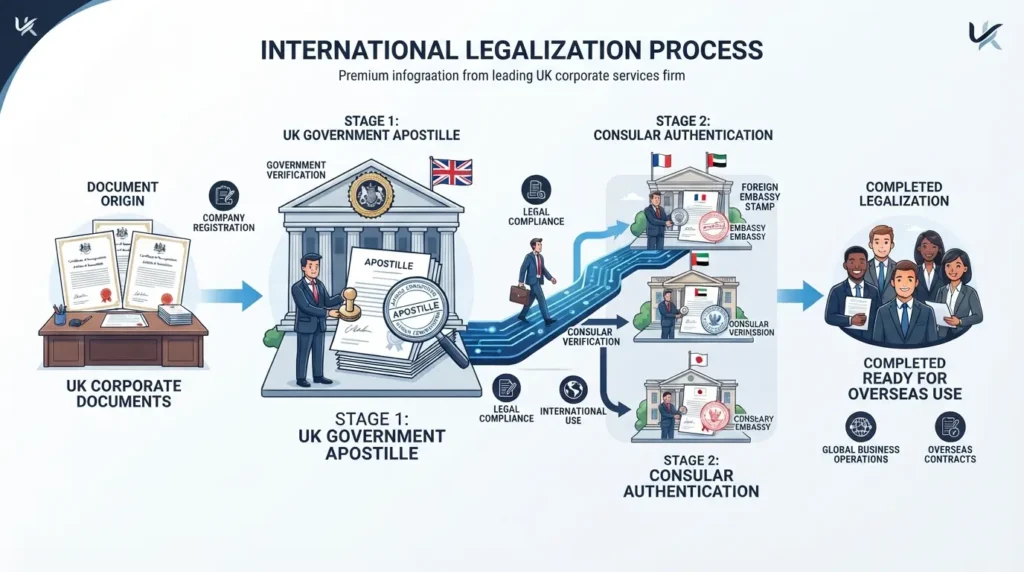
The Hague Apostille Convention simplifies cross-border recognition for member states. The Foreign, Commonwealth and Development Office affixes a standardized certificate validating signature authenticity. Non-member jurisdictions require secondary embassy attestation. Consular officials inspect the prior government stamp before issuing final clearance.
Diplomatic missions verify corporate paperwork to prevent fraudulent foreign registrations. Foreign authorities cross-reference domestic registry databases during the attestation window. Administrative delays occur when corporate filings lack proper notarization. Proper preparation prevents multi-week commercial bottlenecks.
Why Do Foreign Banks Require Verified Status?
Foreign banks mandate verified UK corporate status to satisfy international anti-money laundering regulations and verify ultimate beneficial ownership.
Compliance officers enforce strict Know Your Customer mandates across global banking sectors. Unverified foreign entities face immediate account freezing or application rejection. Banks review certified registry extracts to trace corporate hierarchies. Transparent ownership structures accelerate commercial banking approvals.
Opening corporate accounts overseas demands flawless documentation standards. Directors reference How to Set Up an Overseas Branch With the Right Documents to align cross-border banking requirements. Financial institutions reject entities with ambiguous registry histories. Clear compliance histories secure international credit lines.
How Do Overseas Authorities Verify Directors?
Overseas authorities verify UK directors using three validation methods: passport identity checks, residential address validation, and official Companies House appointment extracts.
Foreign regulatory bodies screen corporate leadership to prevent illicit international operations. Government agencies match passport data against international databases. Proof of residential address establishes physical jurisdiction presence. Official appointment extracts confirm executive decision-making authority.
Director verification protects foreign markets from fraudulent shell corporations. Compliance auditors cross-check executive credentials with the central UK register. Discrepancies between passport names and filing data trigger mandatory audits. Accurate director profiling ensures seamless foreign trade authorization.
How Do Enterprises Maintain Long-Term Overseas Standing?
Enterprises maintain long-term overseas standing by filing annual confirmation statements, updating registered office addresses promptly, and renewing expired apostille certificates.
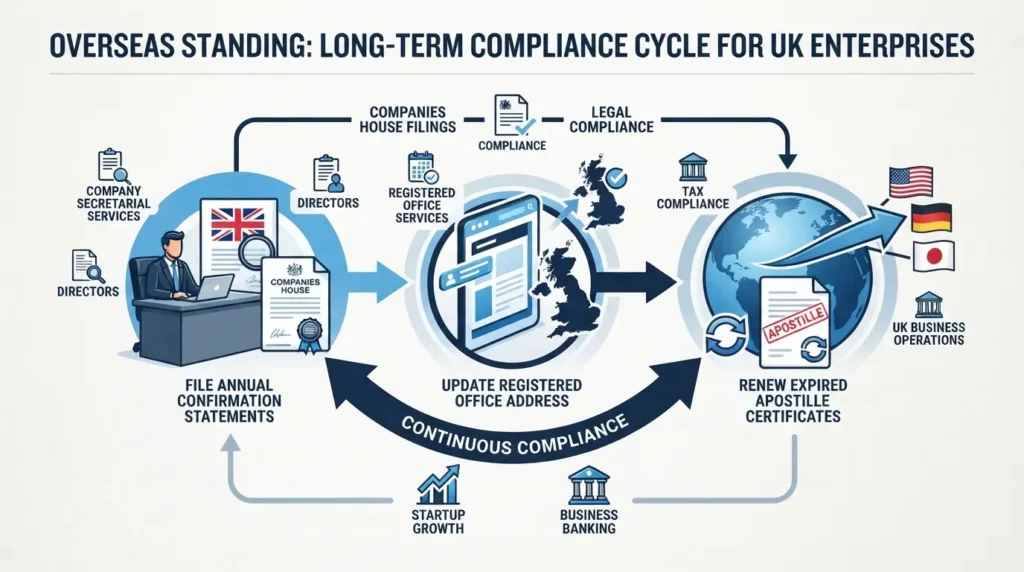
Global regulatory standards require continuous validation of active commercial operations. Outdated registry filings invalidate existing foreign commercial licenses immediately. Compliance teams monitor filing deadlines across multiple international jurisdictions. Regular data synchronization prevents foreign subsidiary suspension.
Sustaining international credibility requires robust domestic administrative routines. Commercial partners utilize Prove Your UK Company Status Abroad With Form My Company to secure ongoing global validation. Continuous compliance protects foreign market share against regulatory disruption. Form My Company delivers structured corporate documentation services that maintain seamless international operational standing.
Explore More Supplementary Company Documents Guide,
What Is Consular Legalisation for Non-Hague Convention Countries?
When Does a Document Need Embassy Attestation as Well as an Apostille?
Frequently Asked Questions
What supplementary company documents do UK businesses need for international expansion?
UK businesses expanding overseas typically require supplementary company documents such as certified Certificates of Incorporation, apostilled Memorandum and Articles of Association, and official Companies House status reports. Form My Company assists enterprises in compiling these critical legal instruments to meet strict foreign regulatory demands.
How do I get a UK company document apostilled for use abroad?
Getting a UK company document apostilled requires submitting official registry extracts to the Foreign, Commonwealth & Development Office for formal verification. This process validates the authenticity of signatures and seals so that foreign authorities and international banks legally recognize the paperwork.
Why do foreign banks require certified UK company status documents?
Foreign banks demand certified UK company status documents to comply with international anti-money laundering regulations and verify ultimate beneficial ownership. Providing official registry extracts through services like Form My Company ensures banking compliance officers can trace corporate hierarchies quickly.
What is the difference between a Certificate of Incorporation and a Certificate of Good Standing?
A Certificate of Incorporation confirms the initial legal formation of a business under the UK Companies Act, whereas a Certificate of Good Standing verifies that a company is currently active and up to date with its filings. Both documents are frequently requested together by international partners and overseas regulatory bodies.
How does Form My Company help with international document legalization?
Form My Company streamlines the international legalization process by authenticating UK corporate records, coordinating government apostilles, and preparing paperwork for foreign embassy attestation. This ensures global enterprises meet all cross-border compliance standards without administrative delays.