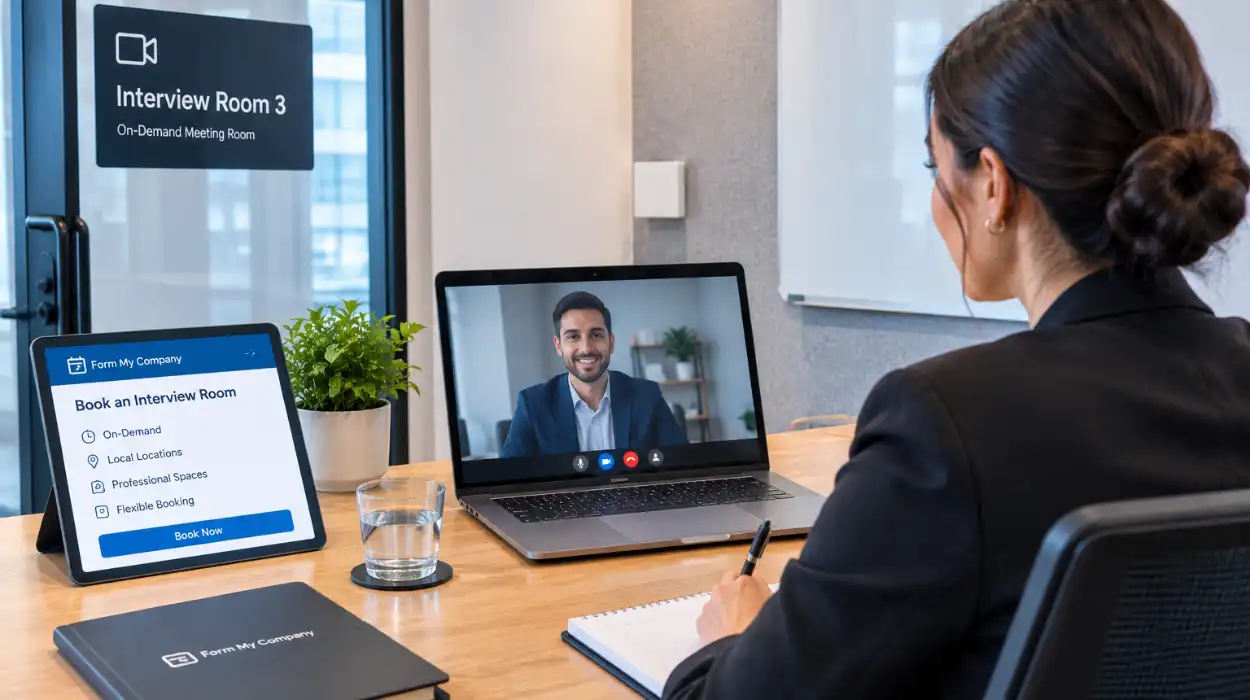
Hybrid events combine in-person gathering with online participation, whereas fully virtual events occur entirely online. Choosing between them depends on whether your priority is maximum physical audience engagement and local networking or broader global reach, lower venue costs, and rapid scalability for your business objectives.
What Are the Core Differences Between Hybrid and Virtual Events?
Hybrid events blend physical venue attendance with digital streaming features, while fully virtual events host all speakers and attendees exclusively online. Hybrid formats demand physical venue logistics and audiovisual synchronization, whereas virtual formats rely strictly on digital hosting platforms and webcasting infrastructure.
Selecting the correct event format requires a clear understanding of operational scope. Physical locations host a core group of attendees while simultaneously broadcasting to remote participants. This dual structure provides tactile networking opportunities for on-site guests. It simultaneously extends audience reach to international participants who cannot travel. Fully virtual events eliminate geographical boundaries entirely. They reduce overhead expenses related to catering, physical security, and travel accommodations.
Organization leaders evaluate audience location data before allocating resources. If 40% of target attendees reside within commuting distance, physical presence adds measurable value. Hybrid formats serve corporate AGMs, product launches, and regional industry summits. Virtual formats suit software demonstrations, internal training webinars, and global user conferences. Decision-makers must align event objectives with attendee preferences to optimize return on investment.
How Do Attendance and Engagement Metrics Compare Across Formats?
Hybrid events yield higher overall audience retention rates by offering physical networking alongside digital convenience. Fully virtual events generate higher initial registration volumes but experience steeper drop-off rates, with average audience drop-offs reaching 35% within the first thirty minutes of broadcasting.
Engagement dynamics vary significantly between physical and digital environments. In-person participants remain attentive for longer durations due to reduced digital distractions. They participate in live Q&A sessions, structured breakout discussions, and spontaneous networking conversations. Remote participants in hybrid events require specialized interaction tools. Interactive polling, live chat moderation, and dedicated virtual hosts maintain remote audience focus.
Virtual events struggle with passive viewing behaviors. Attendees frequently multitask during remote presentations, which reduces content absorption. Presenters must restructure virtual sessions into shorter 15-minute modules. Incorporating gamification elements, live digital surveys, and downloadable resources counteracts audience fatigue. Event strategists analyze completion rates, chat interaction frequency, and post-event survey scores to measure true engagement success across both operational models.
Which Event Model Offers Better Cost Efficiency and ROI?
Fully virtual events provide superior upfront cost efficiency by eliminating venue leases, catering bills, and travel expenses. Hybrid events require larger capital investments but generate higher ticket revenue, premium sponsorship opportunities, and stronger commercial lead conversion rates across physical and digital pipelines.
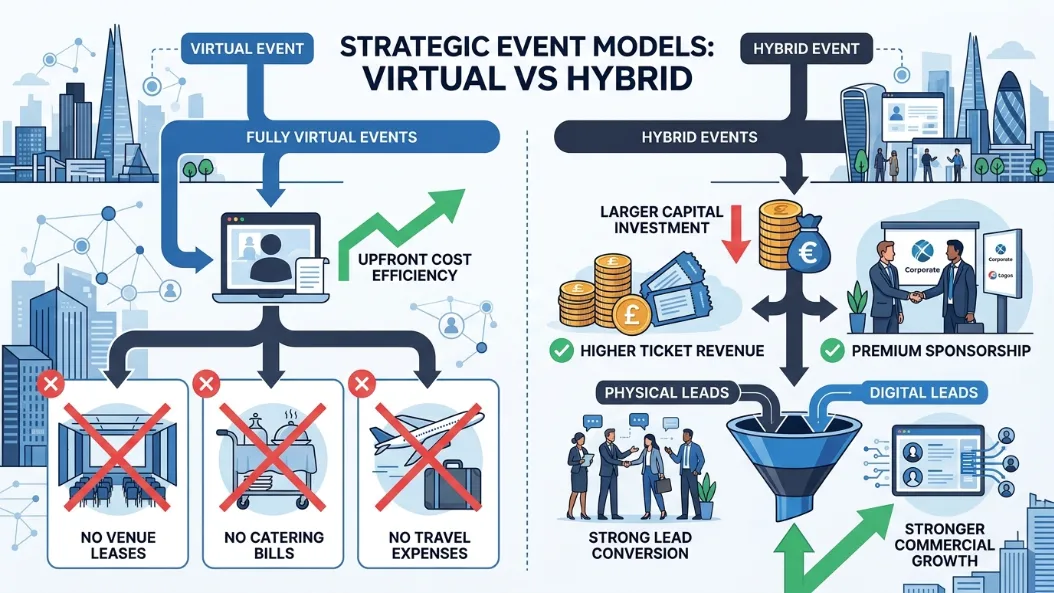
Budget allocation reflects the technical and physical scope of each format. Fully virtual events require spending on event software licenses, digital marketing, and speaker honorariums. Operating costs remain low regardless of attendee volume increases. Hybrid events require dual funding streams. Venue rental fees, on-site staffing, and professional AV broadcasting equipment drive up initial capital expenditure requirements.
Sponsors evaluate event formats based on brand exposure and lead quality. Virtual events offer sponsors precise digital tracking, click-through metrics, and automated lead capture. Hybrid events double sponsor visibility. Corporate sponsors receive physical booth space alongside permanent banner placements within the digital streaming portal. Calculating return on investment involves weighing higher execution costs against long-term commercial pipeline values.
How Do Technology and Infrastructure Requirements Differ?
Hybrid events depend on integrated audiovisual infrastructure, high-speed dedicated bandwidth, and multi-camera live switching systems. Fully virtual platforms rely on cloud server stability, web-based broadcast software, interactive chat widgets, and high-definition webcam feeds from individual speaker locations.
Technical failure points differ between these hosting frameworks. Virtual events depend heavily on individual speaker internet stability and platform server capacity. A sudden latency spike interrupts the entire presentation for thousands of remote viewers. Broadcasters mitigate this risk by securing redundant internet connections and pre-recording key keynote sessions.
Hybrid technical setups demand professional engineering expertise. On-site microphones must capture local audio cleanly without creating feedback loops for remote viewers. Cameras must track physical speakers while displaying digital slides smoothly to online audiences. Organizations evaluate whether to build internal AV capability or source external equipment. Reviewing a [TOFU Article Title: Why Are Businesses Switching to Hybrid Meeting Formats?] guide helps businesses analyze infrastructure readiness before making financial commitments.
How Do You Select the Right Format for Your Strategic Goals?
Choose hybrid formats when your primary goals involve high-value networking, deal closures, and executive relationship building. Select fully virtual formats when prioritizing mass brand awareness, broad accessibility, rapid deployment schedules, and strict budget containment across international markets.
Strategic decision-making begins with an audit of organizational objectives. If a company aims to launch an enterprise product line to local buyers, physical demonstration facilities prove essential. If the objective centers on distributing educational material to thousands of global users, virtual deployment delivers superior speed and economy.
Organizations must evaluate internal technical capabilities before finalizing event formats. Managing dual-audience expectations demands dedicated project managers, technical directors, and content moderators. Evaluating market trends through a [MOFU Article Title: Hybrid vs Fully Virtual Events: Which Format Fits Your Goals?] framework allows leaders to match organizational capacity with audience expectations.
Why Does Venue Selection Impact Hybrid Event Performance?
Venue selection directly dictates hybrid event stability by supplying essential physical space, professional acoustic insulation, enterprise network connectivity, and specialized audiovisual equipment. Dedicated venue infrastructure eliminates technical bottlenecks and ensures equal broadcast quality for on-site and remote participants.
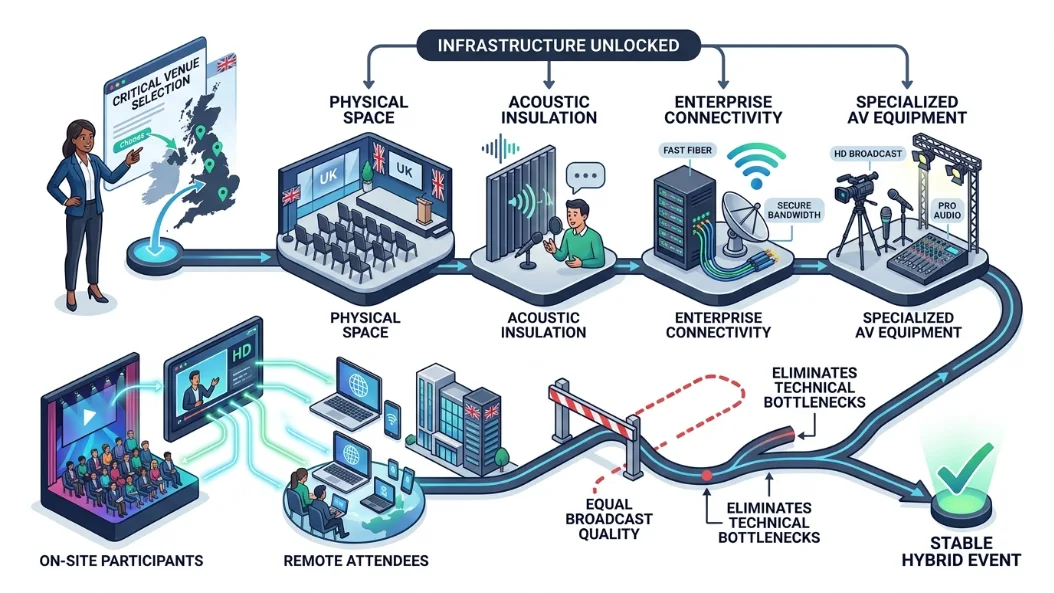
Professional facilities eliminate technical uncertainty. Standard office meeting spaces lack the soundproofing, ceiling height, and lighting controls necessary for high-definition streaming. Dedicated venue spaces integrate broadcast-grade cameras, spatial microphone arrays, and isolated control rooms. These features allow technical operators to manage streams without disturbing physical audience members.
Network reliability serves as the primary pillar of hybrid execution. Streaming high-definition video feeds while hundreds of physical guests access local Wi-Fi crashes standard commercial networks. Professional venues supply dedicated symmetrical fiber connections. They partition guest Wi-Fi networks away from broadcast streams. Organizations secure professional outcomes when they [BOFU Article Title: Hire Video-Enabled Conference Venues From Form My Company].
How Can Businesses Seamlessly Execute Hybrid Events?
Execute successful hybrid events by hiring fully equipped facilities, establishing dual-audience engagement protocols, testing hardware setups, and assigning dedicated digital hosts. Form My Company provides state-of-the-art venue spaces that unite physical presentations with online streaming platforms.
Execution requires structured planning sequences. Event teams must build parallel schedules that account for both in-person and digital workflows. Virtual attendees require frequent breaks to prevent screen fatigue, while physical guests need structured networking intervals and refreshment breaks. Assigning a dedicated online moderator ensures remote participants receive prompt answers to chat inquiries during live keynote speeches.
Physical infrastructure remains the foundational element for professional delivery. Selecting appropriate [Conference Room] environments equips presenters with studio-quality lighting, high-definition displays, and integrated audio capture. Form My Company delivers scalable physical environments optimized for high-impact hybrid execution.
Enterprise organizations count on certified venues to protect their brand reputation. Selecting proper hosting facilities ensures seamless content transmission, robust audience interactions, and measurable business growth across physical and virtual markets. Form My Company supports business growth by delivering fully integrated venue solutions tailored to modern hybrid demands.
Explore our Conference Rooms guide,
Hourly vs Daily Interview Room Hire: Which Costs Less?
How to Budget for Conference Catering Without Overspending
What features should you look for in a video-enabled conference room?
When selecting a video-enabled conference room, look for high-definition audiovisual equipment, high-speed symmetrical internet connectivity, and studio-grade soundproofing. Modern spaces provided by Form My Company also feature spatial microphone arrays, multi-camera live switching capabilities, and dual-display monitors. These integrated tools ensure clear communication and smooth interaction between on-site and remote participants.
How do professional conference room rentals support hybrid business meetings?
Professional conference room rentals provide dedicated broadcast infrastructure that prevents common technical glitches like latency, audio feedback, or streaming drops. Form My Company offers enterprise-grade facilities equipped with isolated networks and integrated video conferencing hardware. This allows organizations to run dual-audience meetings efficiently without buying or maintaining expensive technical setups in-house.
Can I hire a conference room for a single-day corporate event or meeting?
Yes, flexible venue providers like Form My Company offer short-term conference room hire on an hourly, half-day, or full-day basis. Businesses can access fully equipped meeting facilities with on-site technical support without long-term commercial lease commitments. This pay-as-you-go model gives growing SMEs and enterprise teams cost-effective flexibility for AGMs, workshops, and product launches.
How much bandwidth is required to host a hybrid conference without streaming lag?
A reliable hybrid event requires a dedicated symmetrical broadband connection offering at least 20 to 50 Mbps upload and download speeds specifically isolated for the broadcast stream. Form My Company conference rooms supply enterprise fiber lines that partition general guest Wi-Fi away from primary streaming channels. This network isolation prevents bandwidth congestion when multiple attendees access local networks simultaneously during live broadcasts.
What is the difference between a standard meeting room and a hybrid conference room?
A standard meeting room typically offers basic seating, a projector or TV screen, and standard webcams suited for small internal discussions. In contrast, a hybrid conference room from Form My Company includes professional acoustic insulation, studio lighting arrays, multi-channel mic setups, and broadcast-grade streaming hardware. These specialized features ensure remote participants experience the same high-quality visuals and clear audio as physical guests.