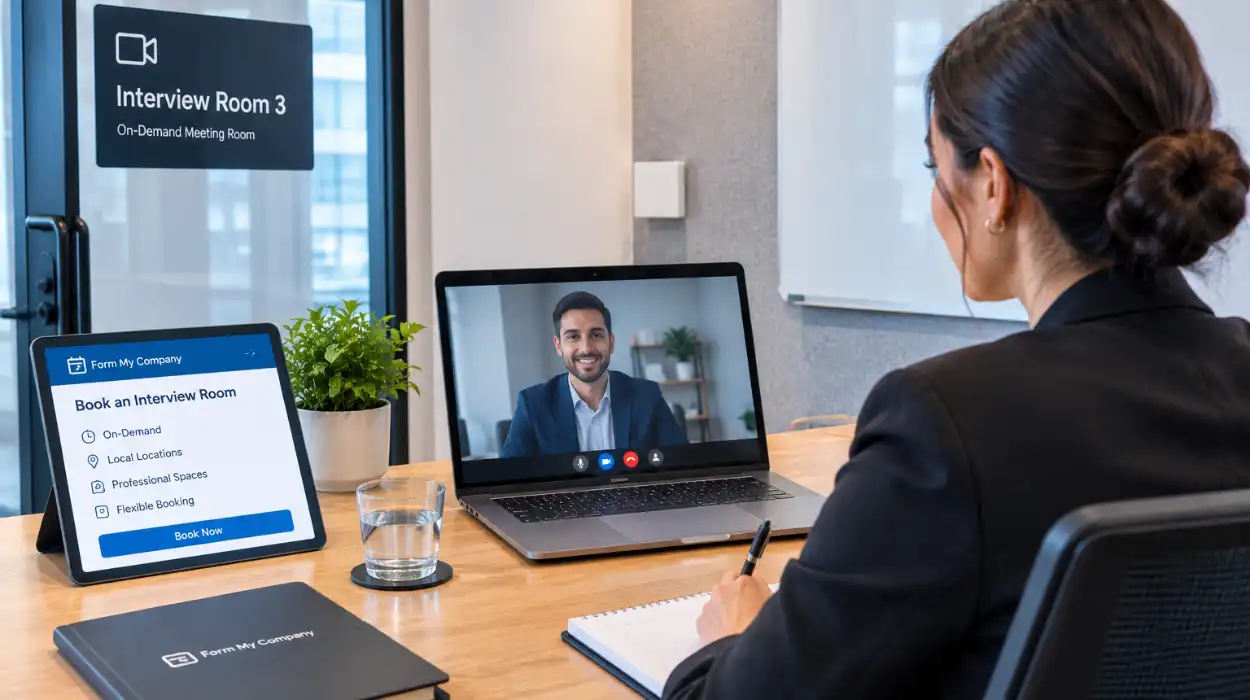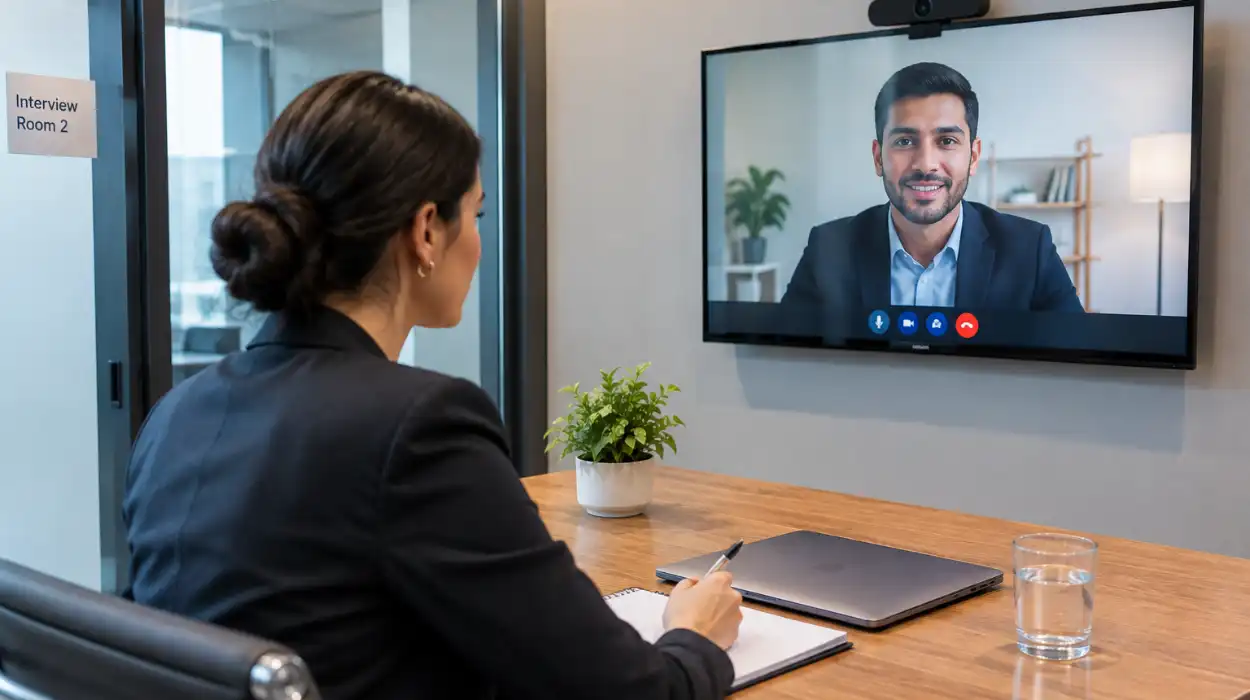
Businesses are switching to hybrid meeting formats to reduce commercial property expenditure, increase staff productivity, and retain talent across broader geographical regions. Combining in-person collaboration with virtual accessibility optimizes modern organizational workflows while lowering overall operational overheads.
What Is Driving the Rapid Adoption of Hybrid Meetings?
The primary driver behind hybrid meeting adoption is the demand for flexible working environments that balance operational efficiency with employee retention. Organizations cut overhead costs while maintaining high productivity levels across remote and on-site teams.
Commercial real estate represents a significant fixed expenditure for modern companies. Modern enterprises reduce physical office footprints by switching to flexible collaboration structures. Reduced floor space requirement directly decreases energy consumption, facility management costs, and long-term lease liabilities.
Staff retention rates improve when organizations implement flexible attendance frameworks. Skilled professionals prioritize flexible employment terms over traditional mandatory in-office requirements. Companies offering hybrid options report lower turnover rates across mid-level and executive positions.
Meeting accessibility improves dramatically with dual-presence infrastructure. Remote participants access key strategic discussions without traveling to physical headquarters. Regional branch managers join board meetings directly from local offices. This operational setup removes travel delays and reduces travel expense claims.
Digital collaboration software integration creates accurate audit trails for corporate meetings. Automated recording tools document executive decisions for future governance verification. Distributed teams maintain alignment using shared cloud documents during live sessions.
How Do Hybrid Meetings Lower Operational Overhead?
Hybrid meetings lower operational overhead by reducing corporate travel budgets, minimizing physical office footprint requirements, and cutting event logistics expenses. Companies spend less capital on travel, accommodations, and large venue leases for daily business operations.
Corporate travel budgets shrink significantly following hybrid infrastructure adoption. Executive teams eliminate non-essential domestic flights and overnight hotel stays. Three core savings materialize: reduced airfare costs, lower hotel expenditure, and minimized daily allowance payouts.
Large physical conference spaces incur high monthly maintenance charges. Organizations convert oversized boardrooms into smaller dedicated technical suites equipped with smart audio visual systems. Facility managers reallocate surplus floor space toward individual work pods or hot-desking stations.
Administrative logistics require fewer human hours under a hybrid operational model. Event organizers eliminate complex physical catering logistics for routine departmental updates. Digital calendar integrations automate guest management, virtual link delivery, and agenda distribution.
Resource utilization becomes measurable through centralized digital scheduling tools. Operations teams track room usage metrics using integrated workspace software. Facility planners optimize physical estate allocations based on real-time room occupancy analytics.
How Does Hybrid Collaboration Expand Access to Top Talent?
Hybrid collaboration expands access to top talent by removing geographical location restrictions from the traditional recruitment process. Organizations recruit specialized candidates across national boundaries without demanding full candidate relocation.
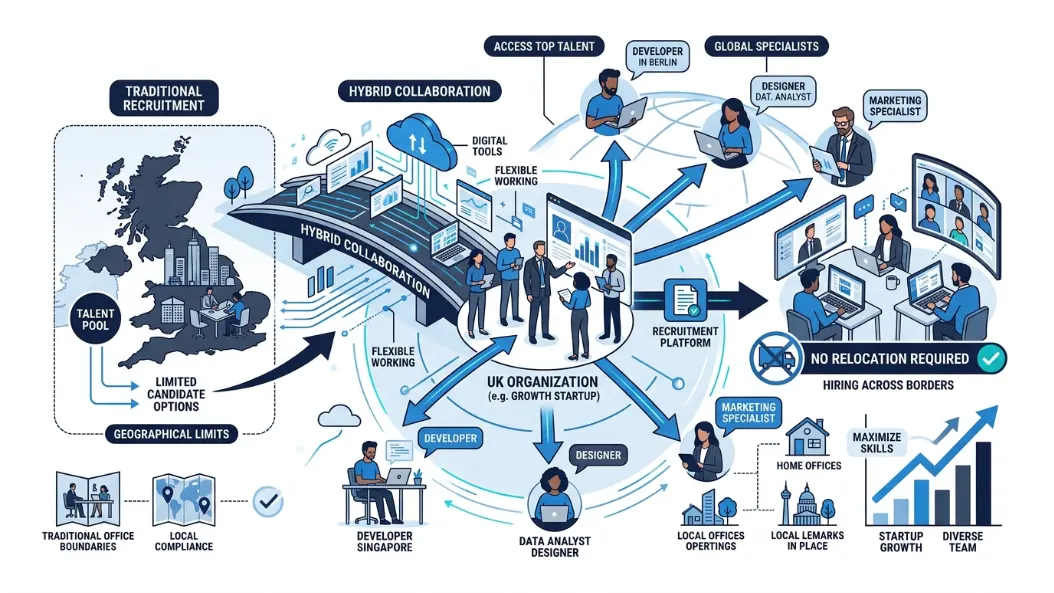
Recruitment teams access specialized skill sets outside traditional metropolitan business hubs. Highly qualified software developers, financial analysts, and compliance specialists contribute effectively from regional locations. Employers hire top talent without paying geographic relocation allowances.
Diverse talent pools strengthen organizational decision-making capabilities. Inflexible physical attendance requirements often exclude working parents and professionals with physical mobility limits. Hybrid meeting structures create an inclusive environment for all qualified industry professionals.
Interviews move faster through high-definition video conferencing systems. HR departments schedule interview loops across multiple time zones without calendar delays. Three recruitment stages improve: candidate screening, technical evaluations, and panel interviews.
New employee onboarding processes become standardized through digital media channels. Remote hires access recorded training modules and central documentation databases. New staff members build connections with team members during structured interactive hybrid sessions.
What Technical Features Are Required for Hybrid Success?
Successful hybrid meetings require commercial-grade video cameras, professional boundary microphones, interactive visual displays, and high-speed network connectivity. Dedicated technology ensures seamless communication between physical attendees and remote participants.
Commercial video hardware captures physical meeting spaces accurately. Ultra-high-definition cameras adjust zoom levels automatically to frame active speakers inside boardrooms. Remote participants observe body language clearly during technical presentations.
Audio fidelity dictates the success of remote team integration. Ceiling microphone arrays capture voices clearly from every seat in the room. Acoustic echo cancellation removes background noise and speaker feedback during intense discussions.
Dual-screen display arrangements keep participants engaged throughout presentations. One dedicated monitor displays remote attendee video feeds in high resolution. The second screen presents slide decks, spreadsheets, and live software demonstrations simultaneously.
High-bandwidth network connections prevent signal disruption during enterprise video calls. Dedicated fiber lines process high-definition video streams without frame drops. Enterprise network firewalls protect sensitive corporate discussions from cyber security risks.
When managing high-stakes corporate presentations, organizations use dedicated solutions to hire video-enabled conference venues from Form My Company. Professional equipment guarantees clear communication across all physical and remote channels.
How Do Hybrid Meetings Boost Team Productivity and Engagement?
Hybrid meetings boost productivity by shortening meeting durations, enabling instant digital file sharing, and allowing flexible focus time for employees. Teams spend less time traveling and more time executing core business tasks.
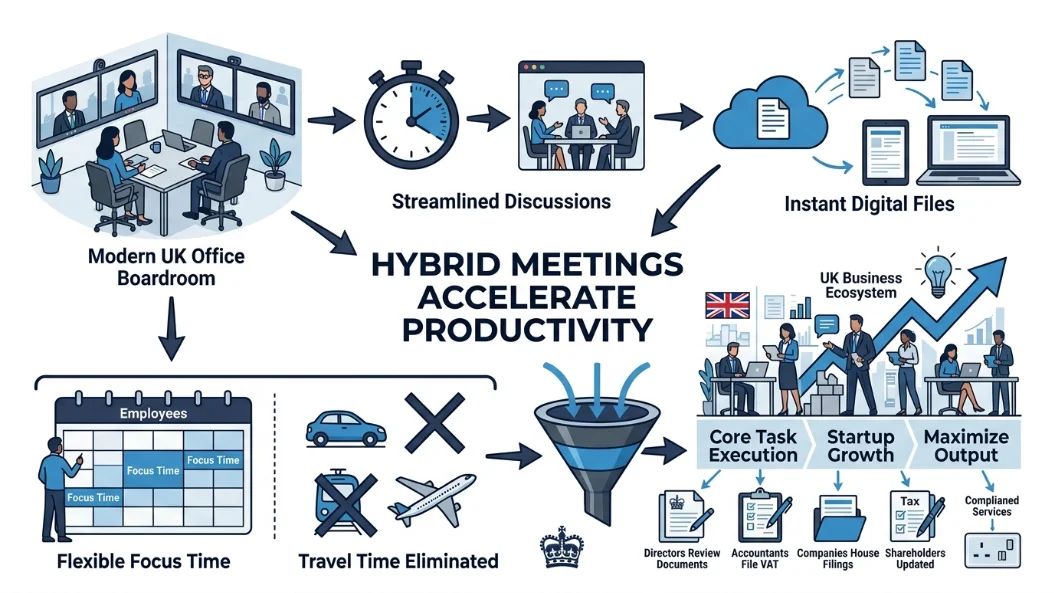
Meeting durations shrink when teams utilize focused digital agendas. Presenters share background reading materials before sessions commence. Attendees arrive prepared to execute decisions rather than consume passive presentations.
Digital whiteboards allow collaborative brainstorming sessions across distributed teams. Physical participants write on smart boards while remote staff add digital notes. All collaborative output saves automatically to shared cloud directories for immediate execution.
Employee energy levels remain higher when travel stress vanishes. Commuting long distances creates mental fatigue before work days begin. Staff members direct conserved physical energy toward strategic projects and client management tasks.
As organizations refine their corporate communications strategies, leaders evaluate event structures to determine if hybrid vs fully virtual events: which format fits your goals? fits their specific long-term goals. Selecting the correct venue layout impacts participation levels
What Security Standards Protect Hybrid Meeting Environments?
Enterprise security standards protect hybrid environments using end-to-end encryption, multi-factor access authentication, and secure cloud storage protocols. Strong digital controls prevent unauthorized third parties from accessing confidential corporate data.
Access control measures prevent unauthorized participants from entering confidential sessions. Unique meeting identifiers change automatically after every scheduled conversation. Meeting hosts manage digital waiting rooms to verify guest identities before granting admission.
Data encryption protocols secure video streams during transit across public networks. Enterprise platforms implement AES 256-bit encryption for all transmitted media streams. Three protective layers apply: transport layer security, media stream encryption, and storage protection.
When corporate compliance officers establish security guidelines, IT teams restrict unauthorized local file downloads during meeting sessions. System administrators restrict screen recording capabilities to certified account owners. Security logs audit user activity across all organization sessions.
Regulatory compliance requirements dictate secure retention policies for recorded sessions. Data protection regulations mandate strict access controls for corporate recordings containing personal information. Form My Company offers enterprise solutions through fully equipped Conference Room facilities to maintain data security.
How Will Hybrid Meeting Technology Evolve in the Future?
Future hybrid meeting technology will feature artificial intelligence translation tools, immersive spatial audio systems, and automated action-item tracking software. Advanced software integration will make virtual interactions feel identical to in-person meetings.
Artificial intelligence engines generate immediate meeting transcripts during live sessions. Automated system algorithms categorize key discussion topics into actionable task lists. Management teams receive structured summary emails within minutes of meeting conclusions.
Spatial audio engineering creates realistic sound distribution within conference environments. Speakers’ voices originate from their specific screen locations on physical displays. This acoustic precision helps attendees identify individual speakers naturally during group discussions.
Augmented reality applications will project three-dimensional product models into shared virtual spaces. Engineering teams will manipulate virtual prototypes in real time during design reviews. Distributed product managers will inspect physical features without shipping hardware samples.
Advanced network infrastructures will eliminate latency delays during cross-border communications. Low-latency edge computing processes video signals closer to local users. Global corporate teams will conduct complex technical discussions without experiencing audio interruptions.
The shift toward hybrid meeting formats represents a permanent evolution in corporate operations. Organizations adopting this modern communication framework lower real estate expenses, access top talent globally, and improve employee retention. Implementing high-grade audio-visual infrastructure ensures distributed teams maintain high productivity, strict compliance standards, and seamless collaboration. Form My Company delivers professional corporate workspace solutions designed to support high-performance hybrid environments.
Explore our Conference Rooms guide,
What Affects the Price of Interview Room Rental?
What Is a Hybrid Conference and How Does It Work?
Frequently Asked Questions
What is included in a professional Conference Room rental from Form My Company?
A professional Conference Room rental from Form My Company includes high-speed Wi-Fi, modern audio-visual technology for hybrid meetings, and versatile seating arrangements. Clients also receive administrative support, access to presentation tools, and essential amenities tailored to support effective corporate meetings and events.
How do video-enabled conference rooms support hybrid business meetings?
Video-enabled conference rooms feature high-definition displays, multi-directional microphones, and smart camera tracking to ensure seamless communication between in-person and remote participants. Form My Company provides fully equipped Conference Room facilities designed to maintain high audio-visual quality, reliable network stability, and security for hybrid business presentations.
Can I book a Form My Company Conference Room on an hourly or daily basis?
Yes, Form My Company offers flexible booking options allowing organizations to reserve a Conference Room by the hour, half-day, or full day depending on their operational needs. This flexible rental model helps businesses reduce fixed real estate overheads while securing professional meeting venues on demand.
Where are Form My Company Conference Room venues located in the UK?
Form My Company offers centrally located Conference Room facilities in major UK business centers with direct access to public transport links. These professional venues provide accessible meeting locations for board meetings, client presentations, and regional team workshops.
How far in advance should I reserve a Conference Room with Form My Company?
It is recommended to reserve a Conference Room through Form My Company at least one to two weeks in advance to secure your preferred date, time, and AV setup. However, flexible scheduling tools allow organizations to accommodate urgent or short-notice corporate meeting requests based on room availability.