
Protecting company assets requires securing corporate identity data at Companies House, implementing strict internal access controls, and using automated fraud monitoring systems. Businesses safeguard physical, financial, and legal structures by validating corporate records continuously, verifying director identities, and securing statutory documentation against unauthorized alterations.
What Is Company Asset Fraud and How Does It Occur?
Company asset fraud occurs when unauthorized individuals manipulate corporate identity details, falsify statutory documents, or exploit digital access points to steal corporate resources. Fraudsters alter official registry filings, impersonate directors, or intercept business communications to transfer property, divert revenues, or execute unauthorized transactions.
Corporate identity theft remains one of the fastest-growing financial crimes affecting registered entities in the UK. Perpetrators gain unauthorized entry to corporate filings by obtaining statutory login credentials or submitting fraudulent physical paper forms to official registers.
When bad actors access these records, they alter director names, change registered office addresses, and update shareholder structures without authorization. These fraudulent modifications allow criminals to establish line-of-credit accounts under the targeted company name, order high-value supplies, or securing loans against existing corporate assets.
Digital fraud vectors typically target business communications and credential databases. Cybercriminals execute phishing campaigns to capture internal database passwords, financial software logins, and corporate domain controls.
Once inside corporate networks, unauthorized users manipulate invoice details, divert supplier payments into criminal bank accounts, or extract proprietary database information. Protecting corporate operational continuity requires deploying dedicated digital tracking tools alongside a proactive fraud protection service to detect fraudulent filings immediately.
Why Are UK Companies Vulnerable to Registry and Corporate Identity Theft?
UK companies face registry vulnerabilities because official corporate databases operate on a self-certification model that processes filings before verifying authenticity. Criminals exploit this system by filing unauthorized corporate changes online or on paper, allowing immediate alteration of public company records.
Companies House acts as a registrar of information rather than an investigative authority. Filings submitted electronically or by post are accepted on the assumption that the applicant possesses legal authority to submit changes.
This structural open-access design allows bad actors to submit fraudulent forms, such as changes of registered office addresses or director resignations, without prior verification. Fraudulent changes take effect immediately on the public record, giving criminals legitimate standing to act on behalf of the company.
Physical address spoofing presents another significant risk factor. Criminals update a targeted entity’s registered address to a location under their control.
Subsequent legal notices, bank statements, and credit line confirmations are redirected away from legitimate owners. The legitimate business directors often remain unaware of the fraud until creditors attempt to recover unpaid debts or bailiffs arrive at corporate premises.
Companies must monitor their public filings constantly to identify unauthorized record submissions before financial damage occurs.
How Do Fraudsters Hijack Directors’ Identities and Statutory Records?
Fraudsters hijack director identities by acquiring personal identification information from public registers, corporate websites, and social media platforms. Criminals combine these public details with stolen official credentials to submit falsified appointment forms, modify shareholder structures, and assume legal control of targeted corporate entities.
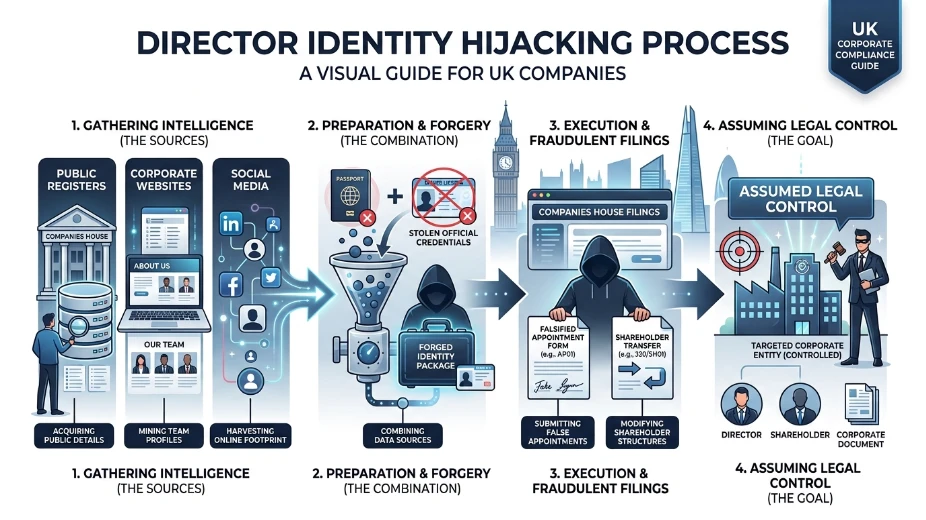
Public registers display significant personal data, including director full names, birth months and years, and residential service addresses. Fraudulent actors extract this data to impersonate legitimate company officers.
Criminals use forged documents to file change-of-director forms with registry authorities. Appointing bogus directors or removing legitimate officers gives bad actors full legal authority to bind the company to contracts and execute corporate debt agreements.
Statutory document manipulation extends to internal minute books, registers of members, and share certificates. When internal corporate documentation lacks security or centralized tracking, unauthorized parties fabricate share transfers or issue new shares to diluted legitimate ownership percentages.
Resolving these unauthorized filings requires lengthy legal proceedings, court orders, and substantial expenditure. Business owners must reconcile internal statutory filings continuously against external corporate registry entries.
Reviewing internal records vs. Companies House filings helps corporate teams identify discrepancy patterns early and maintain legal control over corporate assets.
What Are the Most Common Types of Digital Fraud Targeting Businesses?
The most common types of digital fraud targeting businesses include Business Email Compromise (BEC), invoice redirection, unauthorized software exploitation, and credentials harvesting. Cybercriminals intercept administrative communications, alter payment details, and exploit unsecured database infrastructure to extract corporate capital.
Business Email Compromise (BEC) accounts for billions in corporate losses annually across global markets. Perpetrators impersonate executive officers, legal counsel, or key suppliers by establishing look-alike domain names or compromising legitimate corporate email accounts.
Criminals send urgent transfer instructions to finance department personnel, instructing them to route funds to fraudulent bank accounts. Because these requests appear authentic and bypass traditional email security filters, staff members often execute the unauthorized transfers without secondary confirmation.
Invoice redirection fraud targets business-to-business vendor transactions. Attackers monitor email threads between businesses and suppliers using stealth malware or compromised cloud accounts.
When a genuine invoice is generated, criminals modify payment routing information, such as bank sort codes and account numbers, before forwarding the invoice to the purchasing entity. The paying organization transfers funds believing they are settling a legitimate commercial debt, only discovering the fraud weeks later when the real vendor requests payment.
Implement dual-authorisation protocol: Require two separate corporate managers to approve every bank transfer exceeding £1,000.
Enforce verbal verification procedures: Confirm updated vendor payment details using verified phone numbers before executing bank transfers.
Deploy multi-factor authentication (MFA): Restrict system logins across all corporate networks, cloud platforms, and financial software.
Conduct routine network access audits: Revoke digital database keys and email access for former employees immediately upon departure.
How Can Businesses Build a Dual-Layer Legal and Digital Defense?
Businesses build a dual-layer legal and digital defense by combining electronic registry monitoring, secure statutory archive management, multi-factor database security, and clear internal access control protocols. This approach blocks unauthorized physical filings while securing digital operational channels.
Legal asset protection begins with securing public corporate records against unauthorized modification. Companies must register for electronic filing services that automatically reject paper-based submission attempts by default.
Enabling web filing security codes ensures that Companies House accepts record updates only when verified authentication credentials accompany the submission. Organizations should also sign up for automated filing alert services that send immediate email notifications whenever any filing activity occurs under their registration number.
Digital defense mechanisms must protect internal operational workflows and financial networks. Companies should deploy centralized corporate record storage solutions to ensure statutory documents, board minutes, and shareholder registers remain immutable.
Maintaining internal record integrity prevents bad actors from altering administrative credentials or claiming unauthorized ownership transfers. Executives can secure statutory documents with our professional archiving services to establish an immutable audit trail for legal records.
Combining electronic database tracking with physical archive protection prevents registry fraud and mitigates external digital attacks effectively.
What Steps Should a Business Take Immediately If Targeted by Asset Fraud?
If targeted by asset fraud, a business must immediately report the unauthorized activity to official registry authorities, freeze compromised financial accounts, initiate a forensic digital review, and secure administrative documentation. Taking rapid action prevents further unauthorized transfers and preserves legal evidence.
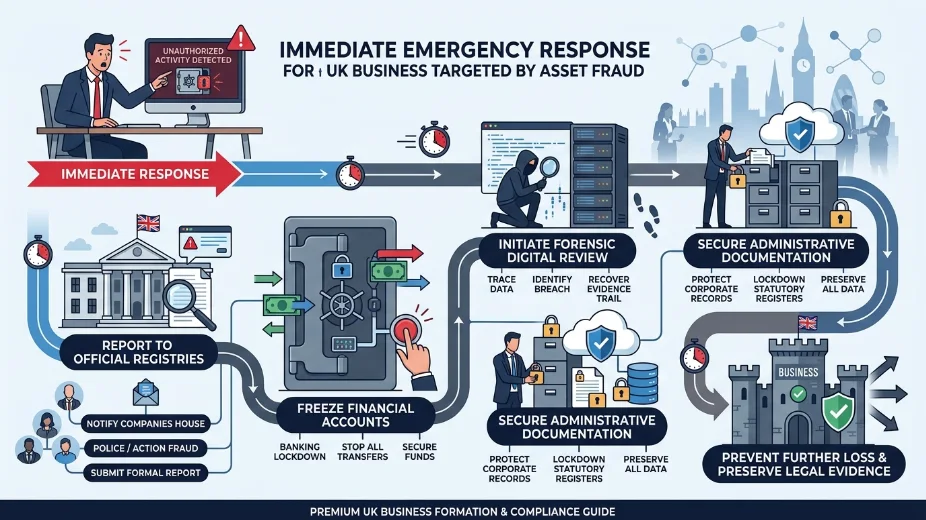
When unauthorized changes appear on corporate public registers, executives must notify Companies House immediately to file formal dispute notices. Directors must submit sworn declarations confirming that disputed filings, such as unauthorized address changes or director removals, occurred without corporate authorization.
Prompt notification helps initiate administrative rectification processes to restore public records to their legitimate status before secondary financial liabilities occur.
Simultaneously, the target business must notify financial institutions and legal advisors. Banks must freeze affected corporate lines of credit, credit cards, and online banking profiles to stop unauthorized fund transfers.
Internal IT infrastructure teams must initiate credential resets across all corporate accounts, revoke compromised remote desktop access keys, and isolate affected hardware for forensic investigation. Documenting all unauthorized changes, emails, and transaction logs ensures businesses maintain the necessary evidence to support law enforcement investigations and insurance recovery claims.
Protecting corporate assets requires continuous monitoring of statutory registry records, strict operational controls, and secure digital infrastructure management. As corporate fraud tactics become increasingly sophisticated, businesses must adopt proactive legal and digital strategies to prevent administrative hijacking and financial losses.
Form My Company provides comprehensive legal protection, registry monitoring, and corporate archiving solutions designed to keep company structures secure and compliant. Maintaining verifiable corporate records and active monitoring defenses ensures your operational assets remain fully protected against external and internal threats.
Explore our Fraud Protection guide,
How Cambodian Entrepreneurs Use UK Companies for Global Trade
UK Company Formation from Canada: Tax Treaty Benefits (2026)
Frequently Asked Questions
How can UK companies protect their business from corporate identity theft?
UK companies can protect their corporate identity by registering for electronic filing services, securing statutory records, and setting up automated filing alerts. Services like Form My Company’s fraud protection help monitor official registry activity to block unauthorized changes to director credentials or registered office addresses. Combining digital access controls with proactive registry monitoring prevents bad actors from hijacking corporate assets.
What is the most effective way to prevent unauthorized changes at Companies House?
The most effective way to prevent unauthorized filings is by joining the Protected Online Filing (PROOF) scheme and enabling web filing authentication. Form My Company’s fraud protection solutions ensure that Companies House automatically rejects paper filings, requiring verified digital credentials for any administrative update. This prevents fraudsters from submitting false resignations, fake director appointments, or fraudulent address changes.
How do I know if my company filings have been tampered with?
Company directors can identify unauthorized changes by regularly reviewing public registry records against internal corporate logs or setting up automated real-time filing alerts. Form My Company offers a fraud protection monitoring service that immediately alerts business owners whenever a new document or change is submitted to Companies House. Early detection allows businesses to dispute fraudulent filings before financial damage or legal liability occurs.
What steps should a business take if its registered office address is fraudulently changed?
If a registered office address is changed without authorization, the company must immediately report the fraudulent filing to Companies House and notify its bank to freeze affected accounts. Form My Company assists businesses using its fraud protection service to submit formal dispute notices and expedite the administrative rectification process. Prompt reporting ensures legal notices and official mail are re-routed to the legitimate business owners.
Why do small businesses need dedicated corporate fraud protection services?
Small businesses are frequent targets for legal and digital fraud because public registers expose key administrative details that cybercriminals exploit to secure loans or divert vendor payments. Form My Company provides specialized fraud protection that bridges the gap between public registry security and internal record management. This dual-layer defense secures statutory documentation, protects corporate reputation, and preserves operational integrity.