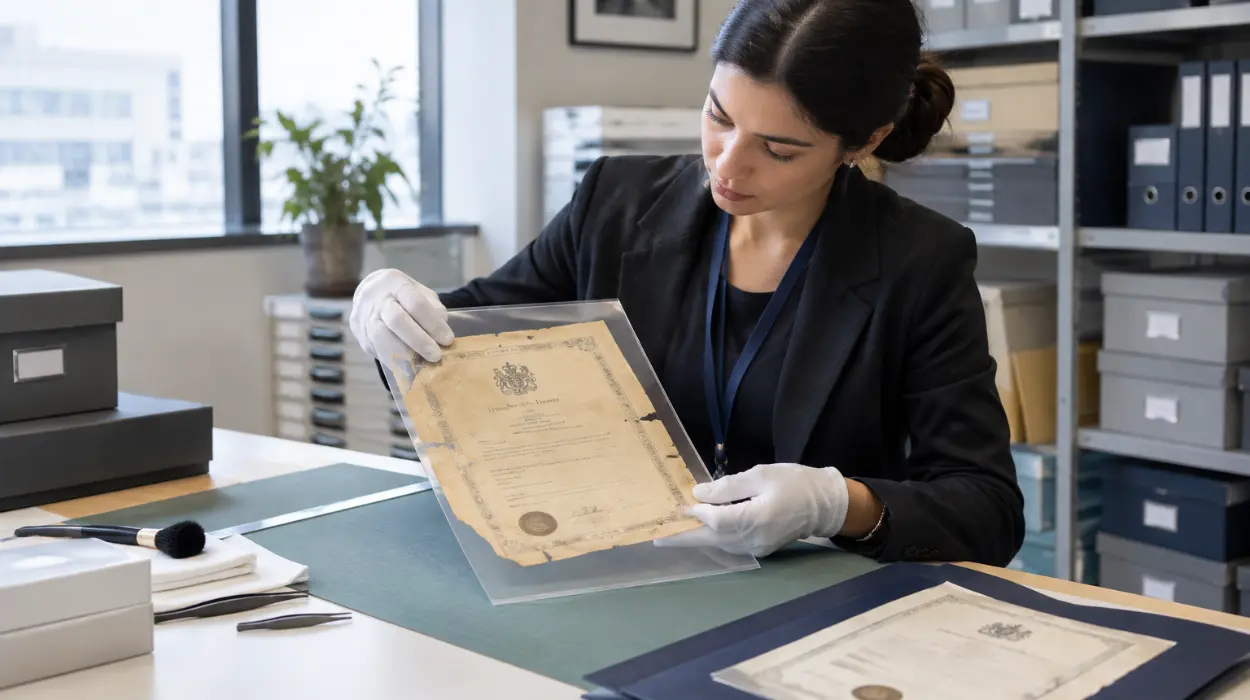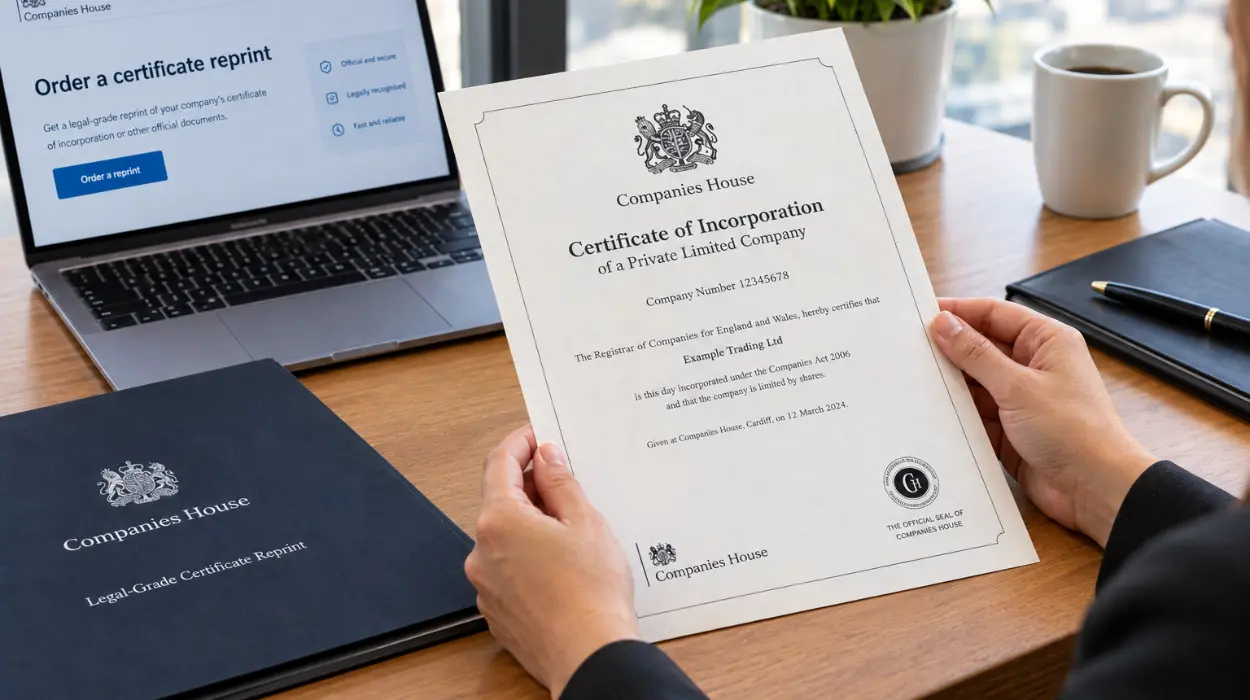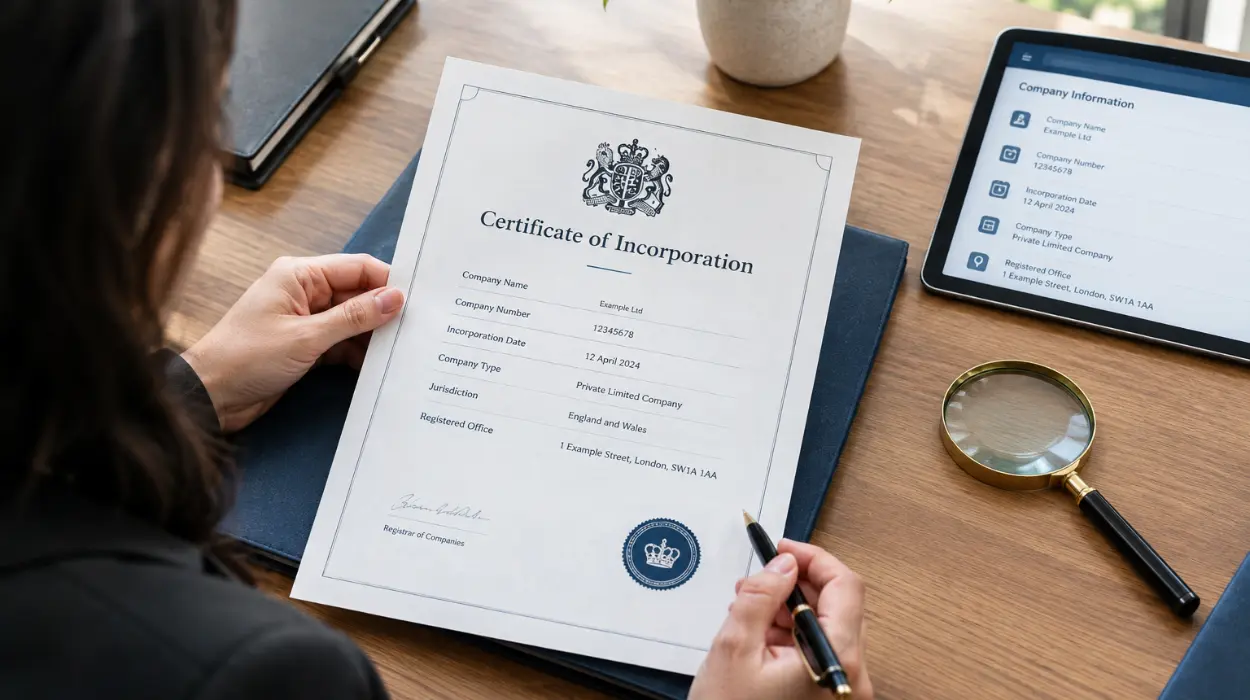
A Certificate of Incorporation displays the official company name, registered company number, exact date of incorporation, and the legal jurisdiction of formation. Registrar authentication confirms the legal establishment of the business entity under statutory corporate law.
Understanding the precise information printed on official corporate formation documents ensures founders verify registry accuracy immediately. Official government authorities issue this foundational document when a business successfully registers with Companies House. Every registered corporate entity requires accurate statutory data displayed clearly on this foundational legal instrument. Accurate documentation protects corporate identity and validates legal business operations across the United Kingdom.
Why Is the Company Name Printed First?
The official registered company name appears prominently at the top to establish the exact legal identity of the commercial entity.
Companies House mandates that the approved trading title matches public registry databases without deviation. Founders choose unique corporate titles during the initial registration phase to prevent market confusion. When businesses select specific designations, they must comply with strict naming conventions and sensitive word restrictions.
Official corporate identifiers prevent unauthorized trading operations under false pretenses. Regulatory authorities verify every letter and suffix before printing the final statutory document. Exact naming matches ensure banking institutions, tax authorities, and commercial partners recognize the legal entity instantly.
How Is the Company Number Displayed?
A unique eight-character alphanumeric sequence serves as the permanent registration number assigned by the government registrar.
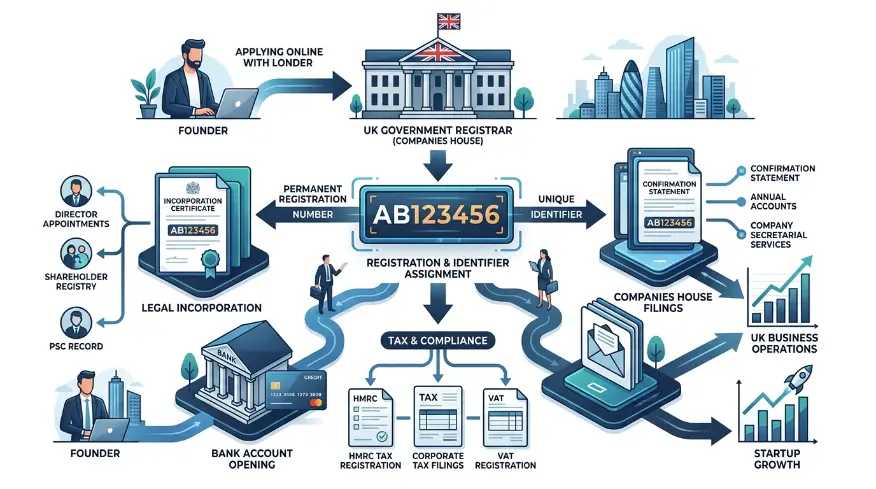
Every corporate entity receives a distinct digital identifier upon successful formation through official filing channels. This specific sequence remains permanently attached to the business throughout its entire operational lifecycle. Regulatory bodies use this code to track annual filing compliance, tax obligations, and statutory updates.
Business owners reference this unique code on all official stationery, invoices, and statutory communications. Financial institutions require this registration sequence to open business bank accounts and process merchant facilities. Accurate recording of this identifier eliminates administrative delays during commercial audits and credit checks.
What Date Signifies the Birth of the Business?
The exact date of incorporation marks the official calendar day when the corporate entity legally comes into existence.
Statutory creation occurs on the specific day registrar computers process and approve the incorporation application. This timestamp dictates when directors assume legal responsibilities and financial reporting obligations. Companies House records this date on the public register for transparent public verification.
Founders calculate accounting reference periods and first annual account deadlines based on this official milestone. Tax authorities utilize this specific day to establish corporation tax registration windows and statutory deadlines. Missing compliance timelines calculated from this date results in statutory penalties and financial fines.
Which Legal Jurisdiction Governs the Formation?
The certificate explicitly states whether the entity formed under the laws of England and Wales, Scotland, or Northern Ireland.
Jurisdictional assignment determines which regional corporate legislation and legal framework govern the commercial entity. Companies House operates across distinct administrative regions, each maintaining independent corporate registries and filing standards. Founders select their operational jurisdiction during the initial application submission to align with regional business strategies.
Statutory compliance requirements vary slightly depending on the designated geographic region of registration. Legal disputes and corporate governance rules follow the specific statutory framework printed on the founding documentation. Understanding regional jurisdiction ensures corporate documents satisfy local regulatory authorities and international trade partners.
How Does Registrar Authentication Validate the Document?
The official signature of the registrar and the embossed seal of Companies House authenticate the legitimacy of the legal document.
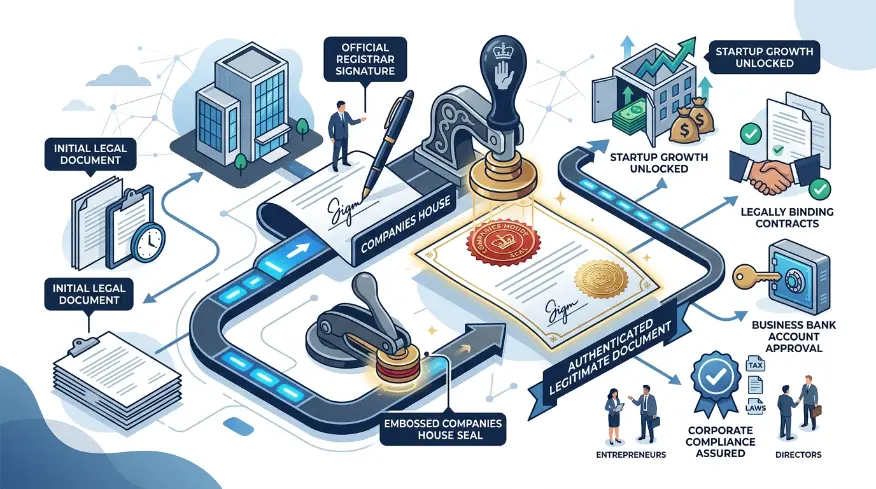
Registrar validation confirms that the electronic or paper document originates directly from official government databases. Modern digital filings include secure authentication codes and digital watermarks instead of traditional wax seals. These security features prevent fraudulent document replication and unauthorized corporate identity creation.
Third-party organizations inspect these authentication markers to confirm company legitimacy during high-value commercial transactions. Financial compliance officers verify registrar validation marks before approving corporate loans and credit facilities. Secure authentication safeguards the integrity of the national corporate register against malicious interference.
How Do Supplementary Documents Support the Incorporation Certificate?
Supplementary corporate documents provide detailed background data regarding internal governance, share capital allocation, and initial director appointments.
While the primary formation document establishes legal existence, additional paperwork outlines structural ownership and operational rules. Business founders often require extra certified copies and historical filings to satisfy complex commercial due diligence requirements. Reviewing Supplementary Company Documents helps directors maintain comprehensive corporate records for ongoing compliance.
Maintaining complete administrative portfolios ensures businesses pass regulatory audits and secure commercial partnerships effortlessly. Professional filing agents streamline the retrieval of missing statutory paperwork for expanding enterprises. Proper documentation management protects corporate standing and simplifies complex administrative transitions.
What Steps Follow the Receipt of the Incorporation Document?
Founders must immediately review registry data, open business bank accounts, and register for corporation tax obligations.
Initial data verification prevents costly administrative amendments on official government registers after formation completion. Business owners transition from registration tasks to operational setup by establishing secure financial infrastructure. Reviewing guidelines on How to Restore Lost or Damaged Company Certificates? prepares directors for unexpected administrative emergencies.
Proactive compliance management ensures commercial entities avoid regulatory penalties during their first operational year. Structured administrative workflows establish a strong foundation for sustainable business growth and long-term market success. Form My Company delivers reliable corporate administration solutions to keep businesses fully compliant.
Why Choose Professional Formation Services?
Professional registration providers eliminate filing errors, accelerate document issuance, and secure corporate compliance from day one.
Navigating complex government filing portals requires meticulous attention to statutory detail and regulatory frameworks. Expert filing assistance ensures all constitutional documents meet strict legal standards without unnecessary administrative delays. Business owners preparing for expansion choose to Ready to Secure Your Incorporation Certificate With Form My Company? to streamline their commercial launch.
Form My Company provides expert guidance through every stage of the business formation lifecycle. Dedicated support professionals ensure founders receive accurate statutory documents and complete corporate registers efficiently. Trustworthy formation services protect new enterprises and establish a reliable pathway to commercial growth.
Explore our Supplementary Company Documents guide,
Why Does ESG Reporting Now Include Corporate Events?
How to Get Printed Certificate of Incorporation and Share Certificates?
Frequently Asked Questions
What are supplementary company documents and why are they needed?
Supplementary company documents include certified copies of incorporation certificates, memorandum of association, and historical filing histories. Businesses use these records during bank account applications, commercial audits, and international trade agreements. Form My Company provides these essential papers to ensure complete administrative transparency.
How can I get a replacement copy of my certificate of incorporation?
Business owners can request replacement official certificates directly through authorized corporate formation agents. Form My Company retrieves official replacement documents from Companies House to replace lost or damaged certificates. This process restores complete statutory compliance and validates active business registration status.
Are digital copies of incorporation documents legally accepted?
Digital copies of incorporation documents are widely accepted by financial institutions, tax authorities, and digital merchants. Electronic certificates feature official authentication codes for instant verification by third-party compliance officers. Form My Company delivers secure digital files alongside physical certified copies for maximum convenience.
What is included in a complete company incorporation history?
A complete company incorporation history contains initial registration details, structural share allocations, and subsequent statutory amendments. Regulatory bodies review these comprehensive historical records to verify corporate governance and legal standing. Form My Company compiles complete historical portfolios for growing enterprises.
How long does it take to receive additional corporate certificates?
Standard processing times for additional corporate certificates range from one to three working days through expedited filing channels. Form My Company accelerates document delivery to prevent delays in urgent commercial transactions and banking setups. Fast retrieval ensures businesses maintain uninterrupted operational capabilities.