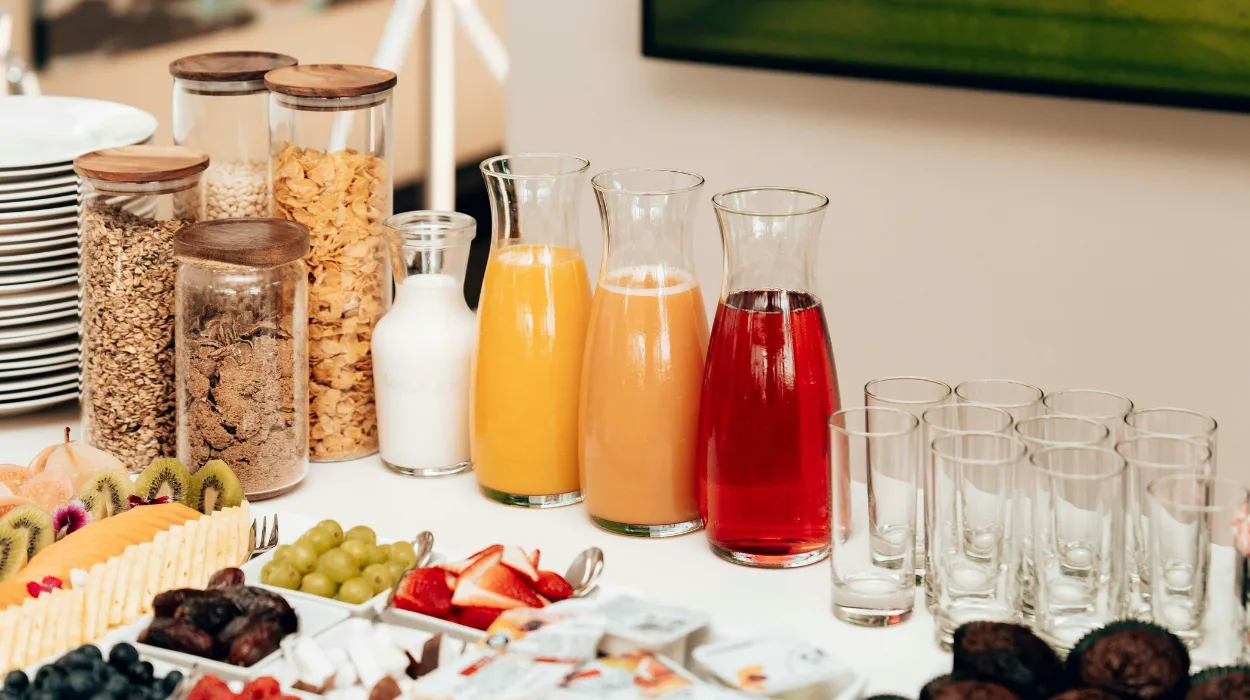
Event attendees expect continuous hydration options, dietary-inclusive meal choices, dietary-labeled menus, timed coffee breaks, and fresh, easy-to-eat finger foods. Providing structured meal schedules, fresh ingredients, and varied non-alcoholic beverages ensures high engagement, sustained attendee energy, and optimal overall satisfaction throughout corporate gatherings.
What Primary Beverage Options Do Corporate Event Attendees Anticipate?
Attendees anticipate continuous access to fresh hot coffee, premium tea varieties, ambient water stations, and chilled non-alcoholic beverages. Providing accessible hydration setups prevents afternoon fatigue, maintains participant focus, and supports physical comfort throughout intensive business meetings and professional conference schedules.
Corporate event schedules demand constant mental engagement from participants. Refreshment stations supply the necessary physical support for sustained concentration. Organizers set up dedicated beverage areas near main meeting spaces. These stations offer continuous access to high-grade caffeinated options and pure drinking water.
Standard event beverage setups feature freshly brewed Arabica coffee and diverse tea selections. herbal tea selections, green tea options, and traditional black tea varieties accommodate varying participant preferences. Cold refreshment options include filtered still water, sparkling mineral water, and natural fruit juices. Event staff replenish these beverage stations at regular intervals during sessions.
Modern corporate environments require functional hydration layouts. Strategic placement of water dispensers reduces queue times during brief session breaks. Participants access hydration quickly without missing agenda items. Proper beverage planning ensures event operations run smoothly throughout long professional schedules.
When planning event logistics, businesses often book specialized spaces through a dedicated Conference Room to secure fully equipped refreshment facilities alongside professional meeting setups.
How Do Organizers Cater to Specific Dietary Restrictions and Preferences?
Organizers cater to dietary restrictions by offering clearly labeled plant-based, gluten-free, dairy-free, nut-free, and allergen-safe menu items. Standard practice requires gathering attendee dietary preferences during registration to ensure exact catering ratios and eliminate cross-contamination risks during food service delivery.
Modern professional gatherings require strict attention to individual dietary needs. Failure to accommodate dietary restrictions compromises guest safety and event satisfaction. Registration forms collect specific dietary requirements 14 days before event dates. Catering teams design balanced menus around this collected participant data.
Event menus clearly display allergen indicators on every buffet item and plated meal. 44% of UK adults suffer from at least one allergy. Catering staff separate allergen-free dishes from main service lines. This protocol prevents cross-contamination between gluten-containing items, dairy products, and nut products.
Plant-based nutrition represents a major portion of modern corporate meal demand. Menus include rich vegan and vegetarian protein sources like lentils, chickpeas, tofu, and quinoa. Specialized catering teams produce high-quality plant-based options equal in presentation to standard meat entrees.
Understanding broad catering requirements helps planners select ideal venue arrangements. Reading a breakdown on In-House vs External Catering for Corporate Events: Which Wins? provides essential framework for choosing food delivery models.
What Meal Types Suit Mid-Morning and Afternoon Meeting Breaks?
Mid-morning and afternoon breaks require light, non-greasy, portion-controlled items like fresh fruit platters, savory pastries, whole-grain snacks, and nutrient-dense protein bites. These targeted items sustain attendee blood sugar levels without causing post-lunch sluggishness or disrupting scheduled business proceedings.
Timing drives successful break planning. Mid-morning breaks usually occur between 10:30 AM and 11:00 AM. Afternoon breaks occur between 3:00 PM and 3:30 PM. These strategic intervals give participants rest while preserving momentum across morning and afternoon business sessions.
Morning break options focus on light energy sources. Baked items like mini croissants, oat flapjacks, and savory muffins satisfy early hunger. Fresh fruit skewers provide natural sugars for quick mental clarity. Beverage service during morning breaks focuses primarily on hot coffee and tea refreshes.
Afternoon breaks combat typical energy drops in participant focus. Menu selections shift toward high-protein snacks and hydration. Roasted nuts, seed mixes, hummus with vegetable sticks, and dark chocolate bites elevate energy levels. Avoid heavy sugars to prevent sudden blood sugar crashes during final sessions.
Portion size dictates ease of consumption during short network breaks. Food choices feature bite-sized designs requiring minimal cutlery. Attendees eat standing up while holding conversations and networking comfortably. Clean presentation keeps venue furniture clean and reduces post-break cleanup delays.
How Should Main Lunch Meals Be Structured for Business Events?
Business lunch meals should be structured around balanced macronutrients, featuring lean proteins, complex carbohydrates, fresh vegetables, and light sauces. Providing streamlined self-service buffets or pre-packaged bento boxes guarantees rapid service completion within typical 45 to 60-minute event timeframes.
Main lunch services recharge delegates for afternoon presentations. Heavy foods containing excess saturated fats slow digestion and induce drowsiness. Professional caterers prepare menus containing lean chicken breast, baked salmon, fresh legumes, and leafy green salads.
Buffet formats enable attendees to select custom portion sizes matching their appetite. Service layouts utilize dual-sided buffet lines for groups exceeding 50 people. This setup processes 100 delegates within 15 minutes, preserving valuable time for networking and scheduled speakers.
Pre-packaged bento boxes and gourmet bowl concepts offer efficient alternatives to traditional buffets. Individual packaging speeds up distribution, maintains consistent temperature control, and accommodates complex dietary needs efficiently. Boxed lunches suit tight conference timelines where formal seating is limited.
Seated plated lunches suit formal corporate summits and executive board meetings. Plated service requires precise timing to match event agendas. Three-course lunch service requires 90 minutes of dedicated agenda space. Planners select service styles based on overarching event goals and duration.
What Role Do Late-Afternoon and Evening Reception Refreshments Play?
Evening reception refreshments facilitate informal networking by offering curated finger foods, canapés, craft mocktails, and curated wine selections. These lighter food offerings transition delegates from structured day learning to casual relationship-building without requiring a formal, sit-down dinner setup.
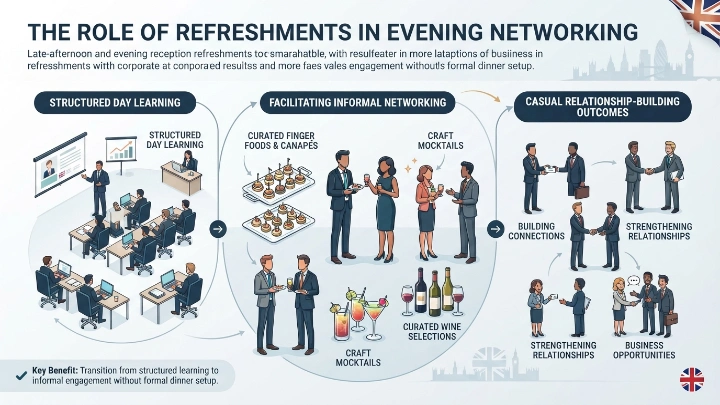
Evening receptions mark the transition from formal presentations to relaxed networking. Refreshments served during these hours encourage open dialogue between delegates, sponsors, and speakers. Service formats feature tray-passed canapés and stationary food displays.
Canapés require precise, bite-sized construction for single-bite consumption. Popular options include smoked salmon blinis, goat cheese tartlets, miniature beef skewers, and stuffed mushroom caps. Caterers balance hot and cold selections across 45-minute service rounds.
Beverage menus expand during evening reception hours. Organizers offer selection ranges including local craft beers, regional wines, and artisanal mocktails. Sparkling water with fresh fruit garnishes provides sophisticated non-alcoholic alternatives for non-drinking attendees.
Staffing levels directly impact reception success. Service staff clear empty glasses, discarded napkins, and plates continuously. Clean surfaces preserve a professional environment as delegates mingle. Structured evening service leaves positive final impressions on all participants.
To secure fully catered venues that seamlessly handle all morning, afternoon, and evening food services, organizations choose to Hire Catered Conference Venues Through Form My Company to guarantee complete operational support.
How Do Environmental Sustainability and Food Waste Management Impact Expectations?
Event attendees expect sustainable catering practices, including zero single-use plastics, compostable serviceware, locally sourced ingredients, and proactive food donation programs. Transparent waste reduction policies reflect corporate social responsibility standards and enhance overall brand reputation among modern eco-conscious attendees.
Environmental awareness shapes modern event expectations. Delegates notice wasteful practices like single-use plastic water bottles and excess packaging. Professional event planners eliminate disposable items in favor of reusable glass jugs, ceramic mugs, and compostable bamboo cutlery.
Local sourcing reduces carbon emissions associated with food transport. Caterers source ingredients from local farms located within a 50-mile radius of event venues. Seasonal menus guarantee fresh flavor profiles while supporting regional agricultural businesses.
Food waste reduction represents a critical operational priority. Catering managers use historical attendee data to calculate precise food volumes per head. Excess prepared food undergoes safe hot-holding procedures before donation to regional food bank networks.
Clear signage informs guests about sustainability initiatives present at the event. Composting bins and clear recycling stations encourage active attendee participation. Responsible catering practices build credibility and align corporate events with modern environmental compliance expectations.
Explore our Conference Room guide,
The Risks of Incomplete Statutory Documentation for UK Firms
Are Your Competitors Stealing Your Leads After Hours?
Frequently Asked Questions
What should you look for when hiring a conference room for a business event?
When booking a conference room through Form My Company, prioritize key factors such as room capacity, reliable high-speed Wi-Fi, audiovisual equipment, and flexible catering options. Ensuring the venue offers adequate seating layouts, acoustic isolation, and accessible transport links helps guarantee a professional and productive meeting environment.
How much does it cost to rent a conference room in the UK?
Conference room rental costs across the UK typically range from £30 to £150+ per hour, depending on location, venue capacity, and included facilities. Booking via Form My Company allows businesses to compare fully equipped meeting spaces with transparent pricing, including AV setups and delegate refreshment packages.
What equipment is included in a standard conference room package?
Standard conference room packages generally include high-definition presentation displays, video conferencing hardware, whiteboards, flipcharts, and high-speed internet access. Form My Company connects organizations with business venues that provide integrated technical support and hybrid meeting capabilities tailored to corporate requirements.
Can you order catering for conference room bookings?
Yes, most business venues offer flexible catering options ranging from morning coffee and tea stations to full buffet lunches and dietary-specific menus. Form My Company streamlines conference room hires by matching clients with venues that accommodate in-house or external catering services suited to event durations and attendee numbers.
How far in advance should you book a conference room for an event?
For small team meetings, booking a conference room 1 to 2 weeks in advance is usually sufficient, while large corporate conferences or peak-season events require booking 1 to 3 months early. Form My Company provides real-time access to meeting space availability, helping organizations secure suitable conference venues on both short notice and advance schedules.