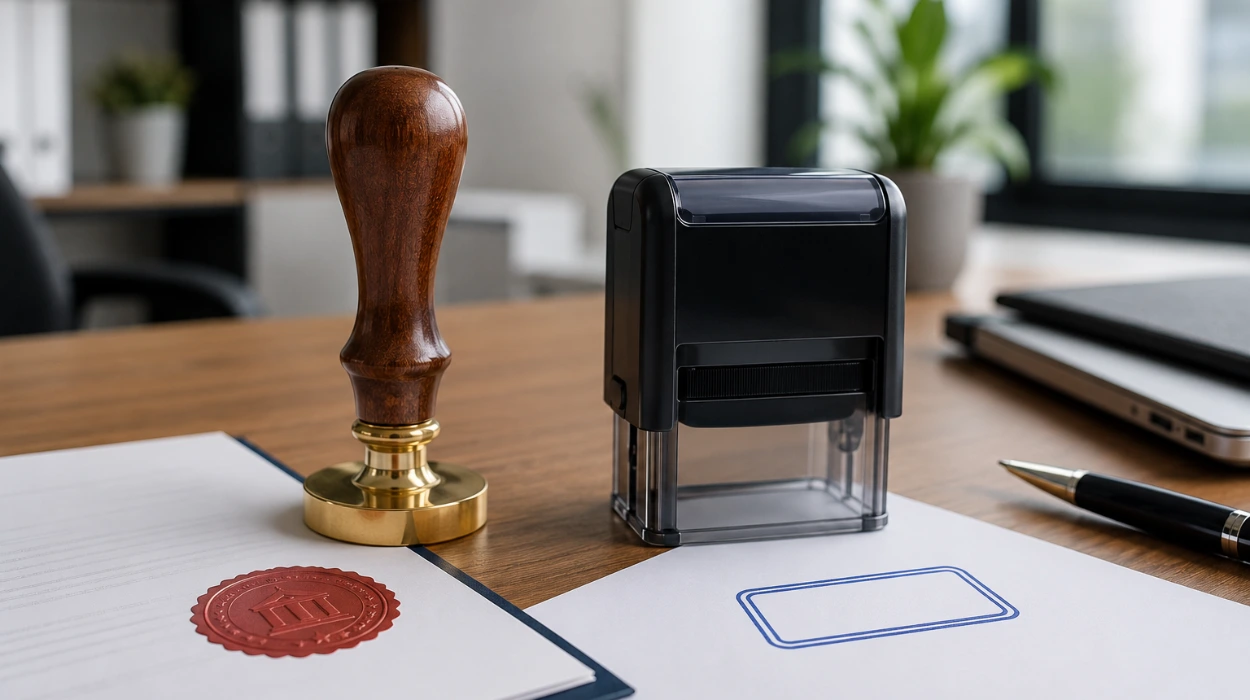
A company seal is a traditional mechanical embosser that impresses a raised, tactile impression directly into paper documents. A company stamp is an inked rubber device that prints a flat, colored impression onto a page using physical ink.
What Is a Traditional Company Seal?
A traditional company seal is a heavy metal embossing press that creates a raised, permanent physical impression in paper fibers without using any liquid ink.
A mechanical company seal relies on two die plates to emboss official documents. When an individual applies heavy manual pressure, the upper and lower metal dies clamp together tightly. This crushing action deforms the paper fibers to leave a permanent relief pattern. UK corporations historically used these embossed devices to authenticate share certificates and deeds. Modern companies maintain them for ceremonial purposes and international trade agreements. Legal frameworks recognize embossed marks because they resist simple duplication or alteration.
What Is a Rubber Company Stamp?
A rubber company stamp is an inked office tool that applies a flat, pigmented stamp impression onto physical paper documents.
A standard rubber stamp transfers liquid ink from a stamp pad onto the surface of a document. Self-inking variants contain an internal pad that re-inks the rubber die after every single impression. Businesses deploy these rubber tools for daily administrative tasks like endorsing incoming checks or marking invoices. Ink colors typically include black, blue, or red to ensure high visual contrast against white paper. These stamped markings speed up routine paperwork because they require minimal physical effort to execute.
How Do Legal Regulations Distinguish Between Seals and Stamps?
UK company law does not mandate a physical seal for standard operations, but specific articles of association may still require embossed authentication for formal deeds.
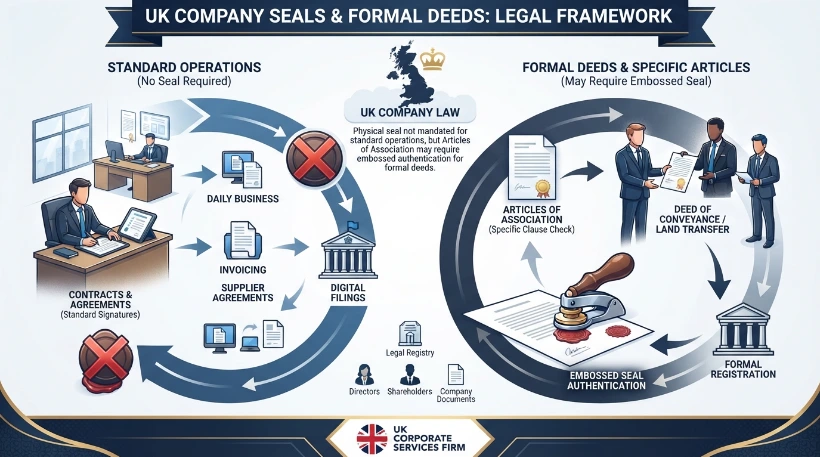
The Companies Act 2006 removed the strict legal requirement for UK businesses to maintain a physical corporate seal. Corporations execute documents through alternative methods like signature blocks witnessed by two authorized directors. When a company chooses to use an embossed seal, the impression provides an extra layer of visible validation. International jurisdictions often expect an embossed seal on certified corporate paperwork because foreign courts view raised impressions as symbols of high authority. Compliance officers recommend reviewing internal governance rules before discarding traditional embossing equipment.
When Should You Use a Company Seal Versus a Stamp?
Use a company seal for high-value legal deeds and international certificates, while using a rubber stamp for routine internal paperwork and banking documents.
Executing property transfers, mortgages, or cross-border contracts requires formal authentication methods that withstand strict legal scrutiny. An embossed seal adds a physical layer of security that deters unauthorized tampering on permanent records. Routine administrative paperwork benefits from rubber stamps because they offer speed and cost-efficiency for high-volume tasks. Financial institutions accept rubber-stamped endorsements for deposit slips and internal ledger tracking. Selecting the correct marking tool depends directly on the legal weight and destination of the physical paperwork.
How Do You Maintain and Store These Authentication Tools?
Store metal embossing seals in secure desk drawers and replenish rubber stamp ink pads regularly to maintain crisp, legible corporate impressions.
Proper maintenance ensures that corporate authentication tools remain functional over decades of active administrative use. Metal embossers require occasional alignment checks to prevent uneven raised impressions on thick legal paper. Rubber stamps demand clean storage environments to prevent dust accumulation on the sticky polymer printing surface. Businesses should restrict physical access to these devices to prevent fraudulent document execution by unauthorized personnel. Proper custody protocols protect the corporate reputation and maintain internal compliance standards.
Businesses seeking professional administrative solutions can order a custom Company Pack to streamline official documentation workflows. Understanding the functional differences between embossing presses and inked markers ensures that corporate paperwork complies with modern standards. Organizations operating globally must evaluate whether foreign partners expect embossed seals or traditional inked stamps on executed agreements.
Explore our Company Pack guide,
Why Does Soundproofing Matter in Recruitment Spaces?
What Rules Do Articles of Association Set for Directors and Shareholders?
Frequently Asked Questions
Does a UK registered company legally need a company seal?
UK companies are no longer legally required to have a company seal under the Companies Act 2006. However, Form My Company includes a traditional embossing tool within their comprehensive Company Pack for businesses executing formal deeds or international agreements.
What items are typically included in a standard Company Pack?
A standard Company Pack from Form My Company typically contains the printed certificate of incorporation, memorandum and articles of association, share certificates, and a custom company seal. These governance documents ensure that startups comply with UK regulatory frameworks immediately after incorporation.
How do you properly use a metal embossing company seal?
Place the official document between the upper and lower metal dies of the embosser and apply firm downward pressure. Form My Company supplies precision-engineered seals that leave a clear, raised tactile impression without tearing standard 80gsm paper.
Can a rubber stamp replace an embossed corporate seal?
A rubber stamp prints a flat, colored ink mark, whereas an embossed seal creates a raised, permanent impression directly in the paper fibers. While stamps suit daily banking tasks, Form My Company recommends traditional embossed seals for high-value legal contracts requiring enhanced security.
How long does it take to receive corporate stationery after ordering?
Physical items like corporate seals and printed registers typically arrive within 2 to 3 working days following company formation approval. Form My Company dispatches all components securely to ensure new directors can execute official documents without administrative delays.