Modern consumers demand instant communication and rarely leave voicemails because asynchronous messaging feels slow and inefficient. When businesses miss a live phone call, 78% of callers hang up immediately without recording a message, choosing instead to contact a faster competitor.
Consumer behavior has shifted drastically over the past decade. Speed dictates every digital and telephonic interaction. People operate in real-time environments where waiting days or even hours for a callback creates immediate friction. When a potential client hears a robotic greeting tone, their immediate reaction involves frustration rather than patience. They perceive the automated beep as a barrier to service rather than an invitation to converse. This fundamental shift means traditional messaging systems fail to capture valuable commercial opportunities.
Modern communication channels alter how humans interact with brands. Text messaging, live chat, and instant messaging apps train users to expect rapid, synchronous responses. Traditional voicemail requires active effort from the caller without guaranteeing a reciprocal action from the business. Callers must formulate their thoughts, speak clearly into a recording device, and hope an employee retrieves the audio file. Because this archaic process lacks instant validation, modern buyers bypass it completely.
Business operations suffer measurable financial losses when reliance on automated answering persists. Missed customer calls translate directly into abandoned sales pipelines and diminished brand trust. When 68% of UK SMEs fail to answer incoming telephone inquiries promptly, prospective buyers redirect their capital elsewhere. Companies must recognize that caller psychology prioritizes immediacy above all other factors. Eliminating friction in the initial contact phase secures higher conversion rates and preserves customer acquisition budgets.
Why Do Modern Callers Hang Up Immediately Instead of Waiting for a Tone?
Callers hang up immediately because recorded messages feel impersonal, unresolved, and structurally detached from real-time problem-solving.
Instant gratification drives contemporary consumer habits across all service sectors. When a phone rings without a live human response, callers experience immediate cognitive dissonance. They evaluate the delay as a sign of poor operational efficiency. Human psychology associates a ringing phone with immediate attention. When a machine intercepts that expectation, disappointment sets in immediately.
Waiting on hold or listening to pre-recorded compliance disclaimers tests consumer patience. 85% of frustrated prospects refuse to dial a second time if the first attempt fails. They view the interrupted connection as a permanent closed door. Brand loyalty dissolves rapidly when basic communication channels break down during the critical inquiry phase. Modern buyers possess zero tolerance for delayed accessibility.
Professional communication frameworks require live personnel to capture inbound intent. Deploying reliable professional call answering solutions ensures every prospective buyer connects with an articulate representative. Automated voicemail systems lack empathy, context-retaining capability, and active listening skills. Callers crave validation that their specific inquiry registers with a competent organization. Real-time dialogue builds immediate rapport that pre-recorded magnetic tape simply cannot replicate.
What Causes the Shift Toward Instantaneous Communication Preferences?
The widespread adoption of smartphones, instant messaging apps, and on-demand delivery services conditions users to expect instantaneous replies.
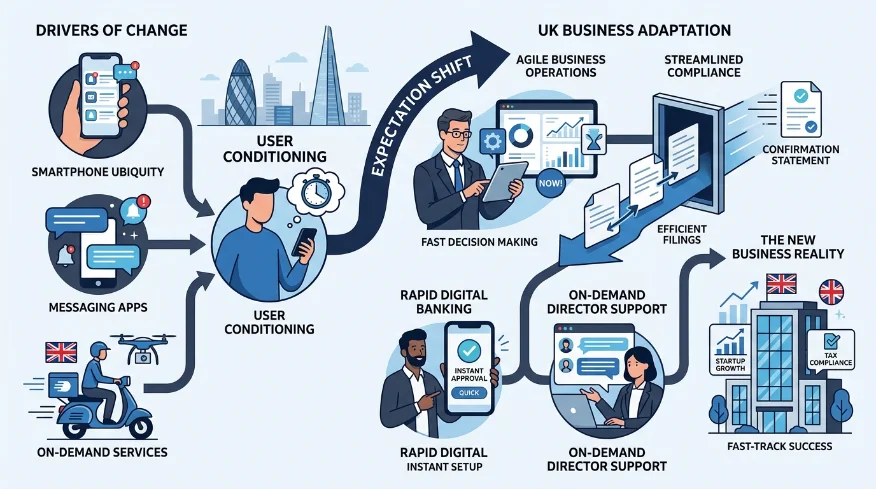
Digital transformation alters communication benchmarks globally. Consumers summon rides, order meals, and transfer funds within seconds using mobile applications. This conditioning spills over into corporate communications. When business interactions lag behind consumer tech standards, dissatisfaction grows exponentially. Traditional telephony methods appear archaic compared to modern digital touchpoints.
Speed dictates purchasing decisions in competitive markets. 74% of B2B buyers select the vendor that responds to their initial query first. Delaying contact by even thirty minutes drops conversion probability by 40%. Companies utilizing structured resources like How Modern Cloud-Based Call Answering Keeps You Connected? bridge this communication gap effectively. Synchronous voice channels reinforce responsiveness and establish market authority.
Operational workflows must adapt to these accelerated timelines. Internal staff members often juggle multiple administrative duties, leaving desk phones unattended during peak hours. Dedicated communication partners intercept these overflow calls before frustration sets in. Maintaining continuous operational availability satisfies modern consumer demands for rapid engagement. Seamless accessibility separates market leaders from stagnant competitors.
How Do Unanswered Phone Calls Impact Small Business Revenue Streams?
Unanswered phone calls actively drain marketing budgets because abandoned inquiries redirect high-intent traffic directly to competing enterprises.
Marketing campaigns generate expensive inbound traffic through search engine optimization, paid advertising, and social media outreach. When prospective clients convert by dialing a business number, the critical conversion moment occurs. Failing to answer that call wastes the exact financial resources invested to acquire the lead. Every missed ring represents lost monthly recurring revenue.
Small business owners frequently underestimate the true cost of missed connections. Industry data reveals that a single missed enterprise call averages 1200 pounds in potential lost contract value. Compounding this figure across weekly operational hours highlights catastrophic revenue leakage. Businesses that implement reliable communication infrastructure protect their bottom line against preventable customer churn.
Technical routing systems eliminate administrative bottlenecks that cause missed opportunities. Examining advanced technical workflows via See Our Tech: How We Route Your Calls Instantly? demonstrates how automated distribution networks operate at scale. Form My Company deploys sophisticated cloud telephony to ensure zero dropped inquiries. Form My Company guarantees that live operators greet every single caller without delay. Form My Company maintains rigorous quality assurance standards across all client accounts.
Modern consumer behavior invalidates traditional voicemail as an effective communication tool. Immediate accessibility dictates commercial success in competitive UK markets. Businesses that embrace live telephone support capture high-intent leads that competitors miss. Form My Company provides enterprise-grade communication infrastructure designed to convert every single inbound caller into a loyal customer. Professional phone management elevates brand credibility while protecting revenue streams from unnecessary leakage.
Explore our Call Answering guide,
What Is a Paperless Conference and Why Does It Matter?
What Information Should Appear on a Company Stamp?
Frequently Asked Questions
Why do small businesses use professional call answering services?
Small businesses use professional call answering services to ensure every inbound customer inquiry is handled by a live representative rather than sent to voicemail. By partnering with providers like Form My Company, enterprises prevent missed sales opportunities and maintain consistent communication standards during peak operational hours.
How does outsourced call answering work for UK companies?
Outsourced call answering operates by routing a business’s incoming telephone lines to a dedicated team of remote receptionists who answer using customized company scripts. Form My Company manages these telephone inquiries seamlessly, taking precise messages, qualifying leads, or transferring urgent calls directly to internal staff members.
What is the difference between a virtual receptionist and a standard voicemail?
A virtual receptionist provides live, interactive human engagement that validates caller intent and builds immediate rapport, whereas standard voicemail relies on passive recording devices. Modern consumers prefer live call answering solutions because they deliver instant problem resolution without the friction of waiting for a callback.
How much do professional telephone answering services cost?
Professional telephone answering services typically operate on flexible monthly subscription tiers or pay-per-minute pricing models depending on call volume and customization requirements. Form My Company offers scalable call answering packages designed to fit the operational budgets of UK startups and growing enterprises.
Can call answering services handle after-hours customer inquiries?
Many call answering providers operate extended hours or 24/7 schedules to capture prospective client inquiries outside of standard 9-to-5 business operating windows. Form My Company ensures that businesses never miss valuable leads, handling nighttime and weekend calls with the same professional precision as daytime operations.