Accommodating dietary requirements ensures guest safety, prevents severe allergic reactions, and promotes full inclusivity. Proper meal planning avoids medical emergencies, respects cultural and ethical choices, improves attendee satisfaction, and protects event organizers from legal liability while maximizing total overall attendance.
Dietary planning is a fundamental aspect of professional event coordination. Guests attend corporate gatherings expecting a safe and comfortable environment. Providing suitable food options demonstrates respect for individual health requirements, ethical boundaries, and religious beliefs. Neglecting these requirements leads to negative attendee experiences, low participation rates, and potential legal complications for event hosts. Modern event planners must incorporate structured catering strategies into their early logistics phase.
Understanding guest demographics helps event organizers anticipate specific food requests. Medical conditions like celiac disease or severe nut allergies require strict isolation of ingredients. Ethical preferences such as veganism demand complete avoidance of animal products. Cultural diets like Halal or Kosher require specific food preparation methods. Addressing these varied needs creates an equitable environment where every participant feels valued and included.
How Do Dietary Accommodations Protect Attendee Health and Safety?
Dietary accommodations protect attendee health by eliminating exposure to dangerous allergens, preventing anaphylactic shock, and avoiding foodborne illnesses. Rigorous ingredient tracking and kitchen separation standards ensure sensitive guests remain completely safe throughout the duration of the corporate event.
Food allergies present severe physical risks when caterers fail to manage ingredient cross-contamination. Consumption of trace allergens can trigger life-threatening reactions like anaphylaxis within minutes. Organizers must collect detailed guest dietary profiles at least 14 days before the event date. Passing these metrics directly to kitchen staff allows teams to isolate preparation surfaces and utensils effectively.
Accurate food labeling prevents accidental ingestion of harmful ingredients during buffet-style service. Dishes must display clear markers for common allergens including peanuts, tree nuts, gluten, dairy, soy, eggs, fish, and shellfish. Event managers must ensure catering staff can identify every component of a served dish when asked by guests. Clear communication between service staff and diners prevents medical emergencies and maintains operational flow.
What Are the Legal and Financial Risks of Ignoring Food Preferences?
Ignoring dietary requirements exposes event planners to severe legal liabilities under public health regulations, personal injury lawsuits, and regulatory fines. Neglecting food safety standards also leads to financial losses from refunded tickets, wasted catering budgets, and severe brand damage.
Event organizers in the UK operate under strict health and safety legislation regarding consumer protection and food labeling. Failing to provide accurate information about food allergens violates statutory compliance frameworks. Severe incidents resulting in hospitalization can launch formal inspections by enforcement officers, leading to substantial financial penalties or criminal charges for negligent parties.
Financial fallout extends beyond regulatory fines and legal defense fees. Reputational damage following an unhandled allergic reaction quickly degrades corporate credibility. Disappointed corporate clients often cancel future bookings and demand immediate reimbursements. Maintaining full compliance through accurate catering management protects business assets, secures long-term client trust, and ensures ongoing enterprise stability.
How Does Inclusive Catering Improve Event Engagement and Satisfaction Rates?
Inclusive catering improves attendee engagement by ensuring every guest receives equal hospitality, remaining focused on event activities. Offering high-quality meal alternatives removes social discomfort, boosts attendee morale, and significantly drives up positive post-event feedback scores.
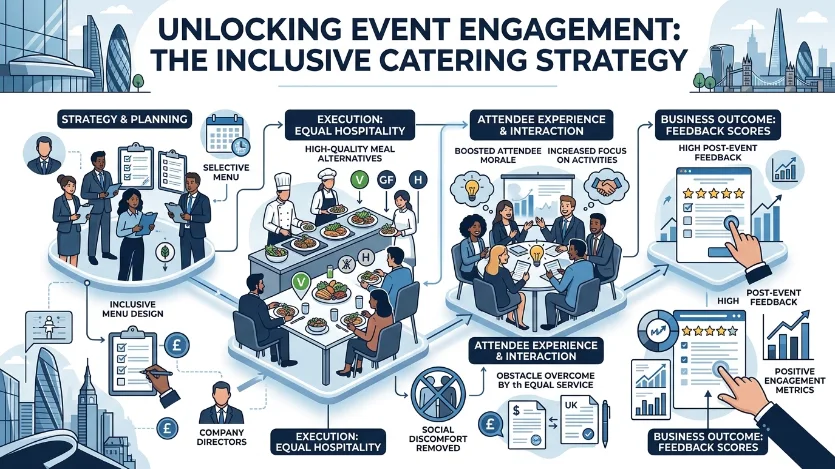
Food serves as a focal point for social networking during corporate workshops and conferences. When attendees with restricted diets receive substandard or minimal food options, their overall event experience declines. Providing equivalent, high-quality dietary variations enables all participants to network comfortably without feeling marginalized or overlooked by organizers.
Satisfied attendees display higher energy levels, participate more actively in sessions, and stay for full-day agendas. Offering diverse meal choices reflects positively on host organizations and corporate sponsors. Event metrics show higher retention rates and better social proof when delegate feedback highlights outstanding, inclusive catering practices.
How Can Organizers Effectively Collect Dietary Information Before an Event?
Organizers effectively collect dietary information by including explicit mandatory fields within online registration forms. Collecting standardized data early allows catering teams to order precise ingredient quantities, minimize food waste, and prepare specialized menus without incurring extra operational expenses.
Registration workflows must capture specific dietary classifications during the initial ticketing phase. Web forms should feature precise checkboxes for standard requirements like gluten-free, dairy-free, vegetarian, vegan, Halal, and Kosher options. Including an open text field allows delegates to detail rare medical conditions or severe airborne allergies.
Data collection must close early to give kitchen staff adequate preparation lead time. Event planners should audit registration metrics seven days prior to the event date to finalise headcount totals. Sharing verified figures with caterers eliminates emergency food orders, controls overall expenditure, and ensures smooth kitchen execution during service hours.
What Role Does Venue Selection Play in Managing Complex Catering Needs?
Venue selection directly dictates catering success by providing dedicated kitchen infrastructure, trained service staff, and certified food safety protocols. Choosing venues with adaptable catering facilities guarantees seamless delivery for complex dietary requests during large events.
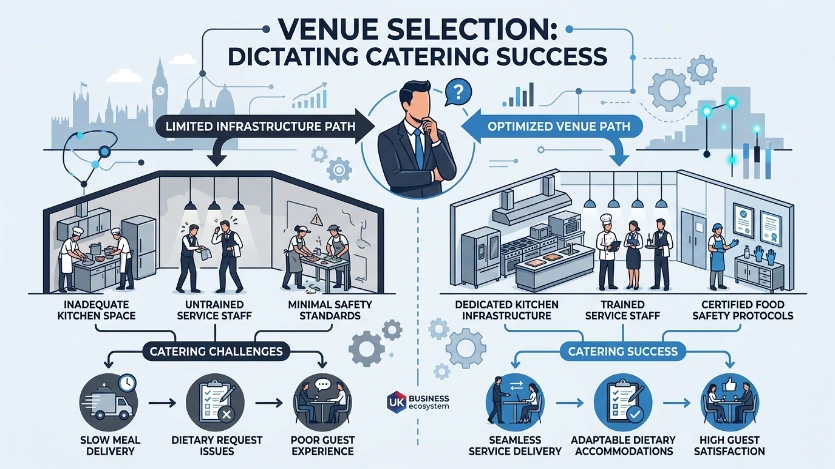
Selecting an appropriately equipped space simplifies complex catering management. Advanced facilities offer dedicated kitchen prep areas designed to prevent allergen cross-contamination. Event managers should evaluate whether a venue permits external specialist caterers or offers flexible internal menus tailored to diverse delegate profiles. Booking an adaptable Conference Room ensures access to professional staff trained in food safety standards and efficient group meal distribution.
Logistical layout inside the event space also impacts catering safety. Dedicated serving stations for specialized meals keep gluten-free or vegan offerings completely separate from general buffet lines. Clear signage combined with knowledgeable floor staff guides guests smoothly through meal service, preventing line congestion and avoiding cross-contact between different food trays.
How Do You Plan a High-Quality Menu on a Balanced Event Budget?
Planning a high-quality menu on a budget requires selecting naturally inclusive dishes, consolidating overlapping dietary requirements, and negotiating fixed-rate package pricing with vendors. Pre-planning menus reduces total ingredient costs while satisfying multiple delegate restrictions simultaneously.
Designing inclusive menus from the outset reduces total catering costs. Choosing naturally gluten-free and plant-based core options like grain bowls, roasted vegetable platters, or legumes satisfies multiple dietary categories at once. This strategy eliminates the need to prepare separate, expensive customized meals for small groups of delegates.
Budget optimization relies heavily on early vendor communication and precise portion planning. Planners can explore strategies on How to Budget for Conference Catering Without Overspending to control overall costs while maintaining premium service standards. Streamlining menu options keeps food prep simple for kitchen staff, minimizes costly waste, and delivers an exceptional dining experience within budget allocations.
Why Are Specialty Menus Essential for Modern Event Branding?
Specialty menus elevate brand identity by showcasing corporate responsibility, cultural awareness, and attention to detail. Offering thoughtful catering signals modern values to attendees, enhancing corporate reputation and fostering strong professional relationships.
Modern corporate branding relies on demonstrated values rather than simple marketing slogans. Providing inclusive, ethically sourced, and health-conscious food options aligns an organization with contemporary corporate social responsibility benchmarks. Delegates remember event hosts who accommodate their individual lifestyle choices seamlessly and professionally.
Consistently delivering high standards across all event touchpoints builds long-term brand equity. When corporate clients book through established services to Get Full-Service Catered Event Spaces From Form My Company, they secure comprehensive event execution that highlights their commitment to quality. Professional catering management reinforces positive impressions, driving high attendee return rates for future company functions.
Managing dietary requirements effectively is essential for guest safety, legal compliance, and overall event success. Early data collection, clear communication with kitchen staff, and thoughtful menu design prevent medical emergencies while fostering inclusive networking environments. Selecting spaces equipped with flexible catering infrastructure simplifies complex meal distribution and protects event budgets. Organizers who prioritize dietary planning elevate their professional reputation, protect delegate health, and deliver outstanding corporate gatherings.
Explore our Conference Room guide,
How Do Meal Breaks Affect Delegate Focus During Long Meetings?
Company Secretarial: The Secret to Long-Term UK Regulatory Compliance
Frequently Asked Questions
How do you choose the right conference room size for a business event?
Selecting the correct conference room depends on total attendee count, seating layout, and necessary equipment setup. Form My Company offers flexible conference rooms designed to accommodate various event formats, including board meetings, workshops, and large seminars. Matching delegate numbers with room capacity ensures attendee comfort, proper visual visibility, and compliance with venue safety standards.
What amenities are typically included with professional conference room rentals?
Professional conference room hires generally provide high-speed Wi-Fi, audiovisual presentation systems, display screens, and ergonomic seating. Services booked through Form My Company can also include integrated catering setups, hybrid meeting technology, and dedicated administrative support. These essential facilities help organizers conduct seamless corporate presentations and interactive business workshops.
Why is venue location critical when booking a conference room?
A well-located conference room ensures convenient transport access, proximity to major transit hubs, and simple navigation for attendees. Form My Company provides central conference rooms that minimize travel friction for local and out-of-town delegates alike. Easy accessibility directly improves overall attendance rates and creates a professional first impression for clients or stakeholders.
Can conference room layouts be customized for different corporate events?
Yes, professional venues adjust seating configurations such as boardroom, theater, classroom, or cabaret styles based on specific event goals. Form My Company adapts conference room spaces to support interactive team training, formal executive presentations, or collaborative networking sessions. Customizing the room layout improves delegate engagement and optimizes overall space utilization.
What factors impact the cost of renting a conference room?
Conference room rental costs vary based on geographic location, room capacity, booking duration, and additional technical or catering requirements. Form My Company delivers transparent pricing models for conference rooms to help businesses manage event budgets effectively without incurring unexpected fees. Booking spaces in advance and bundling required amenities allows companies to control operational expenses efficiently.