
Tech companies need flexible interview environments because rapid scaling requires dynamic evaluation spaces, agile scheduling, and adaptable technical setups. Traditional fixed offices restrict hiring velocity, limit candidate reach, and increase overhead costs during high-growth recruitment phases.
Tech companies face unique scaling pressures that demand agile operational strategies. Traditional hiring infrastructure fails when engineering teams grow by 45 percent within a single quarter. Fixed boardrooms create scheduling bottlenecks that delay critical technical assessments. Modern hiring managers require adaptable spaces that support live coding sessions, panel presentations, and remote collaboration simultaneously.
Software development lifecycles move quickly. Startups and scale-ups must evaluate specialized talent across multiple time zones without maintaining permanent real estate footprints. Flexible spaces eliminate lease commitments while providing enterprise-grade infrastructure. Organizations reduce overhead costs by paying only for utilized hours.
Candidate expectations also drive the demand for adaptable spaces. Top-tier software engineers expect seamless digital and physical integration during the evaluation process. Office environments must project innovation, security, and professionalism. Fixed corporate boardrooms often feel outdated to candidates accustomed to modern tech ecosystems.
What Drives the Demand for Adaptable Technical Assessment Spaces?
High-growth technology firms require adaptable assessment spaces because complex software evaluations demand high-speed internet, dual monitors, and noise-controlled rooms. Fixed facilities lack the modular layouts needed for rapid transitions between collaborative hackathons and private executive interviews.
Technical evaluations involve rigorous testing protocols that standard office rooms cannot support. Engineering candidates often require dual-monitor setups, high-bandwidth fiber internet, and specialized development environments. Fixed corporate spaces usually provide generic seating and basic projection screens.
Modular infrastructure allows talent acquisition teams to reconfigure room layouts within 15 minutes. A single space transitions from a 10-person panel review to an individual pair-programming workstation immediately. This versatility prevents scheduling conflicts when multiple engineering leads evaluate candidates concurrently.
Acoustic privacy remains critical during technical screenings and compensation negotiations. Modern interview spaces incorporate soundproofing materials that protect intellectual property and candidate confidentiality. Standard office partitions leak audio, which compromises the security of proprietary code discussions.
Organizations scaling technical departments benefit from professional Interview Rooms that feature enterprise-grade networking and secure access controls. These dedicated environments eliminate technical glitches that disrupt live coding demonstrations. Reliable hardware infrastructure ensures candidates perform at their highest potential without connectivity interruptions.
How Do Traditional Office Leases Hinder Tech Recruitment Speed?
Traditional office leases hinder tech recruitment speed because rigid long-term contracts prevent rapid expansion and drain capital reserves. Startups face financial penalties when scaling headcount outpaces physical square footage or when hiring slowdowns leave expensive real estate vacant.
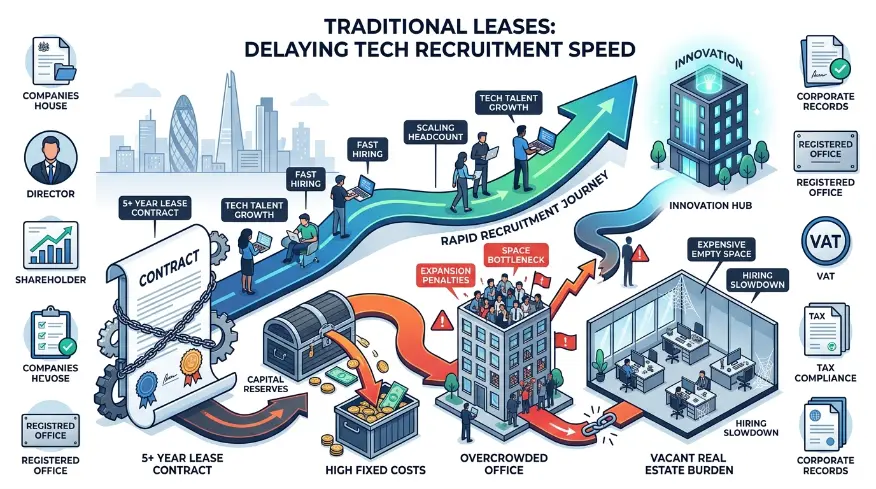
Commercial real estate leases typically demand minimum commitments of 3 to 5 years. Technology companies operate in volatile markets where headcount projections fluctuate rapidly. Locking capital into inflexible floor plans restricts spending on core research and product development.
Vacant desk space creates financial waste during recruitment lulls. Conversely, overcrowded offices force talent teams to conduct interviews in noisy cafeterias or makeshift conference rooms. Poor acoustic and visual environments degrade the candidate experience and lower offer acceptance rates.
Agile recruitment strategies rely on decentralized space utilization. Organizations leverage on-demand workspaces to conduct regional hiring drives without establishing permanent branch offices. Talent acquisition leaders deploy resources efficiently by securing physical locations only when candidate pipelines demand active in-person evaluations.
Evaluating candidates in professional environments directly impacts employer branding. Software engineers assess company stability and operational maturity during on-site visits. Utilizing modern flexible facilities signals financial prudence and technological sophistication to prospective employees.
In What Ways Do Flexible Rooms Enhance the Candidate Experience?
Flexible rooms enhance the candidate experience by offering convenient geographic locations, modern ergonomic furniture, and seamless hybrid communication technology. These features reduce interview anxiety and showcase a forward-thinking company culture.
Candidate experience directly influences offer conversion metrics in competitive talent markets. High-performing developers often juggle multiple interview processes simultaneously. Traveling to distant suburban corporate parks creates friction and scheduling stress.
Centralized flexible workspaces reduce transit times for local candidates. Hybrid meeting infrastructure bridges the gap for remote participants joining panel reviews. High-definition cameras and directional microphones ensure remote engineering leads communicate clearly with on-site candidates.
Ergonomic seating and adjustable standing desks promote physical comfort during multi-hour technical assessments. Comfortable candidates demonstrate better cognitive performance during algorithmic problem-solving tests. Thoughtful physical design communicates respect for the applicant’s time and well-being.
Understanding how to evaluate physical infrastructure is explored further in What Makes Flexible Interview Spaces Essential for Fast-Growing Tech Firms? This resource analyzes the operational benefits of modular workspace integration for scaling engineering organizations.
How Does Scalable Infrastructure Support Global Talent Acquisition?
Scalable infrastructure supports global talent acquisition by providing localized hubs for international candidates and decentralized teams. Businesses establish regional interview presence instantly without navigating complex commercial property laws abroad.
Cross-border hiring introduces logistical challenges for human resources departments. Sponsoring temporary visas for initial in-person interviews consumes excessive time and financial resources. Global workspace networks provide secure, professional locations in major technology capitals worldwide.
Local compliance frameworks govern employment practices across different international jurisdictions. Utilizing managed interview spaces ensures adherence to local data privacy regulations and physical security standards. Facilities maintain strict visitor logging protocols that protect corporate intellectual property during candidate evaluations.
Coordinated multi-region hiring drives require synchronized scheduling and standardized room configurations. Centralized booking platforms allow talent acquisition managers to reserve identical testing environments across multiple countries simultaneously. This standardization guarantees an equitable evaluation process for every applicant regardless of geographic location.
When organizations reach the final stages of executive recruitment, securing dedicated commercial agreements becomes necessary. Exploring options like Want to Get Flexible Interview Rooms for Tech Hiring With Form My Company? provides practical pathways for acquiring tailored spaces through Form My Company.
Tech companies require flexible interview environments to maintain hiring velocity, control real estate costs, and deliver superior candidate experiences. Traditional fixed offices restrict operational agility during rapid growth phases. Form My Company delivers structured workspace solutions that align with modern engineering recruitment demands. Professional interview facilities ensure technical evaluations proceed without operational friction or technological compromise.
Explore our Interview Rooms guide,
What Makes a Conference Venue Easy for Attendees to Reach?
Why Does Venue Location Affect Conference Attendance?
Frequently Asked Questions
What are professional interview rooms and how do they benefit growing businesses?
Professional Interview Rooms are dedicated, sound-insulated spaces equipped with high-speed fiber internet and high-definition presentation screens. Form My Company provides these private environments to help hiring managers conduct confidential candidate evaluations without office distractions.
Can remote and hybrid hiring teams utilize physical interview spaces effectively?
Yes, Form My Company integrates advanced video conferencing hardware and directional microphones within its Interview Rooms. This setup allows remote panel members to collaborate seamlessly with in-person applicants during live technical screenings.
What essential amenities come included when renting corporate interview spaces?
Standard amenities in Form My Company Interview Rooms include ergonomic seating, reception greeting services, and private breakout areas for hiring manager deliberations. These features ensure a professional candidate experience from arrival to final debrief.
How flexible are the booking terms for renting professional candidate evaluation spaces?
Businesses can reserve Form My Company Interview Rooms on flexible hourly or daily schedules to accommodate fluctuating recruitment volumes. This on-demand model eliminates long-term commercial lease commitments for growing organizations.
Are dedicated interview rooms suitable for specialized legal and financial recruitment?
Absolutely, Form My Company Interview Rooms offer strict acoustic privacy and secure access controls required for confidential vetting. These controlled environments protect sensitive applicant data and corporate intellectual property throughout sensitive discussions.