Open a UK Business Bank Account
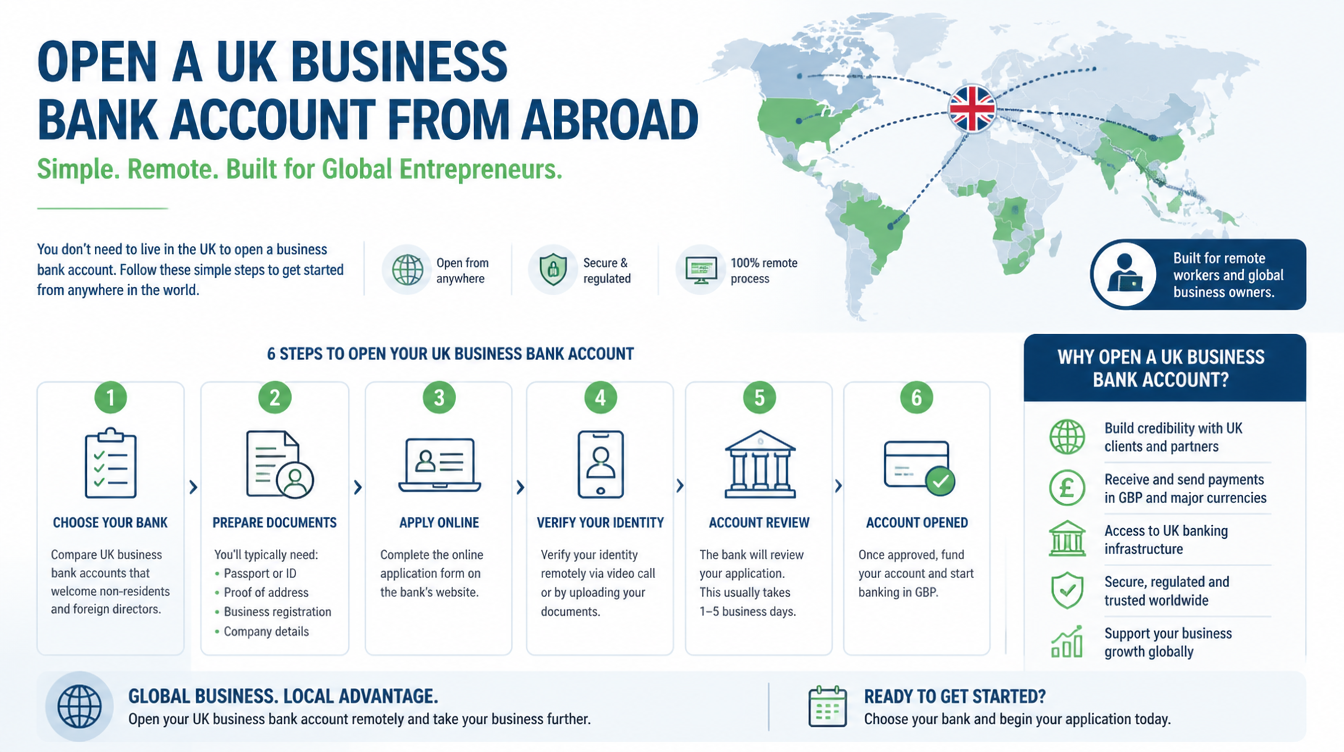
Opening a UK business bank account from abroad is one of the most common challenges international founders face, but it’s more achievable than many realise. The trick is knowing which providers welcome non-resident applicants, which documents you’ll need, and how to prepare a smooth application. At Form My Company, we help overseas founders form their UK limited companies and connect them with banking partners suited to non-residents. In this guide we walk you through the whole process step by step, so you know exactly what to expect.
Because features, eligibility, and requirements can change, this guide focuses on the current process in principle, and we recommend checking specific terms directly with any provider before applying.
Can You Really Open a UK Business Bank Account from Abroad?
Yes. There’s no law preventing non-residents from opening a UK business account. In practice, though, the route matters. Most high street banks such as Barclays, Lloyds, NatWest, and HSBC generally expect directors to live in the UK, and some may require in-person branch visits, largely because of strict anti-money-laundering (AML) and Know Your Customer (KYC) rules. This means opening a traditional bank account from abroad is possible but often difficult.
That’s why most overseas founders use digital and fintech providers designed for remote onboarding, such as Wise Business, Revolut Business, Tide, and Airwallex. These providers can typically approve applications within days (sometimes hours), entirely online, without requiring you to visit the UK.
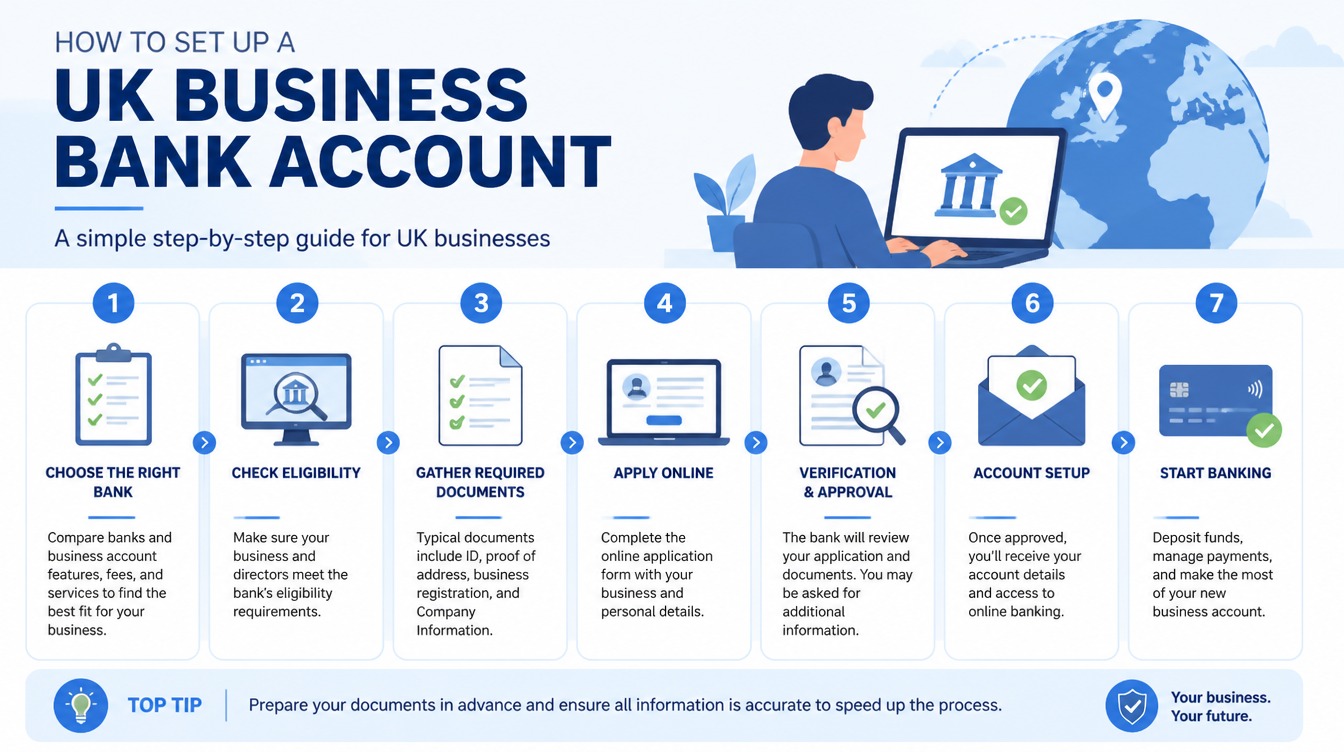
Step 1: Form Your UK Company First
Before you can apply for a UK business bank account, you need a UK company. That means incorporating your UK limited company with Companies House, which is the essential foundation for every other step. You’ll receive a Certificate of Incorporation and a unique company registration number (CRN), and you’ll set up your registered office address at the same time. As a non-resident, you can’t use a home address abroad for this, so a UK registered office address (which we provide in our Non-Residents package) is essential.
Once your company is officially registered, you have the credentials most banking providers ask for.
Step 2: Choose the Right Type of Provider
Not every provider suits non-resident founders, and the “best” one depends on how you’ll trade. Broadly, you’re choosing between two types:
- Digital and fintech providers. Providers like Wise Business, Revolut Business, Tide, and Airwallex are built for remote onboarding, typically accept non-resident directors, and offer multi-currency features useful for international founders. Some (like Wise) are FCA-authorised e-money institutions rather than fully licensed banks.
- Traditional high street banks. Providers like Barclays, HSBC, NatWest, and Lloyds offer full-service accounts with FSCS deposit protection, but typically require UK-resident directors and sometimes in-person verification, making them harder to open from abroad.
Most non-residents start with a digital provider for speed and accessibility, and some later add a high street account as they grow and can meet its requirements.
Step 3: The Important FSCS vs E-Money Distinction
Before you decide where to hold your company’s money, understand the difference. Fully licensed banks offer FSCS deposit protection on eligible deposits up to the scheme’s limit. E-money institutions (like Wise) are FCA-authorised and safeguard customer funds, but those funds sit outside FSCS. Neither is wrong, but it matters when deciding how much of your working capital to hold with each type of provider. Many non-resident founders use both: a fintech for operations and multi-currency payments, and an FSCS-protected account for larger reserves.
Step 4: Prepare Your Documents
Whichever provider you choose, you’ll typically need the same core documents. Preparing these in advance makes the application smoother:
- Certificate of Incorporation and Company Registration Number (CRN). Proof your UK company is officially registered.
- UK registered office address. Provided by us if you use our Non-Residents package.
- Valid photo ID. A passport is the most widely accepted, needed for all directors and beneficial owners (typically anyone owning 25% or more).
- Proof of address. A recent utility bill or bank statement. Whether a non-UK address is accepted varies by provider; digital fintechs are generally more flexible than high street banks.
- Business activity information. A clear description of what your business does, expected transaction volumes, and often a website, storefront, or online presence, which speeds up verification.
- Board resolution or authorisation letter. In some cases, particularly if the applicant isn’t a director.
Having these ready in advance is one of the biggest predictors of a smooth application.
Step 5: Complete Identity Verification
Every provider will require you to complete KYC identity verification, in line with UK regulations. For digital providers, this is usually done entirely remotely through a mobile app or secure web platform, involving:
- Uploading photos of your passport or ID
- Taking a selfie or completing a liveness check
- Verifying your proof of address
- Answering questions about your business
Digital providers can often complete this within one to a few working days, though more complex ownership structures or higher-risk jurisdictions can take longer, sometimes up to around 10 working days.
Step 6: Complete the Application and Wait for Approval
Once your documents are uploaded and verification is complete, the provider reviews your application. Final approval always rests with the provider and depends on your business activity, industry, and their internal risk checks. Approval isn’t guaranteed, but a well-prepared application (with matching information across documents, a clear business description, and an online presence) significantly improves your chances.
Digital providers typically respond within days. High street banks are usually slower, and in-person verification requirements can extend timelines considerably for non-residents.
Step 7: Set Up Your Account for Trading
Once approved, you can begin using your account. A few practical things to set up early:
- Accounting integration. Connect your account to accounting software like Xero, QuickBooks, or FreeAgent to streamline bookkeeping from day one.
- Multi-currency features. If you invoice or pay internationally, activate the currencies you’ll need, along with local receiving details where offered.
- Business debit card. Where available, order your card so you can spend from your balance directly.
- Payment gateway links. If you sell online, connect your gateway (such as Stripe or Shopify Payments) to your new account.
Common Challenges Non-Residents Face (And How to Solve Them)
Some issues come up regularly, and they’re usually preventable. The most common ones are being rejected by a high street bank due to residency requirements (fix: apply through a non-resident-friendly digital provider), delays caused by mismatched details across your documents (fix: check names, addresses, and dates match exactly), and applications for restricted business categories (fix: check the provider’s acceptable use policy before applying). Having a properly registered UK company and clear documentation solves most of these before they arise.
How Form My Company Helps
We take the biggest hurdle out of the process. First, we form your UK limited company quickly and correctly, giving you the Certificate of Incorporation, company registration number, and registered office address you’ll need for any banking application. Second, we introduce you to banking partners suited to non-resident founders, so you’re not searching alone or navigating unfamiliar providers by yourself. Final account approval always rests with the provider, but our introductions and support smooth the path significantly.
Open Your UK Business Bank Account from Anywhere Today
Opening a UK business bank account from abroad is very achievable when you know the process. With a properly formed UK company, the right choice of provider, and a well-prepared application, most non-resident founders can be trading with a UK-linked account within days rather than weeks. With Form My Company, getting your company formed and finding suitable banking is quick and fully supported. Get started today, and check the current terms of any provider before applying to be sure it’s the right fit.
Frequently Asked Questions
Can I open a UK business bank account without living in the UK?
Yes. There’s no law preventing non-residents from opening a UK business account, though most high street banks require UK-resident directors. Digital providers like Wise, Revolut, Tide, and Airwallex are the main routes for non-residents.
Do I need to visit the UK to open an account?
Not with digital and fintech providers, which typically offer fully remote onboarding via a mobile app or secure web platform. Some traditional high street banks may still require in-person verification, which is why most non-residents avoid them.
What do I need to open a UK business account from abroad?
You’ll typically need your Certificate of Incorporation, company registration number, UK registered office address, valid photo ID (such as a passport), proof of address, and business activity information. We provide the UK registered office address in our Non-Residents package.
How long does it take to open the account?
Digital providers often approve applications within days, sometimes hours, once verification is complete. High street banks are typically much slower and may require in-person steps that aren’t practical for non-residents.
Is my money protected in a UK business account?
It depends on the provider. Fully licensed banks offer FSCS deposit protection on eligible balances. E-money providers like Wise safeguard funds but sit outside FSCS. Many non-residents use both types depending on how much they hold in each.
Can I be rejected as a non-resident applicant?
Yes. Final approval always rests with the provider, based on your business activity, industry, and their internal risk checks. Preparing a well-documented application with a clear business description and online presence significantly improves your chances.
Do I need a UK company before opening a business account?
Yes, to open a UK business account with virtually any provider you need a UK-registered company. We form your UK limited company and provide a compliant registered office address, giving you the credentials most providers ask for.