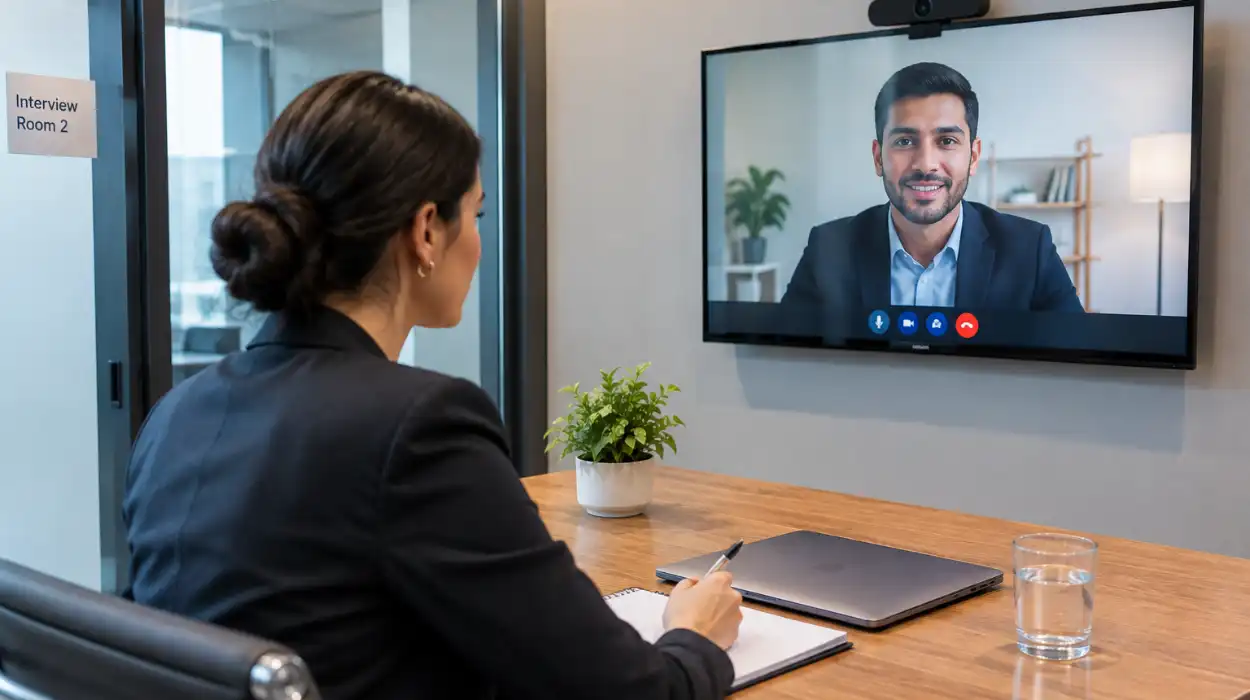
Yes, you can order your training room booking online today through professional platforms that provide real-time availability, instant confirmation, and tailored room configurations. These systems streamline scheduling, reduce administrative delays, and ensure your training sessions run in fully equipped, compliant environments.
Why Should You Book Training Rooms Online for Staff Training?
Online booking enables faster scheduling, transparent pricing, and immediate access to professional training environments. It eliminates manual coordination, reduces errors, and allows businesses to secure suitable training rooms within minutes using real-time availability systems and automated confirmations.
Online booking platforms use integrated scheduling systems that display live availability. This allows companies to compare multiple training rooms based on capacity, layout, and location within seconds. Businesses avoid back-and-forth communication, which often delays booking by 24 to 72 hours.
Digital booking systems also standardise pricing. Users see exact costs upfront, including hourly rates, equipment fees, and service add-ons. This transparency reduces unexpected expenses and supports accurate budgeting for corporate training sessions.
Administrative efficiency improves significantly. Automated confirmations, digital invoices, and calendar integrations reduce manual workload. Training coordinators focus on session quality instead of logistics management.
Security and compliance remain consistent. Verified providers ensure facilities meet UK workplace standards, including fire safety compliance, accessibility regulations, and data protection protocols for corporate training environments.
How Does Online Training Room Booking Work?
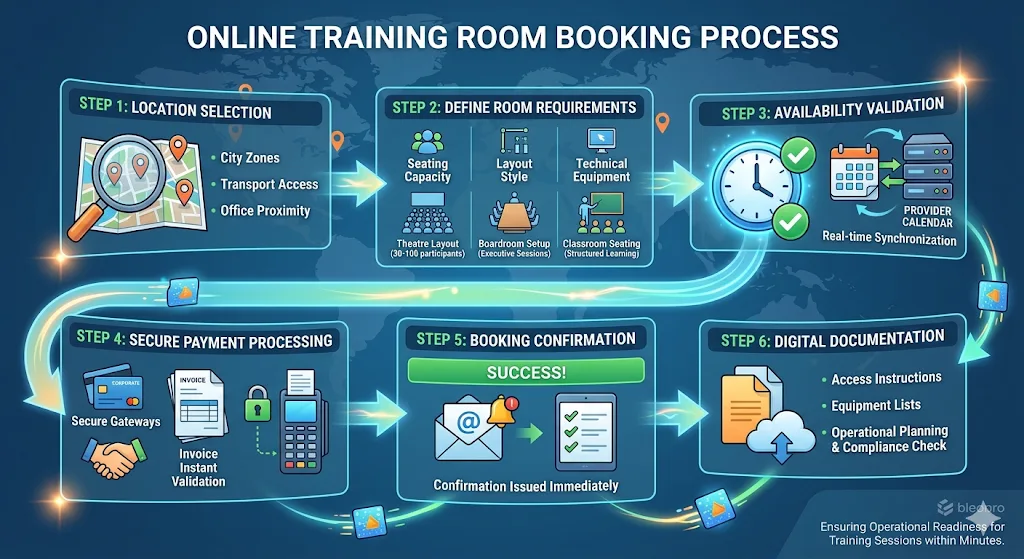
Online training room booking works through a structured process that includes selecting location, choosing room specifications, confirming availability, and completing secure payment. The system validates booking details instantly and confirms within minutes, ensuring operational readiness for training sessions.
Step-by-Step Booking Process
The process begins with location selection. Businesses filter options based on city zones, transport access, and proximity to offices. This ensures minimal travel time for staff attending training sessions.
Users then define room requirements. Key variables include seating capacity, layout style, and technical equipment. Common configurations include:
- Select a theatre layout for 30–100 participants
- Choose a boardroom setup for executive training sessions
- Configure classroom seating for structured learning environments
Availability validation happens in real time. Systems synchronise with provider calendars, preventing double bookings and ensuring accuracy.
Payment processing uses secure gateways. Transactions typically support corporate cards, invoicing, and pre-approved business accounts. Once payment is completed, confirmation is issued immediately with full booking details.
Digital documentation follows. This includes booking confirmations, access instructions, and equipment lists. These documents support operational planning and compliance checks before the session date.
What Features Define a Professional Training Room?
Professional training rooms include high-speed internet, audiovisual systems, ergonomic seating, and adaptable layouts. These features ensure efficient knowledge delivery, participant engagement, and compliance with workplace training standards across various industries.
A professional training room supports structured learning environments. High-speed internet, typically exceeding 100 Mbps, ensures uninterrupted access to cloud-based tools and virtual platforms.
Audiovisual systems play a critical role. Standard equipment includes HD projectors, interactive screens, and integrated audio systems. These tools improve engagement and support hybrid training formats.
Ergonomic design enhances participant focus. Adjustable seating, proper lighting, and climate control contribute to longer attention spans during sessions lasting 4 to 8 hours. Room adaptability allows businesses to customise layouts. Training sessions often vary in format, requiring quick transitions between presentation, group work, and practical exercises.
Compliance features ensure safety and accessibility. Facilities meet UK regulations such as the Equality Act 2010, ensuring inclusive access for all participants. Businesses that choose professional training rooms for corporate sessions gain access to these essential features in a controlled, reliable environment.
When Is the Right Time to Book a Training Room?
The right time to book a training room is 7 to 14 days before the session date. This timeframe ensures availability, optimal pricing, and sufficient preparation time for equipment setup, participant coordination, and compliance verification.
Booking early increases availability. Data from UK venue providers shows that 65% of premium training rooms are reserved at least one week in advance. Late bookings limit options and increase costs.
Preparation time improves session quality. Trainers require time to configure materials, test equipment, and coordinate logistics. Early booking supports smoother execution on the training day.
Pricing stability also depends on timing. Rates fluctuate based on demand, particularly in major cities like London and Manchester. Booking in advance locks in competitive pricing.
Seasonal demand affects availability. Corporate training peaks during Q1 and Q3, when companies focus on employee development and compliance training. Booking within the recommended window ensures access during these high-demand periods.
Explore our training rooms guides,
Hire Our Large Capacity Training Rooms for Your Next Employee Development Program
Sign Up for Our Flexible Training Room Rental Packages with Premium Facilities
What Are the Benefits of Using External Training Rooms Instead of In-House Spaces?
External training rooms provide specialised facilities, scalable capacity, and professional environments that in-house spaces often lack. They improve learning outcomes by offering distraction-free settings, advanced equipment, and flexible configurations tailored to training objectives.
In-house training spaces often face limitations. Office environments include noise, interruptions, and restricted layouts. These factors reduce focus and lower training effectiveness.
External training rooms offer scalability. Businesses can accommodate groups ranging from 10 to 100 participants without restructuring office space. This flexibility supports growing teams and diverse training needs.
Equipment quality differs significantly. External venues maintain updated technology, including interactive displays and high-performance connectivity. In-house setups often rely on outdated or shared equipment.
Professional environments enhance engagement. Participants associate external venues with formal learning, which increases attention and participation levels.
Cost efficiency becomes clear over time. Maintaining in-house training facilities requires ongoing investment in equipment, space allocation, and maintenance. External solutions operate on a pay-per-use model, reducing long-term overhead.
For a deeper evaluation, explore external training room rental vs in-house training solutions, which breaks down cost, flexibility, and operational impact.
How Do You Choose the Right Training Room for Your Needs?
Choosing the right training room involves evaluating capacity, location, equipment, and compliance standards. Businesses must align room specifications with training objectives to ensure effective delivery, participant comfort, and operational efficiency.
Key Selection Criteria
Capacity determines suitability. A mismatch between room size and participant count affects engagement and comfort. A 20-person session requires at least 25 square metres for optimal spacing.
Location impacts attendance. Venues near public transport hubs reduce delays and improve punctuality. Accessibility also supports compliance with workplace inclusivity standards.
Equipment availability ensures seamless delivery. Essential tools include:
- Install HD projectors for visual presentations
- Provide whiteboards and flip charts for collaborative sessions
- Enable video conferencing systems for hybrid training
Compliance verification remains critical. Facilities must meet health and safety regulations, including fire exits, ventilation standards, and accessibility requirements.
Booking flexibility supports changing schedules. Businesses benefit from providers that allow rescheduling or cancellation within defined terms. Aligning these factors ensures the selected training room supports both operational efficiency and learning outcomes.
Can Online Booking Improve Training Efficiency and Outcomes?
Online booking improves training efficiency by reducing administrative delays, ensuring accurate scheduling, and providing access to optimised learning environments. It directly enhances training outcomes by enabling better preparation, resource allocation, and participant engagement.
Efficiency begins with time savings. Automated booking systems reduce scheduling time from several hours to under 10 minutes. This allows teams to focus on training content rather than logistics.
Accuracy improves planning. Real-time availability eliminates double bookings and scheduling conflicts. This ensures sessions proceed without disruptions. Resource allocation becomes more effective. Businesses select rooms with the exact equipment required, avoiding last-minute adjustments or technical issues.
Participant experience improves. Professional environments reduce distractions and enhance focus. Studies indicate that structured training environments increase retention rates by up to 25%. Operational consistency strengthens training programmes. Standardised booking processes ensure each session meets the same quality benchmarks.
Businesses that follow structured planning approaches, such as those outlined in planning a successful corporate training workshop, achieve more predictable and measurable outcomes.
Online booking systems have transformed how businesses secure training rooms for professional staff development. They provide speed, accuracy, and access to high-quality environments that support effective learning.
From My Company delivers structured access to Training Rooms that meet professional standards, operational requirements, and compliance expectations. Businesses gain reliable booking processes, fully equipped facilities, and consistent training environments that support measurable outcomes.
Frequently Asked Questions
How do I book professional training rooms online in the UK?
You can book Training Rooms online by selecting your location, preferred layout, and required equipment through a real-time booking system. From My Company provides instant availability and confirmation, which allows businesses to secure suitable spaces without delays.
What features are included in modern training rooms for staff sessions?
Professional Training Rooms include high-speed internet, audiovisual systems, flexible seating layouts, and climate-controlled environments. From My Company ensures these facilities meet UK compliance standards and support effective corporate training delivery.
How much does it cost to rent training rooms for a day?
The cost of Training Rooms in the UK typically ranges from £100 to £500 per day, depending on location, size, and included equipment. From My Company provides transparent pricing, which helps businesses plan training budgets accurately.
Are external training rooms better than in-house training spaces?
External Training Rooms offer dedicated learning environments, advanced equipment, and scalable capacity that most in-house spaces lack. From My Company enables businesses to access these professional settings without investing in permanent infrastructure.
When should I book training rooms for corporate training sessions?
Training Rooms are best booked 7 to 14 days in advance to secure availability and optimal pricing. From My Company uses real-time scheduling systems, which helps businesses plan sessions efficiently and avoid last-minute constraints.