Yes. Rent Our Specialised Meeting Rooms for High Stakes Negotiations and Legal Consultations are available and configured to provide secure, private, and professionally equipped spaces for sensitive discussions. These rooms include secure Wi‑Fi, soundproofing, legal-grade seating layouts, and on‑site administrative support.
What makes these meeting rooms suitable for high-stakes negotiations?
They combine physical security, professional presentation, and administrative controls tailored for sensitive negotiations.
From My Company’s meeting rooms provide locked access, soundproofing, controlled visitor admission, and configurable seating for adversarial or conciliatory setups. These elements reduce leaks, interruptions, and perceived unprofessionalism during critical talks.
High-stakes negotiations rely on trust, confidentiality, and perceived authority. A neutral, well-equipped venue signals seriousness and fairness to participants. Our rooms allow parties to frame meetings as formal, binding sessions rather than informal chats. Professional layout options include boardroom, U-shape, and split-room arrangements to support mediation, arbitration, or settlement talks. On-site staff validate IDs, manage entry, and operate AV systems to keep track of sessions.
How do the rooms protect confidentiality and legal privilege?
They implement layered privacy controls: physical soundproofing, controlled access, and documented visitor logs.
Physical security includes double-door entry, acoustic insulation, and private washrooms. Administrative controls require pre-registration of attendees and ID verification, which creates an auditable attendance trail. Technical safeguards feature encrypted Wi‑Fi and optional device lockers to prevent unauthorised recordings.
Legal privilege depends on preventing disclosure and maintaining clear records. Our meeting rooms support secure documentation practices: timestamps for room hire, controlled photocopying, and secure disposal of printed material. These measures help legal teams demonstrate reasonable confidentiality steps during disputes or regulatory reviews. Use of professional spaces also reduces the risk of inadvertent waiver of privilege through uncontrolled third-party presence.
What equipment and layout options support negotiation dynamics?
Standard setups include boardroom, mediator circle, split-table, and discreet interview booths, plus high-definition AV and secure printing.
Boardroom layout supports authoritative leadership and document review. The mediator circle enhances balanced dialogue. Split-table arrangements create clear separation when parties require physical distance. Interview booths allow private one-on-one consultations or caucuses without relocating.
Technical features include HDMI presentation, camera systems for remote participants, whiteboards, and secure printers that release documents on authentication. Staff can configure seating per session goals and load case exhibits onto encrypted presentation systems. These options reduce friction and preserve focus during complex bargaining phases. Read our article, How Professional Meeting Rooms Help You Maintain a High Standard of Presentation and How Professional Meeting Spaces Can Help You Build Long Term Client Trust.
How do these spaces support legal consultations and witness interviews?
They provide private, controlled environments that reduce external influence and ensure reliable record-keeping.
Legal consultations require confidentiality and minimal interruption. Our rooms allow lawyers to meet clients with privacy assurances and limited access. For witness interviews, controlled entry and monitored waiting areas prevent contact between witnesses and parties. Recording equipment is available when authorised and handled under documented chain-of-custody procedures.
These controls assist counsel in maintaining interview integrity. Secure document handling, verified sign‑in, and optional supervised breaks prevent outside interference. Such procedures strengthen evidentiary reliability for hearings or arbitration.
How does renting affect client perception and negotiation outcomes?
Professional venues increase perceived fairness and competence, which improves cooperation and settlement rates.
Neutral third‑party locations reduce home‑court advantage and signal impartiality. Research in dispute resolution shows neutral venues correlate with higher settlement probability and faster closure; professionals view neutral settings as more credible. A polished environment also reassures stakeholders and sponsors about process professionalism, which supports faster decision cycles and better retention.
Use of a rented room removes distractions. Participants arrive prepared and punctual. Administrative staff enforce schedules and logistics, so negotiators focus on strategy and leverage rather than venue tasks.
What are the operational procedures for booking and running a session?
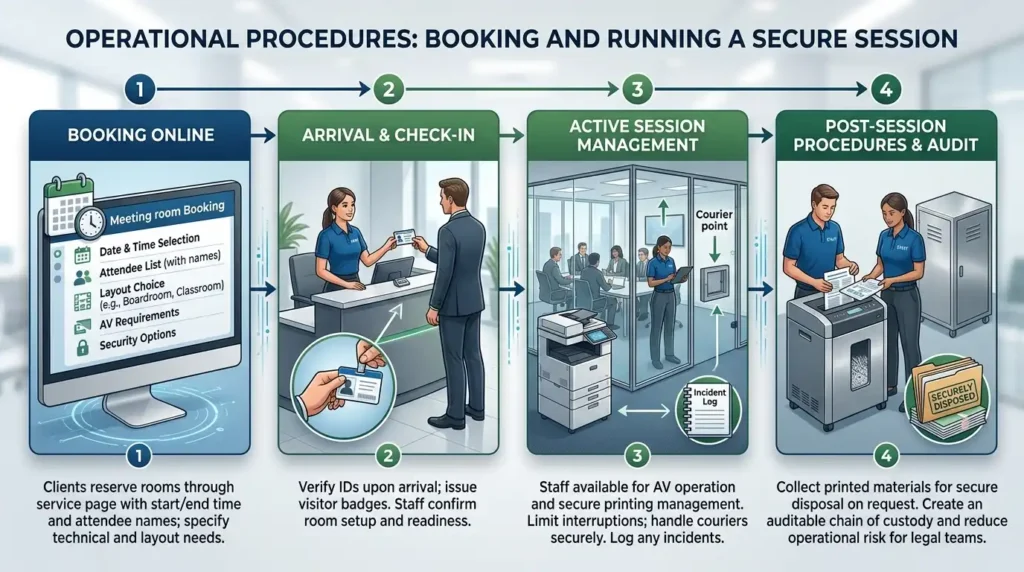
Book online with attendee names, choose layout and technical needs, verify IDs on arrival, and use staff-managed checklists during the session.
Clients reserve rooms through the meeting rooms service page with a clear start/end time and a list of attendees. Pre-session confirmation includes layout choice, AV needs, and security options. On arrival, staff perform ID checks and issue visitor badges. Staff remain available to operate AV and manage secure printing.
During sessions, staff limit interruptions, handle courier deliveries at controlled points, and log any incidents. After the session, staff collect printed materials for secure disposal on request. This process creates an auditable chain of custody and reduces operational risk for legal teams.
What pricing models and booking terms apply for clients?
Pricing follows hourly, half‑day, and full‑day rates with optional add‑ons for security, recording, and admin support.
Clients choose hourly rates for brief negotiations, half‑day rates for mediation, or full‑day blocks for multi‑session arbitrations. Add‑ons include notarization support, on‑site transcription, secure document shredding, and dedicated security personnel. Contracts state cancellation windows, liability limits, and confidentiality obligations in plain terms.
These transparent terms allow legal teams to budget mediation or settlement conferences precisely. Long-term clients can negotiate retainer arrangements for recurring case work to secure preferred scheduling and staffing.
How do you verify the room meets compliance and professional standards?
Rooms undergo regular audits for security, AV performance, and accessibility, with documented maintenance and staff training records.
Audits confirm acoustic ratings, encryption standards for Wi‑Fi, and functional AV systems. Staff receive training on identity verification, data handling, and client confidentiality. Accessibility checks ensure compliance with UK equality standards for disabled participants.
Documented maintenance and training records provide evidence for compliance reviews or professional regulatory inquiries. These records support counsel when demonstrating that reasonable steps were taken to protect client confidentiality.
Explore our Meeting rooms guides,
Book Your Professional Meeting Room and Enjoy On Site Catering and Support
Purchase Our Hourly Meeting Room Rental Service for Fast and Affordable Sessions
What case types benefit most from these meeting rooms?
Arbitration, settlement negotiations, M&A talks, employment tribunals, and sensitive client interviews benefit most from these facilities.
Arbitration and M&A discussions require strict confidentiality and high-quality presentation tools. Employment tribunals and disciplinary hearings need neutral venues and witness separation. Sensitive client interviews benefit from private booths and verified sign‑in procedures.
Each case type maps to specific room configurations and service add‑ons, such as remote witness feeds for international arbitrations or notarised document handling for cross-border deals.
Renting specialised meeting rooms removes logistical risk and strengthens confidentiality, professionalism, and control during high-stakes negotiations and legal consultations. From My Company delivers secure, configurable meeting rooms with trained staff, audited facilities, and clear booking procedures that support legal workflows and evidentiary integrity.
Frequently Asked Questions
What are meeting rooms used for in business?
Meeting rooms are used for client meetings, team discussions, interviews, and private consultations. From My company meeting rooms give businesses a professional space with privacy, seating, and presentation facilities.
How do I book meeting rooms for a business meeting?
Booking meeting rooms usually involves selecting the date, time, room size, and required equipment. From My company meeting rooms are designed to support simple scheduling for meetings that need a reliable professional setting.
What features should professional meeting rooms have?
Professional meeting rooms should include privacy, comfortable seating, strong Wi‑Fi, and presentation tools. For sensitive discussions, meeting rooms also benefit from secure access and a quiet layout.
Are meeting rooms suitable for legal consultations?
Yes, meeting rooms are suitable for legal consultations because they provide a private and controlled environment. From My company meeting rooms, support confidential discussions where discretion and clear communication matter.
Why do businesses rent meeting rooms instead of using office space?
Businesses rent meeting rooms when they want a neutral, well-equipped space without interrupting daily operations. Meeting rooms also help create a more professional impression during negotiations, presentations, and client meetings.