Proper meeting etiquette preserves a professional corporate image by ensuring punctuality, clear agendas, respectful communication, appropriate dress, and tidy meeting spaces. These practices project competence, build trust with stakeholders, and reduce misunderstandings that harm reputation.
What is proper meeting etiquette?
Proper meeting etiquette is a set of observable behaviours that create efficient, respectful, and professional meetings.
Proper etiquette includes arriving on time, circulating an agenda, minimising interruptions, using appropriate language, dressing to the organisation’s standard, and preparing meeting spaces. These actions reduce wasted time and protect a company’s external and internal reputation.
Proper meeting etiquette affects first impressions and ongoing perceptions. Front-line staff, executives, and external guests notice punctuality, clarity of purpose, and room presentation. A tidy room with functioning technology signals operational competence. Clear agendas and timekeeping signal respect for participants’ schedules. Consistent etiquette reduces confusion and prevents avoidable reputational damage in client and regulatory interactions.
How does meeting etiquette affect client trust and sales?
Meeting etiquette directly influences client trust by signalling reliability, expertise, and respect, which increases contract conversion and repeat business.
Clients form judgments within the first five minutes of contact. Professional greetings, organised materials, and reliable AV setup communicate competence. Sales teams that follow etiquette close deals faster and report higher client satisfaction scores.
Read our guides, Comparing Different Meeting Room Layouts for Workshops and High-Level Board Meetings and Buy Our Meeting Room Membership for Ongoing Business Success and Professional Growth.
Data from service industries shows that 62% of buyers cite professional presentation as a top factor in supplier selection. A well-run meeting prevents misunderstandings about scope, price, and timelines. Clear minutes and follow-up actions increase accountability and reduce post-meeting disputes, improving conversion rates and lifetime customer value.
What meeting etiquette standards should hosts enforce?
Hosts should enforce punctual start times, a published agenda, role clarity, device policies, and tidy meeting rooms.
Publish agendas 24–48 hours before meetings. Assign roles: chair, timekeeper, minute-taker, and technical support. Require attendees to silence devices and limit non-essential camera use for video calls. Inspect the meeting room 15 minutes before the start: check seating, lighting, and AV. Provide water and note-taking materials for in-person meetings.
These standards set expectations and reduce friction. A published agenda focuses discussion on outcomes. Role clarity prevents duplicated tasks. Device policies reduce interruptions and improve listening. A pre-meeting room check avoids technical delays that undermine confidence.
How should meeting attendees prepare to support a professional image?
Attendees should review the agenda, prepare concise input, arrive early, and bring required documents and action tools.
Read the distributed materials and highlight two key points to raise. Bring printed or digital copies of deliverables. Join 5–10 minutes early for AV checks. Dress to the company’s standard: business formal for client-facing meetings, business casual for internal strategy sessions. Plan succinct contributions: state facts, propose actions, and note required decisions.
Prepared attendees reduce meeting duration. Short, focused contributions keep discussions on track. Early arrival allows troubleshooting technical issues, which prevents visible delays and demonstrates respect for others’ time.
What role does meeting room setup play in corporate image?
Meeting room setup signals organisational capability through cleanliness, ergonomics, technology reliability, and branded materials.
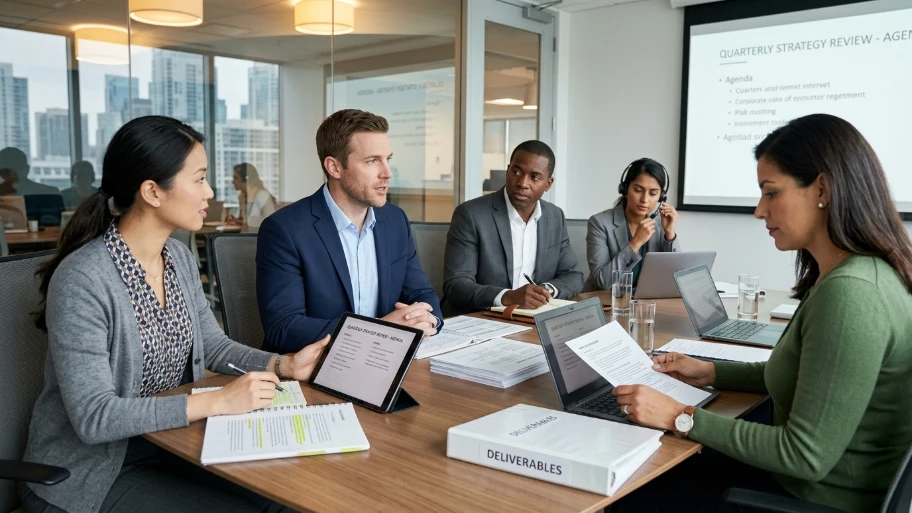
Arrange seating to match meeting goals: boardroom for executive decisions, U-shape for workshops, theatre for presentations. Ensure ergonomic chairs, stable Wi‑Fi, functioning screens, and tested microphones. Display subtle branding: a logo on a presentation slide or a branded notepad. Remove clutter and personal items from sight.
A well-designed room reduces cognitive friction and supports focused discussion. Different layouts influence interaction patterns and decision speed. For example, a boardroom layout emphasises hierarchy and formal decisions, while a workshop layout encourages collaboration.
When should organisations update their meeting etiquette policies?
Organisations should update meeting etiquette policies annually and after any change in hybrid work practices, legal requirements, or client expectations.
Review policies after staff surveys, major client feedback, or technology upgrades. Update remote-meeting protocols when hybrid policies change. Train new hires within their first two weeks. Reassess policies after two or more incidents that affected client perception.
Regular reviews keep etiquette aligned with evolving norms. Technology changes, like new conferencing tools, require updated procedures to maintain professionalism. Training prevents protocol drift and ensures consistent client-facing behaviour.
How do hybrid meetings change etiquette requirements?
Hybrid meetings require explicit rules for camera use, turn-taking, microphone discipline, and equal participation for remote attendees.
Designate a facilitator to monitor chat and remote participation. Use quality webcams and microphones for remote attendees. Ask in-room participants to face the cameras when speaking. Share the agenda and materials digitally before the meeting. Enforce a hand-raising protocol to structure contributions.
Hybrid etiquette prevents remote participants from becoming passive observers. Facilitators balance input between physical and virtual attendees. Equal participation improves decision quality and reduces perceptions that remote contributors are less valued.
Explore our Meeting rooms guides,
How Professional Meeting Spaces Can Help You Build Long-Term Client Trust
Everything You Need to Know About Organising a Successful Client Presentation Meeting
How can organisations measure the impact of meeting etiquette on professional image?
Measure meeting effectiveness through time-to-decision, attendee satisfaction scores, follow-up completion rates, and client feedback.
Track average meeting duration against agenda estimates. Collect post-meeting satisfaction scores for clarity, relevance, and professionalism. Measure the percentage of action items completed within agreed deadlines. Solicit client feedback after major meetings using short surveys.
Quantitative metrics highlight efficiency gains and compliance with standards. Qualitative client comments reveal reputational shifts. Combine both types of data to guide training and room investments.
Organised meeting etiquette delivers measurable reputational benefits. It shortens decision cycles, increases client trust, and reduces operational friction. From My Company supports professional meetings by providing well-equipped meeting rooms, clear room protocols, and client-ready spaces that reflect a corporate image of competence.
Frequently Asked Questions
What features should I expect from professional meeting rooms?
Professional meeting rooms provide reliable AV systems, stable high-speed Wi‑Fi, comfortable seating, and flexible layouts for different meeting types. These features support presentations, hybrid video calls, and focused discussions while projecting a competent corporate image for From My Company meeting rooms.
How do I book a meeting room with From My Company?
Book a meeting room by selecting the required room size, date, and time, and confirming amenities such as AV, catering, and on-site support. This process secures a professional space and ensures the meeting room is prepared to your specifications.
What is the best meeting room layout for board-level decisions?
Use a boardroom layout with a central table and clear sightlines to support structured discussion and decision-making. This layout helps senior participants focus, exchange documents, and maintain a formal professional tone in From My Company meeting rooms.
How can I run hybrid meetings effectively in a meeting room?
Position a high-quality camera and microphone, share the agenda and materials beforehand, and assign a facilitator to manage remote participation. These steps ensure remote attendees have equal access, and the meeting room setup supports clear audio and video for From My Company meeting rooms.
What etiquette improves professionalism during room hire?
Arrive 5–10 minutes early, circulate a clear agenda, limit device interruptions, and leave the room tidy after the session. Following these practices preserves the corporate image of your organisation and matches the professional standards expected in From My Company meeting rooms.