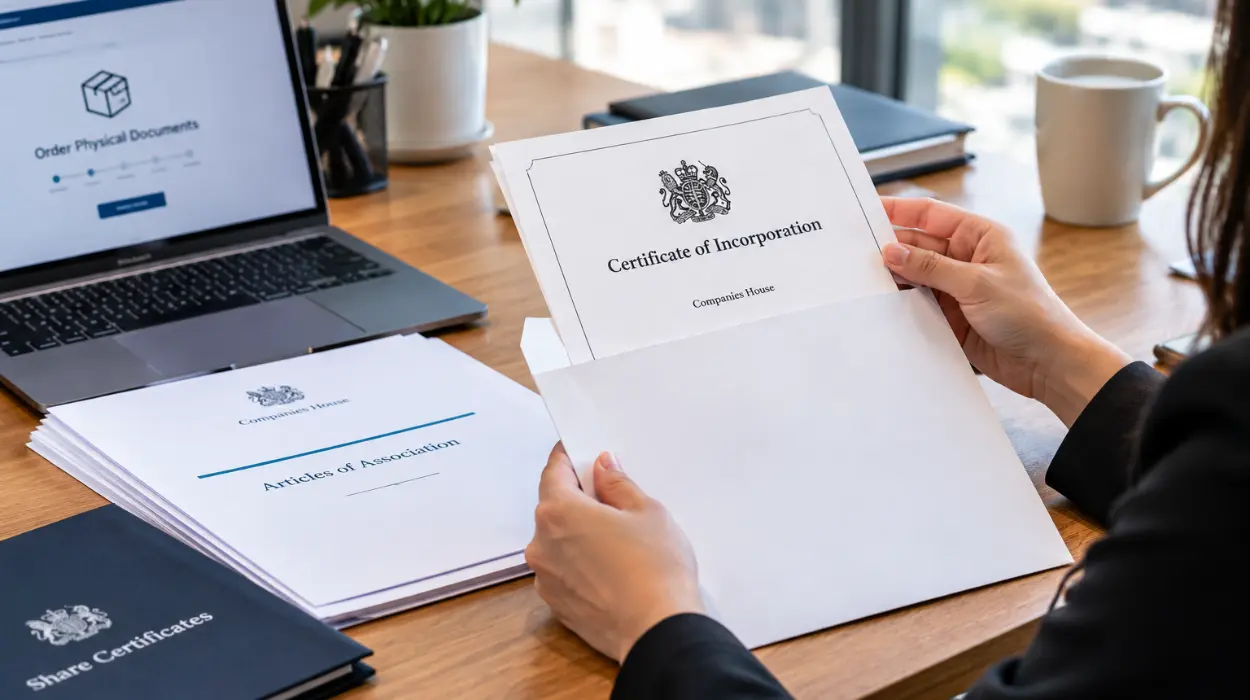
Form My Company protects your business identity by deploying automated monitoring tools, identity verification protocols, and real-time updates directly linked with Companies House. These systems block unauthorized changes to corporate registers, prevent director impersonation, and safeguard official company address records from fraudulent exploitation.
Corporate identity theft affects thousands of UK enterprises every year. Fraudulent actors target registered corporate details to secure unauthorized loans, order goods on credit, or intercept sensitive communications. Without dedicated monitoring, unauthorized alterations to your official public records can remain undetected for months. Implementing specialized identity safeguards halts fraudulent submissions before unauthorized changes damage your enterprise credit profile or business reputation.
What Is Corporate Identity Theft in the UK Business Sector?
Corporate identity theft occurs when unauthorized individuals manipulate registered company details at Companies House to commit financial fraud. Perpetrators alter director names, registered office addresses, or filing histories to exploit established business credit scores, acquire high-value assets, and intercept legal communications.
Corporate identity theft relies on manipulating public data. Fraudulent actors scan the Companies House register to find active firms with static management structures. They file unauthorized administrative changes using stolen web-filing credentials or forged paper forms. Once perpetrators change your registered office address to a location under their control, official government mail redirects away from your executive team.
After altering public filings, fraudulent actors impersonate legitimate company directors. They apply for trade credit agreements, lease luxury equipment, and secure business loans under your corporate identity. Lenders process applications based on the falsified Companies House records. Your organization only discovers the security breach when debt collection agencies issue payment demands for unauthorized liabilities.
Recovering from corporate identity theft requires extensive legal intervention and administrative resources. Companies must file statutory declarations with Companies House to remove fraudulent filings from the public register. During the recovery process, affected organizations face credit downgrades, operational disruptions, and severe reputational damage. Preventing unauthorized administrative changes forms the baseline requirement for maintaining long-term commercial integrity.
Why Are UK Small Businesses Vulnerable to Identity Fraud?
UK small businesses are vulnerable because public registration records provide open access to corporate filing histories and director details. Many small firms lack real-time register monitoring systems, allowing unauthorized paper submissions or web-filing alterations to process without immediate verification from internal management teams.
Public transparency forms the foundation of the UK corporate register. Any individual can view registered addresses, director names, and filing histories on the Companies House database. While transparency fosters commercial trust, open access gives bad actors the exact data required to forge statutory documents. Criminals extract official signatures and corporate numbers to construct convincing fraudulent applications.
Many small and medium-sized enterprises fail to review their public register entries regularly. Small business directors focus on day-to-day operations rather than routine compliance checks. This visibility gap allows fraudulent administrative updates to remain active for extended periods. When bad actors submit forged filings, Companies House processes the documents under standard filing procedures, assuming the submission carries proper internal authorization.
The transition toward digital filing opens additional risk vectors for organizations with weak credential management. Stolen authentication codes allow unauthorized users to modify corporate records online within minutes. For a detailed analysis of systemic commercial risks, review our guide on Understanding Corporate Fraud: The Modern Threats to UK Small Businesses. Integrating proactive register controls eliminates operational vulnerabilities across all corporate filing pathways.
How Do Form My Company Fraud Tools Stop Unauthorized Access?
Form My Company Fraud Tools stop unauthorized access by integrating electronic identity validation, real-time Companies House monitoring, and secure web-filing protections. These tools instantly block unverified administrative filings, alert corporate officers to register changes, and validate official director documentation against trusted databases.
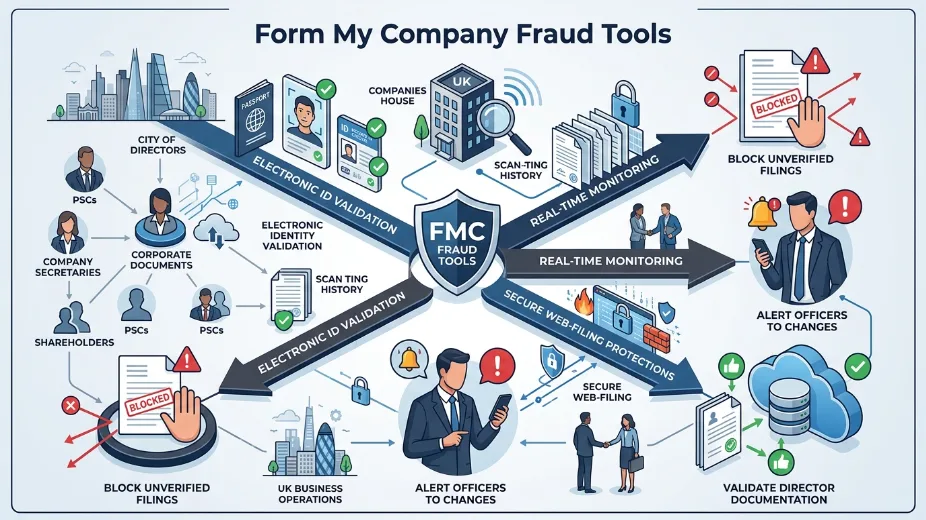
The system establishes an automated defense matrix around your registered corporate identity. When an individual attempts to alter corporate information, the platform verifies the submitted credentials against verified administrative profiles. If an unverified party submits an administrative request, the system flags the transaction instantly and notifies registered directors before the change impacts your public profile.
Electronic verification serves as the primary barrier against director impersonation. The system uses strict compliance protocols to validate leadership credentials. Three verification methods—passport checks, biometric scans, and address validation—ensure that only authorized corporate officers approve administrative updates. This multi-layered validation process prevents criminal syndicates from inserting fictitious directors into your corporate structure.
Real-time monitoring tools track all incoming interactions associated with your company registration number. Direct API connections with official registry databases ensure immediate notification whenever a document reaches the public queue. By utilizing dedicated enterprise solutions like our Fraud Protection services, organizations maintain total oversight and continuous authority over their official public records.
What Is the Difference Between Identity Safeguards and Business Insurance?
Identity safeguards actively prevent unauthorized register alterations and block fraudulent transactions before damage occurs. Business insurance compensates an enterprise for financial losses after a fraudulent event takes place, but insurance cannot restore compromised public records or damaged commercial credit scores.
| Safeguard Feature | Proactive Identity Protection | Reactive Business Insurance |
| Primary Mechanism | Blocks unauthorized filings instantly | Payouts after financial loss occurs |
| Credit Rating Protection | Prevents fraudulent credit lines | Resolves claims after default |
| Operational Impact | Zero downtime or administrative burden | Extended claims processes |
| Data Integrity | Preserves public register accuracy | Leaves altered records unchanged |
Proactive identity safeguards function as preventive security systems for public business data. These digital tools block fraudulent submissions at the entry point, keeping your administrative records accurate and clean. By maintaining accurate public register data, your company avoids administrative freezes, commercial loan rejections, and legal disputes with unverified creditors.
Business insurance policies operate reactively after identity theft occurs. Insurance policies may reimburse direct stolen funds, but financial compensation does not automatically fix altered filing histories or repair damaged relationships with suppliers. Insurance claims often involve complex investigations, leaving your enterprise credit profiles restricted while loss assessors evaluate claims.
Combining proactive security measures with corporate risk management strategies provides comprehensive defense. Insurance policies handle residual liability, while technical safeguards prevent criminal intrusion into public registers. To evaluate how preventive tools compare against traditional financial risk products, consult our analysis on Fraud Protection vs. Insurance: How to Shield Your Business Identity.
How Does Automated Registry Monitoring Prevent Corporate Identity Theft?
Automated registry monitoring prevents identity theft by scanning official corporate databases continuously for unauthorized filing attempts. The system alerts company owners instantly when changes occur, enabling rapid administrative rejection of fraudulent submissions before unauthorized updates take legal effect.
Automated monitoring replaces manual record checks with continuous digital oversight. The technology queries central registration databases multiple times per day to confirm data consistency. If a third party submits a change of registered office address or files an unauthorized confirmation statement, the automated monitoring engine detects the pending transaction immediately.
Speed forms the critical element in stopping corporate fraud. When fraudulent filings process without opposition, criminal networks quickly use those updated records to execute fraudulent transactions. Automated alerts inform company leadership within minutes of a filing attempt. Instant notifications allow corporate officers to contact registration authorities and halt processing before fraudulent entries update public databases.
The automated system also creates a secure digital audit log for all corporate compliance actions. This tracking mechanism logs every authorized submission, recording user credentials, timestamps, and document reference numbers. Maintaining a clear administrative trail simplifies compliance reporting and provides irrefutable evidence of legitimate management actions during legal audits.
Which Features Make Form My Company Tools Effective Against Fraud?
Form My Company tools feature real-time register tracking, secure online filing locks, biometric director authentication, and protected address services. These combined tools eliminate registration security gaps, block unauthorized web filings, and protect corporate records against criminal manipulation.
The platform integrates several protective mechanisms designed specifically for UK corporate compliance standards. Each tool addresses a distinct vulnerability point across physical and digital management workflows.
Activate Protected Online Filing: Locks online filing profiles to prevent unverified web-filing updates without multi-factor authorization.
Validate Director Credentials: Authenticates leadership identities using official UK compliance databases and biometric document verification.
Secure Registered Addresses: Replaces vulnerable physical addresses with managed corporate service locations to prevent physical mail intercept fraud.
Monitor Filing Histories: Scans public registers continuously to report any pending administrative changes instantly.
Combining these operational features forms an impenetrable barrier against commercial identity theft. Protected address services prevent criminals from intercepting physical statutory notices, while electronic filing locks stop unauthorized online updates. Biometric verification ensures that only recognized company directors can authorize changes to corporate structure.
System integration requires zero technical setup from business owners. The software connects directly to your corporate registration number, establishing immediate monitoring and risk protection across all filing pathways. This ongoing oversight protects company assets, maintains clean credit profiles, and protects commercial identity without adding daily administrative tasks.
How to Deploy Form My Company Fraud Tools for Your Business
To deploy Form My Company Fraud Tools, enter your enterprise registration details into the secure management dashboard, complete automated director verification, and enable real-time registry monitoring. The platform activates instant identity protections across all official corporate records immediately.
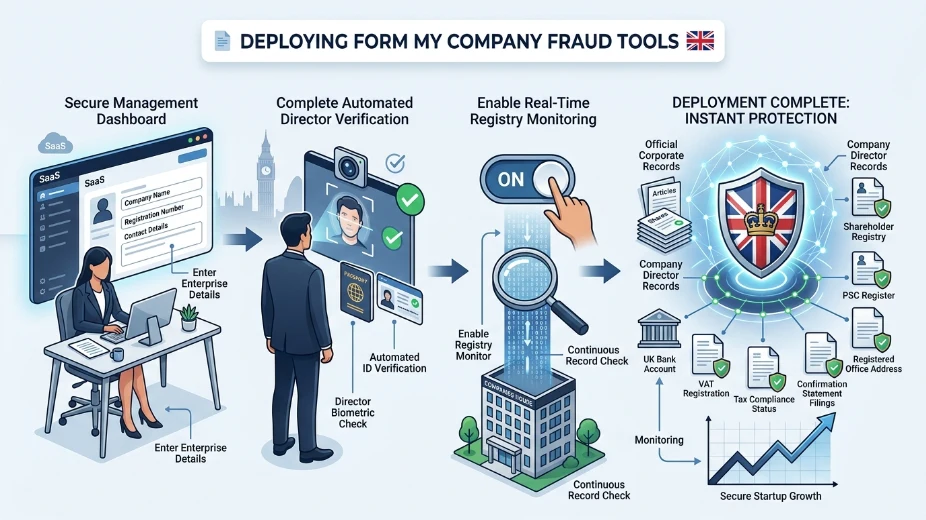
Begin by entering your official enterprise details into the secure management portal. The system synchronizes directly with public corporate registers using secure API connections. This initial sync maps your current corporate structure, identifying existing directors, registered addresses, and historical compliance filings.
Step 2: Identity Authentication and Access Controls
Complete the automated identity verification process for all active company officers. Directors upload government-issued identification documents directly through the secure encrypted platform. The system validates these credentials against official verification databases, establishing a secure access baseline for future administrative actions.
Step 3: Activation of Real-Time Safeguards
Enable continuous monitoring services and secure filing locks with a single click inside the administrative control panel. Once active, the platform monitors your business registration details around the clock. Any attempt to modify your corporate records triggers instant alerts, keeping your enterprise safe from unauthorized identity alterations.
Protect Your Corporate Identity Today
Corporate identity theft poses an immediate threat to modern enterprise operations. Criminal networks actively exploit public register data to commit financial fraud, alter corporate filings, and access unauthorized credit lines. Securing your public business records protects your financial standing, commercial reputation, and corporate stability.
Form My Company delivers clear, automated protections designed specifically for UK enterprise security. By integrating real-time registry monitoring, biometric director authentication, and secure filing protections, our platform blocks unauthorized register alterations before they cause operational harm.
Maintain complete control over your enterprise records with dedicated monitoring tools. Secure your company against corporate identity theft by activating robust identity safeguards today.
Explore our Fraud Protection guide,
How Chilean Founders Use UK Company Structures to Enter Global Markets
Start Your UK Company from China with Form My Company
Frequently Asked Questions
What is Form My Company fraud protection for UK businesses?
Form My Company fraud protection is a dedicated corporate security service designed to safeguard UK registered entities against identity theft and unauthorized filings at Companies House. The service continuously monitors company registers, alerts directors to unexpected changes, and restricts electronic access to protect official corporate records.
How does company identity fraud happen in the UK?
Company identity fraud occurs when unauthorized parties submit falsified administrative filings to alter a business’s registered address or director details at Companies House. Perpetrators then use the updated public records to secure fraudulent loans, open lines of credit, or intercept corporate mail.
Why do small businesses need fraud protection services?
Small businesses need fraud protection because public registration records are accessible to anyone, making companies without active register monitoring vulnerable to fraudulent alterations. Implementing Form My Company fraud protection provides real-time alerts and identity verification controls, preventing criminal manipulation before commercial credit scores are damaged.
Can individuals register for Companies House Protected Online Filing independently?
Yes, UK company officers can register for the free Protected Online Filing (PROOF) scheme directly through Companies House to block paper-based changes to company records. Utilizing Form My Company fraud protection enhances this baseline defense by adding multi-layered identity validation and immediate notifications across all digital filing channels.
How do I activate fraud protection for my business?
You can activate Form My Company fraud protection by providing your corporate registration number and completing automated director identity verification through the service portal. Once set up, the system links directly to official registry databases to deliver continuous monitoring and real-time security alerts.