To budget for conference catering without overspending, establish a strict per-head limit, select self-serve buffet formats, cap alcoholic beverage service, and confirm all service fees upfront. Request itemized proposals from caterers to identify hidden delivery, staffing, and equipment charges early in the planning process.
Conference catering represents one of the largest variables in corporate event management. Food and beverage expenses typically consume 30% to 40% of a total event budget. Financial mismanagement during the planning stage leads directly to cost overruns that jeopardize overall event profitability.
Corporate planners must establish structured evaluation methods to control catering expenditures. Accurate financial forecasting requires clear attendance metrics, menu design controls, and strict contract terms. Implementing precise budgetary frameworks keeps corporate events financially viable while maintaining high standards of hospitality.
What Are the Baseline Costs of Conference Catering?
Baseline conference catering costs in the UK average £25 to £65 per attendee daily for basic refreshments, lunch, and coffee breaks. Premium multi-course plating services range from £75 to £150 per person depending on menu complexity and staffing levels.
Calculating total expenditure begins with defining individual headcounts and mandatory service touchpoints. Morning coffee setups, mid-day meals, and afternoon snacks each carry distinct pricing structures. Planners must obtain itemized breakdowns for food production, chef labor, and support staff to establish true baseline figures.
Venue infrastructure directly impacts these fundamental operational costs. Booking dedicated corporate spaces with integrated food prep areas eliminates external kitchen rental surcharges. Organizations evaluating external venues secure transparent pricing by reserving an equipped Conference Room that already includes full service infrastructure.
External variables like seasonal ingredient availability also sway baseline pricing tiers. Produce costs fluctuate based on harvest cycles and transport logistics. Standardizing menus around local, seasonal items stabilizes baseline estimates and protects budgets against sudden supplier price increases.
How Do You Calculate an Accurate Per-Head Catering Budget?
Calculate an accurate per-head catering budget by multiplying the confirmed guest count by the base menu cost, adding a 15% service fee margin, and adding local taxes. Incorporate a 5% contingency reserve to cover last-minute attendee registrations.
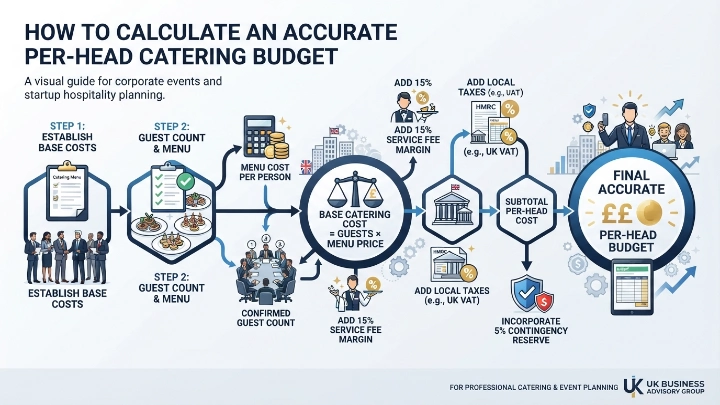
Accurate calculations depend on strict attendance tracking rather than raw invitation counts. Historical data shows that standard corporate conferences experience a 10% to 15% attrition rate between registration and event delivery. Budgeting based on unconfirmed invitees results in excess food production and direct financial waste.
Contractual headcount lock-in dates dictate financial exposure. Caterers enforce final headcount guarantees between 72 hours and 7 days prior to an event. Planners must align registration cutoff dates with vendor contract terms to avoid paying for absent attendees.
Variable consumption rates across different demographic groups alter volume requirements. All-day technical seminars demand higher coffee and carbohydrate volumes than brief afternoon presentations. Adjusting per-head allocations based on event duration and delegate activity levels prevents costly over-ordering.
Which Catering Formats Offer the Best Cost Efficiency?
Self-serve buffets and boxed meals offer the highest cost efficiency for corporate conferences. These formats reduce required waitstaff ratios from one server per 10 guests down to one server per 30 guests, cutting overall labor charges by 40%.
Plated multi-course meals require extensive front-of-house labor and rigid preparation timelines. Waitstaff, banquet captains, and dedicated bussers increase hourly labor billing dramatically. Plated services also create food waste when guests decline specific preset menu items.
Buffet stations maximize service speed while controlling total staffing requirements. Self-serve setups allow attendees to select portions based on preference, reducing discarded food volumes. Planners maintain cost control by controlling protein portion sizes at central carving stations while allowing unlimited self-service for side dishes.
Pre-packaged bento boxes and gourmet drop-off trays present another high-efficiency alternative. Boxed meals eliminate the need for specialized heating equipment, full banquet staff, and extensive table settings. Drop-off formats streamline clean-up operations, lowering venue rental duration and associated staff costs.
How Do Dietary Requirements Impact Your Catering Expenses?
Dietary requirements increase overall catering expenses by 10% to 25% when managed incorrectly. Ordering customized individual meals from external suppliers incurs premium single-plate preparation fees, specialized packaging costs, and separate delivery surcharges.
Managing diverse dietary preferences requires structural planning during the initial menu design phase. Modern events accommodate vegan, gluten-free, halal, and allergen-sensitive diets across large delegate groups. Collecting delegate dietary choices early prevents expensive emergency meal substitutions on event day.
Planners lower costs by selecting naturally inclusive core menus rather than ordering separate custom dishes. Crafting a primary menu that is inherently gluten-free and plant-based eliminates the need for duplicate prep lines. This strategy streamlines kitchen operations and prevents premium add-on fees from specialized culinary vendors.
Detailed knowledge of dietary management forms the foundation of efficient event planning. Organizers often ask why do dietary requirements matter when planning an event? to understand how health compliance drives both attendee satisfaction and supply chain logistics. Designing universally accessible menus remains the most effective method for controlling custom meal surcharges.
What Hidden Fees Should You Watch Out for in Catering Contracts?
Hidden catering fees include 18% to 22% automatic service charges, corkage fees of £10 to £25 per bottle, equipment rental surcharges, linen fees, and mandatory overtime rates for event shifts running past contractual limits.
Contractual fine print frequently conceals operational charges that expand baseline quotes. Service fees often cover administrative overhead rather than direct staff gratuities, prompting double-payment when planners add separate tips. Reviewing itemized terms identifies whether delivery, setup, and teardown labor are fully included.
Landlord and venue restrictions introduce secondary costs through kitchen access fees. Venues lacking prep spaces charge external caterers access fees to bring in mobile cooking appliances. Planners mitigate these risks by confirming that site utilities, power hookups, and waste disposal facilities are included without add-on fees.
Equipment rentals represent another major source of unexpected budget inflation. Standard catering quotes frequently omit specialized glassware, high-end silverware, audio-visual power runs for hot stations, and heavy-duty trash disposal. Securing all-inclusive contracts locks in flat rates for equipment delivery and recovery.
How Can You Negotiate Better Rates with Event Caterers?
Negotiate better catering rates by guaranteeing multi-event contracts, selecting off-peak event dates, consolidating food and beverage packages, and accepting seasonal menu flexibility in exchange for a 10% to 15% price reduction.
Caterers prefer predictable revenue streams and reward client commitment with discounted rates. Offering vendor exclusivity across an annual calendar of corporate meetings leverages bulk buying power. Caterers lower per-event margins when guaranteed multiple bookings across a fiscal year.
Date flexibility creates immediate leverage during rate negotiations. Mid-week days like Tuesday and Wednesday experience lower venue demand than Thursdays or Fridays. Booking during off-peak corporate periods enables caterers to utilize staff and inventory that would otherwise remain idle, yielding direct cost reductions.
Flexible menu clauses allow culinary teams to source lower-cost ingredients based on market fluctuations. Granting the executive chef permission to substitute seasonal produce reduces wholesale purchasing costs. Planners secure lower overall package rates by defining core protein types while allowing flexibility on side dishes and desserts.
How Do You Optimize Beverage Packages Without Overspending?
Optimize beverage packages by shifting from unlimited per-hour open bars to consumption-based billing or capped drink vouchers. Limiting beverage options to two wine varieties, two beer types, and non-alcoholic options cuts drink costs by 35%.
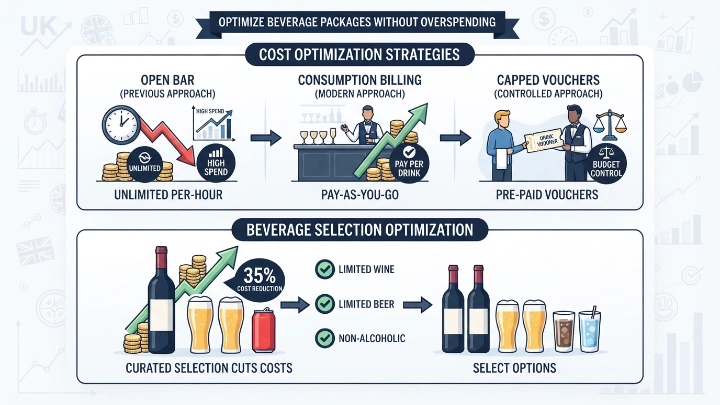
Unlimited duration beverage packages charge fixed hourly rates per person regardless of actual consumption. Non-drinking delegates incur the same billing rate as active consumers, resulting in financial inefficiency. Capped billing systems charge organizers only for bottles opened during the event window.
Drink voucher systems provide absolute control over alcohol expenditures. Distributing two pre-paid drink tokens per delegate sets a hard ceiling on corporate bar tabs. Once tokens are redeemed, the bar shifts to a cash-bar model where delegates purchase additional beverages independently.
Simplifying the beverage menu eliminates expensive specialty inventory. Full cocktail bars require complex mixers, specialized glassware, and dedicated mixologists that drive up staffing overhead. Offering curated house wines, regional craft beers, and flavored still waters keeps beverage logistics simple and cost-effective.
Why Is Choosing an All-Inclusive Venue the Ultimate Cost-Control Strategy?
Choosing an all-inclusive venue controls costs by bundling room hire, AV equipment, furniture setups, and professional catering into one flat-rate package. This approach eliminates separate vendor delivery fees, third-party markup costs, and coordination charges.
Managing multiple independent vendors introduces compounding administrative costs and logistics risks. Separate contracts for catering, table rentals, and venue hire create overlapping delivery fees and conflicting operational timelines. Integrated event solutions streamline accountability under a single itemized billing structure.
All-inclusive facilities maintain permanent on-site catering staff and kitchen infrastructure. On-site culinary operations eliminate transport delays, food reheating degradation, and mobile kitchen equipment setup fees. Form My Company offers fully managed corporate environments that integrate workspace logistics with professional food service.
Direct venue integration provides complete pricing transparency from initial booking to final reconciliation. Corporate organizers who get full-service catered event spaces from Form My Company protect their operational budgets against surprise vendor surcharges. Eliminating third-party catering markups keeps corporate event execution predictable and cost-effective.
Explore our Conference Room guide,
In-House vs External Catering for Corporate Events: Which Wins?
PAYE Registration vs. Payroll Management: Choosing Your Workflow
Frequently Asked Questions
How much does it cost to rent a conference room in the UK?
Conference room rental costs in the UK typically range from £30 to £150 per hour or £250 to £1,000+ per day, depending on location, delegate capacity, and included amenities. Fully serviced venues like Form My Company provide transparent pricing packages that include high-speed Wi-Fi, audio-visual equipment, and flexible catering options.
What amenities are typically included in a conference room rental?
Standard conference room rentals include high-speed internet, presentation displays or projectors, whiteboards, video conferencing hardware, and ergonomic seating. Premium meeting spaces booked through Form My Company also offer full-service event support, on-site technical assistance, and customizable catering setups.
Can you hire a conference room with catering included?
Yes, corporate event planners can hire meeting spaces with full catering services bundled into the venue contract. Form My Company offers fully serviced meeting venues with customizable food and beverage packages, ranging from basic coffee breaks and lunch boxes to multi-course plated dining.
How far in advance should I book a corporate conference room?
Small meeting spaces can often be booked 1 to 2 weeks in advance, but large conference rooms and peak corporate event dates should be secured 1 to 3 months early. Booking early with Form My Company ensures optimal room configurations, preferred catering arrangements, and guaranteed equipment availability.
How do I choose the right conference room size for an event?
Selecting the right conference room size depends on total headcount and the required seating layout, such as boardroom, theater, or classroom style. Planners should allow approximately 1.5 to 2 square meters per attendee to ensure comfortable movement, proper accessibility, and adequate space for presentation equipment.