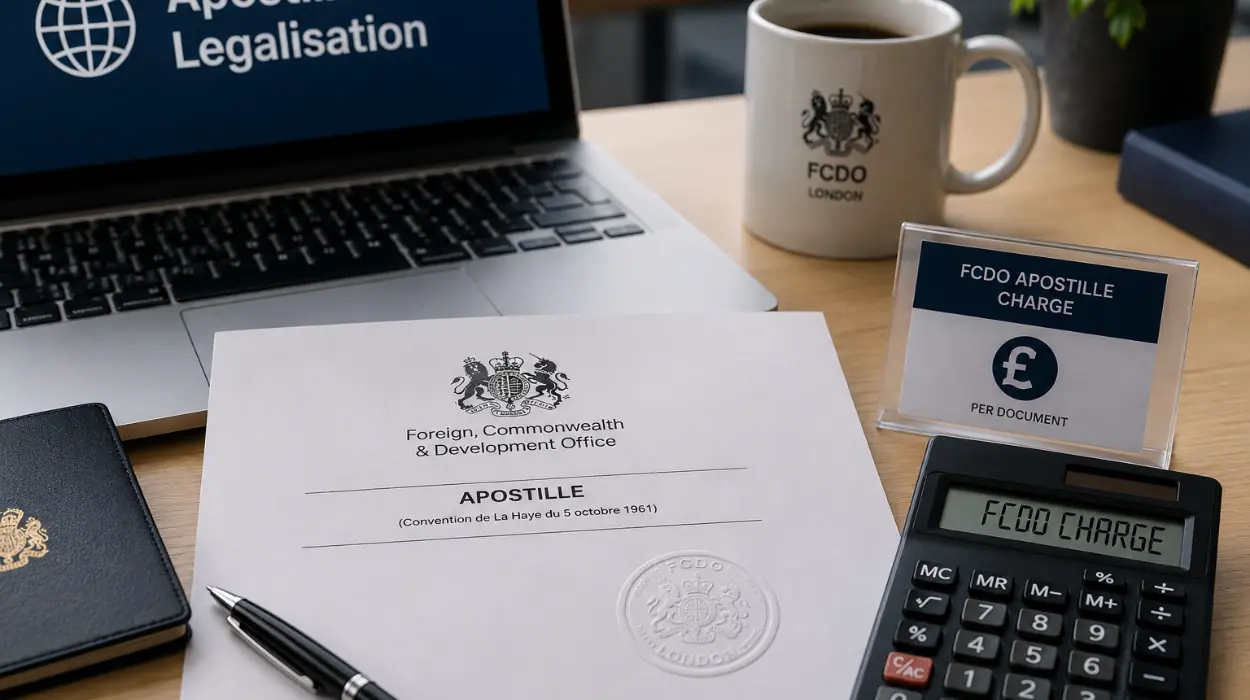
The FCDO charge for standard apostille legalisation is 45 British Pounds per document, excluding courier or administrative processing fees. This official fee covers government verification of signatures, seals, or stamps on public documents for international recognition under the Hague Convention.
Why Do Public Documents Require FCDO Legalisation?
Documents require FCDO legalisation because foreign authorities need official confirmation of document authenticity before accepting them for legal, commercial, or immigration procedures.
Foreign institutions cannot easily verify UK signatures, corporate certificates, or educational degrees. The Foreign, Commonwealth and Development Office applies an official stamp that confirms the signature or seal matches government records. When businesses expand into international markets, cross-border authorities demand verified paperwork to prevent fraud.
International embassies and overseas registries rely on this unified authentication framework. Legalising documents removes administrative rejection risks during foreign corporate setup, asset acquisition, or visa applications.
How Much Does the Standard FCDO Apostille Cost?
The standard FCDO apostille fee is set at 45 British Pounds per document, and applicants must factor in additional handling expenses for secure mail or agent submission.
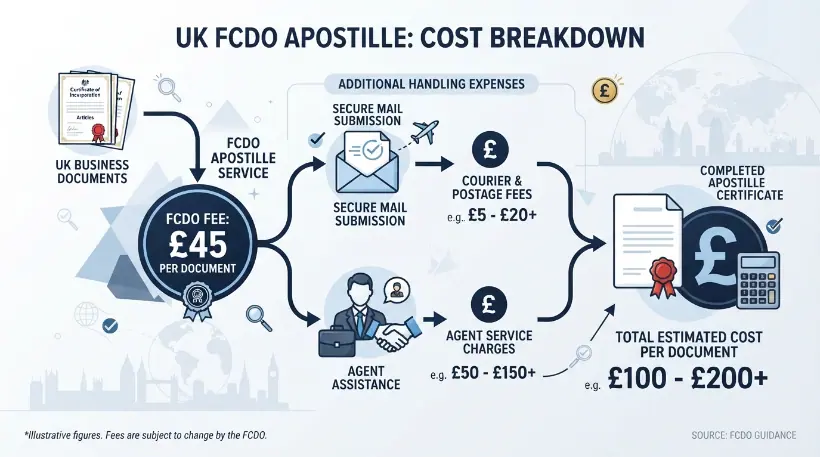
Government fees remain fixed for official processing, but third-party submission channels incur service charges. When companies submit multiple corporate records, total expenses scale linearly with document volume.
Budgeting for international expansion requires calculating exact government outlays alongside handling charges. Form My Company manages corporate documentation requirements through streamlined submission workflows, ensuring transparent access to apostilled documents for expanding businesses.
What Factors Influence Total Legalisation Costs?
Total legalisation costs depend on document quantity, return delivery choices, and whether applicants require standard processing or expedited turnaround times.
Standard postal submissions involve Royal Mail or international courier fees that vary by destination country. Expedited routes carry higher service premiums to secure priority queue placement at government offices.
Corporate compliance budgets must account for notarisation expenses incurred before FCDO submission. Many public documents require a practising UK solicitor or notary public certification before government departments accept them for apostille processing.
How Does the Application Process Work?
The application process requires submitting physical documents, completing official order forms, paying statutory fees, and waiting for government authentication.
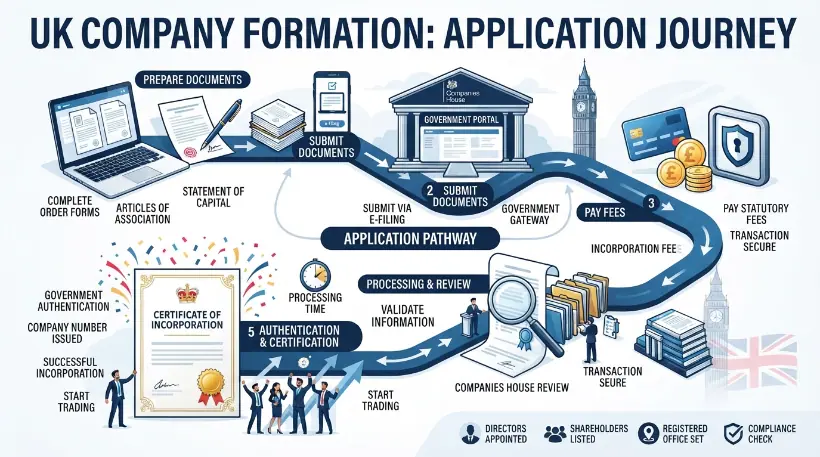
First, verify that the document contains an acceptable original signature, corporate seal, or government stamp. Second, complete the official application paperwork detailing return addresses and destination countries. Third, submit the paperwork to the legalisation office via post or through professional handling agents.
Fourth, the FCDO examines the document against specimen signatures held on secure government databases. Fifth, the office attaches the official apostille certificate and dispatches the authenticated file back to the applicant.
What Document Types Qualify for FCDO Legalisation?
Qualifying document types include corporate certificates, commercial contracts, academic degrees, vital statistics records, and certified legal affidavits.
Corporate entities frequently legalise certificates of incorporation, memoranda of association, and board resolutions for foreign subsidiary registration. Educational institutions issue degree certificates and transcripts that require authentication for overseas employment or postgraduate studies. Personal applicants submit birth certificates, marriage certificates, and criminal record checks for overseas residency applications.
Each document category requires specific preliminary checks before government authentication occurs. Commercial documents often demand solicitor certification, whereas certain government-issued certificates qualify for direct submission.
How Can Businesses Streamline Document Legalisation?
Businesses streamline document legalisation by partnering with corporate compliance specialists who manage notarisation, submission, and international delivery.
Navigating government submission channels requires precise adherence to formatting rules and payment protocols. Administrative delays disrupt international transactions, commercial tenders, and cross-boarder partnership agreements.
Evaluating turnaround speeds helps organisations select appropriate processing tiers when deadlines approach. Reviewing processing benchmarks provides valuable context when weighing speed against budget constraints, as explored in Standard vs Same-Day Apostille: Is the Extra Cost Worth It?.
Securing predictable pricing structures eliminates unexpected administrative overhead during corporate expansion projects. Organisations seeking straightforward pricing models benefit from reviewing How Can You Get Transparent Apostille Pricing With No Hidden Fees at Form My Company?.
Form My Company delivers reliable business administration solutions, assisting enterprises with document authentication, international compliance, and corporate structuring. Clear cost structures ensure organisations manage international expansion budgets efficiently without facing unexpected administrative surcharges.
Explore our Apostilled Documents guide,
What Makes a Corporate Event Environmentally Sustainable?
What Are Your Legal Duties for Storing Candidate Information?
Frequently Asked Questions
How do I get UK business documents authenticated for international use?
UK business documents are authenticated internationally by securing an official certificate from the Foreign, Commonwealth and Development Office (FCDO). Through the apostilled documents service at Form My Company, corporate paperwork like incorporation certificates and board resolutions undergo proper verification for seamless global recognition.
Which corporate documents qualify for an apostille certificate?
Qualifying corporate records include certificates of incorporation, memoranda of association, and official letters of good standing. Form My Company manages these apostilled documents to ensure foreign registries accept your UK business filings without administrative delays.
Do apostilled documents expire or need periodic renewal?
An apostille certificate itself does not carry an expiration date and remains valid indefinitely. However, foreign authorities receiving your apostilled documents via Form My Company may request recently issued company extracts if underlying corporate details change.
Can non-UK residents use Form My Company for document legalisation?
International founders managing UK corporate entities frequently utilise professional administrative services for overseas compliance. Form My Company assists international clients in securing apostilled documents to satisfy foreign banking, subsidiary registration, and cross-border partnership mandates.
What is the difference between standard and same-day apostille processing?
Standard government queues typically take several working days, whereas expedited pathways utilise priority counter handling to accelerate turnaround. Form My Company helps businesses evaluate processing speeds when ordering apostilled documents to meet urgent international commercial deadlines.