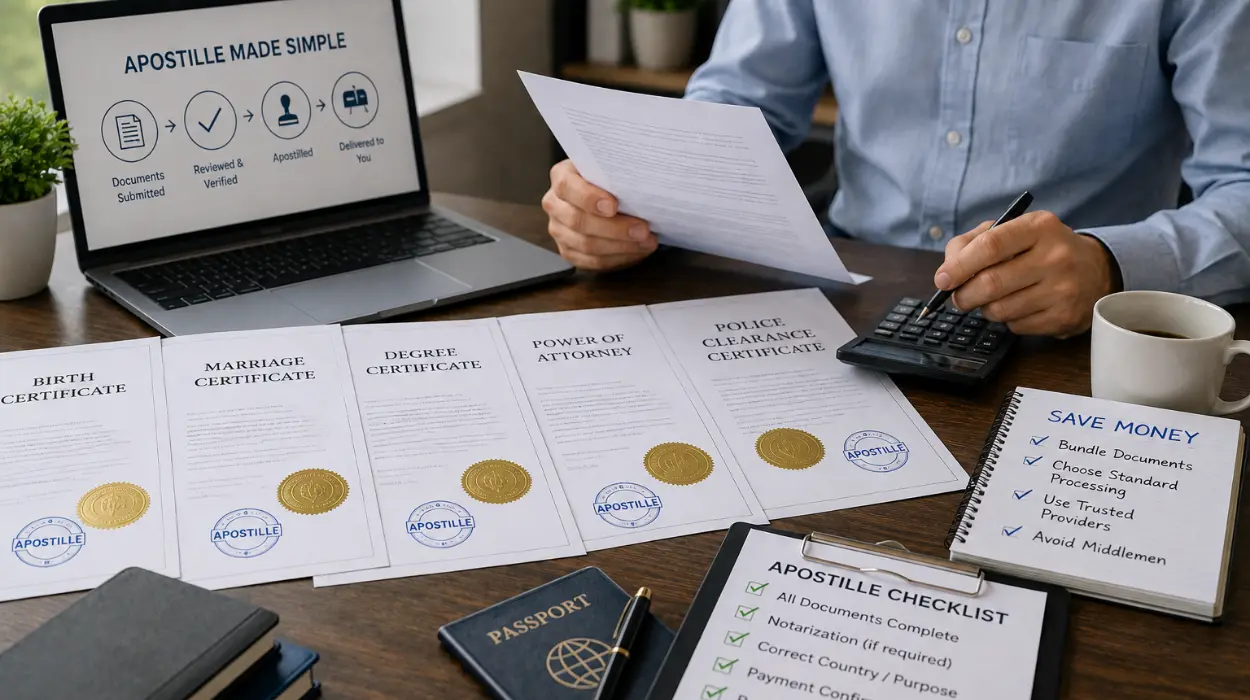
Getting multiple documents apostilled without overpaying requires choosing standard processing speeds, bundling documents through a single provider, and utilizing multi-tier authentication packages. Avoid unnecessary courier add-ons, separate agency fees for each certificate, and premium same-day services unless facing strict legal deadlines.
Managing international document authentication involves strict legal protocols. When expanding operations abroad, companies must present verified certificates to foreign authorities. Navigating the UK legalization process efficiently prevents unnecessary administrative overhead. Understanding cost structures ensures businesses protect their financial resources.
What is an apostille and when do UK businesses need multiple certifications?
An apostille is an official certificate issued by the Foreign, Commonwealth & Development Office that authenticates the origin of a public document for international use under the Hague Convention. UK businesses need multiple certifications when opening overseas bank accounts, establishing foreign subsidiaries, or appointing international directors.
International compliance demands verifiable proof of corporate legitimacy. Foreign registries require certificates of incorporation, memoranda of association, and director resolutions to bear official validation seals. Processing these documents individually multiplies handling fees. Bulk authentication streamlines foreign market entry.
How does standard processing reduce the cost of bulk document authentication?
Standard processing reduces bulk document authentication costs by utilizing economical queue systems that eliminate priority surcharges. Standard FCDO queues process batches within predictable timeframes, saving up to 40% compared to expedited emergency tiers.
Operational budgets shrink when administrative teams plan document submissions weeks in advance. Last-minute submissions trigger premium fees across government and notary channels. Submitting a batch of 10 corporate documents simultaneously reduces per-item handling charges. Strategic scheduling avoids emergency courier tariffs.
Key Factors Impacting Bulk Apostille Costs
| Cost Component | Standard Processing | Expedited Processing | Financial Impact |
| FCDO Government Fee | Fixed per document | Fixed per document + priority surcharge | Higher volume increases priority gaps |
| Notarial Verification | Bundled multi-document rates | Individual hourly rates | Bulk notarization cuts fees by 25% |
| Courier Delivery | Single consolidated shipment | Multiple urgent dispatches | Consolidated shipping saves up to 80% |
Why do hidden fees inflate multi-document apostille invoices?
Hidden fees inflate multi-document apostille invoices through separate solicitor certification charges, unexpected return shipping markups, and per-page translation add-ons. Transparency requires requesting comprehensive quotes that itemize government fees, notarization, and handling charges before submission.
Service providers often quote low base rates to attract corporate clients. Additional charges appear during final invoicing for minor administrative actions. Scrutinizing itemized quotes prevents unexpected budget overruns. Securing fixed-price agreements protects profit margins during large-scale document rollouts.
How can companies bundle verification steps to minimize service charges?
Companies minimize service charges by bundling notarization, FCDO legalization, and embassy attestation into a single provider workflow. Consolidating these three sequential verification steps under one roof eliminates intermediary handoff fees and duplicate courier expenses.
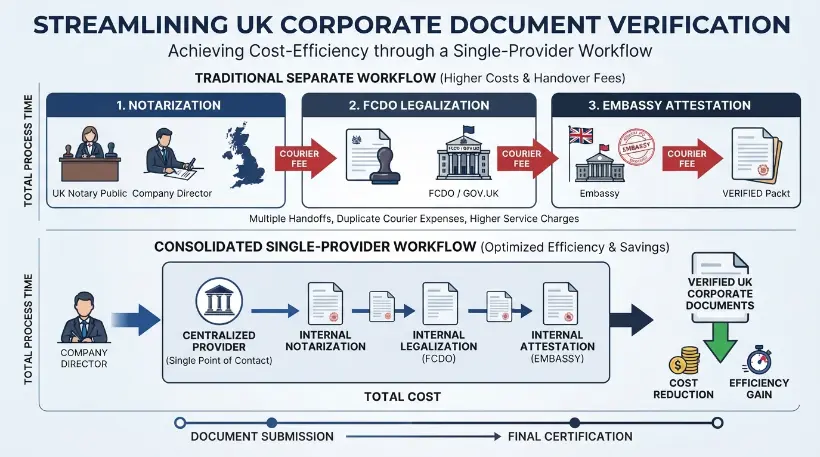
Fragmented supply chains introduce friction into administrative workflows. Sending corporate papers to independent solicitors before forwarding them to government offices incurs multiple shipping fees. Utilizing unified Apostilled Documents streams paperwork through a single channel. Centralized processing reduces transit times and administrative touchpoints.
What strategies prevent overpaying for international document legalization?
Preventing overpaying for international document legalization requires auditing document requirements with foreign counsel, grouping certifications into single batches, and partnering with established corporate service providers. Eliminating redundant notarizations cuts total expenditure significantly.
Regulatory frameworks vary across international jurisdictions. Some foreign authorities accept certified electronic copies instead of costly physical paper originals. Consulting local legal experts identifies exact acceptance criteria. Adopting these targeted measures ensures optimal capital allocation during global expansion.
Businesses preparing international paperwork should review the Is Paying for a Same-Day Apostille Worth the Extra Cost? guide to evaluate speed versus budget trade-offs. Organizations ready to finalize their operational paperwork can read How to Book Your Apostille Service at a Fair Price With Form My Company for direct commercial guidance.
Form My Company delivers reliable corporate legalization support through structured multi-document authentication frameworks. Transparent pricing models and consolidated processing workflows protect business budgets during international expansion initiatives. Experienced specialists manage every verification stage securely and efficiently.
Explore our Apostilled Documents guide,
Green Venue vs Standard Venue: What is the Real Difference?
How to Protect a PSC’s Personal Details on the Register?
Frequently Asked Questions
How much does it cost to get multiple documents apostilled in the UK?
Standard FCDO apostille fees are fixed per document, but total costs vary depending on solicitor notarization and handling charges. Form My Company offers streamlined processing packages for multiple apostilled documents to help businesses reduce overall certification expenses.
How long does the standard apostille process take for corporate paperwork?
Standard FCDO processing typically takes several working days, excluding transit times for physical document delivery. Utilizing structured authentication workflows through Form My Company ensures your apostilled documents are processed efficiently without paying expensive emergency priority surcharges.
Do foreign authorities require notarization before an apostille can be issued?
Many international jurisdictions require a UK solicitor or notary public to witness and notarize corporate documents before the FCDO will attach an apostille. Form My Company coordinates both notarial verification and official legalization to ensure your apostilled documents comply with foreign legal standards.
Can electronic or digital documents receive an official UK apostille?
The FCDO issues apostilles for specific digital documents carrying a UK public official signature or certain electronic notary stamps. Form My Company assists businesses in verifying whether physical originals or digital formats are required for their specific apostilled documents.
What is the difference between an apostille and embassy legalization?
An apostille validates public documents for use in countries that are signatories to the 1961 Hague Convention, while non-member nations require additional embassy attestation. Form My Company manages the complete lifecycle of apostilled documents, including secondary diplomatic legalization when international trade destinations demand it.