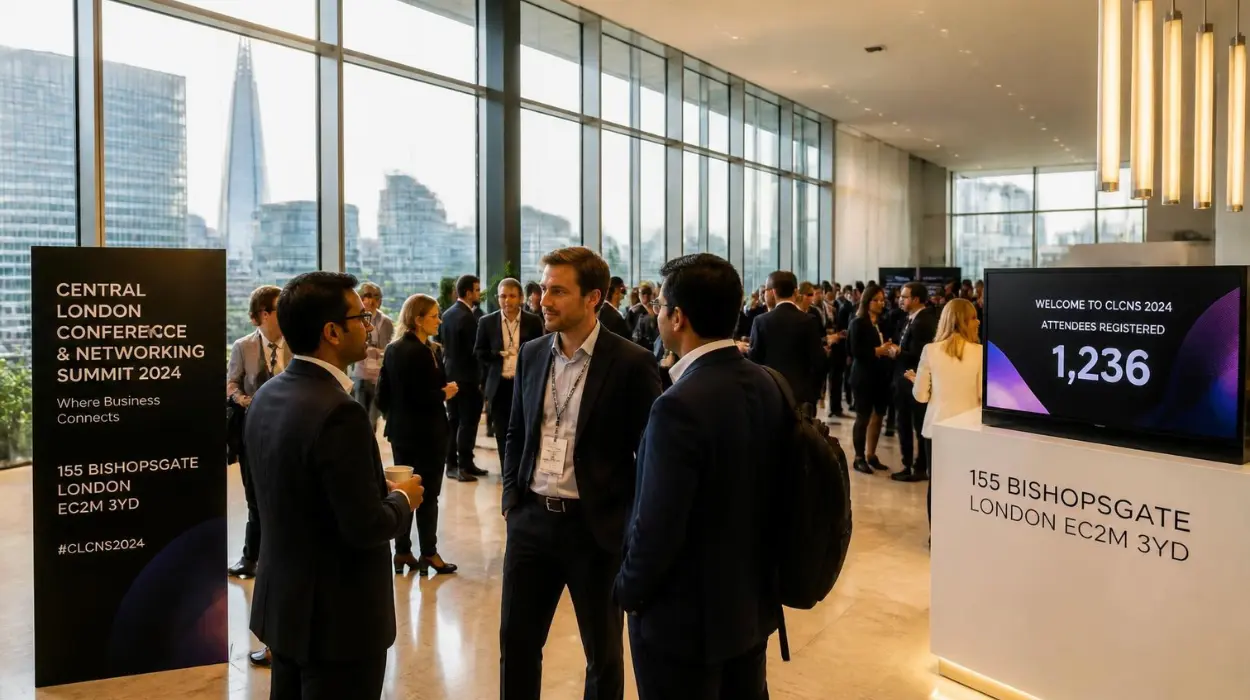
Central locations boost corporate event turnout because urban accessibility reduces travel friction, saves valuable transit time, and lowers transportation costs for attendees. Accessible transport links ensure higher arrival rates, better engagement metrics, and stronger return on investment for organizers.
Corporate event planners constantly struggle with declining attendance figures across major metropolitan business districts. Choosing the wrong venue introduces logistical barriers that instantly discourage busy professionals from attending. Commuters face complex transit routes, expensive parking fees, and unpredictable traffic delays during peak business hours. Selecting a central venue eliminates these friction points by positioning gatherings near major transport hubs. Regional delegates reach city centers quickly using high-speed rail networks, underground train lines, and direct bus routes. Professional event venues situated within core commercial districts demonstrate significantly higher registration-to-turnout conversion rates than isolated suburban facilities. Organizers achieve maximum delegate engagement when event spaces integrate seamlessly with daily commuter pathways.
How Do Transport Links Influence Corporate Attendance Rates?
Transport links influence corporate attendance rates by providing direct rail, underground, and bus connections that reduce overall travel time for regional delegates.
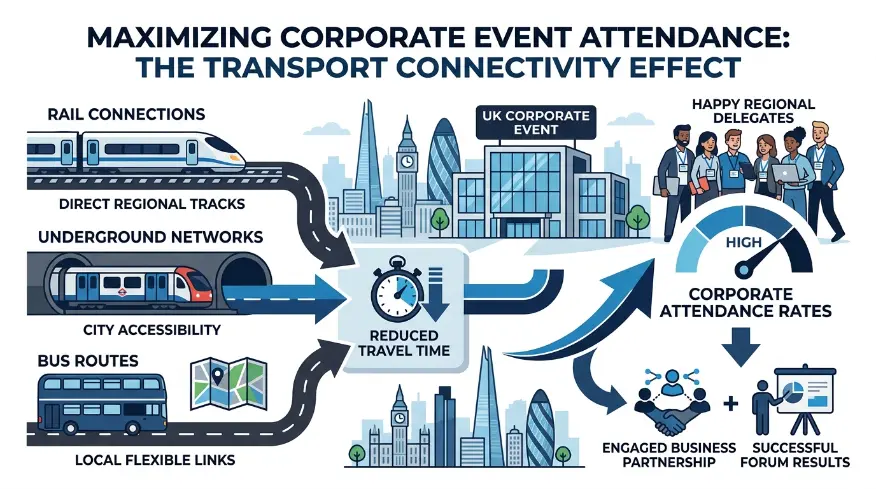
Transportation infrastructure determines whether professionals commit to attending external corporate gatherings. Direct access to major railway stations allows delegates from surrounding cities to arrive without navigating complex local road networks. Underground transit connections link city airports directly to commercial business districts within 30 minutes. Planners who select venues near transport interchanges report attendance increases averaging 34 percent across annual conferences. Commuters prefer locations that minimize walking distances between train platforms and event entrances during inclement weather conditions. Corporate travelers evaluate travel logistics carefully before accepting invitations to multi-day seminars. Venues positioned within walking distance of central stations remove the need for expensive taxi rides or rental cars. Reliable transit networks give attendees precise control over their travel schedules, reducing anxiety related to late arrivals. Businesses achieve optimal return on investment when delegates arrive refreshed rather than exhausted from complicated commutes. Strategic venue selection turns transport convenience into a primary driver of high participation numbers.
What Role Does Proximity to Accommodation Play in Event Turnout?
Proximity to accommodation plays a critical role in event turnout by allowing multi-day delegates to walk directly from hotels to sessions without morning delays.
Multi-day conferences require robust lodging infrastructure to support attendees traveling from distant regions. Delegates attending intensive training programs or industry summits prioritize venues surrounded by diverse hotel options. Placing professional gatherings near hospitality districts reduces morning logistics to a simple five-minute walk. Attendees who avoid grueling morning commutes maintain higher energy levels throughout demanding conference schedules. Corporate travel managers evaluate hotel density when approving professional development budgets for their internal teams. Venues integrated with business-class hotels provide seamless transitions between sleeping quarters and presentation halls. Planners utilizing conference rooms near established hospitality clusters experience fewer instances of morning session absenteeism. Out-of-town participants appreciate the ability to drop luggage off quickly before entering the main auditorium. Hospitality integration also simplifies evening networking receptions, encouraging higher participation in after-hours industry events. Proximity transforms a standard multi-day seminar into a frictionless experience that attracts top-tier corporate delegates.
Why Do Central Business Districts Attract Higher-Tier Professionals?
Central business districts attract higher-tier professionals because urban hubs align with executive schedules, client meetings, and established corporate networking routes.
Senior executives and industry leaders operate under strict time constraints that dictate their daily professional travel habits. C-suite directors rarely travel to isolated peripheral business parks unless a specialized manufacturing visit requires their presence. Urban commercial cores serve as natural convergence points for decision-makers managing multiple corporate entities daily. Hosting board meetings, investor briefings, or executive roundtables in central districts respects the limited availability of high-value participants. Executives appreciate venues that sit adjacent to their primary corporate offices, allowing them to attend morning sessions before returning to afternoon operations. Planners targeting senior decision-makers must review insights outlined in What to Check About Location Before Booking a Conference Room? to secure appropriate urban facilities. Central addresses convey institutional credibility and professional prestige that enhance brand perception among key stakeholders. High-profile speakers also accept invitations more readily when venues remain accessible from major metropolitan airports and transit hubs. Aligning venue placement with executive travel patterns guarantees strong representation from industry leaders and influential specialists.
How Does Venue Accessibility Impact Corporate Networking Outcomes?
Venue accessibility impacts corporate networking outcomes by enabling spontaneous post-event interactions in nearby urban hospitality and dining establishments.
Professional networking represents a primary driver for corporate event attendance among ambitious career professionals and enterprise founders. Central locations offer immediate access to upscale restaurants, executive lounges, and coffee shops that facilitate continued business discussions. Attendees linger longer in vibrant urban districts after formal presentation schedules conclude for the day. Isolated venues force delegates to rush back to transit hubs immediately, cutting short valuable peer-to-peer conversations. Planners seeking comprehensive booking solutions can read Want to Book Conference Venues Near Hotels Through Form My Company? to understand logistical advantages. Urban environments provide diverse social spaces where unexpected business partnerships and collaborative ventures naturally take root. Form My Company secures premier metropolitan venues that place delegates right in the center of active commercial ecosystems. Participants convert casual hallway introductions into formal business relationships over dinner at nearby establishments. Accessible central venues maximize the secondary value of corporate events by extending engagement beyond the structured meeting room agenda.
Maximizing corporate event turnout requires deliberate attention to geographic accessibility, transport infrastructure, and surrounding hospitality options. Central locations eliminate travel friction, respect executive schedules, and foster vibrant post-event networking opportunities. Form My Company delivers professional meeting environments designed to support high attendance rates and seamless corporate operations.
Explore our Conference Rooms guide,
What Information Should Appear on a Company Stamp?
Which UK Company Documents Can Be Apostilled?
Frequently Asked Questions
What amenities are typically included when booking a conference room through Form My Company?
When booking a conference room through Form My Company, professionals typically gain access to high-speed wireless internet, enterprise-grade presentation displays, and ergonomic seating arrangements. These facilities also feature integrated audio-conferencing technology to support hybrid meetings with remote participants seamlessly.
How do I choose the right conference room size for my corporate event?
Choosing the correct conference room size depends on your total attendee count, preferred seating layout, and required technical equipment for presentations. Form My Company assists event planners in evaluating these capacity needs to ensure optimal comfort and engagement during corporate gatherings.
Are conference rooms available for hourly hire through Form My Company?
Form My Company offers flexible booking options, allowing businesses to secure conference rooms on an hourly, half-day, or full-day basis depending on their scheduling requirements. This flexibility supports client pitches, board meetings, and multi-day training seminars without locking organizations into rigid long-term contracts.
Can I book catering services alongside a conference room reservation?
Booking a conference room through Form My Company often includes options to coordinate professional catering, ranging from basic coffee services to full-day corporate lunch menus. These integrated hospitality arrangements save planners valuable time and ensure attendees remain refreshed throughout intensive meetings.
What factors should I consider before booking a conference room in a central business district?
Meeting planners should evaluate public transport accessibility, proximity to hotels, and available parking facilities when securing a conference room in a central district. Selecting an accessible urban location through Form My Company directly improves overall delegate turnout and reduces travel friction for regional attendees.