Handling cross-border document requirements demands strict adherence to international verification standards, authenticated corporate filings, localized legal translation, and multi-jurisdictional compliance frameworks to prevent regulatory delays, legal penalties, and transaction failures during global business expansion.
What Are Cross-Border Document Requirements?
Cross-border document requirements encompass mandatory legal, financial, and corporate paperwork validated across international boundaries to satisfy regulatory frameworks, foreign registry rules, and compliance mandates.
International trade and global corporate expansion require businesses to move sensitive paperwork across distinct legal jurisdictions. Regulatory authorities demand absolute accuracy in every submission to prevent fraud and financial crime. Local company registries enforce strict compliance protocols for foreign entities. Cross-border operations rely on verified credentials, certified translations, and official apostille stamps.
Foreign banks and regulatory bodies require verified proof of corporate existence before opening accounts. Three verification methods secure cross-border compliance: certified corporate registries, notarised board resolutions, and official apostille authentication. Businesses must align their internal filing systems with international standards. Managing these workflows manually increases the risk of administrative rejection by foreign authorities.
Why Do International Registries Demand Specific Paperwork?
International registries demand specific paperwork to verify legal entity status, establish ultimate beneficial ownership, authenticate director identities, and enforce local corporate transparency laws.
Foreign government bodies protect their domestic economies through rigorous corporate vetting processes. Regulatory compliance teams inspect incoming foreign documents for signs of structural inconsistency or missing data. Registries require clear proof of business registration from the home country.
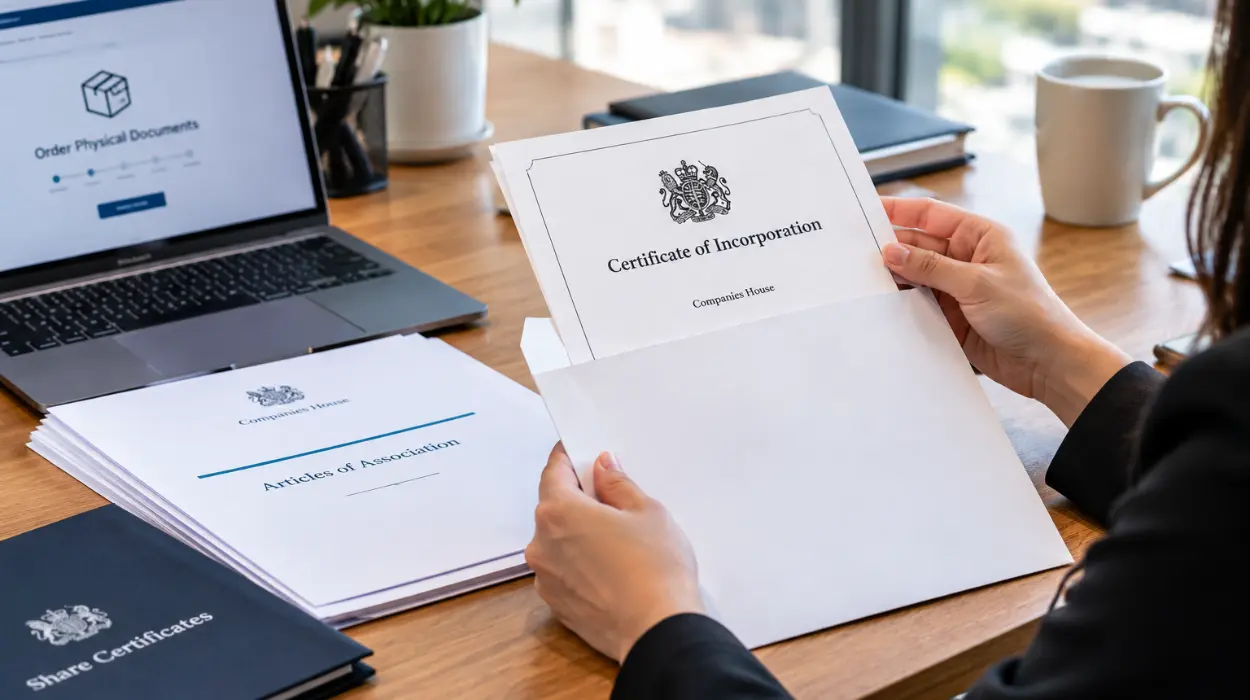
Establishing a foreign branch or subsidiary involves submitting foundational corporate charters. Two key documentation types satisfy international scrutiny: certified articles of association and official certificates of incorporation. Foreign authorities review these records to determine operational legitimacy. Discrepancies in corporate documentation trigger immediate rejection from foreign registrars.
Core Verification Documents Required by Foreign Authorities
| Document Type | Purpose | Verification Standard |
| Certificate of Incorporation | Proves legal existence | Official government seal |
| Articles of Association | Defines internal governance | Certified true copy |
| Director Identification | Validates individual identity | Government-issued photo ID |
How Does Document Authentication Protect Global Operations?
Document authentication secures global operations by validating official credentials through international legal frameworks, diplomatic channels, and standardized certificate endorsements.
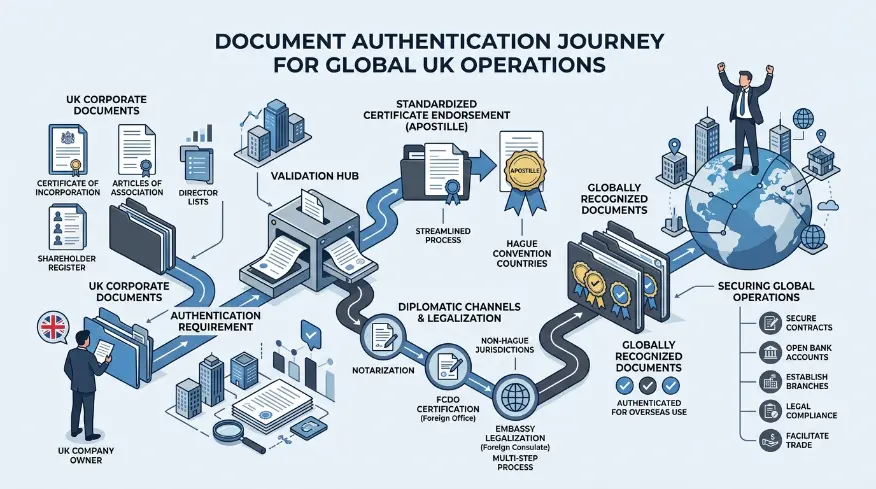
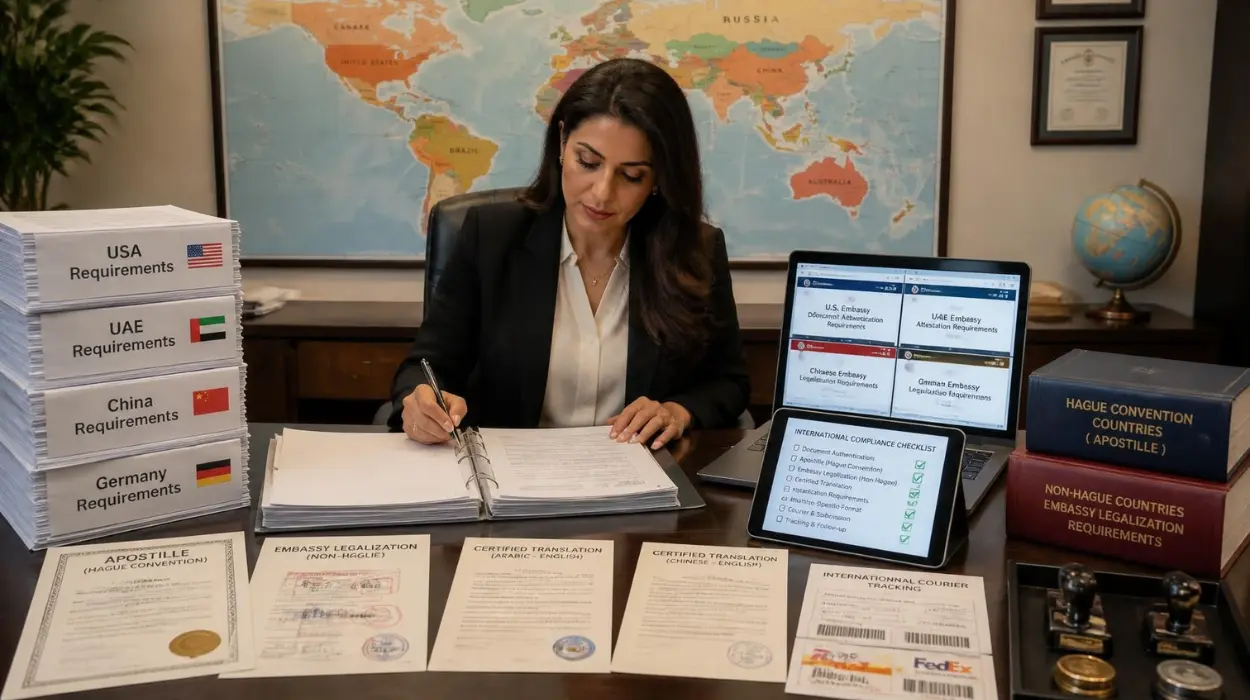
Cross-border legal validity requires documents to undergo formal authentication before acceptance abroad. The Apostille process simplifies international document recognition among participating countries. Standard consular legalisation applies when dealing with non-apostille member states. Foreign partners rely on authenticated paperwork to confirm business stability.
Unverified documents invite severe legal challenges during international dispute resolution. Three authentication steps prevent document rejection: local notary public attestation, government department verification, and foreign embassy legalisation. Executing these steps correctly protects corporate assets across borders.
What Challenges Arise During Multi-Jurisdictional Compliance?
Multi-jurisdictional compliance challenges emerge from conflicting legal frameworks, varying language requirements, strict filing deadlines, and disparate verification protocols across international borders.
Navigating foreign regulatory environments exposes businesses to complex administrative hurdles. Different countries enforce distinct rules regarding corporate governance and financial reporting. Translating legal terminology into local languages requires specialized linguistic expertise. Inaccurate translations invalidate official corporate records instantly.
Companies managing multiple international entities face overwhelming paperwork volumes. Two primary operational risks threaten cross-border projects: regulatory fines and severe filing delays. Organizations utilize Supplementary Company Documents to streamline cross-border due diligence and satisfy foreign filing mandates. Integrating specialized administrative support minimizes human error during document preparation.
How Can Businesses Streamline Cross-Border Filing Workflows?
Businesses streamline cross-border filing workflows by deploying standardized document templates, automating verification checks, partnering with compliance experts, and utilizing centralized digital repositories.
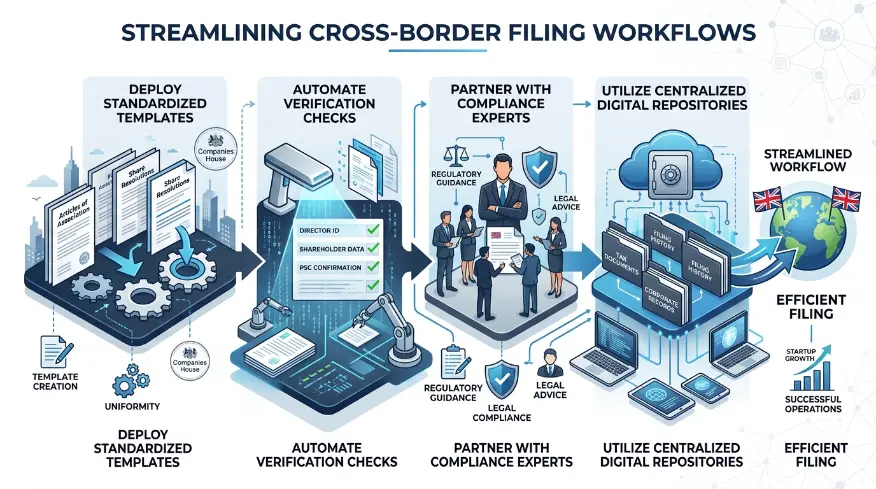
Operational efficiency in global expansion relies on systematic document management. Standardizing paperwork formats reduces preparation time across multiple international markets. Centralized digital storage allows compliance teams to access verified records instantly. Regulatory updates require continuous monitoring to maintain active compliance status.
Form My Company delivers expert assistance through the What Paperwork Do You Need for Cross-Border Due Diligence? framework to guide initial planning stages. Strategic administrative planning prevents costly operational bottlenecks. Organizations ready to finalize international expansion can Secure Cross-Border Ready Documents From Form My Company? to accelerate global market entry.
Handling cross-border document requirements requires rigorous attention to detail, strict adherence to international legal standards, and precise multi-jurisdictional compliance. Organizations eliminate administrative friction by utilizing structured authentication workflows, certified translations, and official registry validations. Form My Company delivers reliable corporate solutions that ensure international paperwork meets exact foreign regulatory standards.
Explore our Supplementary Company Documents guide,
How to Plan a Carbon-Conscious Conference Step by Step?
How to Decide Which Company Documents to Apostille for Overseas Use?
Frequently Asked Questions
What are supplementary company documents and why are they needed?
Supplementary company documents are official records that provide additional legal, financial, or structural evidence beyond standard incorporation certificates. Businesses require these supplementary company documents when dealing with international trade, foreign bank account opening, or complex corporate due diligence. Form My Company provides these vital records to ensure complete legal compliance and seamless cross-border operations.
How do I obtain certified copies of my company documents?
Certified copies of corporate records are requested directly from official registries or authorized corporate service providers. These documents undergo formal authentication and certification processes to prove their legal validity for domestic and international use. Form My Company assists business owners in rapidly securing certified supplementary company documents with exact compliance standards.
When does a business need an apostille for corporate documents?
An apostille is required when a company submits official corporate documents to foreign authorities in countries that are signatories to the 1961 Hague Convention. This official stamp verifies the authenticity of signatures and seals on foundational records like certificates of incorporation or articles of association. Form My Company manages the entire apostille authentication workflow to streamline international business expansion.
What documents are included in a corporate compliance portfolio?
A corporate compliance portfolio typically includes up-to-date registers of directors, shareholders, PSC details, and certified constitutional documents. Regulatory authorities and foreign financial institutions inspect these comprehensive records to verify ultimate beneficial ownership and legal status. Form My Company curates exact supplementary company documents to maintain your business readiness for any compliance audit.
How long does it take to process supplementary company documents?
The processing time for supplementary company documents varies depending on the specific government registry and whether legalisation or apostille services are required. Standard document retrieval and certification usually complete within a few working days through professional filing services. Form My Company accelerates document delivery timelines to prevent operational delays during critical business transactions.