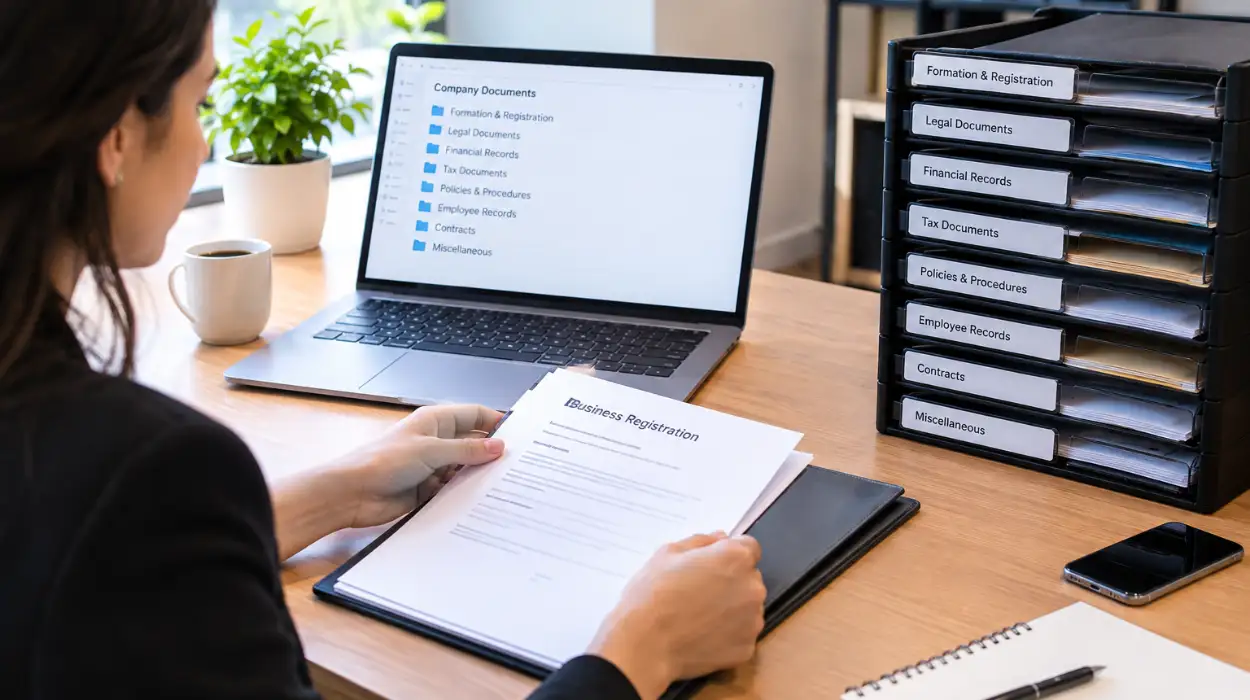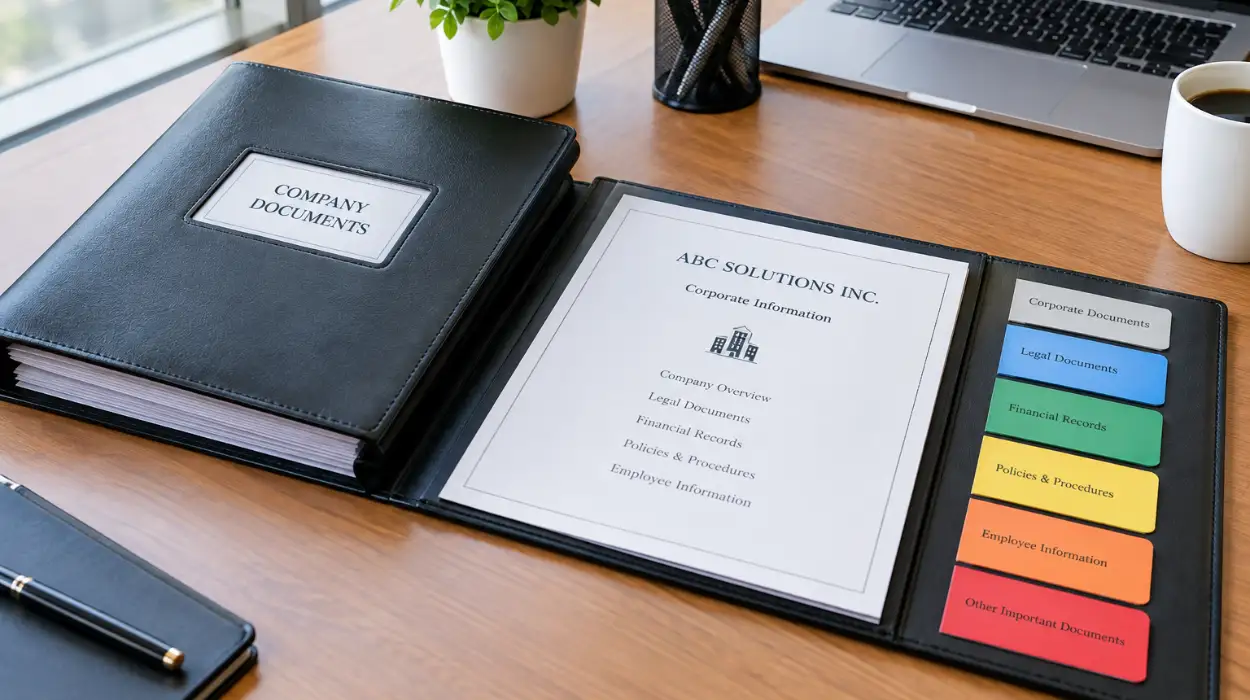
Yes, keeping physical copies of company documents is legally necessary because UK regulatory authorities, international banks, and overseas partners frequently require physical paper verification, wet-ink signatures, and embossed corporate seals that digital PDF files cannot replicate.
UK business owners operate within a dual compliance framework requiring both digital efficiency and physical security. Digital storage systems fail when technical outages occur, servers crash, or cyber threats compromise cloud infrastructure. Paper records guarantee permanent accessibility without reliance on electricity, software licenses, or internet connectivity.
Statutory regulations enforced by Companies House and HMRC demand accessible archives for inspection upon short notice. Directors face severe financial penalties when requested records remain unavailable during compliance audits. Maintaining a structured physical archive protects corporate governance structures from unexpected administrative disruptions.
Which Company Documents Require Physical Storage?
Core constitutional documents, share certificates, and statutory registers require physical storage because banks, legal bodies, and overseas trade partners demand verified paper originals featuring official stamps and wet-ink signatures.
Constitutional records form the legal backbone of any corporate entity operating within the United Kingdom. Directors must safeguard the Certificate of Incorporation, Memorandum of Association, and Articles of Association in secure physical formats. Financial institutions review these exact paper documents during corporate bank account applications and commercial loan underwriting processes.
Share certificates and minutes of board meetings require physical safeguarding to prove ownership equity and lawful corporate decision-making. When businesses expand internationally, foreign authorities reject unverified digital printouts. Securing formal authentication through apostilled documents guarantees that foreign embassies and overseas registries accept UK corporate instruments without administrative delay.
How Long Must UK Businesses Retain Paper Records?
UK companies must retain specific paper records for designated statutory periods, including six years for financial transactions, permanent retention for incorporation instruments, and seven years for tax compliance documentation.
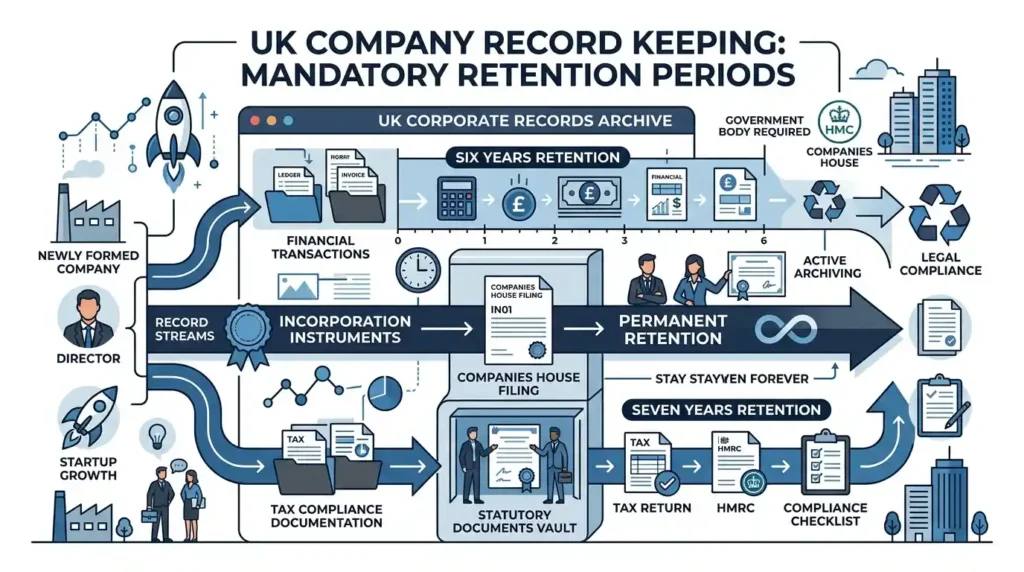
Regulatory mandates dictate strict retention schedules for corporate paper archives. HMRC requires companies to keep accounting records, invoices, and bank statements for at least six years from the end of the financial year. Private limited companies failing to maintain these records commit a criminal offense carrying substantial fines.
Permanent retention applies to constitutional documents, statutory registers of directors, and charges. Directors must store these foundational papers safely throughout the entire operational lifespan of the enterprise. When a company undergoes liquidation or restructuring, liquidators require immediate access to historical paper trails to settle liabilities and distribute remaining assets cleanly.
What Are the Security Risks of Relying Solely on Digital Storage?
Relying solely on digital storage creates severe operational vulnerabilities, including permanent data loss from ransomware attacks, software obsolescence rendering files unreadable, and cloud server outages halting daily business administration.
Cybersecurity threats target cloud-based corporate repositories continuously through sophisticated phishing schemes and ransomware encryption vectors. When hackers lock digital servers, administrative operations grind to an immediate halt. Hardcopy physical binders create an offline defensive barrier against malicious digital intrusions.
Format obsolescence poses another hidden threat to digital-only archiving strategies. Proprietary file formats and outdated storage media become unreadable as technology evolves over decades. Paper documents remain universally readable by human eyes without requiring specialized software decoders, proprietary applications, or legacy hardware interfaces.
How Can Businesses Organize and Protect Physical Archives?
Businesses can protect physical archives by investing in acid-free storage folders, installing fireproof filing cabinets, restricting access to authorized directors, and maintaining a master index log for rapid document retrieval.
Organizing physical records demands methodical categorization to ensure rapid retrieval during unexpected audits or legal disputes. Companies utilize heavy-duty ring binders, archival-grade sheet protectors, and labeled tab dividers to separate statutory records from commercial contracts. Storing folders inside fireproof and waterproof safes protects vital papers against catastrophic environmental damage.
Access control protocols prevent unauthorized staff members from misplacing or altering sensitive corporate instruments. Maintaining an updated master index spreadsheet cross-references physical document locations with specific binder numbers. This systematic organization speeds up administrative workflows when corporate partners request immediate verification of company status.
Explore Our Apostilled Documents Guide,
Why Does ESG Reporting Now Include Corporate Events?
How to Get Printed Certificate of Incorporation and Share Certificates?
What Steps Ensure Complete Protection for International Expansion?
International expansion requires securing certified physical copies, obtaining official government authentications, utilizing secure courier tracking, and partnering with professional incorporation specialists to navigate foreign compliance frameworks successfully.
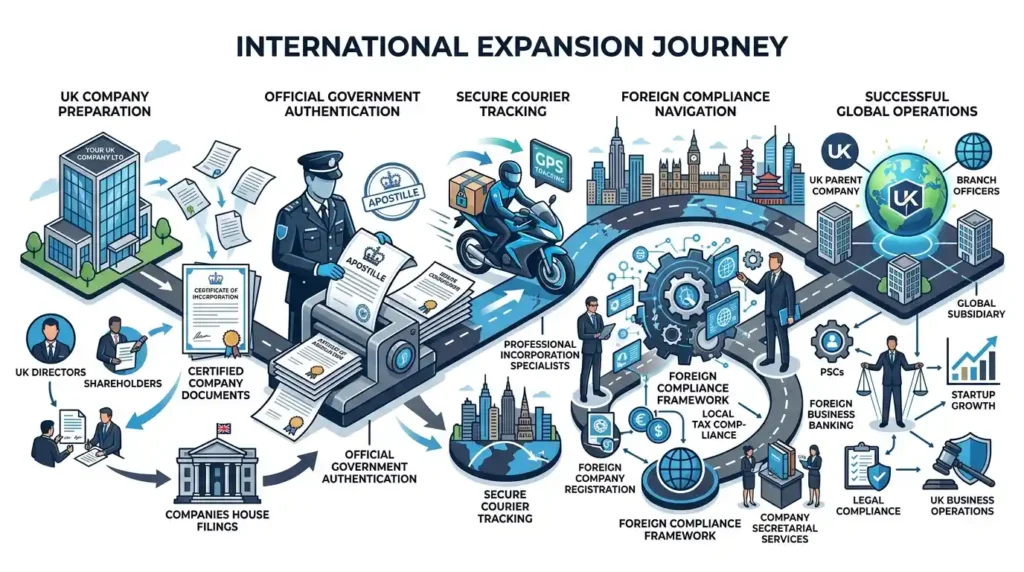
Expanding business operations across international borders involves rigorous document verification procedures by foreign government departments. Overseas agencies demand physical verification before granting trade licenses, work visas, or subsidiary registration rights. Providing standard digital copies often triggers immediate rejection and costly administrative delays.
Navigating these cross-border requirements demands structured preparation and expert guidance. Business owners can review practical insights detailed in how to get a complete bound company folder for your records to streamline their physical archiving setup. Combining organized in-house archiving with professional document legalization services ensures complete compliance across domestic and international jurisdictions.
Why Choose Form My Company for Official Document Services?
Form My Company delivers comprehensive document solutions by producing secure bound company folders, authenticating official certificates, managing government filings, and providing expert compliance support for UK business owners.
Maintaining meticulous corporate records safeguards business continuity, protects directors from legal liabilities, and accelerates international trade approvals. Form My Company assists entrepreneurs through every stage of document management, from initial incorporation paperwork to complex cross-border authentications. Business owners ready to secure their corporate archives can explore options to order a complete bound company folder from Form My Company to guarantee professional presentation and long-term durability.
Frequently Asked Questions
What is an apostilled document in the UK?
An apostille is an official certificate issued by the UK Foreign, Commonwealth & Development Office that authenticates the origin of public documents for international use. Through services provided by Form My Company, business owners can secure valid apostilled documents to ensure overseas authorities, banks, and legal systems accept UK corporate certificates.
Why do companies need apostilled documents for international trade?
International trade partners and foreign registries require apostilled documents to verify the legal standing, director identities, and structural authenticity of a UK enterprise. Without proper government authentication, overseas organizations regularly reject standard digital printouts and uncertified corporate paper copies.
Which UK company documents can receive an apostille?
Common documents eligible for apostilles include Certificates of Incorporation, Memorandum and Articles of Association, register of directors, and certified board resolutions. Form My Company processes these official instruments through government channels to guarantee complete legal compliance across international jurisdictions.
How long does it take to get documents apostilled in the UK?
Standard government processing for apostilles typically takes a few business days, though expedited premium services can accelerate turnaround times for urgent commercial needs. Form My Company manages the entire submission and retrieval workflow to minimize administrative delays for busy directors.
Are digital apostilles accepted by foreign authorities?
While some digital verification systems exist, the vast majority of foreign government departments and international banks still demand physical paper certificates featuring the official UK apostille stamp and signature. Form My Company ensures your corporate documents meet all physical authentication standards required for seamless global expansion.