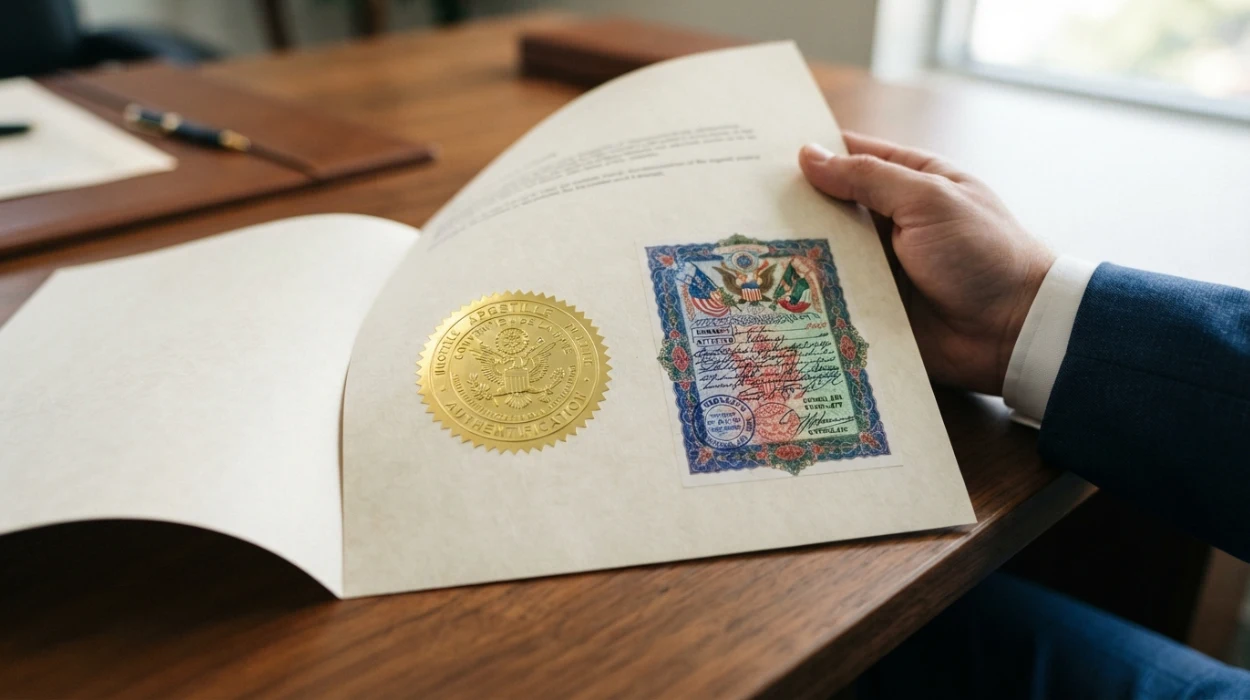
Apostille vs Consular Legalisation determines document authentication pathways based on destination country treaties; Hague Convention members accept a single Apostille certificate, while non-member nations require multi-step consular legalisation involving local embassies and foreign ministries.
Navigating international paperwork requires precise adherence to destination country regulations. Global commerce demands verified documents for cross-border operations, banking compliance, and international expansion. Two distinct verification frameworks govern international document validity. Understanding these pathways prevents costly delays in foreign markets.
What Is the Fundamental Difference Between an Apostille and Consular Legalisation?
The fundamental difference lies in the governing international treaties and processing stages; Apostilles use a single Hague Convention certificate, whereas consular legalisation requires sequential verification through domestic ministries and foreign embassies.
International document recognition depends entirely on whether the destination country participates in the 1961 Hague Convention. Global authorities developed the Apostille framework to simplify cross-border document use among member states. 82% of international business jurisdictions recognize the streamlined Apostille certificate without extra embassy stamps.
When nations operate outside the Hague treaty, administrative frameworks require a multi-tier authentication process. Three sequential verification stages govern consular legalisation: domestic notary certification, Foreign, Commonwealth & Development Office validation, and destination embassy approval. 126 sovereign nations currently demand full consular legalisation for official corporate documents. Failing to identify the correct route invalidates corporate filings in foreign jurisdictions.
Which Countries Require an Apostille Instead of Consular Legalisation?
Countries requiring an Apostille are official signatories to the 1961 Hague Convention, which streamlines document recognition through a single government-issued certificate.
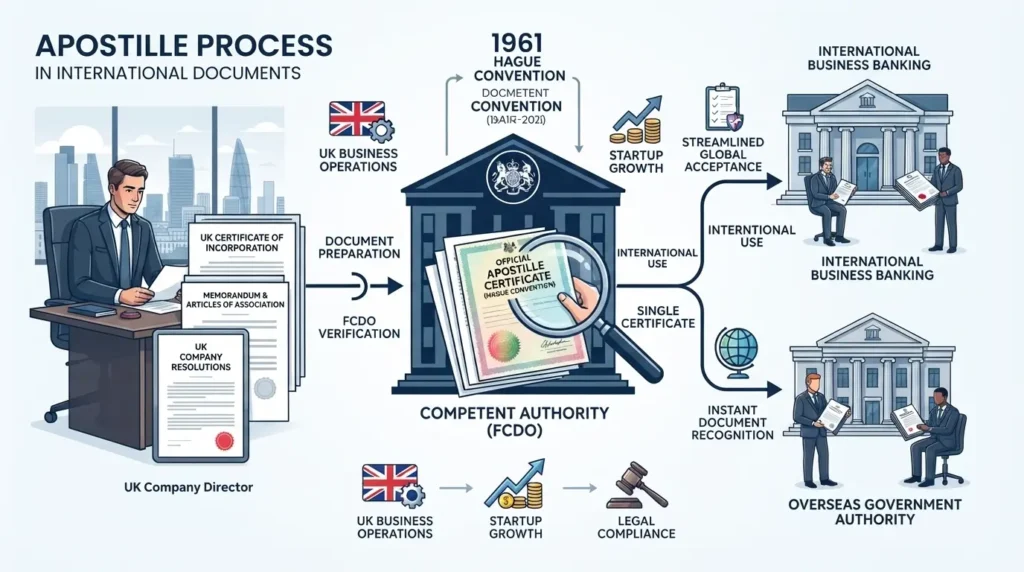
Hague Convention signatories share a unified legal framework for document verification. 124 countries currently participate in this international treaty. Major commercial hubs like the United States, Germany, Australia, and Japan accept single-step document authentication.
Businesses expanding into member states bypass embassy visits entirely. Competent authorities within the issuing nation attach a standardized square certificate directly to the official paperwork. This certificate features 10 specific metadata fields, including the issuing country, signing official name, and unique tracking number.
When corporate directors prepare UK documents for European markets, they utilize Apostilled Documents to ensure immediate foreign legal recognition. This single-tier process reduces administrative overhead for companies trading across international borders.
Why Do Non-Hague Convention Nations Demand Consular Legalisation?
Non-Hague Convention nations demand consular legalisation because their domestic legal systems lack reciprocal treaty agreements for simplified certificate recognition.
Sovereign states outside the Hague treaty framework require absolute proof of document authenticity through diplomatic channels. Foreign governments maintain strict sovereignty over foreign corporate filings entering their domestic registries. Four distinct validation layers protect foreign administrative systems from fraudulent paperwork: local solicitor notarization, central government attestation, foreign embassy review, and final local ministry stamping.
Diplomatic missions verify that domestic signatures match official records on file. 95% of Middle Eastern and Asian jurisdictions enforce mandatory consular stamps before accepting foreign certificates of incorporation or power of attorney.
Corporate leaders managing global expansion schedules must account for extended processing timelines. Reviewing our guide on What Is Consular Legalisation for Non-Hague Convention Countries? helps compliance teams anticipate multi-week administrative delays.
How Does the Processing Workflow Differ for Each Authentication Route?
The processing workflow for an Apostille involves a single government agency, whereas consular legalisation requires sequential approvals across multiple government departments and foreign embassies.
Operational efficiency defines the divergence between these two administrative pathways. Single-agency processing takes 3 to 5 business days for standard Apostille issuance through government departments. Compliance officers submit physical paperwork, verify document seals, and receive the finalized certificate without diplomatic intervention.
Multi-step consular legalisation extends timelines significantly. Three distinct bureaucratic stages govern this workflow:
Verify document signatures through a registered notary public
Authenticate government seals via central foreign office departments
Secure final embassy endorsement from the destination country mission
Managing these sequential hurdles demands rigorous oversight. Organizations seeking streamlined solutions can Order Full Consular Legalisation for Non-Hague Countries at Form My Company to mitigate administrative friction. Form My Company manages every diplomatic touchpoint, ensuring full compliance for international enterprise operations.
Which Document Types Require International Authentication?
Corporate documents requiring international authentication include certificates of incorporation, memoranda of association, board resolutions, and commercial powers of attorney.
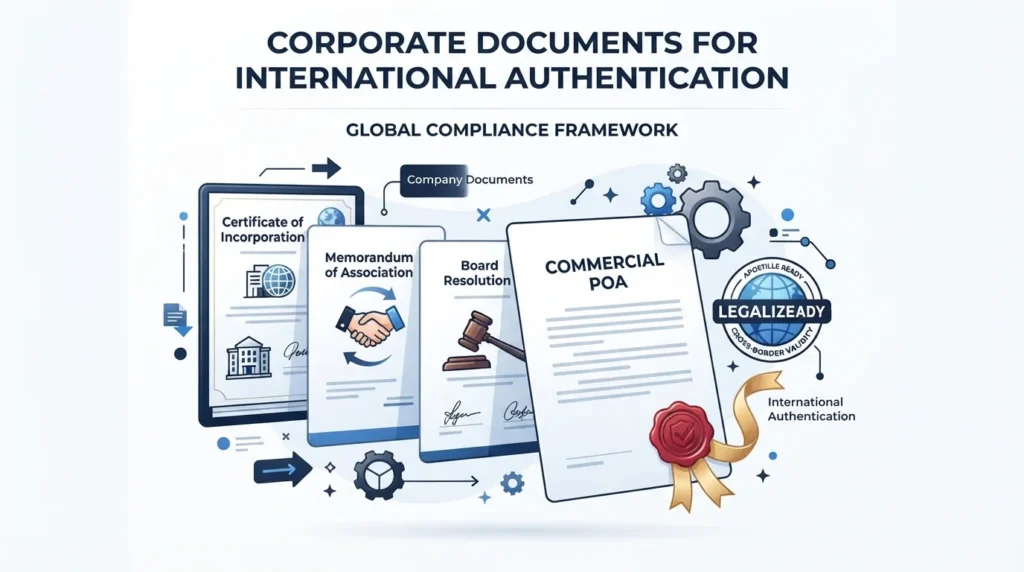
Cross-border business transactions rely on verifiable legal instruments to establish corporate identity and authority. International banking institutions mandate authenticated formation papers before opening foreign subsidiary accounts. Three primary corporate document categories undergo rigorous international scrutiny:
Authenticate corporate formation certificates through official registry channels
Validate director resolutions via certified legal practitioners
Verify commercial power of attorney instruments through diplomatic missions
Foreign regulatory bodies reject unverified paperwork during foreign branch registration. Form My Company eliminates compliance risks by preparing precise corporate bundles for global expansion.
Navigating international compliance requires precise adherence to destination country legal frameworks. Hague Convention members accept streamlined Apostille certificates, while non-member states enforce rigorous consular legalisation workflows. Understanding these procedural distinctions ensures seamless cross-border corporate operations. Form My Company delivers expert document authentication services, guiding enterprises through complex international regulatory requirements with absolute precision.
Explore More Apostilled Documents Guide,
Want to Get Your Articles of Association Apostilled Through Form My Company?
How Can You Suppress a PSC Home Address With Form My Company?
Frequently Asked Questions
How long does it take to get documents apostilled for international use?
Standard processing times for [Apostilled Documents] through Form My Company typically range from 3 to 5 business days once physical paperwork arrives at our processing centre. Expedited options are available for urgent corporate filings and international commercial transactions requiring immediate government certification.
What is the difference between an Apostille and consular legalisation?
An Apostille is a single-step certification recognized by member countries of the 1961 Hague Convention, validating official seals and signatures. In contrast, consular legalisation requires a multi-tier authentication process involving domestic government departments and the destination country’s embassy for non-Hague nations.
Which corporate documents require an Apostille for overseas business expansion?
Common documents requiring certification include certificates of incorporation, memoranda of association, board resolutions, and commercial powers of attorney. International banks and foreign regulatory bodies mandate these authenticated corporate instruments before permitting foreign subsidiary registration or cross-border account opening.
Can personal documents like birth certificates and degrees be apostilled?
Yes, personal vital records such as birth certificates, marriage certificates, academic degrees, and criminal record checks can be officially certified. Form My Company assists clients in preparing both personal and corporate paperwork to ensure seamless acceptance by foreign authorities.
Do I need to notarize my documents before requesting an Apostille?
Certain official documents require solicitor or notary certification before a government department can attach an Apostille. Form My Company reviews your specific paperwork to verify that all preliminary notarisation and legalisation requirements are satisfied prior to submission.