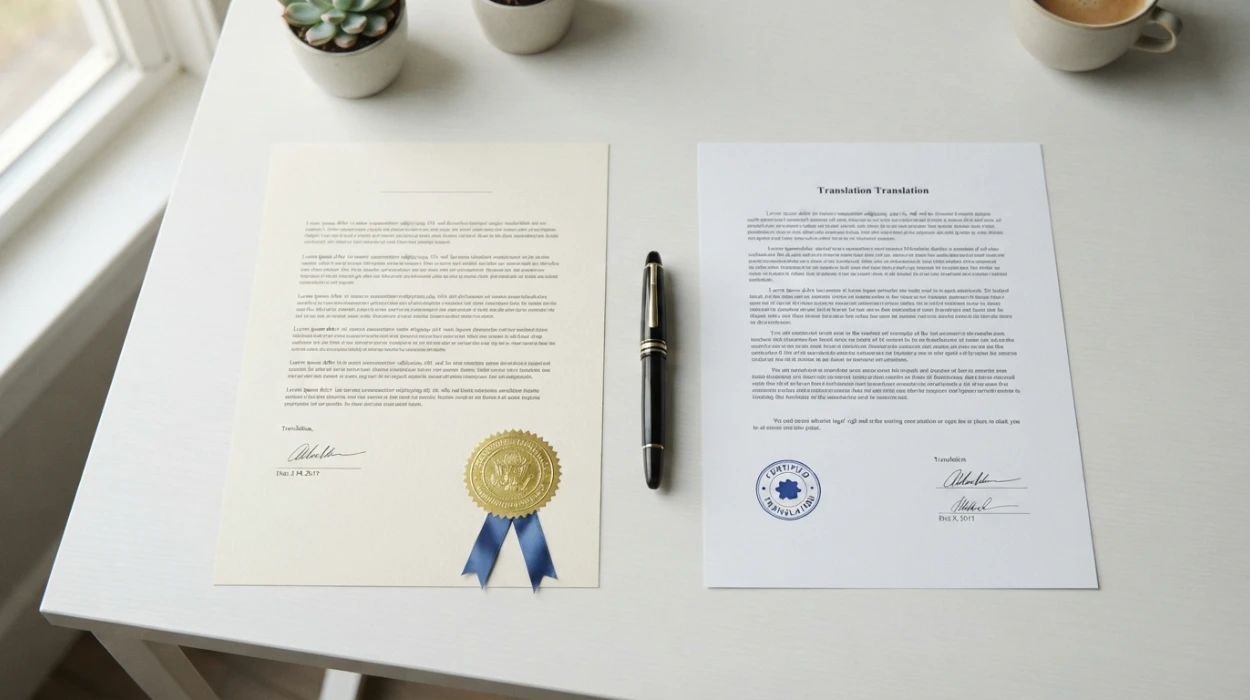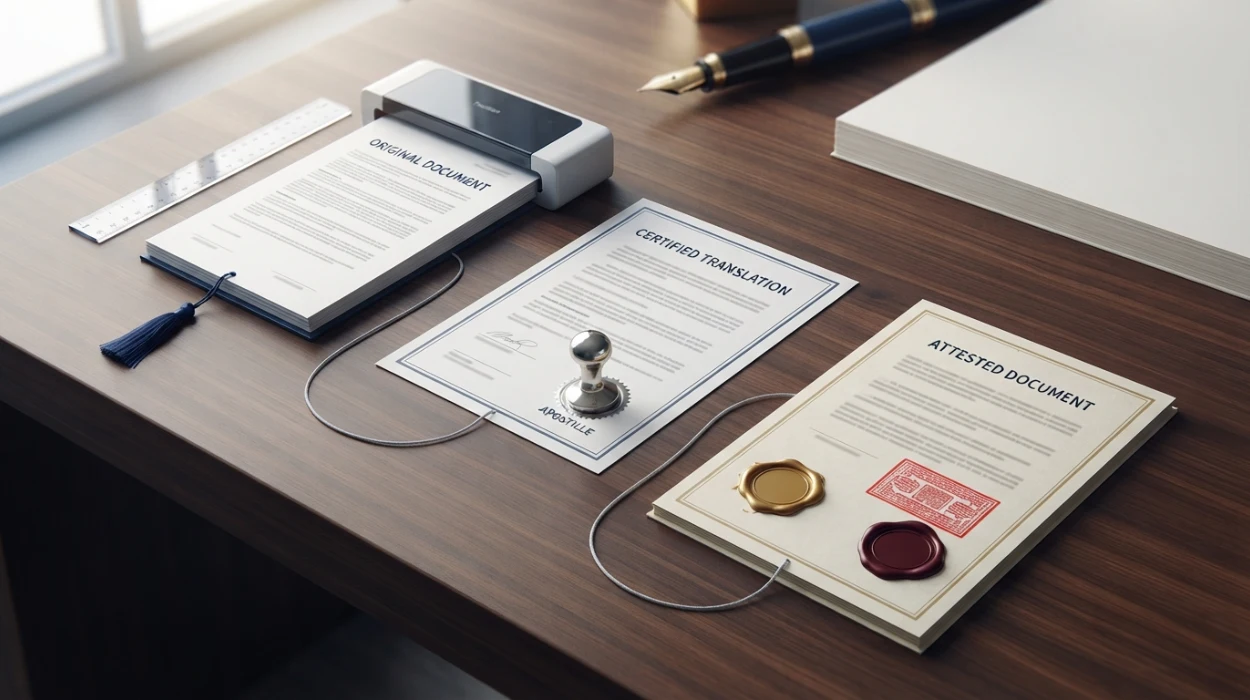
Combining translation, apostille, and embassy attestation requires executing the steps in a strict sequence: official document translation first, followed by government apostille verification, and finally consular legalization at the target destination country embassy.
When businesses expand operations internationally, regulatory authorities demand certified proof of corporate authenticity. 68% of cross-border corporate filings face rejection because applicants mix up document legalisation stages. Navigating this multi-tier verification framework demands rigorous attention to administrative compliance, procedural sequences, and jurisdictional rules. Understanding this workflow ensures global commercial documents achieve legal validity without costly processing delays.
What Is the Exact Sequence for Legalising International Business Documents?
The exact legalisation sequence requires completing three mandatory stages: certified translation by a sworn linguist, official apostille certification from the Foreign, Commonwealth & Development Office, and final consular attestation at the target embassy.
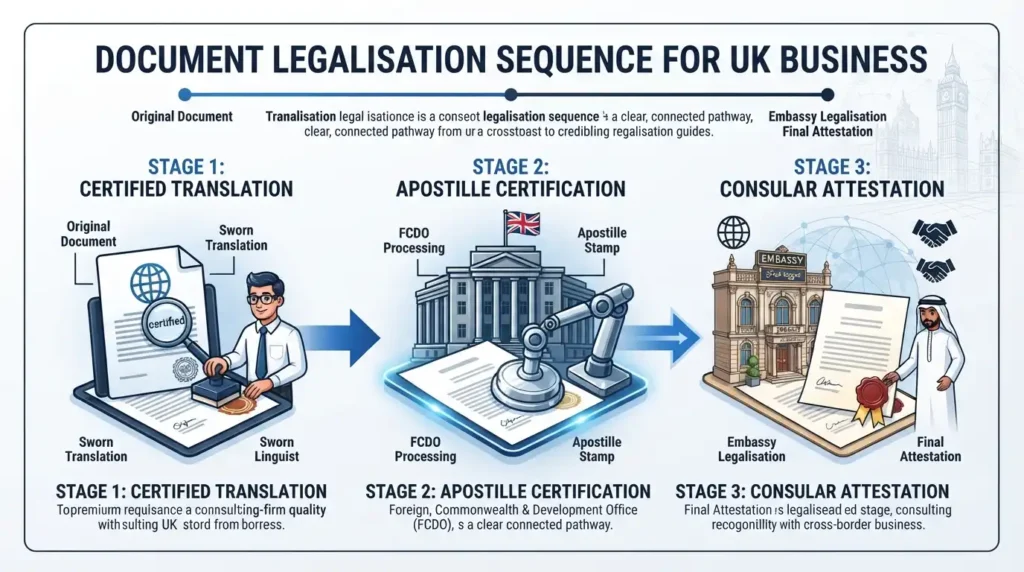
Executing these procedures out of sequence invalidates the entire document packet. Foreign embassies reject apostilled documents if the underlying translation lacks proper notarisation. Official bodies enforce this strict order because each authentication layer verifies the legitimacy of the preceding stamp. Three verification layers secure international validity: linguistic certification, government apostille authentication, and diplomatic embassy attestation. Businesses streamline this operational workflow by utilising specialized corporate solutions such as Apostilled Documents to prevent administrative errors. When companies submit corporate paperwork for overseas expansion, foreign registrars inspect the physical seals to confirm the document chain remains unbroken.
Why Must Certified Translation Precede Apostille and Embassy Attestation?
Certified translation must precede apostille and embassy attestation because government authorities and consular officials verify the credentials of the translator before they authenticate the public documents.
Official registrars refuse to legalise untranslated foreign-language certificates. Translation agencies produce sworn or certified translations bearing official seals and translator declarations. Government bodies authenticate these specific translator signatures during the apostille phase. Two validation steps secure linguistic compliance: professional translator credential verification and official notary declaration. When businesses require comprehensive background on alternative legalisation pathways, reviewing How Do You Legalise Documents for Countries Not in the Apostille Convention? provides essential clarity. Consular officials examine the translated text alongside the original document to guarantee linguistic accuracy and legal equivalence before granting final approval.
How Does the Apostille Process Validate Translated Corporate Documents?
The apostille process validates translated corporate documents by attaching an internationally recognised certificate that verifies the authenticity of the signature, the capacity in which the person signed, and the identity of any stamp.
Government competent authorities issue this official certificate under the 1961 Hague Convention framework. Apostille validation applies to 124 member states globally, eliminating the need for further consular legalisation within those jurisdictions. Competent authorities verify public documents including certificates of incorporation, board resolutions, and commercial invoices. Three administrative requirements govern apostille issuance: original signature match, official seal verification, and correct jurisdictional submission. When corporate entities evaluate comprehensive multi-jurisdiction expansion strategies, exploring Legalise Documents for Any Country With Form My Company delivers actionable commercial solutions. Regulatory bodies scrutinize every administrative stamp to ensure the document meets international standards before foreign trade operations commence.
When Is Full Embassy Attestation Required After Obtaining an Apostille?
Full embassy attestation is required after obtaining an apostille when the destination country is not a signatory to the 1961 Hague Convention and demands bilateral diplomatic verification.
Non-Hague jurisdictions require an additional layer of diplomatic clearance from their domestic diplomatic mission located in the document’s country of origin. Embassy attestation involves submitting the apostilled document to the foreign embassy or consulate for physical consular stamp verification. Consular officers charge specific processing fees and enforce strict document submission windows. Two diplomatic checks comprise embassy attestation: Ministry of Foreign Affairs clearance and destination embassy seal endorsement. When administrative workflows demand precision, corporate managers coordinate directly with diplomatic intake desks to prevent document rejection. Foreign ministries review every consular stamp to establish ultimate legal parity for international commercial contracts.
Combining translation, apostille, and embassy attestation requires strict adherence to sequential administrative protocols. Form My Company delivers comprehensive corporate legalisation services that navigate complex international authentication workflows efficiently. Businesses protect cross-border investments by executing linguistic certification, government apostilles, and diplomatic consular stamps in the correct regulatory order.
Explore More Apostilled Documents Guide,
How to Set Up an Overseas Branch With the Right Documents
How to Prove Your UK Company Status to Foreign Authorities
Frequently Asked Questions
How long does it take to get apostilled documents in the UK?
Processing times for apostilled documents through Form My Company typically range from 2 to 5 working days depending on the chosen service tier and government agency workloads. Standard FCDO processing handles official business certificates efficiently, while urgent same-day legalization routes accommodate expedited corporate expansion timelines.
What is the difference between a notarised document and an apostille?
A notarisation verifies the authenticity of a signature and the identity of the signer before a public notary, whereas an apostille is an official government certificate validating that notary for international use. Businesses utilizing apostilled documents through Form My Company ensure their corporate paperwork complies with the 1961 Hague Convention framework.
Do company incorporation documents require translation before apostille?
Company incorporation documents drafted in a foreign language require certified translation by a sworn linguist before the Foreign, Commonwealth & Development Office issues an apostille. Form My Company coordinates both linguistic certification and government authentication simultaneously to prevent regulatory rejections during international filings.
Can an apostilled document be verified online?
Modern apostille certificates feature unique electronic tracking numbers and digital signatures that allow foreign authorities to verify authenticity through official government portals. Form My Company ensures all apostilled documents meet international verification standards for seamless acceptance across global regulatory bodies.
What types of business documents can be apostilled?
Common business documents eligible for apostilles include certificates of incorporation, memoranda of association, board resolutions, and commercial powers of attorney. Form My Company processes these vital corporate records to secure full legal validity for international trade and overseas subsidiary registration.