
Yes, you can generally set up a new company after dissolving one in the UK if you’re not bankrupt or disqualified from acting as a director. But if the old company went into insolvent liquidation, Section 216 of the Insolvency Act 1986 can restrict the use of its name for five years after liquidation for directors involved in the 12 months beforehand.
It’s understandable to want a fresh start without carrying old legal or financial problems into your next business. In general, you can start again, but the right steps depend on how the previous company closed, your role in it and whether you plan to reuse its name or assets.
This article explains when you can form a new company, how company-name rules work and which exceptions may apply. It also covers why asset transfers and director restrictions matter, so you can identify the key issues before moving forward.
Key Takeaways
- You can generally start another company after liquidation if you’re not bankrupt or disqualified from acting as a director.
- According to UK legislation, Section 216 applies to a director involved in a company during the 12 months before its liquidation, restricting use of the same or a similar name.
- Exceptions may allow a name to be reused, but the route can involve formal creditor notice or an application for court permission.
- Handle assets from the closed company through the proper insolvency process, with a fair transfer rather than simply moving them into the new business.
- Get advice on name restrictions, assets or staff before restarting, then choose a company formation option that suits your new business structure.
Can I liquidate my company and start again?
Usually, yes. Closing a UK company doesn’t automatically prevent you from forming another. Your eligibility, any director restrictions and how you handle the old company’s debts and assets all matter.
Starting a company after liquidation
Starting again means forming a separate company after the old one has entered liquidation and closed. The new business does not automatically inherit the old company’s legal identity. A company ceases to exist when it is removed from the Companies House register following liquidation. A former director can generally start another company if they are not bankrupt or disqualified from acting as a director. The way the old company closed still affects what you can do next.
Eligibility after an insolvent company closes
An insolvent company can be liquidated even when it cannot pay all its debts. Its former director may form a new company, provided no bankruptcy or director-disqualification restriction prevents them. Insolvency practitioners manage the liquidation, and directors must cooperate with the appointed liquidator. That process matters: starting a fresh business doesn’t make unresolved conduct disappear. A director who walks away from an insolvent company may face disqualification from directorships for up to 15 years.
Restrictions on directors starting again
Director restrictions determine whether you can manage or help run another limited company. Can you start a new company after a company is dissolved in the UK? Yes, if you are eligible to act. If you are bankrupt or disqualified, you cannot act freely as a director; a disqualified director needs court permission to take part in management. Personal bankruptcy also prevents someone from forming, promoting or managing a limited company without the court’s permission. Check your status before taking a director’s role or managing the new business.
Tax, VAT and insolvency rules
Tax and insolvency obligations can affect the new company even if it has a different registration. Do UK tax, VAT or insolvency rules affect setting up a new company after dissolution? Yes. HMRC may require a security deposit if the previous company left tax debts. The security may relate to VAT, PAYE or National Insurance Contributions. If the new business uses assets from the insolvent company, they must be dealt with through the insolvency process, for example by purchasing them from the liquidator.
What happens to a dissolved company’s debts and assets in the UK? Debts remaining after an insolvent liquidation are generally written off unless a director personally guaranteed them. Company assets do not automatically become the new company’s property; the liquidator must deal with them through the insolvency process. To register a new limited company, choose a structure, prepare the required company details and submit an incorporation application to Companies House. A filing fee applies, and the amount depends on the filing route. This creates a separate legal entity, not a transfer of the old company’s debts or property.
Section 216 and restrictions on reusing a company name
Section 216 of the Insolvency Act 1986 sets out UK rules on reusing a liquidated company’s name. It concerns the old company’s name, not simply whether you can form another limited company. The distinction matters if you plan to continue trading under the same or a similar name.
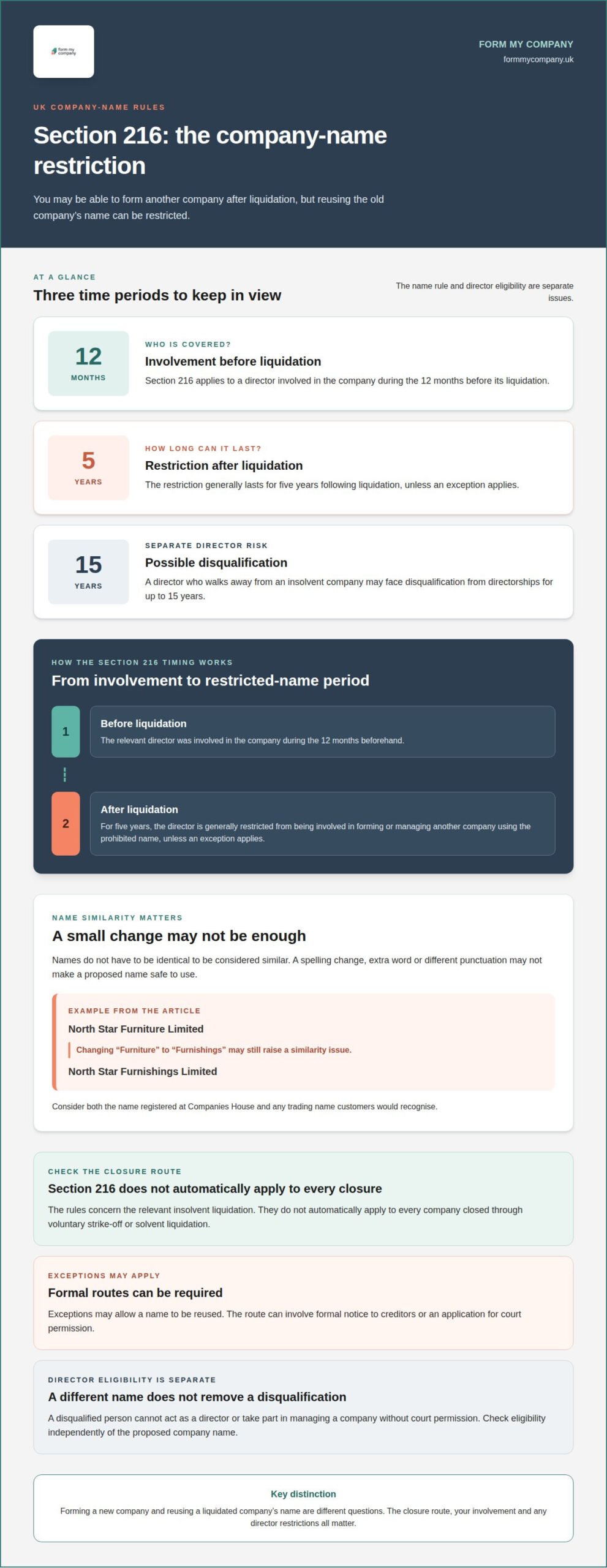
Under UK legislation, the Section 216 restriction applies to a director involved in a company during the 12 months before its liquidation. The restriction generally prevents that director from becoming a director of, or being involved in forming or managing, another company using the prohibited name. It lasts for five years following liquidation, unless an exception applies.
Names can be similar without being identical. A change in spelling, an added word or different punctuation may not make a proposed company name safe to use. Consider both the name registered at Companies House and any trading name customers would recognise. For example, changing “North Star Furniture Limited” to “North Star Furnishings Limited” may still raise a similarity issue.
The rules apply to the relevant insolvent liquidation, not automatically to every company that closes through voluntary strike-off or solvent liquidation. Establish how the previous company ended before choosing a name. If licensed insolvency practitioners handled the liquidation, their records can help clarify the company’s status and relevant dates.
A director disqualification creates a separate restriction. A disqualified person cannot act as a company director or take part in managing a company without court permission. Using a different company name does not remove that restriction. Ignoring disqualification rules can lead to criminal proceedings, so consider your eligibility separately from the name question.
Can a dissolved company be restored, and how does restoration affect a new company? A dissolved company may be restored to the Companies House register through a formal process, depending on its circumstances. Restoration concerns the old company’s legal status. A new company remains a separate entity, so do not assume restoration automatically transfers the old company’s name, assets or obligations.
Before settling on a name, identify whether the old company was liquidated, who was involved during the relevant period and whether the proposed name could be considered similar. Keep records of the closure route and your decision about the new name. If a restriction applies, the next section explains exceptions, including formal notice to creditors and court permission.
Exceptions for using a similar company name
Section 216’s name restriction has exceptions, but each route has specific conditions. The right option depends on the old company’s trading history, whether its business was bought, and the timing of any court application.
Reusing a name after liquidation
An existing-use exception may apply if the new company was already known by the relevant name during the 12 months before liquidation, and wasn’t dormant then. This can matter when a company continued trading under a name before its formal closure. Keep records showing the name’s use and active business during that period, rather than relying only on a similar entry in a register.
A separate route may apply if someone buys all or substantially all of the insolvent company’s business from its liquidator and intends to trade using its name. The liquidator may require notice to creditors and an advertisement in the Gazette. This is not simply permission to use the name; the purchaser must follow the process connected with the business sale.
Company names and trading names both need attention. A new limited company might register one name but continue using the old company’s trading name in adverts, invoices or on premises. Changing “Oakfield Kitchens Limited” to “Oakfield Kitchen Services Limited”, for example, may still raise a similarity issue. Treat the name customers see as carefully as the registered name.
Court permission for name reuse
Court permission is a formal exception for a director seeking to use a prohibited name after liquidation. The application must be lodged no more than seven days after the old company’s liquidation, and the court can grant leave no more than six weeks after the application date. Those short deadlines make timing central to this route.
There is also a creditor-notice route: a director seeking to use a prohibited name must give formal notice to all creditors or apply for court leave. The applicable procedure depends on the circumstances, so identify the intended name, liquidation date and director’s role before trading begins. Do not treat a pending application as permission.
These exceptions don’t remove separate director restrictions. A disqualified director cannot manage a company without court permission, even if a name-reuse exception applies. Ignoring restrictions can lead to criminal proceedings, and director disqualification can last up to 15 years. Keep the name issue and management eligibility separate when planning a restart.
For a proposed name, gather the old company’s records, evidence of trading, sale documents and creditor notices. If licensed insolvency practitioners handled the liquidation, their records may help establish which route applies. Resolve the name issue before the first trade under it, rather than building a new business around a name that may remain restricted.
Phoenix companies and legal exceptions
A phoenix company is a new business that continues activity associated with a closed company. The key distinction is whether the restart involves a legitimate business transfer or an attempt to leave creditors unpaid while carrying on as before.
Can I transfer a dissolved company’s business, assets or customers to a new company? Business assets must be transferred properly through the insolvency process, even if they appear to have little value. A new company can continue trading, but customers are not assets that transfer automatically; they can choose whether to use the new business.
Phoenix activity can involve the same business or directors operating through successive companies that close with unpaid debts. Repeatedly using a new company to evade creditors or pursue fraud is abusive phoenixism. The name alone does not determine whether a restart is improper. The treatment of the old company’s assets and whether creditors were disadvantaged also matter.
For an insolvent company, the liquidator controls the disposal of company assets during liquidation. If the new company needs machinery, computers, furniture, goodwill or the company name, arrange a proper sale through the insolvency process. A director buying assets should pay fair value; an independent professional valuation can help establish a defensible purchase price.
A low or informal price creates risk. A liquidator may reverse an asset sale if the new company fails to pay fair value and may hold the buyer liable for the shortfall. This can apply even to assets that seem insignificant, such as equipment or goodwill. Record what is being transferred, its agreed value and the payment made, rather than moving property informally.
Customers may continue buying from the new company, but the old company’s customer relationships and goodwill need proper treatment as business assets. Do not assume existing contracts, customer records or unpaid invoices simply move with the business. Identify what belongs to the insolvent company and include relevant assets in the transfer process. The liquidator can address their treatment alongside creditors’ interests.
Directors must also distinguish a permitted restart from continuing to manage a company while disqualified. A disqualified director cannot act as a director or take part in managing a company without court permission. Failure to follow the required procedures can lead to prosecution, asset recovery or personal liability. Director disqualification can last up to 15 years, so the consequences may extend well beyond the original liquidation.
Before trading, document the new company’s purchases, the liquidator’s involvement and how creditors’ interests have been addressed. A clear paper trail helps show that the new business acquired assets through a proper process rather than simply taking them from the old company.
Seeking professional advice when restarting
Get advice before the new company trades, especially if the old business entered liquidation. The former company’s liquidator or administrator can explain how its assets and records must be handled. Early guidance helps distinguish a proper restart from a phoenix arrangement that could leave creditors worse off.
Start with the closure records. Give the liquidator or administrator details of the proposed business activity, company name and assets the new company needs. If you plan to use assets from a closed company, speak to its liquidator or administrator. This applies even when equipment, customer records or goodwill appear to have little value.
Ask how each proposed transfer should be documented. If the new company needs machinery, computers or furniture, identify the owner and arrange the transfer through the insolvency process. The liquidator may sell the assets to the new company, and the purchase price should reflect fair value. Keep the valuation, sale terms and payment records together.
Staff transfers need separate attention. If you plan to employ people from the closed company, seek professional advice from its liquidator or administrator. Share the intended roles and proposed transfer arrangements before employment begins. TUPE may protect staff rights when employees move to a new company, so do not treat this as a simple change of employer.
Check your own position before accepting a director or management role. A person who is disqualified cannot manage a company without court permission. Bring any disqualification documents and the old company’s liquidation details to the relevant adviser. If you were involved in the old company during the 12 months before liquidation, also raise any plan to reuse its name.
Discuss the circumstances that led to closure, not just the new company’s paperwork. For example, explain unpaid creditors, asset sales and any personal guarantees. Directors’ responsibilities change when a company becomes insolvent, and poor decisions can lead to personal liability or further action. Full information gives the liquidator or administrator the context needed to address the restart properly.
Before trading, make a written record of the new company’s intended name, asset purchases, staff plans and any required permission. Keep correspondence with the liquidator or administrator alongside sale and valuation documents. These records can show how the new business acquired what it uses, rather than simply taking property from the old company.
Use the discussion to resolve practical questions before launch: who owns each asset, whether staff are transferring and whether the proposed name is restricted. If the facts suggest a possible phoenix concern, pause the relevant transfer or trading activity until the proper process is clear.
Form My Company: Digital Package
Once your restart plan addresses these issues, Form My Company can help with registering the new company. Its Digital Package supports company formation, while the Digital & Print Package and Entrepreneurs Choice Package offer other formation options. If your new venture will operate as a partnership, Form My Company also offers Limited Liability Partnership (LLP) Formation.
Choose a formation option after addressing any restrictions on your director role, company name and use of the previous business’s assets. These matters are separate from registering a new entity, so handle the old company’s liquidation requirements through the appropriate process before trading.
When you are ready to form the new company, contact Form My Company to discuss the available options.
Plan your next business with confidence
If you’re still asking whether you can set up a new company after dissolving one in the UK, focus next on making the new venture distinct and properly organised from day one. Set out its intended structure, trading plans and practical requirements before launch. A clear plan helps you move from resolving the old company’s affairs to building something new.
Form My Company offers company formation through its Digital Package, Digital & Print Package and Entrepreneurs Choice Package. Choose the option that fits your next step, then focus on preparing the new business to operate.
Explore company formation options with Form My Company and take the next step towards your new venture.
Frequently Asked Questions
Can I close my limited company and open a new one?
Yes, you can generally close one limited company and form another, provided you are eligible to act as a director. The appropriate way to close a company depends on its circumstances, so consider the position of creditors before choosing a route. For example, if the company cannot pay its bills, address the insolvency process rather than treating strike-off as a shortcut. The new company is a separate legal entity.
Can You Be a Director After Liquidation?
Yes, liquidation alone does not automatically prevent you from becoming a director of another company. You must not be personally bankrupt or disqualified from acting as a director. A disqualified person cannot manage a company without court permission. Before accepting an appointment, consider whether a court order or bankruptcy restriction applies to you. A different company name or fresh registration does not remove a restriction on your role.
What is Section 216 of the Insolvency Act 1986?
Section 216 of the Insolvency Act 1986 restricts certain people from reusing the name of a company that entered insolvent liquidation. It applies to a director involved in that company during the 12 months before liquidation, and the restriction lasts five years, subject to exceptions. It can cover involvement in forming or managing another company with the same or a similar name, not just registering an identical name.
Can I set up a new UK company after dissolving a previous company?
Generally, yes, if you are not bankrupt or disqualified from acting as a director. If you’re asking whether you can set up a new company after dissolving one in the UK, first distinguish a solvent closure from an insolvent liquidation. Then consider whether you will reuse the old company’s name, assets or staff. For example, the new business may need to document its purchase of equipment from the old company’s liquidator.
Can I reuse the same company name after a UK company has been dissolved?
Sometimes, but the answer depends on how the old company closed and your involvement in it. After an insolvent liquidation, Section 216 can restrict a director from using the same or a similar name. Exceptions may apply, including certain existing-use or business-purchase situations. A small spelling change may still leave a name similar, so assess the full registered and trading name before using it.
What are the rules for using a dissolved company’s name under UK company law?
UK company-name rules can restrict reuse after an insolvent liquidation, particularly for directors involved before the liquidation. The restriction may cover a trading name as well as the name registered at Companies House. Potential exceptions have formal conditions: a business purchaser may need to notify creditors and advertise in the Gazette, or a director may seek court permission. The applicable route depends on the facts and timing.
Can a director of a dissolved company start a new company if the old company had debts?
Having been a director of a company with debts does not automatically bar you from forming another company. You must still be eligible to act, and any personal guarantee remains your responsibility. HMRC may require a security deposit from a new company if the old company left tax debts. Do not assume the previous company’s assets are yours to transfer; the liquidator must handle them through the insolvency process.
What are the risks of phoenixing or transferring a business after UK company insolvency?
A restart can create serious problems if it shifts assets away from creditors or ignores insolvency procedures. A liquidator may challenge an asset sale if the new company did not pay fair value, and the buyer may be liable for the shortfall. Improper transfers can also lead to asset recovery, personal liability or prosecution. Keep sale, valuation and payment records, and involve the liquidator before the new company uses assets from the old business.