
Official mail reaches your registered office when you maintain an active physical UK address, keep your Companies House records updated, and implement daily mail sorting protocols.
Why Is a Valid Registered Office Address Mandatory for UK Companies?
UK law mandates a physical registered office address within the same jurisdiction to ensure Companies House and HMRC can legally serve official correspondence and statutory notices.
The Companies Act 2006 requires every UK-registered entity to maintain an official address for legal notices. Statutory bodies like Companies House and HM Revenue and Customs deliver critical legal correspondence to this designated location. A physical presence ensures that directors receive tax assessments, compliance reminders, and court summonses without delay.
Using an outdated or invalid address causes severe operational risks. Postal services return uncollected mail to the sender, triggering regulatory flags. Statutory authorities assume valid service once correspondence reaches the registered address, regardless of whether a director opens it. Failure to maintain an operational official address leads to financial penalties or forced company strike-off.
Companies operating from remote locations or international hubs face distinct delivery challenges. Standard domestic mail handling often fails when directors do not physically occupy the premises daily. Establishing a dependable location guarantees that statutory mail enters a secure processing chain immediately upon delivery.
How Do Mail Redirection and Handling Services Protect Official Post?
Professional mail handling services receive, log, and scan incoming statutory letters daily to prevent missed compliance deadlines and protect director privacy.
Third-party service providers manage corporate correspondence through dedicated processing facilities. Certified mail handlers accept deliveries from Royal Mail and commercial couriers during standard business hours. Staff members log every item into a secure management portal to establish an unbroken audit trail.
Same-day digital scanning ensures instant access to time-sensitive notices. Authorized personnel open statutory letters, scan the contents, and upload high-resolution files to a secure cloud platform. Directors view digital copies immediately, removing postal transit delays completely.
Physical forwarding options complement digital processing for original legal documents. Providers repackage original certificates, court orders, and seal requests for tracked dispatch to designated private addresses. This dual system protects personal residential addresses from public Companies House registers while maintaining complete operational visibility.
What Steps Ensure Royal Mail Correctly Delivers Statutory Notices?
Validating address formatting, installing secure physical collection points, and issuing clear delivery authorizations ensure Royal Mail successfully hands over statutory correspondence.
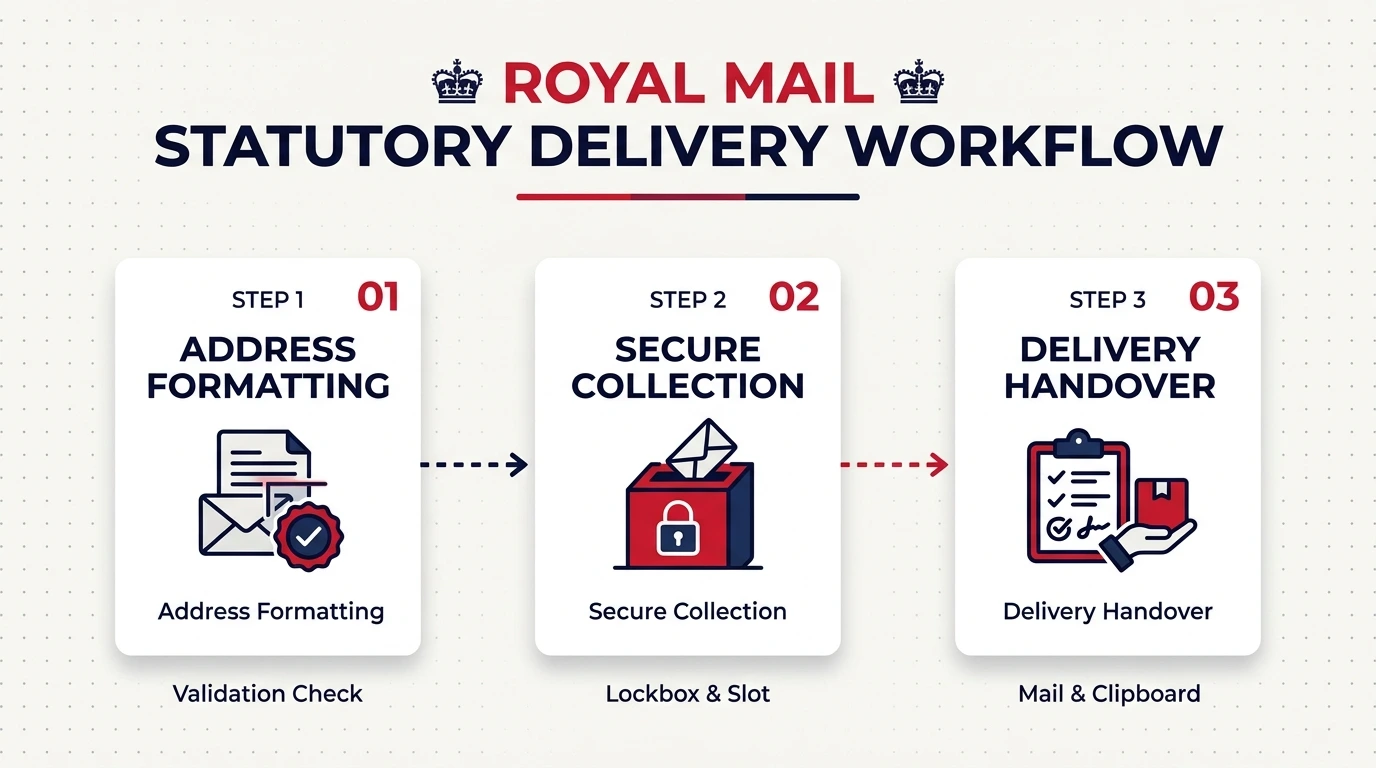
Royal Mail relies on precise structural formatting to route statutory mail efficiently. Incorrect building numbers, missing suite identifiers, or outdated postal codes cause immediate sorting errors. Corporate entities must align their official registered details across the postal database and public corporate registers.
Clear signage at the physical location confirms identity for postal carriers. Delivery personnel require clear markings on building entrances, reception desks, or dedicated mailboxes. Undelivered mail returns to government offices when carriers cannot verify company occupation at the destination.
Formal authorization structures empower designated representatives to accept restricted mail. Certain statutory letters require signed proof of delivery upon receipt. Providing postal carriers with written authorization allows registered mail agents to accept recorded deliveries on behalf of company directors continuously.
How Does Updating Companies House Details Prevent Delivery Failures?
Filing immediate address changes through Form AD01 updates the public register and ensures statutory bodies direct official letters to the active location.
Companies House routes all legal communications to the registered office listed on the public record. When a business changes location without filing notification, statutory post continues travelling to the old address. Unanswered correspondence leads to statutory non-compliance and administrative penalties.
Directors submit Form AD01 electronically to change an address across public records rapidly. The update takes effect once Companies House processes the filing, updating internal government distribution lists. Prompt updates protect corporate standing by maintaining continuous delivery channels.
HMRC requires separate address verification through the online business tax account. Updating Companies House does not automatically transfer changes across every government database. Directors must verify that tax reference files match the new location details to prevent misplaced payroll and VAT notifications.
Which Additional Corporate Documents Improve Mail Verification Security?
Filing identity records, corporate charters, and statutory certificates verifies entity legitimacy and prevents unauthorized redirection of corporate mail channels.
Postal authorities and corporate service providers require formal documentation before managing official mail. Identity checks establish clear lines of authority for company officers. Validating credentials ensures that third parties cannot redirect sensitive corporate correspondence without board consent.
Businesses secure their operational foundation by maintaining complete governance documentation. Obtaining comprehensive supplementary company documents provides the necessary proof of authority required by postal institutions, financial entities, and legal officers. Valid documentation streamlines identity validation during mail handling setups.
Proper documentation mitigates identity theft risks across corporate postal routes. Cybercriminals often target business postal channels to intercept sensitive financial records. Presenting verified incorporation documents to service partners locks down processing protocols and prevents fraudulent mail diversions.
How Do You Set Up a Seamless Mail Forwarding Workflow?
Configuring automated digital notifications, defining escalation rules for urgent legal notices, and designating authorized internal recipients guarantees zero compliance lapses.
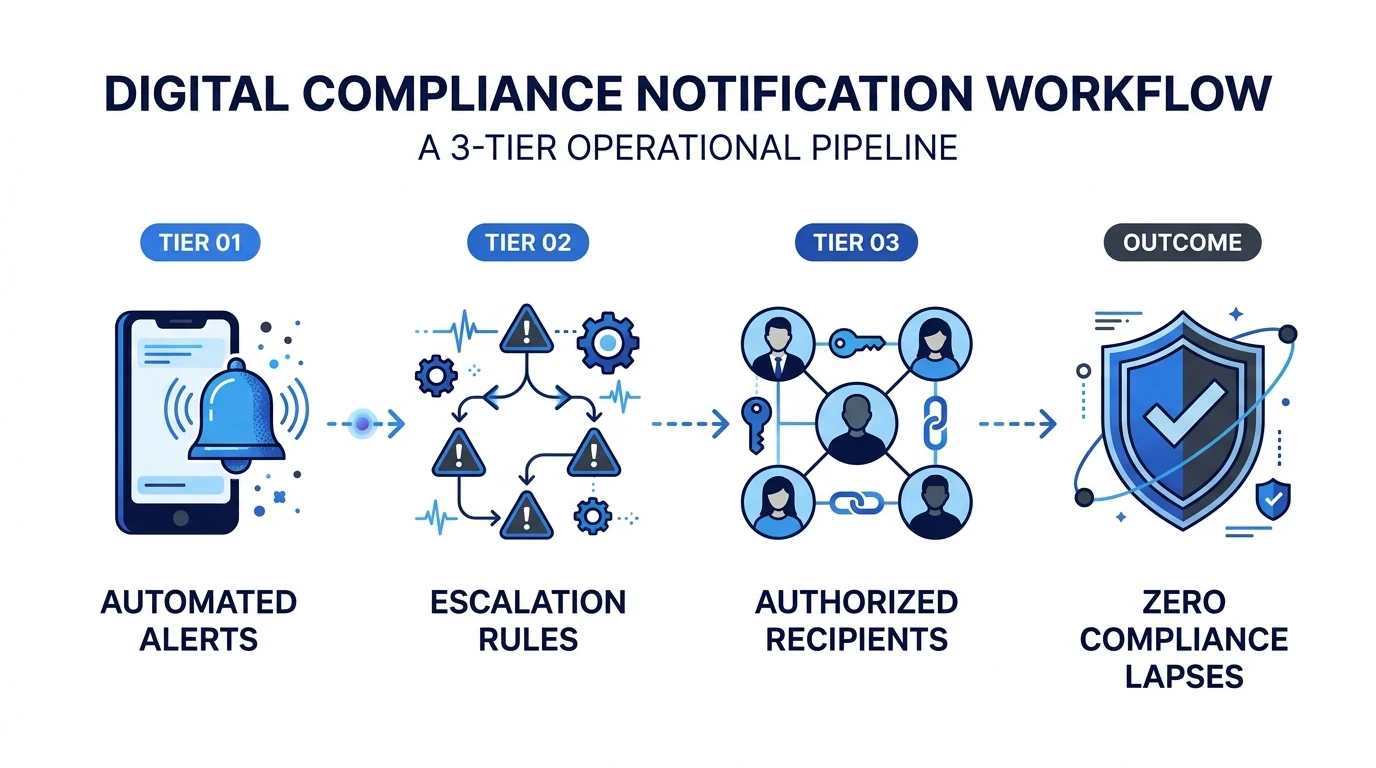
Creating an efficient mail distribution plan requires structured internal workflows. Businesses assign clear roles for reviewing incoming digital mail scans. Assigning specific team members to handle tax notices, legal summonses, and statutory filings eliminates confusion and accelerates response times.
Time-sensitive documents demand immediate escalation protocols. Penalties accrue rapidly when companies fail to respond to HMRC enquiries or statutory notices. Automated alerts notify company officers the moment a high-priority letter enters the digital portal system.
Integrating postal workflows with corporate record management keeps compliance teams aligned. Archiving digital scans in secure databases creates a permanent historical record of statutory correspondence. Directors maintain complete visibility over corporate notices regardless of their physical operating location.
To build an efficient corporate infrastructure, directors often ask why do HMRC and Companies House write to your registered office? to better understand statutory delivery triggers. Recognizing these triggers helps companies structure their daily administration effectively.
When implementing professional oversight, managers choose to pair mail handling and a letter of authority with Form My Company to automate mail collection and protect directors’ personal privacy. Professional services handle daily operations, freeing business leaders to focus on core growth.
Maintaining an active, verifiable registered office guarantees that essential legal notifications arrive without delay. By combining strict public record updates with professional mail handling, companies protect their corporate status and ensure smooth regulatory compliance.
Explore More Supplementary Company Documents Guide,
How Often Should You Renew Certified Copies of Company Records?
How to Make Sure Your Certified Copies Are Accepted First Time
Frequently Asked Questions
What Are Supplementary Company Documents in the UK?
Supplementary company documents are official legal certificates and corporate extracts—such as Certificates of Good Standing, updated Articles of Association, and official filing copies—that provide proof of a company’s legal status beyond basic initial formation certificates. Form My Company provides certified Supplementary Company Documents directly sourced from Companies House to verify current operational standing for financial institutions, international expansion, and regulatory compliance.
Why Do Financial Institutions Require Supplementary Company Documents?
Banks, lenders, and investors require supplementary filings to verify that a business maintains active legal standing, complies with reporting requirements, and is free from strike-off proceedings before approving financial applications. Through Form My Company, businesses can obtain certified Supplementary Company Documents like a Certificate of Good Standing to validate director appointments, shareholder structures, and up-to-date annual confirmation statements.
How Can a Business Request Certified Copies of Corporate Documents?
Companies can obtain official certified copies either by performing self-managed searches on public government databases or by utilizing specialized corporate filing services. Form My Company streamlines the retrieval of official Supplementary Company Documents, delivering verified digital or authenticated hard-copy certificates tailored for legal proceedings, overseas filings, and corporate audits.
Which Specific Certificates Are Included in Supplementary Company Documents?
Essential supplementary records include Certificates of Incorporation on Change of Name, Certificates of Good Standing, official Director and Shareholder Registers, Persons with Significant Control (PSC) registers, and formal corporate resolutions. Form My Company bundles these vital Supplementary Company Documents into official business packs to ensure complete proof of corporate identity and ongoing statutory compliance.
How Often Should Companies Update Their Official Supplementary Records?
While core formation files remain static post-incorporation, supplementary extracts reflect real-time statutory updates and must be updated whenever major structural changes occur or when financial partners request fresh compliance proof. Using Form My Company to audit and refresh your Supplementary Company Documents ensures your company maintains current legal records and avoids transaction delays during audits, mergers, or banking checks.