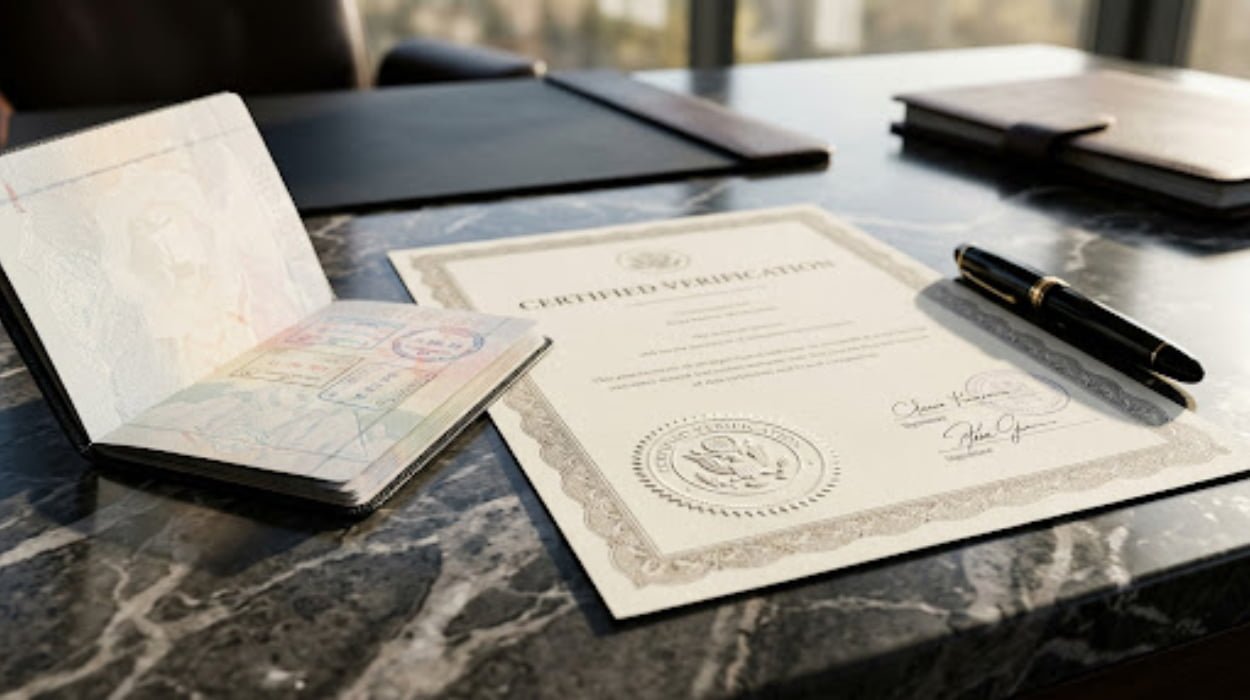
Overseas founders prove a UK registered office by presenting an official proof of address document, such as a formal utility bill, a registered office service agreement, or a certified document issue from Companies House.
Overseas entrepreneurs face strict regulatory scrutiny when incorporating a business in the United Kingdom. Companies House and UK banks require verifiable evidence of a physical UK address to satisfy statutory anti-money laundering regulations. Overseas founders must provide documentation that establishes a direct legal link between their company and the physical location registered with the UK government.
The verification process demands official proof of legal occupancy or authorization to use the designated address. International business owners cannot rely on standard personal correspondence to satisfy regulatory compliance bodies. Submitting properly authenticated legal documentation prevents incorporation delays, avoids banking rejections, and maintains official corporate standing within the United Kingdom.
Why Do UK Authorities Require Proof of a Registered Office?
UK authorities require proof of a registered office to enforce corporate accountability, prevent fraudulent business registrations, ensure anti-money laundering compliance, and establish a reliable legal address for serving official government notifications and legal documents.
Companies House and HM Revenue and Customs demand a physical UK address to maintain transparency across the legal business register. Legal regulations mandate that every UK corporate entity maintains an active registered address where legal correspondence arrives. Verification protocols prevent illegal entities from using unauthorized physical locations to conduct fraudulent financial activity.
Regulatory frameworks enforce strict oversight over non-resident corporate directors. Authorities inspect address documentation to verify that the business operations comply with the Companies Act 2006. Failure to produce valid address proof results in administrative penalties, company strike-off risks, and immediate bank account freezes.
Which Official Documents Prove a UK Registered Office Address?
Founders prove a UK registered office address by submitting a official service agreement, a government-issued certificate of incorporation, a corporate bank statement, or a certified letter of authority from a recognized corporate service provider.
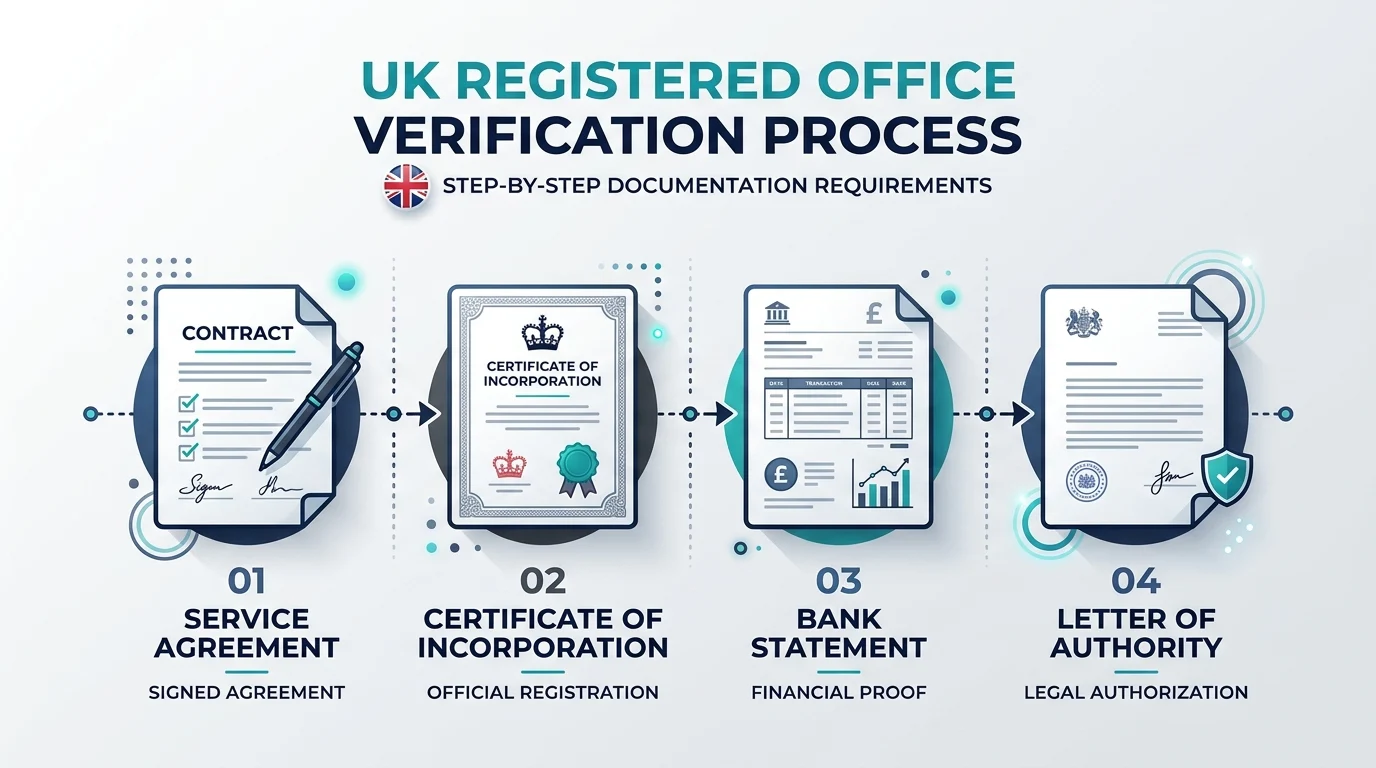
Official verification requires documents containing the full corporate name and the exact registered address matching Companies House records. Corporate service providers supply official address verification letters that confirm legal authorization to use a specific UK location. These formal legal instruments confirm the founder’s right to occupy or utilize the designated commercial location.
UK banking institutions require proof issued within the previous three months to validate ongoing corporate operations. Overseas founders often utilize formal company address documentation to fulfill these stringent administrative requests. International business owners secure Supplementary Company Documents to deliver certified evidence directly to official financial entities and international banking networks.
How Do Overseas Founders Obtain a Valid UK Registered Office Address?
Overseas founders obtain a valid UK registered office address by contracting a licensed UK corporate service provider, securing a commercial office lease, or retaining a professional registered office service that includes statutory mail handling.
Non-resident directors must secure a physical address situated within the same UK jurisdiction as their company registration. Virtual business address providers issue legal authorization documentation upon completing mandatory anti-money laundering verification checks. These registered services process official post from government departments, including HM Revenue and Customs and Companies House.
Selecting a professional corporate service provider ensures full compliance with UK corporate law standards. Licensed providers furnish instant legal proof of address documentation required for statutory filings. Many international entrepreneurs evaluate whether a non-UK resident director can use a UK registered office before finalizing their international corporate structure.
What Steps Are Needed to Verify a UK Address for Bank Account Opening?
Founders verify a UK address for banking by completing Know Your Customer identity checks, submitting certified registered office documents, providing official corporate registration filings, and presenting valid proof of corporate operating address.
Complete identity checks using government-issued passport documentation.
Submit official corporate registration filings from Companies House.
Present formal corporate address service agreements signed by licensed providers.
Supply certified bank verification letters confirming legal corporate registration.
Provide valid utility documentation associated with the designated UK address.
UK financial institutions examine physical address documentation rigorously during the corporate onboarding workflow. Banks match the registered address details against public records and corporate registries before approving commercial accounts. International founders must provide notarized or certified copies of their address paperwork if applying from external jurisdictions.
Discrepancies in the corporate address format cause immediate banking application rejections. Professional corporate providers ensure that address details match official government database records precisely. International business owners acquire a certified letter of authority for non-resident founders from Form My Company to satisfy strict banking verification requirements.
How Does Address Verification Impact UK Corporate Compliance?
Address verification impacts UK corporate compliance by ensuring continuous legal standing, facilitating timely receipt of statutory government notices, preserving public register accuracy, and avoiding administrative financial penalties or company dissolution.
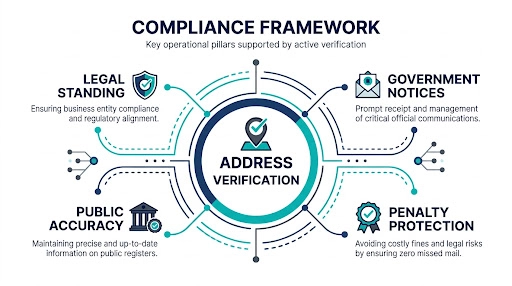
Maintaining an authenticated registered office address forms a primary statutory obligation under UK company law. Government bodies dispatch legal notifications, tax assessments, and official compliance warnings exclusively to the designated registered address. Missing statutory deadlines due to address verification failures leads to severe administrative fines and legal prosecution.
Companies House conducts routine compliance audits to remove inactive or fraudulent addresses from the public register. If an address remains unverified, authorities mark the corporate profile as non-compliant. Professional service managers assist international companies by maintaining accurate, fully verified address documentation year-round.
What Are the Common Address Verification Mistakes Overseas Founders Make?
Overseas founders make address verification mistakes by using residential addresses without authorization, providing outdated utility documentation, submitting uncertified address copies, and entering inconsistent address formatting across official corporate filings.
Submitting residential addresses that breach property lease terms or local council rules.
Supplying address verification documents dated older than 90 calendar days.
Uploading uncertified digital scans when original certified documents are mandatory.
Entering inconsistent street names or postal codes across government registration portals.
Utilizing unauthorized virtual address providers lacking proper anti-money laundering licensing.
Inconsistent data entries across public registers trigger immediate regulatory flags within UK compliance databases. International founders must review all submitted documentation to verify absolute alignment between corporate certificates, lease contracts, and banking forms. Working with accredited corporate specialists eliminates technical submission errors during compliance checks.
Accredited business service partners review documentation before submission to prevent costly processing rejections. Form My Company verifies corporate documentation structures to ensure complete compliance with legal UK registration mandates. Proper initial setup guarantees that international corporate entities maintain flawless legal status across international jurisdictions.
How Do Legal Changes Impact UK Address Verification Rules?
Legal changes impact UK address verification rules by empowering Companies House to reject suspicious addresses, requiring service providers to enhance identity verification, and enforcing stricter evidence standards for registered corporate locations.
Recent statutory reforms through the Economic Crime and Corporate Transparency Act expand regulatory powers over UK business registrations. Companies House now actively inspects, verifies, and removes invalid corporate addresses from the central register. Authorities no longer permit public record registration without verified legal authority from the underlying property owner or licensed provider.
Corporate service providers must execute strict identity verification protocols on all beneficial owners before granting address usage rights. Overseas directors must provide updated proof of legal standing periodically to preserve public registry validation. Staying compliant requires continuous alignment with modern statutory verification requirements.
Proving a UK registered office address remains a fundamental requirement for international founders operating within the United Kingdom. Regulators, financial institutions, and legal authorities enforce strict documentation standards to guarantee corporate transparency and combat financial fraud. Overseas business owners must supply official, recent, and certified address documentation to maintain legal compliance and secure commercial banking infrastructure. Form My Company provides comprehensive legal document solutions, professional registered office support, and certified corporate filings to simplify compliance for global entrepreneurs.
Explore More Supplementary Company Documents Guide,
How to Prepare Certified Documents for a Government Tender Bid
Solicitor Certification vs Notarisation: Which Does Your Company Need?
Frequently Asked Questions
What are Supplementary Company Documents in the UK?
Supplementary company documents are official legal filings and certified corporate records—such as Certificates of Good Standing, Letters of Authority, Articles of Association, and Share Certificates—issued beyond primary incorporation papers. Form My Company provides these Supplementary Company Documents to help businesses verify their statutory compliance, director authority, and corporate structure for third parties.
Why do overseas founders need Supplementary Company Documents?
Overseas founders require Supplementary Company Documents to satisfy stringent anti-money laundering (AML) protocols and Know Your Customer (KYC) checks when opening UK bank accounts or entering global contracts. Form My Company assists international directors by retrieving certified official proof, including Letters of Authority and Certificates of Incumbency, to validate their right to operate and represent a UK registered entity.
How do I order certified Supplementary Company Documents from Form My Company?
You can order certified Supplementary Company Documents directly through the Form My Company portal by submitting your UK Company Registration Number (CRN) and specifying the required records. The Form My Company team retrieves, verifies, and authenticates official filings directly from Companies House, delivering digital or physical apostilled copies tailored for legal and financial use.
What is the difference between core incorporation filings and Supplementary Company Documents?
Core incorporation filings create a limited company at registration, whereas Supplementary Company Documents reflect post-incorporation changes, legal standing, and operational permissions over time. Form My Company manages these ongoing records—including updated confirmation statements and director appointment forms—to ensure continuous regulatory compliance under the Companies Act 2006.
How long are Supplementary Company Documents valid for banking and legal verification?
Most UK banks, legal institutions, and regulatory bodies require Supplementary Company Documents issued within the past three months to ensure corporate details remain current. Form My Company offers expedited retrieval services to ensure founders obtain up-to-date certified documents before statutory or financial compliance deadlines expire.