Companies House director resignation involves notifying Companies House that a director has ceased to hold office and ensuring the company’s records reflect the change. A UK company must generally report a director’s resignation within 14 days of the date the individual ceases to be a director. Form TM01 is used to notify Companies House of the termination of a director’s appointment.
Whether you are a director leaving a business or a company representative responsible for updating the public register, it is important to understand the correct procedure. This guide explains how to resign as a director on Companies House, how to complete Form TM01, which deadlines apply, and what the company should do after the resignation.
Companies House Director Resignation: What You Need to Know
Companies House director resignation is the process of notifying the registrar that a director’s appointment has ended. The company is generally responsible for reporting the change, rather than relying on the resigning director to update the public register personally.
The main steps are to establish the effective resignation date, check the company’s governing documents and resignation arrangements, submit the appropriate notification, and update the company’s internal records. The company must generally notify Companies House within 14 days of the director ceasing to hold office.
Resigning from a directorship is not necessarily the same as resigning as an employee or transferring shares. These are separate matters and may require additional action depending on the individual’s position in the business.
How to Resign as a Director on Companies House
If you want to know how to resign as a director on Companies House, the first step is to establish how the resignation will take effect. The director should give notice in accordance with the company’s articles of association, any applicable agreement and the relevant contractual arrangements.
The company should then record the resignation date and notify Companies House using the appropriate filing method. A director should not assume that sending a resignation letter automatically updates the public register.
Step 1: Submit a Written Resignation
The director should provide written notice to the appropriate person or body within the company. The letter should identify the director, confirm the intention to resign and state the intended effective date.
Check the company’s articles of association and any director service agreement for notice requirements. Where a notice period applies, the resignation date should reflect the relevant arrangements.
Keep a copy of the resignation notice and evidence of when it was delivered. These records help the company establish the effective date and complete its filing accurately.
Step 2: Confirm the Effective Resignation Date
The effective date is important because it determines when the director ceases to hold office and when the notification deadline begins.
The date on which a letter is written is not necessarily the date on which the resignation takes effect. The company should review the wording of the notice, any applicable notice period and the relevant governing documents before recording the cessation date.
For example, if a director’s resignation takes effect on 1 April, the company should calculate the applicable 14-day filing period from that cessation date. It should not substitute the date on which someone later processes the paperwork.
Step 3: Notify the Company and Update Its Records
The company should record the resignation in its relevant internal records and establish who will submit the Companies House notification.
Depending on the company’s arrangements, the board or company secretary may oversee the administrative process. The company should retain the resignation letter and any relevant minutes or supporting documentation.
Step 4: File Form TM01
Form TM01 is used to notify Companies House that a director’s appointment has ended. The company can use the online filing service or submit the relevant paper form where permitted.
The filing should contain the correct company details, the director’s registered particulars and the effective termination date. The company should check the current filing instructions before submission.
Use the official TM01 form and filing guidance to confirm the applicable requirements.
Step 5: Confirm the Filing and Retain Evidence
After submitting the notification, keep the submission confirmation and any other relevant evidence. Check the public register to ensure that the change has been recorded correctly.
If the filing is rejected or the register does not reflect the change, review the reason and take the appropriate corrective action. Do not assume that an unsuccessful submission has fulfilled the company’s reporting obligation.
What Is Form TM01 and When Should You Use It?
Form TM01 is the Companies House form for terminating a director’s appointment. It can be used to report the end of an individual or corporate director’s appointment, subject to the current filing requirements.
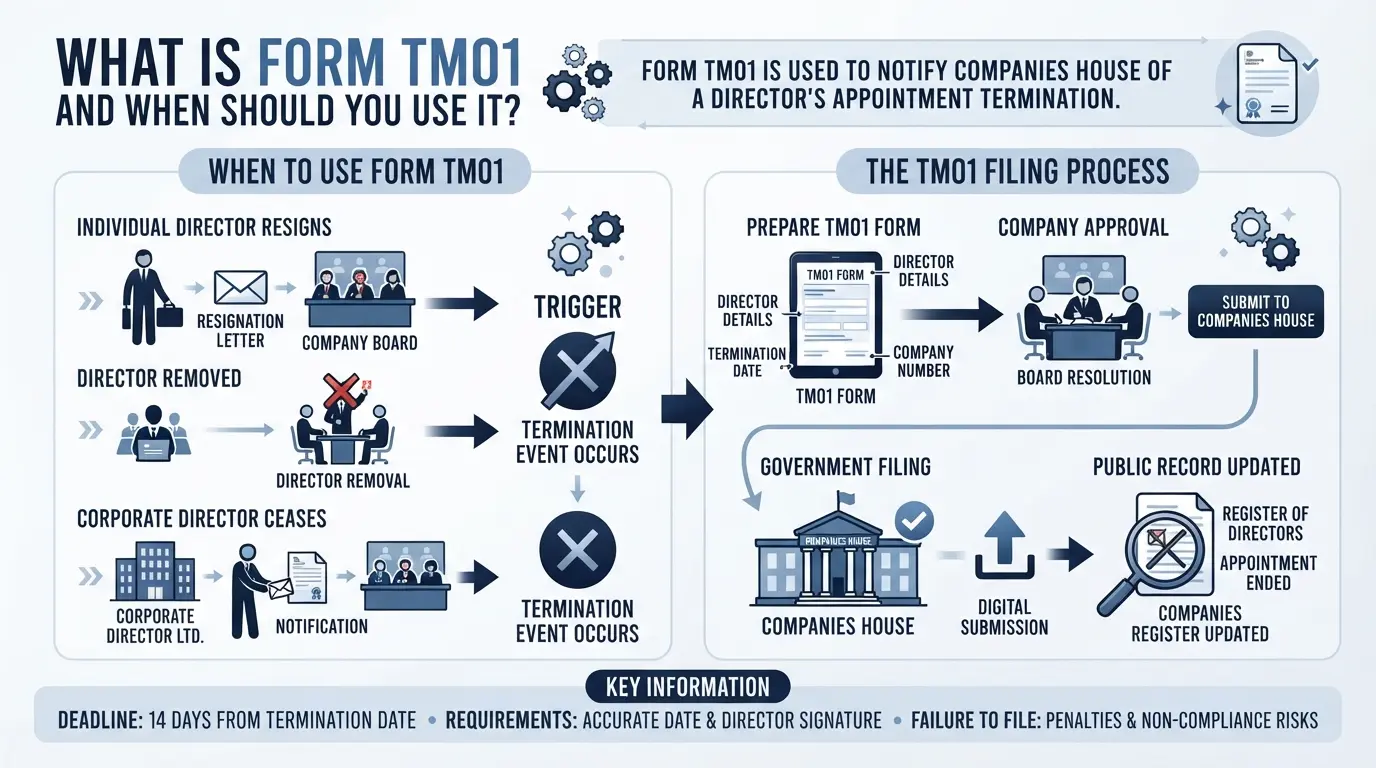
The form records the company details, the director’s existing registered particulars and the termination date. The person authorised to submit the form should ensure that the information matches the company’s records.
Online filing is generally the more convenient route because Companies House recommends using its online service to update information more quickly. Paper forms can take longer to process.
Information to Prepare Before Filing
Before submitting TM01, confirm the following:
The full company name and company number.
The director’s details as recorded on the public register.
The correct effective termination date.
The identity of the person authorised to submit the notification.
The applicable authentication and submission requirements.
The supporting records the company needs to retain.
Only include information requested by the current form or filing service. Older instructions may refer to fields or authentication methods that have since changed.
Also explore,
The Essential Checklist for Resigning as a Director From a UK Company
What Happens to a Company When a Sole Director Decides to Resign?
How to Notify Companies House About a Director’s Resignation Online
Online filing is a practical way to notify Companies House about a director’s resignation. The person responsible for filing should use the official Companies House service and follow the current instructions.
Step 1: Access the Official Filing Service
Visit the Companies House online filing service and follow the link to the online service.
Use the appropriate company account and authentication arrangements. If the company cannot access its account or has lost the information required to file, resolve the access issue before relying on the submission being completed.
Step 2: Select the Director Termination Filing
Choose the option for notifying Companies House that a director’s appointment has ended. Check that you are completing the termination filing rather than a form for appointing a director or changing other company details.
Step 3: Enter the Director’s Details
Use the information held on the public register to identify the correct director. Confirm the company number and the director’s name and other requested particulars.
Where the service asks for a termination date, use the date on which the director actually ceased to hold office. Check the details carefully before proceeding.
Step 4: Review and Submit
Review the form for mistakes and follow the current authentication and submission instructions. Submit the filing and save the confirmation for the company’s records.
Step 5: Check the Public Register
After submission, check the company’s Companies House record. If the director’s appointment still appears active or the filing has not been accepted, investigate the status and resolve the issue.
The processing time may vary, so do not promise that every filing will update the public record instantly.
What Is the Legal Deadline for a Companies House Director Resignation?
A company must generally notify Companies House within 14 days of a director ceasing to hold office. This reporting obligation is set out in the Companies Act 2006. <escape>GOV.UK company reporting guidance</escape>
The company should calculate the deadline using the effective cessation date, not simply the date the resignation letter was drafted or received if those dates differ.
How to Calculate the 14-Day Deadline
Suppose a director’s resignation takes effect on 1 April. The company should calculate the 14-day period using that effective date and ensure the filing is made within the applicable period.
Weekends and public holidays can affect practical arrangements for preparing and submitting paperwork, so it is sensible to complete the filing as early as possible rather than waiting until the final day.
What If the Company Misses the Deadline?
A late notification means the company has not met the applicable reporting deadline. The company should submit the outstanding information promptly and seek appropriate guidance if it is uncertain how to correct its records.
Do not assume that a particular fixed fine applies automatically to every late TM01 filing. The consequences depend on the applicable legal provisions and circumstances. The company should check official guidance rather than relying on unsupported penalty figures.
What Documents Are Needed for a Director’s Resignation?
The principal records generally include the written resignation notice and the information needed to complete the termination notification. The company should retain appropriate evidence of the effective date and the action taken.
Resignation Letter
The letter should clearly identify the director and state the intention to resign. It should specify the proposed effective date and comply with any relevant notice arrangements.
Board Minutes or Other Internal Records
Depending on the company’s articles and circumstances, internal records may document the resignation and the company’s response. A board resolution is not automatically required for every resignation, so the company should follow its own governing documents and applicable procedures.
Form TM01 and Submission Confirmation
Keep a copy of the information submitted and any confirmation received. These records help the company demonstrate what was filed and when.
Updated Company Registers
Update the relevant internal records to reflect the director’s departure. Review any related information that may need to be changed, including the company’s governance records and arrangements for ongoing management.
What Happens After a Director Resigns?
Notifying Companies House is an important administrative step, but the company should also consider the operational consequences of the departure.
Update Internal Records
Ensure that the company’s register of directors and other relevant records reflect the correct cessation date. Retain the resignation notice and evidence of the Companies House notification.
Review Banking and Authorisation Arrangements
If the departing director is a bank signatory or holds authority over business accounts, review the company’s banking arrangements. Notify the relevant provider where necessary and amend mandates in accordance with its procedures.
Inform Relevant Advisers and Stakeholders
Depending on the director’s role, the company may need to inform accountants, legal advisers, insurers or other relevant parties. Check whether any separate notification or contractual obligation applies.
Check Whether the Company Still Meets Its Requirements
If the resigning director is the company’s only director, the departure may create a governance issue. Review the company’s articles and the legal requirements that apply to its circumstances, and arrange any necessary next steps promptly.
How Does a Director’s Resignation Affect Confirmation Statements?
A director resignation and a confirmation statement are separate filing matters. The company should notify Companies House of the director change within the relevant deadline rather than relying on its next annual confirmation statement to report the change.
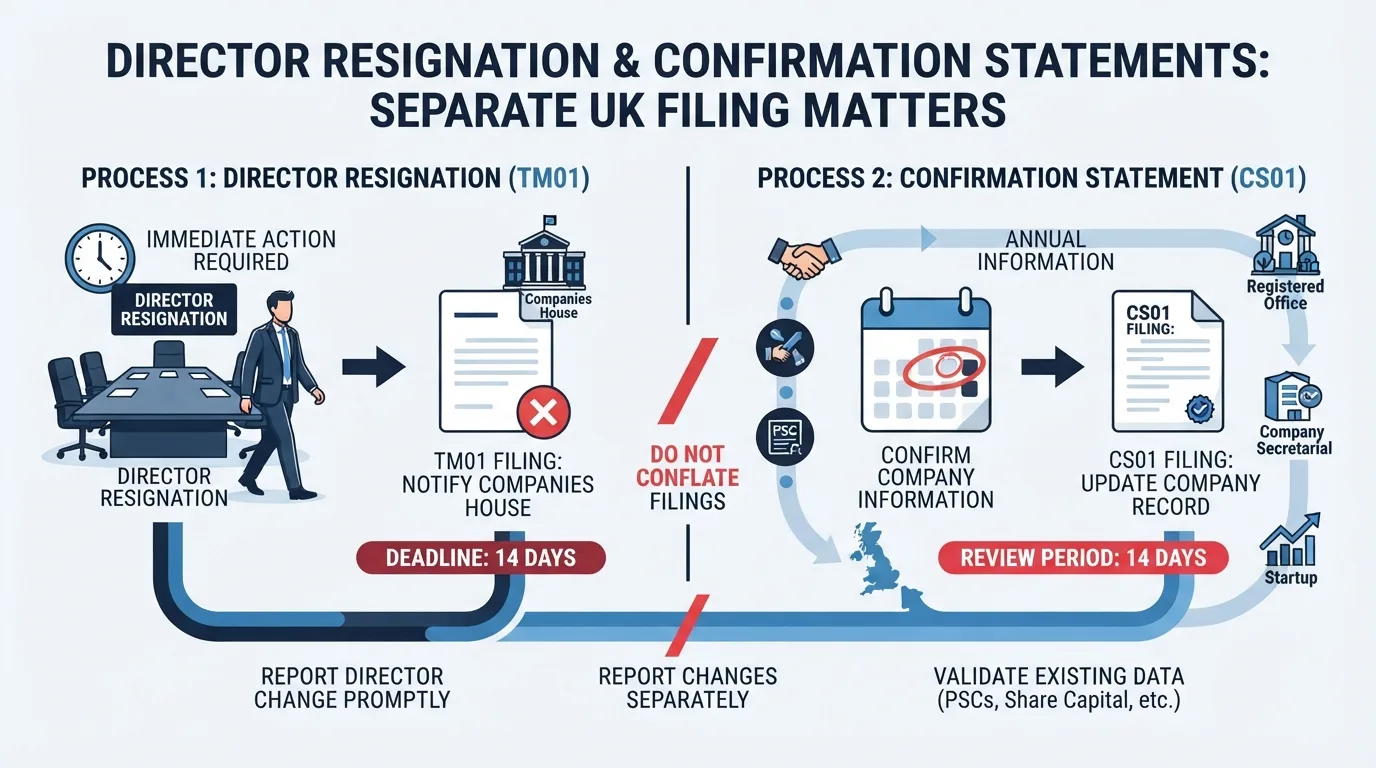
The company should also ensure that any other required updates are handled separately. For example, a change in a person’s position as a director does not automatically mean that their status as a person with significant control or shareholder has changed.
Keeping these records separate helps the company maintain accurate information and avoid confusing a director’s departure with changes to ownership or control.
Common Mistakes When Notifying Companies House
Using the Wrong Effective Date
The filing date must reflect when the director actually ceased to hold office. Check the resignation notice and applicable arrangements before entering the date.
Assuming the Director Must File Personally
The company is generally responsible for notifying Companies House of the change. A director’s resignation letter alone does not ensure that the public register is updated.
Using Outdated Filing Instructions
Older guidance may describe different form fields or submission methods. Use the current Companies House form and online service instructions.
Waiting Until the Deadline
Delaying the filing increases the risk of administrative errors or missing the deadline. Assign responsibility for the submission and prepare the information as soon as the effective date is known.
Ignoring Related Company Changes
A director’s departure may affect bank mandates, internal records and management arrangements. Review these matters separately instead of treating the TM01 submission as the only action required.
When Should You Seek Professional Help?
Professional assistance may be useful where the resignation date is disputed, the company has only one director, the articles are unclear or several company changes need to be coordinated.
Support can also help businesses that want assistance preparing the filing, checking the details and maintaining consistent records. The company remains responsible for ensuring that its legal obligations are met, even when it uses an external service provider.
For further information on the wider legal responsibilities involved, read our guide to legal obligations after resigning as a company director.
If you are considering leaving a directorship and need a broader overview of the process, see how to resign as a director from a UK limited company.
For a separate explanation of the difference between a resignation and removal from the board, read the difference between a director’s resignation and being removed from the board.
Frequently Asked Questions
How do I resign as a director on Companies House?
A director should provide resignation notice in accordance with the company’s applicable arrangements. The company must then generally notify Companies House within 14 days of the effective cessation date, using Form TM01 or the appropriate online filing service.
How do I notify Companies House of a director’s resignation?
Use the official Companies House online filing service or the permitted paper form TM01. Enter the required company and director information, confirm the termination date and follow the current submission instructions.
What is the deadline for filing a director’s resignation?
The company must generally notify Companies House within 14 days of the date the director ceases to hold office. The effective cessation date is the key date for calculating the deadline.
Can I resign as a director without filing Form TM01 myself?
Yes. The company is generally responsible for notifying Companies House of the change. The director should make sure the resignation has been communicated correctly and may wish to check the public register after the company has submitted the notification.
What happens if Companies House is not notified of a director’s resignation?
The public register may remain inaccurate, and the company may fail to meet its statutory reporting obligation. The company should submit the outstanding notification promptly and check the applicable guidance if the deadline has passed.
Can I submit a director resignation online?
Yes. Companies House provides an online filing route for terminating a director’s appointment. Online filing is generally more convenient than paper submission, although processing times can vary.
Does resigning as a director mean I have sold my shares?
No. Resigning as a director does not automatically transfer or cancel shares. Directorship, share ownership and a person’s status as a person with significant control are separate matters and should be reviewed independently.
Get Support with Your Director Resignation Filing
Notifying Companies House of a director’s resignation requires an accurate effective date, the correct filing and timely updates to company records. Taking these steps carefully helps businesses maintain accurate public information and manage changes in leadership.
Form My Company offers assistance for businesses that need support with director changes and related company administration. Explore our Director Resignation service to review the available support and take the next step towards keeping your company records up to date.