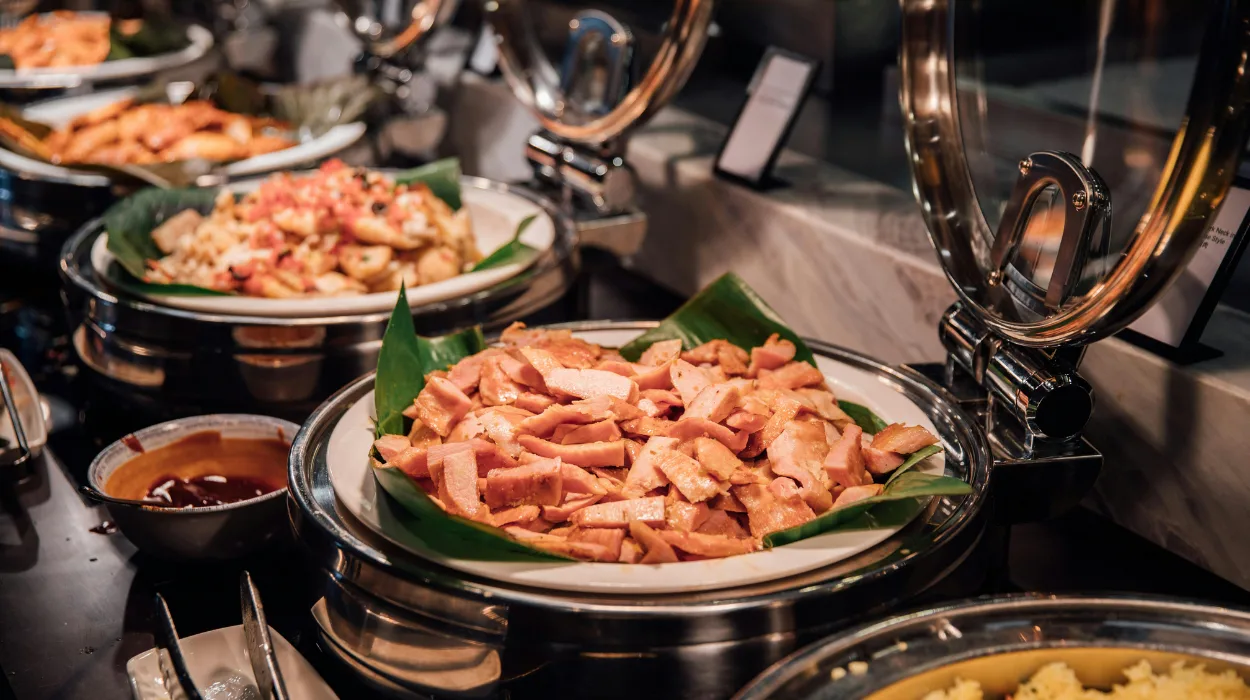
Buffet service suits large, networking-heavy business conferences requiring flexible schedules, while plated service fits formal events with fixed agendas. Buffets reduce labor costs and increase dietary options, whereas plated service maximizes floor space and maintains strict time control for high-profile keynotes.
Which Dining Style Cost-Effectively Supports Conference Budgets?
Buffet service reduces staff labor costs by up to 30%, but plated service controls portion sizes and minimizes food waste. Overall venue budgets balance lower labor costs against higher food volume requirements based on attendee counts and event length.
Venue catering expenses form a substantial portion of overall corporate event spending. Corporate event planners analyze cost structures by evaluating both direct food expenses and operational labor fees.
Buffet service requires fewer service staff members per attendee. Staff members manage central service lines rather than serving individual tables. Venues allocate roughly one staff member per 30 guests for buffets. This operational structure lowers total hourly labor expenditures for event hosts.
Food preparation costs differ between service styles. Buffets require 15% to 20% more raw food volume to maintain full presentation levels throughout the entire meal period. Kitchen staff prepare extra portions to prevent service stations from appearing depleted. This requirement increases total raw ingredient costs for the host organization.
Plated service demands precise portion control. Kitchen teams pre-portion exact weights for protein, starch, and vegetable components. This discipline limits food waste and keeps raw ingredient purchases predictable.
Plated service requires significantly higher floor staff ratios. Venues deploy one server per 10 to 12 guests to ensure synchronized meal delivery. The increased labor charge often offsets the savings achieved through reduced food waste. Event planners evaluate these competing expense variables to protect event profit margins.
How Do Food Options Impact Guest Capacity and Venue Layout?
Buffet layouts require 15 to 20 square feet per attendee to accommodate line queuing, whereas plated meals fit into 12 to 15 square feet per person. Plated service maximizes floor space within tight corporate rooms.
Floor space availability dictates the viability of specific catering formats. Event organizers calculate precise room square footage to ensure attendee safety, comfortable movement, and proper seating density.
Buffet setups demand significant spatial allocation for physical food tables and attendee queuing lines. Venues position buffet lines away from main dining tables to prevent traffic bottlenecks. This configuration consumes roughly 20% of usable floor space.
Large conference halls accommodate these extra service islands easily without sacrificing seating capacity. Small or mid-sized venues lose substantial table capacity when integrating self-service stations.
Plated service eliminates internal room queues entirely. Kitchen staff load plates inside the kitchen, and waitstaff deliver meals directly to seated guests. This approach frees up valuable floor space for delegate seating, stage setups, or audiovisual displays.
Corporate planners hosting events in compact environments maximize seating efficiency by choosing plated service. Organizations seeking full-service venue flexibility can book a modern conference room to accommodate either layout seamlessly.
Does Meal Format Influence Conference Timelines and Agendas?
Plated service maintains strict conference schedules by serving all attendees simultaneously within a precise 60-minute window, whereas buffet service requires 45 to 75 minutes depending on line efficiency, group size, and station numbers.
Maintaining agenda integrity ranks among the highest priorities for business conference organizers. Speaker schedules, breakout sessions, and live broadcasts require tight time management.
Plated meals deliver strict temporal control. Banquet managers coordinate service teams to serve every table within a 10-to-15-minute window. Entire dining rooms complete their meals concurrently. Session moderators resume presentations precisely on schedule without distracting room movements.
Buffet meal durations depend on line flow velocity and human behavior. Attendees move through buffet lines at varying speeds. Groups exceeding 100 delegates experience service delays if venues provide insufficient buffet stations.
Queue congestion extends the overall meal period by 20 to 30 minutes. This extension compresses afternoon speaker slots or pushes back panel discussions. Event managers build extra buffer time into event schedules when choosing buffet setups.
How Does Dining Style Affect Professional Networking Opportunities?
Buffet service increases attendee interaction by encouraging organic movement and cross-table conversations, whereas plated service restricts delegate conversations to immediate table neighbors for the duration of the meal.
Conferences serve as primary venues for professional relationship building, business development, and peer engagement. Event structures influence how delegates interact during breaks.
Buffet formats act as natural networking drivers. Delegates stand together in service lines, browse food selections, and move freely around the room. These open movement patterns break down social barriers. Attendees initiate conversations with peers outside their immediate work teams or pre-assigned seating areas.
Plated service limits physical movement during the dining hour. Delegates remain seated at their assigned tables throughout the meal service. Conversations stay confined to the six to eight individuals occupying the same table circle.
Plated environments work well for structured team discussions, client entertainment, or formal awards ceremonies. Organizations looking to evaluate broader financial trade-offs should read about what are the hidden hospitality costs of hosting a conference? to understand how service choices impact overall ROI.
Which Catering Method Accommodates Complex Dietary Requirements Best?
Buffet service accommodates diverse dietary requirements efficiently through clear dish labeling, whereas plated service requires advance collection of delegate meal preferences to prevent severe kitchen delays during live service.
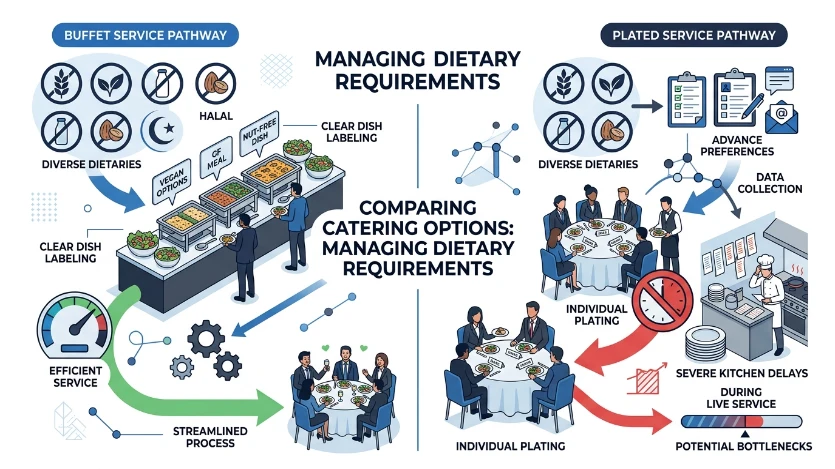
Modern corporate events must cater to varied dietary requests, including vegetarian, vegan, gluten-free, halal, and allergen-safe meals. Event managers mitigate liability and guest dissatisfaction through proactive meal planning.
Buffet stations offer transparent food selection. Venues label each dish with detailed ingredient cards and allergen warnings. Attendees select items matching their dietary choices without requesting custom kitchen interventions.
Self-service displays give delegates complete control over their food combinations. Kitchens prepare diverse side dishes that accommodate multiple diet profiles simultaneously on a single line.
Plated service demands meticulous pre-event administration. Event organizers gather dietary data from delegates weeks before the conference date. Banquet kitchens receive exact meal counts for standard, vegetarian, and special-diet plates.
Last-minute dietary requests during plated service disrupt kitchen workflow. Preparing custom meals on demand slows down service for the entire table. Plated events require robust registration systems to capture accurate attendee preferences in advance.
How Do You Match Dining Style to Your Conference Objectives?
Match buffet service to multi-day, networking-focused conventions with fluid schedules, and assign plated service to single-day executive summits, formal award galas, or tightly timed panel presentations.
Aligning catering formats with core event goals ensures high attendee satisfaction and operational success. Event planners categorize conference types by intent, delegate demographic, and formal expectations.
Collect delegate feedback during registration to identify service preferences
Select service styles that complement room size and presentation formats
Confirm catering staff ratios with the venue prior to final contract signing
Audit total catering expenses to identify hidden service charges
Executive summits and board-level meetings favor plated service. High-ranking delegates expect premium, uninterrupted table service that mirrors corporate formality. Plated delivery maintains a professional atmosphere suitable for keynotes and sensitive discussions.
Interactive workshops, trade expos, and annual team conventions benefit from buffet setups. These events prioritize casual interaction, energy maintenance, and schedule flexibility.
Form My Company assists corporate organizers in selecting optimal venue setups that align with budget parameters and strategic goals. Event managers who want to audit complete operational budgets can review what are the hidden hospitality costs of hosting a conference? before finalizing vendor agreements.
Choosing the right meal format directly impacts delegate engagement, budget execution, and schedule accuracy. Form My Company delivers professional corporate space solutions tailored to specific catering structures, technical needs, and event sizes.
Explore our Conference Room guide,
PAYE Registration vs. Payroll Management: Choosing Your Workflow
Director ID vs. PSC Identity Checks: Requirements Compared
Frequently Asked Questions
What should you look for when booking a conference room?
When selecting a meeting space, prioritize location accessibility, room layout flexibility, and reliable technology like high-speed Wi-Fi and audiovisual equipment. It is also essential to ensure the space offers flexible catering options and transparent pricing without hidden venue fees. Form My Company provides fully equipped conference rooms designed to accommodate professional corporate meetings, workshops, and large business events seamlessly.
How much does it cost to hire a conference room in the UK?
Conference room hire costs in the UK typically range from £30 to £100+ per hour, depending on location, capacity, and included technology. Rates often vary based on whether you choose hourly bookings, day rates, or packages that include catering and administrative support. Form My Company offers competitive venue solutions to help businesses secure professional event spaces tailored to their specific operational budgets.
What is the difference between a board room and a conference room?
A boardroom is typically designed for smaller, executive-level meetings featuring a single large central table and premium seating for leadership discussions. In contrast, a conference room offers a larger, more adaptable space that can be configured in various layouts, such as theater, classroom, or banquet style. Services like Form My Company provide flexible conference room setups that can be customized to support either collaborative workshops or large delegate presentations.
What equipment should be included in a professional conference room?
A professional meeting venue should come equipped with high-definition display screens or projectors, video conferencing hardware, flipcharts, and high-speed internet access. Access to on-site technical support, proper acoustics, and ergonomic seating is also vital for maintaining attendee engagement during long sessions. Form My Company ensures every conference room includes essential business amenities to facilitate clear presentation and seamless virtual collaboration.
How far in advance should you book a conference room for a business event?
For standard corporate meetings, booking two to four weeks in advance usually guarantees availability and adequate setup preparation. However, larger corporate conferences requiring specialized catering, multiple breakout spaces, or custom room configurations should ideally be reserved one to three months prior. Booking through Form My Company allows organizers to secure preferred meeting dates and coordinate custom layout specifications well ahead of time.