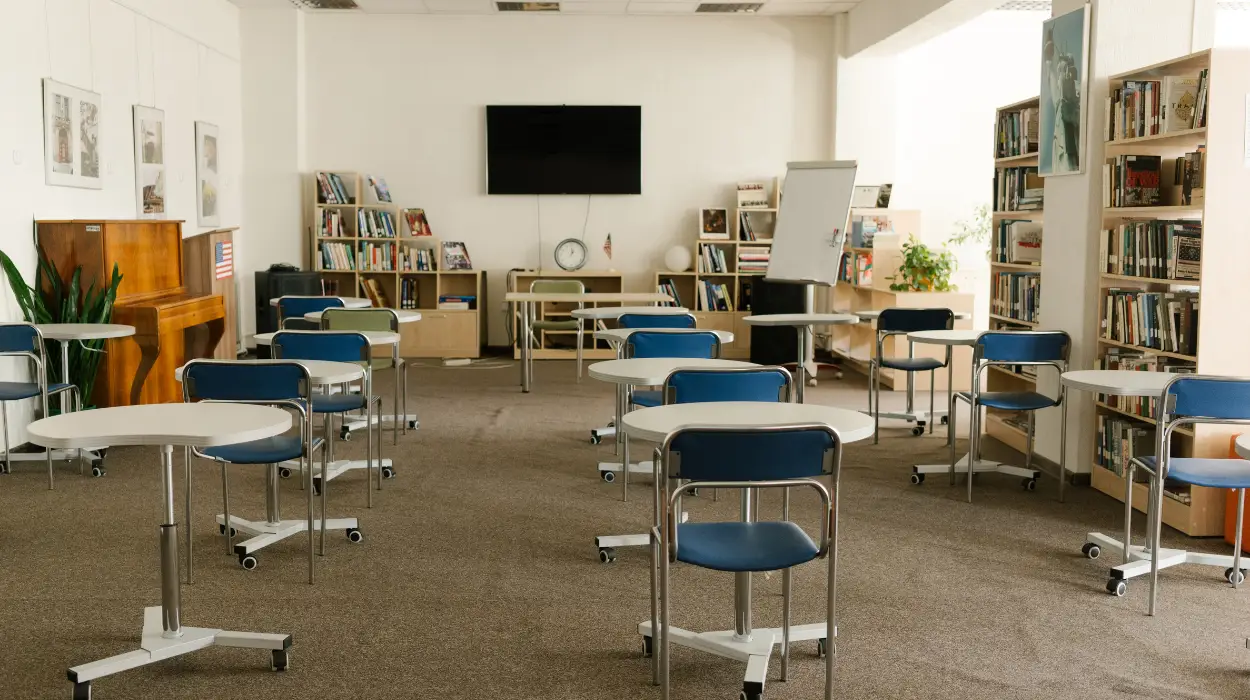
You can book your next corporate training session with a professional provider that offers fully equipped training rooms, structured environments, and operational support. This ensures consistent delivery, measurable learning outcomes, and a distraction-free setting aligned with corporate training objectives and performance standards.
Why do professional training rooms guarantee better corporate training results?
Professional training rooms guarantee better results because they provide controlled environments, purpose-built layouts, and integrated technology. These elements support structured delivery, reduce disruptions, and improve participant focus, leading to higher knowledge retention and measurable training effectiveness.
A structured training environment directly impacts learning outcomes. Research from the Learning and Performance Institute shows that controlled learning environments improve retention rates by up to 60% compared to informal or office-based sessions. Professional training rooms are designed with specific layouts. These include classroom setups for instruction, boardroom formats for discussions, and U-shaped arrangements for interactive workshops. Each layout aligns with a distinct training objective.
Technology integration also plays a key role. Standard features include high-definition displays, video conferencing systems, and fast internet connectivity. These tools support hybrid learning, remote participation, and real-time collaboration. Environmental consistency matters. Lighting, acoustics, and seating arrangements are optimised for long-duration sessions. This reduces fatigue and improves engagement across sessions lasting 4 to 8 hours.
What features should you expect from a high-quality corporate training room?
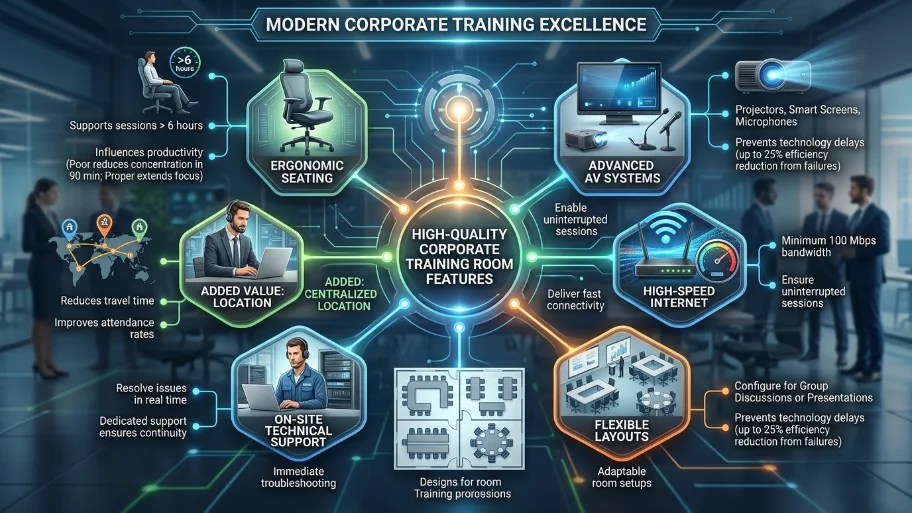
A high-quality corporate training room includes ergonomic seating, advanced AV systems, high-speed internet, flexible layouts, and on-site support. These features ensure uninterrupted sessions, enhanced communication, and alignment with corporate training delivery standards.
Core features define the effectiveness of a training space. Each component contributes to operational efficiency and learner experience.
Key features include:
- Provide ergonomic seating to support sessions lasting over 6 hours
- Enable AV systems such as projectors, smart screens, and microphones
- Deliver high-speed internet with a minimum 100 Mbps bandwidth
- Configure flexible layouts for group discussions or presentations
- Offer on-site technical support to resolve issues in real time
Ergonomics directly influences productivity. Poor seating reduces concentration within 90 minutes. Proper seating extends focus spans significantly.
Technology reliability is critical. Training delays caused by technical failures reduce session efficiency by up to 25%. Dedicated support ensures continuity. Location accessibility also adds value. Centralised training rooms reduce travel time for employees across multiple branches, improving attendance rates. For organisations comparing centralised solutions, this analysis of centralised training room facilities for multi-branch organisations explains why shared training environments improve operational consistency.
How does booking a dedicated training room improve team performance?
Booking a dedicated training room improves team performance by removing workplace distractions, standardising training delivery, and enabling focused collaboration. This leads to faster skill acquisition, improved engagement, and consistent performance across departments and teams.
Workplace environments introduce distractions. Common interruptions include emails, calls, and internal meetings. Studies show employees lose up to 2.1 hours daily due to interruptions. Dedicated training rooms eliminate these disruptions. Participants engage fully with the session content without competing priorities.
Standardisation is another key benefit. When training occurs in controlled environments, content delivery remains consistent. This ensures every participant receives the same level of instruction. Collaboration improves in structured settings. Training rooms are designed for interaction. Features like breakout areas and whiteboards support group activities and problem-solving exercises. Performance metrics reflect these improvements. Companies using dedicated training facilities report up to 35% higher post-training assessment scores.
When should a business book external training rooms instead of using in-house space?
A business should book external training rooms when internal spaces lack capacity, technology, or focus. External venues provide scalability, professional infrastructure, and distraction-free environments that support high-quality training delivery and consistent organisational standards.
In-house training spaces often fall short in three areas: capacity, equipment, and environment. Capacity limitations occur when teams exceed available seating. For example, a company with 50 employees may only have meeting rooms for 10–15 people. Equipment gaps reduce training quality. Internal rooms often lack advanced AV systems or reliable connectivity needed for hybrid sessions.
Environmental distractions reduce effectiveness. Office settings introduce interruptions from daily operations, affecting both trainers and participants. External training rooms solve these issues by offering scalable spaces. Businesses can choose rooms based on attendee numbers, ranging from 10 to over 100 participants.
Professional environments also enhance brand perception. When hosting external trainers or partners, a well-equipped venue reflects organisational professionalism. To ensure optimal learning conditions, businesses often explore strategies outlined for minimising distractions during corporate training sessions, which highlight the impact of controlled environments on learning outcomes. And centralized training room facilities for multi-branch organisations.
How does the booking process for corporate training rooms work?
The booking process for corporate training rooms involves selecting a suitable space, confirming availability, specifying technical requirements, and securing the reservation. This structured process ensures alignment with training objectives, participant numbers, and operational needs.
The process follows a clear sequence to ensure efficiency and accuracy.
Step-by-step breakdown:
- Select room size based on participant count, for example, 20, 40, or 80 attendees
- Define layout type, such as classroom, boardroom, or workshop format
- Specify technical requirements, including screens, microphones, and connectivity
- Confirm booking date and duration, typically half-day or full-day sessions
- Finalise support services such as catering or on-site assistance
Accuracy in booking reduces operational risks. Incorrect room size or missing equipment disrupts training schedules.
Lead time also matters. Booking 7–14 days in advance ensures availability, especially for central locations. Service providers streamline this process through structured booking systems. Businesses can explore professionally managed training rooms to secure fully equipped environments aligned with corporate training standards.
Why is location important when booking corporate training rooms?
Location is important because it affects attendance, punctuality, and overall training efficiency. Centrally located training rooms reduce travel time, improve accessibility, and ensure participants arrive prepared and on schedule.
Accessibility directly impacts attendance rates. Data shows centrally located venues increase attendance by up to 25% compared to remote locations. Transport connectivity is a key factor. Proximity to train stations, bus routes, and parking facilities ensures ease of access for participants.
Time efficiency improves when travel is minimised. Employees spend less time commuting and more time engaging in training. Location also affects logistics. Central venues simplify coordination for trainers, facilitators, and external stakeholders. For multi-branch organisations, centralised training locations provide equal access for teams across regions, supporting consistent learning delivery.
What makes a training room provider reliable for corporate bookings?
A reliable training room provider offers consistent availability, transparent pricing, modern facilities, and professional support. These factors ensure smooth booking experiences, uninterrupted sessions, and alignment with corporate training expectations.
Reliability is measured through operational consistency and service quality.
Key reliability indicators include:
- Maintain consistent room availability across multiple dates
- Provide transparent pricing with no hidden costs
- Deliver modern infrastructure updated to current standards
- Offer responsive support for booking and technical issues
Service consistency reduces operational risks. Businesses avoid last-minute cancellations or facility issues.
Transparent pricing supports budget planning. Clear cost structures eliminate unexpected expenses. Providers like From My Company deliver structured solutions aligned with corporate requirements. Their services focus on operational efficiency, professional environments, and compliance with business training standards. Technology updates also define reliability. Providers that upgrade systems regularly ensure compatibility with modern training tools and hybrid learning platforms.
Explore our training rooms guides,
Purchase Our Premium Training Room Package for High-Stakes Executive Leadership Programs
Order Your Fully Managed Training Room Service for a Stress-Free Workshop
How can businesses maximise ROI from corporate training room bookings?
Businesses maximise ROI by aligning training objectives with room features, optimising session structure, and ensuring participant engagement. Effective use of space, technology, and time leads to measurable improvements in skills, productivity, and organisational performance.
Return on investment depends on how effectively the training environment is utilised.
Key optimisation strategies include:
- Align room layout with training objectives, such as interactive or lecture-based sessions
- Use integrated technology for presentations, recordings, and remote participation
- Schedule sessions during peak productivity hours, typically mid-morning
- Track performance outcomes using assessments and feedback
Data-driven evaluation improves ROI measurement. Businesses can compare pre-training and post-training performance metrics to assess impact. Engagement also influences outcomes. Interactive environments increase retention rates by up to 70% compared to passive learning formats. Efficient time management ensures full utilisation of booked hours. Structured agendas prevent delays and maximise learning delivery. Professional training rooms support these strategies by providing environments designed for efficiency and measurable results.
Booking corporate training rooms ensures structured environments, advanced technology, and consistent delivery standards. These factors directly improve learning outcomes, team performance, and operational efficiency. From My Company provides professionally managed training rooms designed to support corporate training objectives. Their approach focuses on reliability, accessibility, and performance-driven environments that align with modern business requirements.
Frequently Asked Questions
What are training rooms used for in a corporate setting?
Training rooms are used for workshops, staff induction, skills development, and team learning sessions. From My company’s training rooms provide a focused environment for corporate training, with layouts and facilities that support clear delivery and participation.
What features should a good training room include?
A good training room includes ergonomic seating, reliable internet, presentation screens, and flexible layouts. Training rooms from My company are designed to support professional sessions with the space and equipment needed for effective delivery.
How do training rooms improve corporate training outcomes?
Training rooms improve outcomes by reducing distractions and creating a structured learning environment. This helps teams stay engaged, follow the session more easily, and retain information better during corporate training.
When should a business book a training room instead of using office space?
A business should book a training room when office space is too small, too noisy, or lacks the right equipment. Training rooms from My company are useful when companies want a more professional setting for structured learning.
How do I choose the right training room for my team?
Choose a training room based on attendee numbers, room layout, location, and technical support. From My company offers training rooms that help businesses match the space to the training format and learning goals.