
Yes, you can manage business calls remotely using cloud-based telephony, digital call routing, and professional call answering services. Modern communication infrastructure allows UK entrepreneurs to handle incoming inquiries, route client calls, and maintain professional phone operations from any global location.
How Do Remote Call Management Systems Work?
Remote call management systems operate through cloud-based VoIP platforms and virtual phone networks that intercept incoming dials and redirect them to digital endpoints. Three core technologies power this infrastructure: internet-hosted PBX software, smartphone routing applications, and automated virtual receptionists.
Cloud-based telephony disconnects business communication from physical landlines. When customers dial a company number, the virtual network processes the signal instantly. Software algorithms route the call based on preset rules. Employees answer queries using mobile apps or desktop software. Data packets transmit audio over internet protocols without degradation in sound quality.
Virtual receptionists capture missed inquiries when internal teams remain unavailable. Live communication specialists answer client calls using customized scripts tailored to specific business operations. These operators record message details in central CRM dashboards. Real-time notifications alert business owners immediately via email or text message.
Remote routing eliminates geographic boundaries for growing enterprises. 68 percent of UK SMEs utilize virtual communication tools to maintain operations outside traditional offices. Call analytics software tracks duration metrics, peak inquiry hours, and conversion rates across remote teams. Businesses integrate these communication metrics directly into daily operational reviews.
What Are the Core Benefits of Virtual Call Handling?
Virtual call handling delivers cost efficiency, operational continuity, and enhanced customer satisfaction by eliminating missed opportunities. Three primary operational advantages include reduced overhead expenses, uninterrupted customer communication, and professional brand image representation.
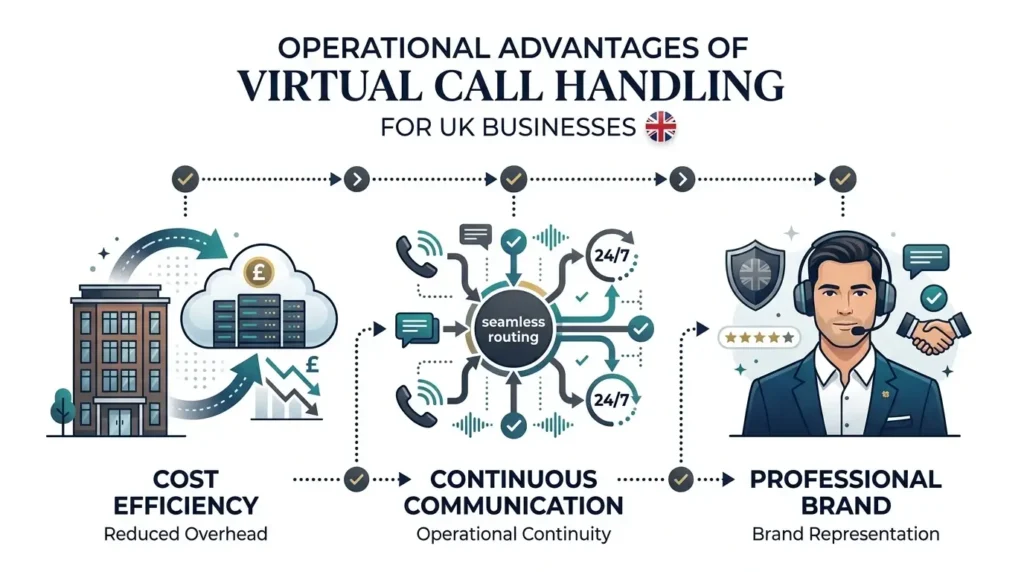
Fixed office spaces incur high maintenance costs for traditional landline installations. Remote call handling removes physical hardware requirements entirely. Businesses save capital on multi-line telephone hardware installation and maintenance contracts. Subscription models replace expensive capital expenditures with predictable operational costs.
Customer satisfaction increases when every inbound call receives a prompt response. Client retention rates improve because buyers never encounter busy signals or unmonitored voicemail boxes. Professional operators establish trust during initial phone interactions. Prompt query resolution transforms casual callers into loyal paying clients.
Operational continuity protects companies against unexpected office disruptions or staff absences. Cloud systems redirect calls automatically to alternative team members or external support agents. Staff members handle client inquiries from home offices, co-working spaces, or travel destinations. Business operations continue seamlessly regardless of physical location constraints.
How Can Businesses Implement Remote Communication Workflows?
Businesses implement remote communication workflows by auditing current call volumes, selecting cloud telephony providers, and establishing clear routing protocols. Three essential deployment steps involve configuring virtual phone numbers, training remote staff, and integrating CRM software.
Auditing historical call volumes reveals peak inquiry times and staffing requirements. Companies analyze average handling durations to determine appropriate staffing levels for remote environments. Telephony providers evaluate existing communication infrastructure before deploying virtual solutions.
Configuring virtual phone numbers establishes a professional local or national presence instantly. Businesses select geographic numbers to build regional trust or freephone numbers to encourage national inquiries. Call routing rules direct specific inquiries to designated departments or specialized team members.
Integrating CRM software centralizes client communication histories across distributed teams. Staff members access previous conversation notes before answering active calls. Professional workflows ensure consistent messaging across all company touchpoints. Companies that want to explore professional outsourced support can utilize our call answering service to streamline inbound communication without hiring full-time receptionists.
How Do Flexible Call Plans Support Growing Enterprises?
Flexible call plans support growing enterprises by adapting communication capacity to changing business volumes without long-term financial commitments. Three distinct financial advantages include variable cost scaling, seasonal adaptation, and elimination of idle overhead.
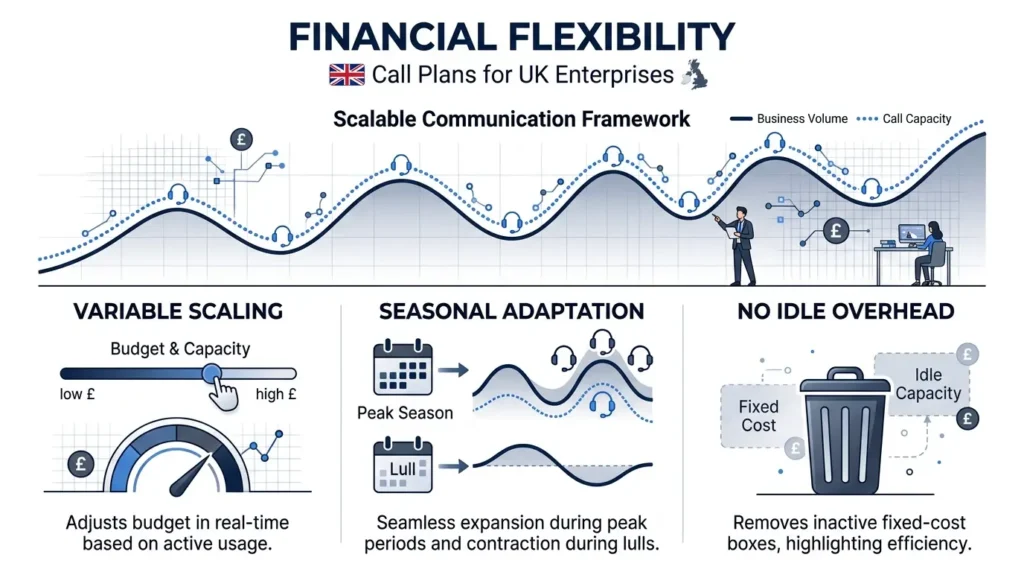
Growing companies experience fluctuating inquiry volumes due to seasonal campaigns or market shifts. Fixed communication contracts penalize businesses during slower months through rigid monthly fees. Flexible models charge only for utilized minutes or specific operator interactions.
Enterprise agility improves when communication budgets align directly with active revenue generation. Finance managers allocate capital toward growth initiatives rather than maintaining redundant phone capacity. Companies evaluate whether Is a Flexible Pay-As-You-Go Plan Better Than Fixed Contracts? to determine optimal cost structures for their operational models.
Eliminating long-term commitments reduces financial risk for startup founders and expanding firms. Business owners scale service tiers upward during high-growth phases instantly. Operational flexibility ensures that communication expenses remain proportional to incoming business revenue.
What Factors Define Reliable Remote Call Management?
Reliable remote call management relies on rigorous data security standards, high service uptime guarantees, and transparent performance metrics. Three critical evaluation criteria include GDPR compliance frameworks, encrypted data transmission protocols, and detailed call analytics dashboards.
Data protection regulations require strict confidentiality when handling customer personal information. Secure telephony providers implement encrypted data transmission channels to prevent unauthorized interception. Compliance frameworks safeguard sensitive client data against digital breaches.
Service uptime guarantees ensure uninterrupted communication channels for incoming client inquiries. Reliable providers maintain redundant server networks to prevent regional outages. Technical support teams monitor system performance continuously to resolve anomalies immediately.
Performance metrics provide objective visibility into communication efficiency and staff responsiveness. Management teams review detailed call logs to identify operational bottlenecks and training opportunities. Transparent reporting tools empower business leaders to optimize remote communication strategies continuously. For organizations seeking complete freedom from rigid terms, exploring No-Contract Call Management: Compare Our Flexible Plans details how Form My Company delivers adaptable, contract-free communication solutions tailored to modern remote enterprises.
Remote call management empowers UK enterprises to maintain professional communication standards without physical office constraints. Cloud telephony, digital routing, and expert operational frameworks ensure that every client inquiry receives immediate attention. Form My Company delivers reliable remote communication solutions that scale dynamically with your business growth and operational requirements.
Explore More Call Answering Guide,
How Much Does a UK Certificate of Good Standing Cost?
How Do You Keep Your Company Eligible for a Certificate of Good Standing?
Frequently Asked Questions
How do virtual call answering services work for UK small businesses?
Virtual call answering services intercept incoming business inquiries via cloud telephony and route them to live professional receptionists who answer using customized company scripts. Form My Company manages these interactions remotely, recording message details and forwarding real-time notifications directly to business owners. This setup ensures that companies never miss client calls while eliminating the need for full-time internal reception staff.
Can I use a business phone answering service without a physical office?
UK entrepreneurs and remote businesses can utilize virtual phone answering services without maintaining a physical commercial address or fixed landline. Providers assign virtual geographic or national numbers that direct callers instantly to cloud-based systems or live operators. This infrastructure establishes an instant professional corporate presence from any remote location.
How are telephone messages and client queries delivered to my team?
Professional call handling services record detailed message logs, caller contact numbers, and specific inquiry notes during every live phone interaction. Operators transmit these updates instantly via secure email notifications, SMS alerts, or direct CRM integrations. Internal teams review these structured summaries to follow up with clients promptly and accurately.
What is the difference between a call answering service and voicemail?
Live call answering services provide human interaction, immediate query resolution, and professional brand representation for every inbound caller. Voicemail systems frequently discourage potential clients who prefer speaking with a live representative rather than leaving unmonitored messages. Outsourcing inbound calls through Form My Company ensures high response rates and improves overall customer retention.
How much do remote business call answering services cost?
Remote call answering services typically operate on flexible subscription or pay-as-you-go pricing models based on monthly call volumes or minute usage. This structure allows startups and growing enterprises to avoid the high fixed overhead costs associated with hiring full-time internal receptionists. Businesses scale their communication plans dynamically as inquiry volumes fluctuate throughout the year.