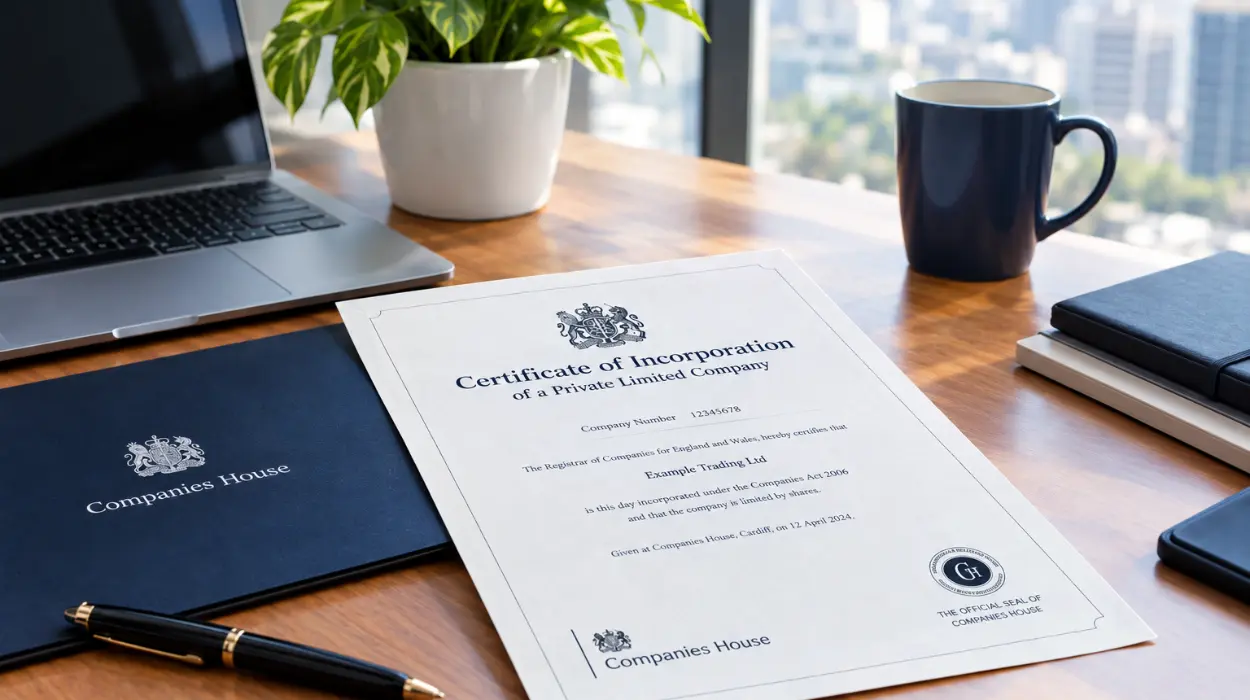
You track the status of an apostille application through the official tracking reference provided upon submission, monitoring progress via the Foreign, Commonwealth & Development Office portal or your chosen processing agent to verify document legalization.
What Is an Apostille and Why Do You Need to Track It?
An apostille is an official certificate issued by government authorities that legalizes public documents for international acceptance under the Hague Convention, requiring active status tracking to prevent severe cross-border operational delays.
Global business expansion requires official documentation like corporate certificates, board resolutions, and statutory filings to possess absolute legal validity across foreign jurisdictions. International authorities reject unverified paperwork immediately.
Legalization bridges this gap by confirming the authenticity of the signature and the capacity of the official who signed the document. Tracking this processing lifecycle ensures that your commercial contracts, intellectual property filings, and corporate expansions proceed without administrative bottlenecks.
Foreign commercial registries demand authentic proof before granting operational licenses to foreign parent entities. When you submit corporate paperwork for legalization, the competent authority applies a standardized digital or physical stamp.
Monitoring this verification cycle guarantees that your corporate documents clear government inspection desks successfully. Businesses utilize structured tracking frameworks to maintain tight control over legal compliance timelines.
How Do You Submit Documents for an Apostille?
You submit documents for an apostille by preparing physical or digital paperwork, completing the official application form, paying the statutory processing fees, and dispatching the files to the designated competent authority.
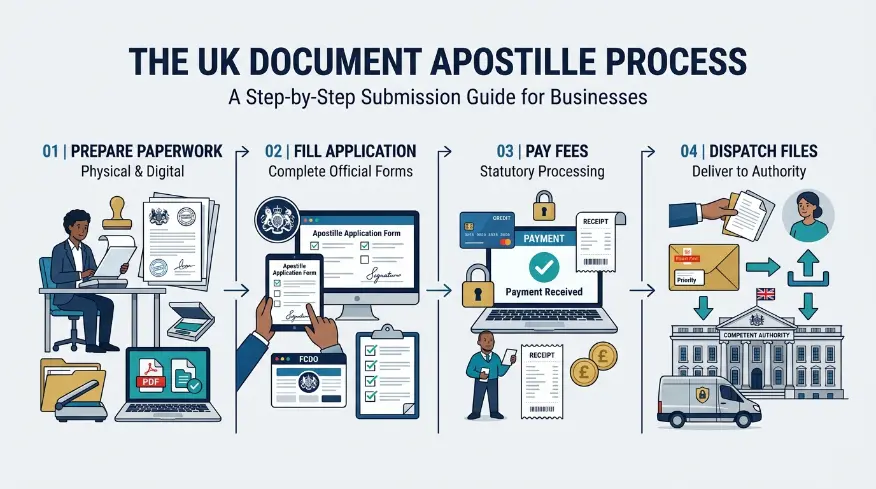
Document submission begins with thorough document preparation. Public documents require verification by a practicing UK solicitor or notary public before government submission takes place.
Applicants complete the official application form detailing document types, destination countries, and return dispatch preferences. Payment of government processing fees occurs during this initial submission phase.
Dispatching the paperwork involves sending physical documents via secure courier services or utilizing digital drop-off portals where applicable. The competent authority receives the submission batch and logs the transaction into their internal tracking database.
Each submission receives a unique reference number. This identifier serves as the primary key for all subsequent status inquiries.
Proper initial submission prevents administrative rejections. Authorities examine paper quality, signature clarity, and notary stamps during intake.
| Submission Method | Processing Time | Security Level | Best Suited For |
| Standard Postal | 5 to 10 working days | High (Tracked Courier) | Bulk corporate document batches |
| Premium Counter | Same day or 24 hours | Very High (In-person drop) | Urgent international transactions |
| Digital e-Apostille | 1 to 2 working days | Maximum (Encrypted portal) | PDF documents and digital records |
How Can You Check the Progress of Your Application?
You check the progress of your application by entering your unique tracking reference number into the official government online portal or by reviewing status update emails sent by your processing provider.
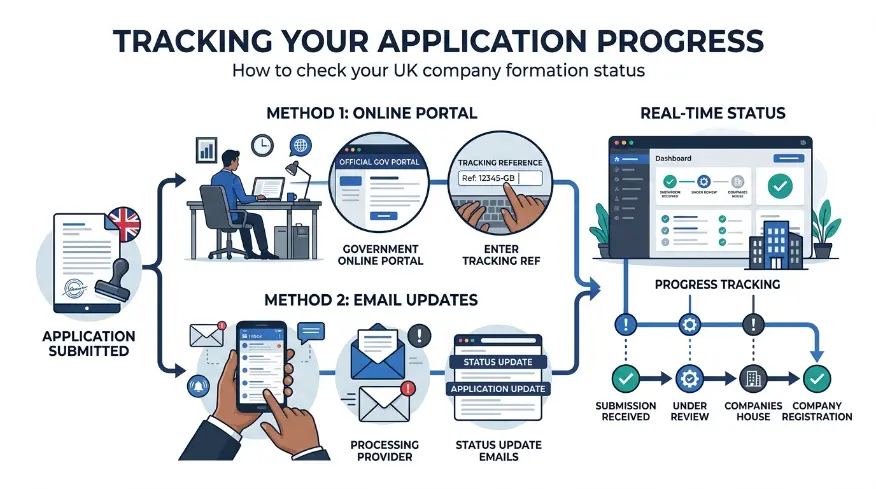
Online tracking portals provide real-time visibility into the current stage of document processing. Applicants enter the reference code generated at submission into the verification search field.
The system displays the exact operational status, showing whether documents sit in the intake queue, undergo verification, or await dispatch. Email notifications deliver automated milestones directly to the applicant inbox.
When tracking updates indicate processing completion, the system prepares the paperwork for secure return delivery. Professional compliance providers monitor these government touchpoints constantly.
They intervene immediately if administrative queries or document discrepancies arise during the verification cycle. Clear tracking logs eliminate uncertainty during international corporate restructuring projects.
What Do the Different Application Statuses Mean?
The different application statuses mean specific things: received indicates initial logging, processing denotes active verification by officials, and dispatched signifies successful legalization and return transit.
Understanding status vocabulary helps businesses interpret administrative updates accurately. The “Received” status confirms that the competent authority holds your physical paperwork securely in their facility.
The “Processing” status indicates that government examiners verify notary signatures against official databases. The “Completed” status shows that the official apostille certificate is attached securely to your document.
The “Dispatched” status means the courier service carries your legalized paperwork back to your designated business address. Reviewing these milestones allows logistics managers to schedule international couriers and overseas meetings with absolute confidence.
When delays occur, specific status markers pinpoint whether issues stem from postal transit or signature authentication queries.
How Long Does the Apostille Process Typically Take?
The apostille process typically takes between 3 and 10 working days depending on the submission channel chosen, seasonal government demand, and whether documents require prior solicitor certification.
Processing durations fluctuate based on operational capacity at government legalization offices. Standard postal submissions require up to two weeks from dispatch to return delivery.
Expedited counter services reduce turnaround times to 24 hours for urgent commercial requirements. Document complexity also influences total processing duration.
Corporate documents lacking initial notary certification require an extra step before government submission begins. Businesses streamline this entire lifecycle by utilizing specialized Apostilled Documents services to manage compliance verification from start to finish.
Planning around these operational timeframes prevents missed deadlines in foreign tender submissions and international banking setups.
What Should You Do If Your Application Is Delayed?
You resolve application delays by reviewing the specific tracking error code, contacting the issuing authority support desk, or submitting corrected documentation if signature verification failed.
Administrative delays typically arise from unverified notary seals, damaged paper stock, or incomplete application forms. Competent authorities flag these discrepancies within the tracking system.
Reviewing the detailed status notes reveals the exact cause of the administrative pause. When a signature mismatch occurs, applicants secure a fresh notarization immediately.
If postal delays occur, tracking numbers locate the package within the courier network. For complete guidance on managing this workflow, read our detailed guide on How to Track and Manage Your Apostille Application From Start to Finish?.
Proactive resolution of flagged errors restores normal processing velocity within 48 hours.
Tracking an apostille application requires attention to reference numbers, processing milestones, and official status updates. Proper monitoring prevents cross-border delays and ensures foreign commercial compliance. Form My Company manages your apostille from start to finish. For comprehensive assistance with your legalization requirements, explore our Do You Want Form My Company Manage Your Apostille From Start to Finish? professional advisory options.
Explore our Apostilled Documents guide,
Can You Keep a PSC’s Home Address Off the Public Record?
Why Does ESG Reporting Now Include Corporate Events?
Frequently Asked Questions
How long does it take to get an apostille for UK company documents?
Standard government processing for apostilled documents typically takes between 3 and 10 working days from the date of receipt. Form My Company accelerates this verification timeline by managing solicitor certification and courier dispatch efficiently on behalf of clients.
What types of business documents require an apostille for international use?
Corporate paperwork such as certificates of incorporation, memorandum of association, and board resolutions require an apostille to achieve legal validity abroad. Form My Company processes these vital commercial records to ensure compliance with foreign regulatory authorities.
Can digital documents receive an e-apostille in the UK?
Yes, certain PDF documents and digital records qualify for an electronic apostille through streamlined government online verification systems. Form My Company helps businesses navigate digital submission requirements to secure rapid authentication.
What happens if my apostille application is rejected by the authorities?
Applications face rejection if notary seals are missing, signatures are unverified, or application forms contain errors. Form My Company reviews your paperwork thoroughly before submission to prevent costly administrative delays.
Do I need a solicitor to notarize documents before getting an apostille?
Many public and corporate documents require official notarization or solicitor certification before government legalization authorities can attach an apostille. Form My Company coordinates both notarization and apostilled documents services to streamline your international expansion.