
A confirmation statement is a document that a UK company files with Companies House to confirm that the information held about the company is accurate and up to date. Every UK company must file one at least once every 12 months, including dormant and non-trading companies. The filing helps maintain reliable public company records and confirms that the company has reviewed its registered details.
Understanding a confirmation statement helps company directors, shareholders and business owners maintain accurate records and meet their ongoing responsibilities. This guide explains what a confirmation statement means, what information it covers, who needs to file one and how it fits into wider company compliance.
What Is a Confirmation Statement?
A confirmation statement is an official filing used to confirm that a company’s details on the Companies House register are correct. It is submitted using the relevant Companies House service and is commonly associated with form CS01. The filing is required even when the company’s information has not changed during the review period.
The confirmation statement replaced the annual return in June 2016. Although both filings involve checking company information, the confirmation statement operates under the current company filing framework and includes specific requirements for confirming and updating information.
Companies House uses the filing to maintain an accurate public record of UK companies. Customers, suppliers, lenders, professional advisers and other interested parties can consult that register when checking a company’s registered details.
Company Confirmation Statement: Why Is It Important?
A company confirmation statement is an important part of maintaining a company’s statutory records. It confirms that the company has reviewed the information held at Companies House and identifies certain details that need to be updated through the relevant filing process.
The statement supports several important purposes:
Maintaining accurate public records: It helps ensure that company information remains current and reliable.
Confirming company details: Directors review the information held on the register and identify relevant changes.
Supporting transparency: Accurate records help third parties understand a company’s registered identity and structure.
Maintaining compliance: Filing is an ongoing legal obligation, even if the company has not traded or made changes.
Keeping information consistent: Regular reviews help directors identify discrepancies between internal records and the public register.
A confirmation statement is not a substitute for keeping company records accurate throughout the year. Certain changes must be reported separately when they occur rather than waiting until the next annual statement.
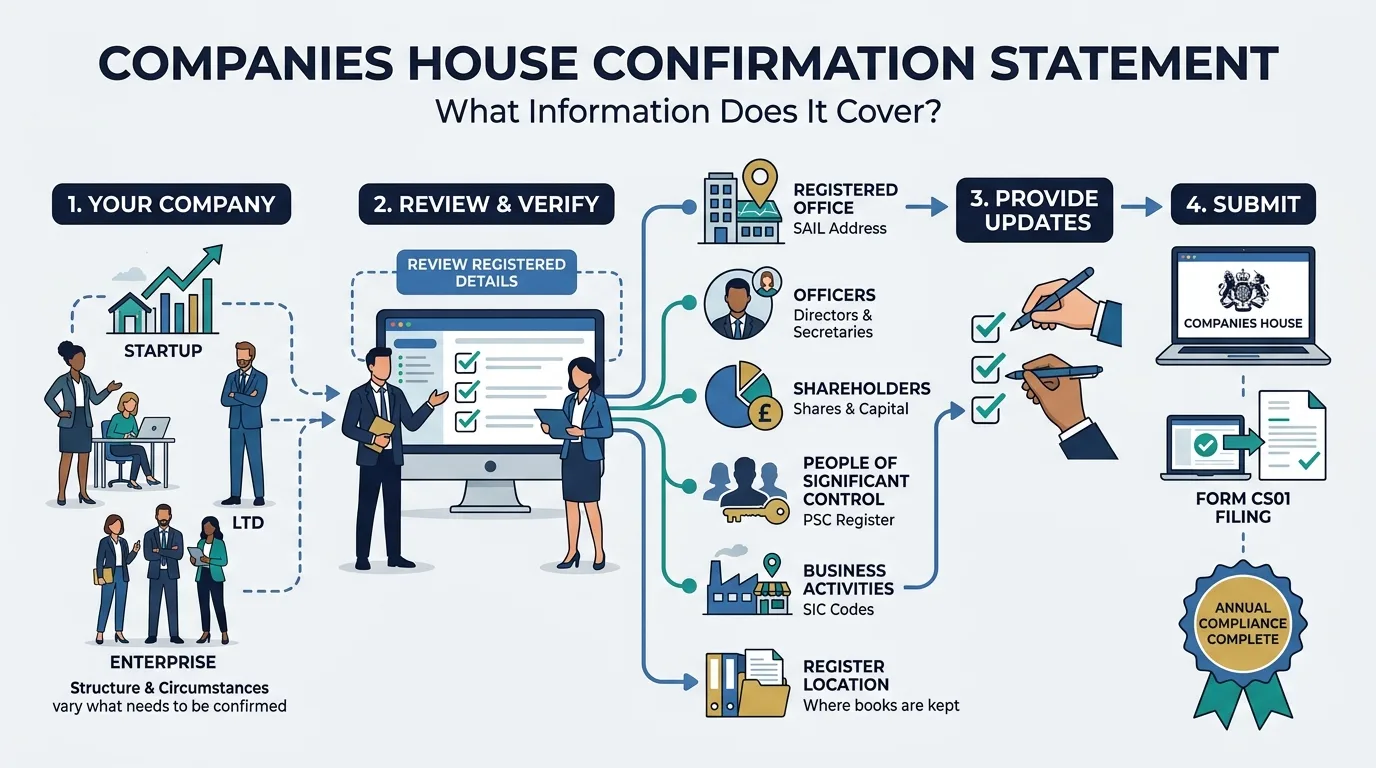
Companies House Confirmation Statement: What Information Does It Cover?
The information included in a Companies House confirmation statement depends on the company’s structure and circumstances. The filing process asks the company to review relevant registered details and provide information required for the statement.
Company Information and Registered Details
The statement helps confirm the company’s registered information, including details relevant to its company record. Directors should check that the information is consistent with the company’s current position and identify any discrepancies that need correcting.
Directors and Company Officers
Companies must ensure that their director and officer information is accurate. Appointments, resignations and other reportable changes generally require their own notifications to Companies House. The confirmation statement does not replace those separate filings.
People with Significant Control
People with significant control, commonly known as PSCs, are individuals or relevant entities that meet the applicable criteria for significant control over a company. Companies must comply with the rules for recording and reporting PSC information. The relevant requirements depend on the company’s ownership and control arrangements.
Shareholders and Share Capital
For companies with share capital, the statement may involve reviewing shareholder information, share capital and related details. The information required depends on the company’s circumstances and the relevant Companies House filing requirements.
Standard Industrial Classification Code
A company’s Standard Industrial Classification code, or SIC code, describes the nature of its business activity. Companies should check that the code reflects their activities and update it where necessary through the appropriate filing process.
Registered Email Address and Identity Verification
Companies House also has requirements relating to registered email addresses and identity verification. Depending on the filing and the company’s circumstances, the confirmation statement process may require additional information, including director identity verification details or personal codes.
For the latest requirements, consult the official Companies House confirmation statement guidance.
Confirmation Statements: Who Needs to File?
UK companies must file a confirmation statement at least once every 12 months. This requirement applies to companies even if they have not traded, generated income or changed their registered details.
Active Companies
Trading companies must review their registered information and file their confirmation statement within the applicable filing period. The process is separate from filing annual accounts and submitting tax returns.
Dormant Companies
Dormant companies must also file confirmation statements. Having no trading activity does not remove this obligation. Dormant companies may have different accounting requirements, but they still need to meet the applicable Companies House filing rules.
Companies With No Changes
A company must submit its confirmation statement even when all its registered information remains unchanged. The statement confirms that the company has reviewed the details and that the information held by Companies House remains accurate.
Newly Incorporated Companies
New companies need to monitor their first confirmation statement date and prepare for the initial filing. The first review period is based on the incorporation date, and the company should use its Companies House record to confirm the relevant dates and requirements.
How Does a Confirmation Statement Differ From Other Company Filings?
A confirmation statement is only one part of a company’s ongoing compliance responsibilities. It serves a different purpose from annual accounts, corporation tax returns and notifications of changes to company officers.
| Filing or obligation | Main purpose |
|---|---|
| Confirmation statement | Confirms the accuracy of specified company information held at Companies House |
| Annual accounts | Reports the company’s financial position and performance in the required format |
| Corporation Tax return | Reports relevant taxable profits and tax information to HMRC |
| Director appointment or resignation filing | Notifies Companies House of a reportable change involving a company officer |
| Registered office change filing | Updates the company’s official registered office address |
| PSC-related filing | Reports relevant information about people or entities with significant control |
These obligations have different requirements and deadlines. A company should maintain a compliance calendar that covers each relevant filing rather than treating the confirmation statement as a replacement for other statutory submissions.
For a fuller comparison, read our guide to confirmation statements vs annual accounts.
What Should Directors Check Before Confirming Company Information?
Directors should review the company’s registered details carefully before submitting a confirmation statement. A structured review helps identify missing information, outdated records and changes that require separate notification.
A practical review should include:
Checking the company name and registration details.
Reviewing director and officer information.
Checking PSC information and relevant control details.
Reviewing shareholder and share capital information where applicable.
Confirming the company’s SIC code reflects its business activities.
Checking the registered office and other required contact details.
Identifying changes that must be reported through separate Companies House filings.
Confirming that any required identity verification information is available.
Companies should also ensure that the information they submit agrees with their own statutory records. If a discrepancy exists, they should determine the appropriate correction process rather than assuming that the confirmation statement alone will resolve it.
What Happens If a Company Does Not File a Confirmation Statement?
Failure to file a confirmation statement can have serious consequences. Companies House may impose a financial penalty, and persistent non-compliance can result in the company being struck off the register. The consequences depend on the circumstances and the applicable rules.
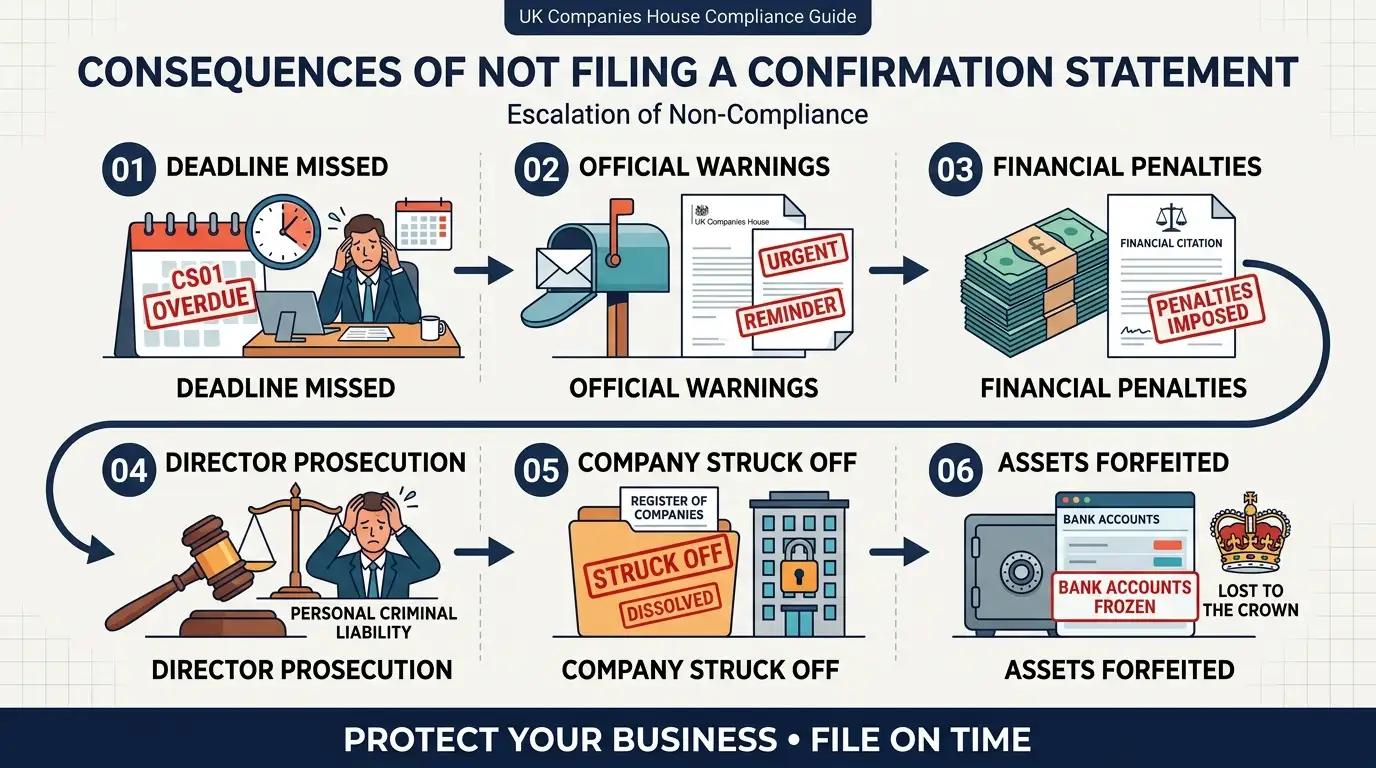
Directors should take filing obligations seriously, even where a company is dormant or has no immediate plans to trade. An overlooked filing can create avoidable administrative problems and affect the company’s standing.
If a filing has already been missed, the company should review its current status and act promptly. Our related guide explains what happens if you forget to file your confirmation statement.
For companies that need specific guidance on the filing period, consult the official Companies House guidance rather than relying on general assumptions about dates or penalties.
How Can Companies Make Confirmation Statement Compliance Easier?
Companies can make compliance more manageable by keeping their records organised and reviewing filing dates regularly. A consistent process reduces the risk of missing an obligation or submitting information that no longer reflects the company’s circumstances.
Maintain Accurate Records Throughout the Year
Keep company records updated when changes occur. Do not wait until the annual review to identify changes that need to be notified separately to Companies House.
Monitor Official Filing Dates
Use the company’s Companies House record to check the relevant confirmation statement date and filing deadline. Directors can also use available Companies House reminders to help keep track of upcoming obligations.
Separate Annual Filing Responsibilities
Confirmation statements, annual accounts and tax returns have different purposes. Maintain separate reminders for each obligation and confirm which filings apply to the company.
Consider Professional Filing Support
Directors who manage several companies or have limited time for administration may consider using a professional filing service. Before appointing a provider, check what the service includes, which responsibilities remain with the company and whether any additional fees apply.
You can also read our guide to the benefits of a managed filing service for UK small businesses.
Frequently Asked Questions
What is a confirmation statement for a UK company?
A confirmation statement is a filing that confirms the information held about a company at Companies House is accurate and up to date. Every UK company must file one at least once every 12 months, including dormant companies.
What is a company confirmation statement called at Companies House?
The filing is commonly associated with form CS01. Companies House provides online filing services and guidance explaining what information companies must review and submit.
Do companies need to file a confirmation statement if nothing has changed?
Yes. A company must file a confirmation statement even if its registered details have not changed during the review period. The filing confirms that the information held by Companies House remains accurate.
Is a confirmation statement the same as an annual return?
No. The confirmation statement replaced the annual return in June 2016. It is the current filing used to confirm company information under the applicable Companies House requirements.
Is a confirmation statement the same as annual accounts?
No. A confirmation statement confirms specified company information, while annual accounts report financial information. Companies may need to complete both, along with other applicable filings.
Do dormant companies need to submit confirmation statements?
Yes. Dormant and non-trading companies must still file confirmation statements. Their lack of trading activity does not remove the annual filing obligation.
Where can a company check its confirmation statement information?
A company can review its record and filing dates through the Companies House online register and use the official filing guidance to check the current submission requirements.
File Your Confirmation Statement With Form My Company
A confirmation statement helps keep your company’s public record accurate and supports its ongoing compliance responsibilities. Understanding what the filing covers, reviewing company details regularly and keeping track of applicable obligations can help directors maintain organised company records.
If you need assistance with the filing process, explore Form My Company’s confirmation statement filing service. Review the service details to understand the support available and take the next step towards managing your company’s filing responsibilities.