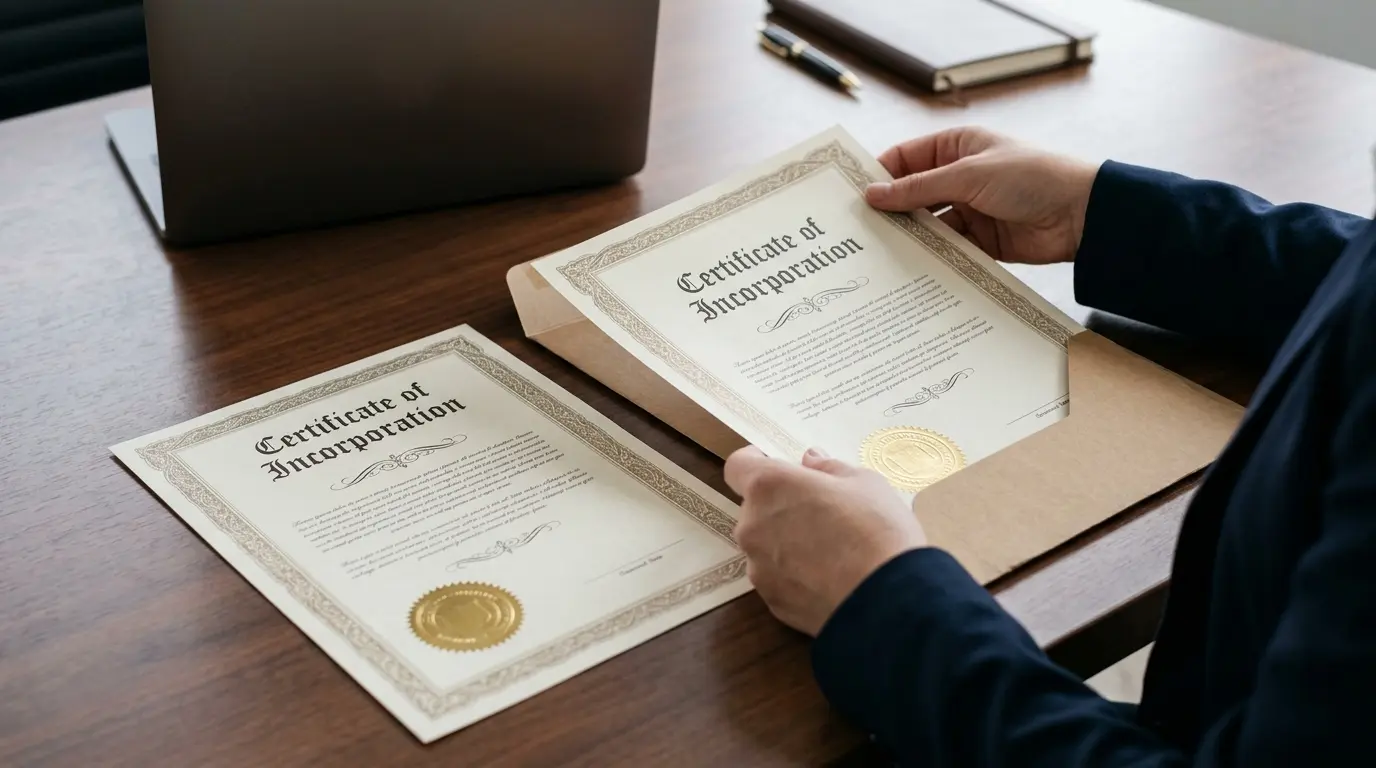
To supply incorporation proof for a trade credit account, submit an official Certificate of Incorporation alongside your registered company details, director information, and filing history obtained directly from Companies House or an authorised corporate service provider.
What Documents Count as Official Incorporation Proof for Credit Approval?
Official incorporation proof includes a Companies House Certificate of Incorporation, official filing history, and certified corporate documents. Suppliers accept these documents because they legally verify company status, registration number, incorporation date, and corporate standing in official public registers.
Trade credit providers evaluate financial risks before extending payment terms to corporate accounts. Credit underwriters require official corporate documentation to verify company existence. The Certificate of Incorporation serves as legal proof that a business exists as a registered corporate entity under UK law. Suppliers review the certificate details against official public records to validate the legal name and company number.
Suppliers often require additional supporting documentation alongside the legal registration certificate. These supplementary records include the Memorandum and Articles of Association, confirmation statements, and official registered address filings. Providing updated corporate filings demonstrates ongoing legal compliance and active trading status. Underwriters inspect these filings to confirm that board members hold proper signing authority for credit agreements.
Lenders and commercial suppliers reject unofficial documentation, print screens, or unverified registration drafts. Business applicants must present official documents generated directly from legal registries. Submitting clear, official certificates accelerates credit checks and prevents approval delays during vendor onboarding. You can acquire certified documents through our supplementary company documents service to ensure rapid validation during credit underwriting.
Why Do Trade Suppliers Require Incorporation Verification?
Trade suppliers require incorporation verification to satisfy Know Your Customer compliance rules, assess commercial credit risk, and establish corporate legal liability. Verification confirms that a registered corporate entity assumes legal responsibility for unpaid invoices and financial obligations.
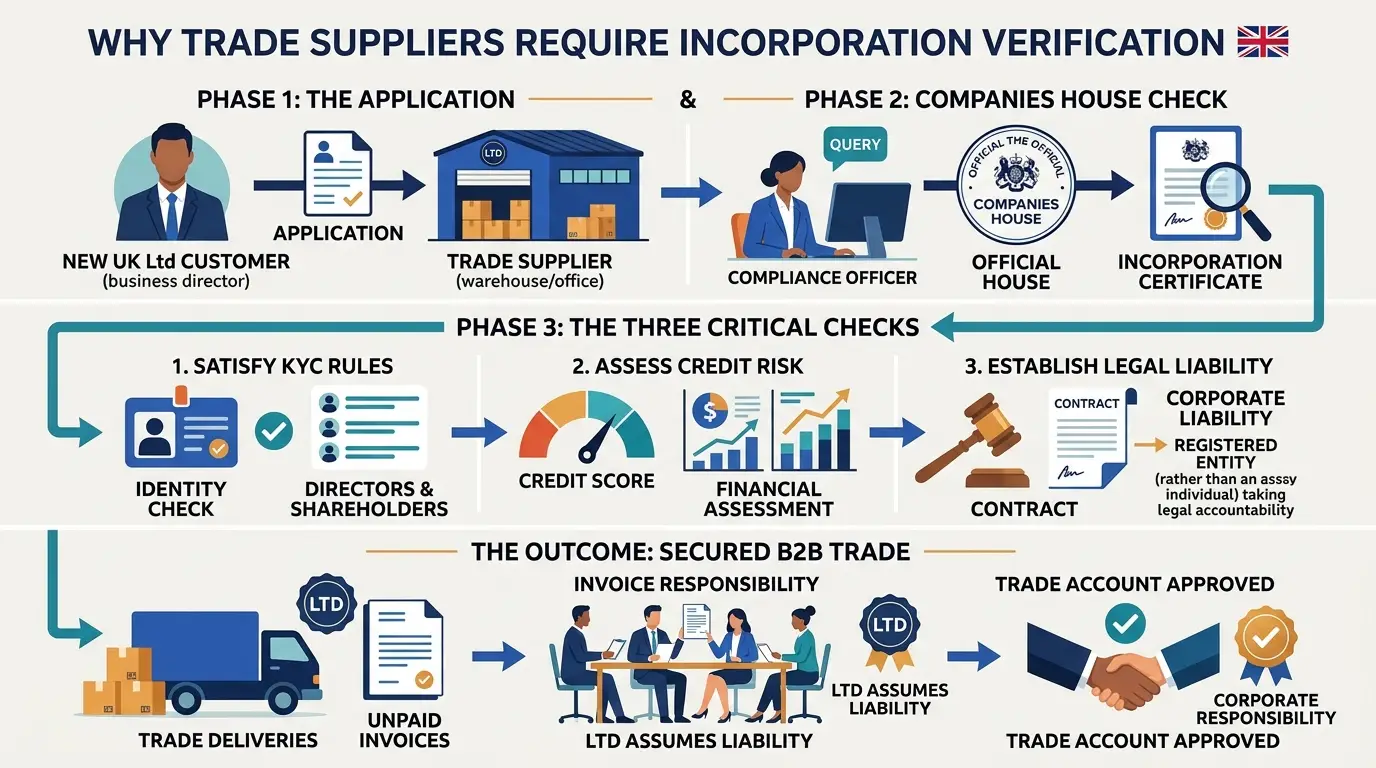
Commercial credit terms create direct financial exposure for trade suppliers. Credit managers conduct rigorous background checks to prevent fraud, identity theft, and corporate impersonation. Verifying incorporation credentials ensures that suppliers issue credit to legitimate corporate entities rather than fraudulent operators. The verification process protects suppliers against fraudulent account setup and defaulted trade debt.
Legal compliance frameworks require trade creditors to perform thorough Know Your Customer checks. Regulations mandate that credit providers verify corporate identities, ultimate beneficial owners, and company directors before opening trade credit lines. Proper verification confirms that signatories possess legal authority to bind the company to commercial credit terms. Suppliers keep verified corporate documentation on file to support internal auditing and regulatory compliance.
Unregistered sole traders and unverified business entities present higher risk profiles for commercial trade suppliers. A verified corporate entity provides legal protection through limited liability structures. Suppliers review corporate registration details to draft enforceable credit contracts and establish clear recourse in legal disputes. Supplying complete incorporation details helps businesses build strong supplier relationships and secure extended payment terms.
How Do You Request and Download Certified Corporate Proof?
You request certified corporate proof by accessing the Companies House registry directly or ordering official registry documents through a corporate service provider. Digital certificates download immediately in verified formats, while certified physical copies arrive through postal delivery.
Businesses access official corporate records through online registry portals. Applicants search for their registered company name or unique company registration number on the official database. The digital registry provides access to recent confirmation statements, annual accounts, and official incorporation certificates. Users select the specific certified documents required by trade creditors and download secure PDF files.
Certain trade suppliers mandate physical certificates bearing official registry authentication marks. Ordering printed corporate documents requires selecting official registry printing services or working with corporate governance specialists. Official printed certificates contain security features, registry seals, and official verification stamps that prevent document tampering. Ordering hard copies through corporate specialists guarantees document authenticity for international and UK credit applications.
Digital document downloads require proper legal formatting to satisfy commercial credit departments. Suppliers decline submitted files if digital security certificates or verification stamps display errors. Business managers must verify file clarity, document completeness, and registry formatting before submitting files to credit officers. Fast document retrieval speeds up account approval timelines and establishes early commercial trust.
What Steps Are Involved in Submitting Documents to Suppliers?
Submitting incorporation documents involves auditing corporate records, attaching certified digital files to trade application portals, verifying director signatures, and sending complete packages directly to credit control departments.
The submission process begins with a preliminary corporate record audit. Business owners check company status, director lists, and registered office addresses across all documents. Any discrepancies between credit application forms and public registry filings cause immediate account rejections. Updating registry records prior to submitting trade applications prevents verification mismatches.
Applicants compile documentation packages according to supplier guidelines. Most credit departments require four specific items: a Certificate of Incorporation, recent bank statements, utility bills for proof of address, and director identification. Combining these items into a single, high-resolution submission speeds up underwriting checks. Clear file labelling allows credit officers to process documents efficiently.
Final submission occurs through secure digital portals or direct encrypted email channels. Applicants confirm receipt with supplier credit teams to ensure timely account processing. Credit analysts verify the documents against active public registers to complete risk assessments. Business owners seeking detailed insights into vendor documentation requirements can read our guide on why suppliers ask for a Certificate of Incorporation to prepare compliant account applications.
How Do You Fix Common Credit Application Rejections?
Fixing credit application rejections requires resolving corporate register discrepancies, providing current proof of address, updating officer appointments, and resubmitting certified registry documents to supplier credit departments.
Credit rejections occur when information on credit forms conflicts with public registry filings. Common issues include misspelled company names, outdated registered office addresses, or unrecorded director changes. Business owners must review the rejection notice to identify specific data mismatches. Correcting public records with Companies House creates matching data across all official documentation.
Outdated documents represent another major cause of account application delays. Suppliers frequently reject incorporation documents issued alongside old confirmation statements or unfiled annual accounts. Providing up-to-date registry documents proves that the business maintains active trading status and meets statutory compliance deadlines. Fresh corporate filings give credit managers confidence in the company’s stability.
When credit departments demand quick document turnarounds, sourcing professional corporate help prevents prolonged trade disruptions. Working with corporate specialists ensures that submitted files meet strict credit vetting standards. Companies can get a supplier-ready Certificate of Incorporation from Form My Company to resolve verification delays and open trade accounts without administrative friction.
What Additional Credentials Accelerate Trade Credit Approval?
Additional credentials that accelerate credit approvals include audited financial statements, trade credit references, bank validation letters, and active VAT registration certificates.
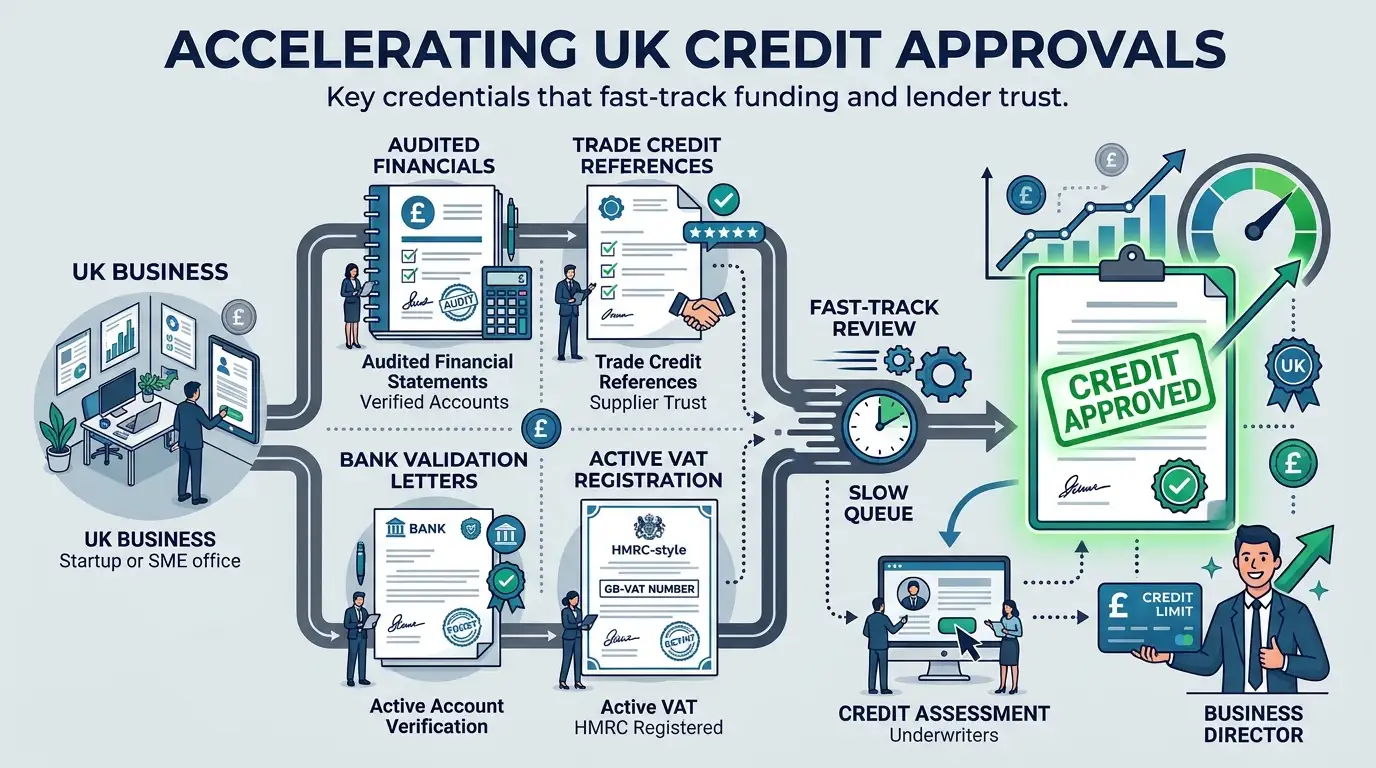
Providing supplemental financial records strengthens credit applications. Suppliers review audited accounts and profit metrics to establish appropriate credit limits. Businesses that present audited financial statements receive higher credit caps and longer repayment windows. Transparent financial reporting demonstrates operational stability and disciplined fiscal management.
Trade references provide direct evidence of past payment performance. Suppliers contact existing commercial partners to verify payment history, order volumes, and credit compliance. Providing three strong trade references reduces risk perceptions during vendor reviews. Strong credit histories encourage suppliers to approve accounts faster and offer competitive payment terms.
Adding tax credentials and banking validations completes comprehensive corporate profiles. Active VAT registration certificates prove operational trading volume and regulatory compliance. Bank confirmation letters validate active corporate accounts and match official business details. Presenting a complete credit package streamlines onboarding, reduces credit checks from weeks to days, and establishes immediate creditworthiness.
Supplying official incorporation proof is essential for opening trade credit accounts and securing favorable payment terms with commercial suppliers. Trade credit providers rely on official corporate documents, such as the Certificate of Incorporation and updated public filings, to satisfy regulatory Know Your Customer requirements and evaluate commercial risk. Ensuring that corporate filings match credit application details eliminates administrative delays and prevents application rejections. Businesses that present verified corporate credentials, accurate director information, and supplementary financial records establish immediate trust with creditors. Form My Company assists businesses by delivering official corporate documentation that meets strict vendor verification standards and streamlines trade credit onboarding.
Explore More Supplementary Company Documents Guide,
How to Get an Updated Certificate After a Company Name Change
How to Use Your Certificate of Incorporation to Verify Your Business
Frequently Asked Questions
How do I request supplementary company documents for my UK business?
You can order supplementary company documents directly through the official Companies House registry or via corporate service providers like Form My Company. The Supplementary Company Documents service allows businesses to quickly request certified copies of official filings, including Certificates of Incorporation, Memorandum and Articles of Association, and official change of name certificates. These authenticated corporate records are typically delivered as secure digital PDFs or physical certified documents for official use.
What supplementary company documents are required to open a trade credit account?
To establish a trade credit account or open a business bank account, suppliers and financial institutions usually request a Certificate of Incorporation alongside current confirmation statements. Additional Supplementary Company Documents such as registered address proofs, official director filing records, or a Certificate of Good Standing may also be required to satisfy Know Your Customer (KYC) compliance. Securing these official corporate records through Form My Company ensures all submitted documentation meets strict vendor verification standards.
What is the difference between a Certificate of Incorporation and other official company documents?
A Certificate of Incorporation serves as the primary legal document proving that a business exists as a registered company under UK law. Other Supplementary Company Documents, such as annual returns, confirmation statements, and change of director filings, provide ongoing proof of a company’s legal status, operational history, and active corporate governance. Form My Company provides access to both primary formation certificates and auxiliary registry documents to maintain full regulatory compliance.
How long does it take to receive official certified company documents?
Digital versions of official corporate filings ordered through the Supplementary Company Documents service are generally available for immediate download or delivered within a few hours. Physical certified copies or apostilled documents from Companies House take longer due to official printing and postal transit times. Form My Company offers expedited document retrieval services to help business owners meet tight supplier onboarding or legal deadlines.
Why do suppliers ask for apostilled or certified supplementary company documents?
Suppliers and foreign registries request apostilled or official certified Supplementary Company Documents to ensure the records are authentic and legally recognized across legal jurisdictions. An apostille certificate attached by the Foreign, Commonwealth & Development Office (FCDO) verifies the legitimacy of official UK corporate signatures and seals. Utilizing Form My Company to obtain certified registry copies prevents document tampering concerns and speeds up cross-border trade credit approvals.