
A limited company for an online business may offer tax benefits, but it does not make every business cost deductible. Allowable expenses can reduce taxable profit, while qualifying business assets may receive relief through capital allowances. The key is to identify costs incurred for the company’s trade and keep clear records.
Setting up a company does not automatically mean paying less tax. The outcome depends on the company’s profits, allowable costs and how money is taken from the business. A limited company is a registered structure with its own tax and filing responsibilities, so potential benefits need to be weighed against ongoing administration.
This guide explains how a limited company works, how expenses and capital allowances affect taxable profit, and why an online business might choose this structure. It also covers the boundary between business and personal spending, the records to keep and the practical obligations to consider.
Key Takeaways
- Learn how to distinguish day-to-day business expenses from asset purchases, which may qualify for capital allowances.
- Understand the separate reporting responsibilities and ongoing costs that come with running a limited company.
- See how eligible expenses affect taxable profit, and why personal spending must be kept separate from business costs.
- Explore how decisions about salary, dividends and pension contributions can shape a company’s tax planning.
- Consider whether incorporation suits your business, then explore Form My Company’s formation packages for the next step.
Allowable business expenses and capital allowances
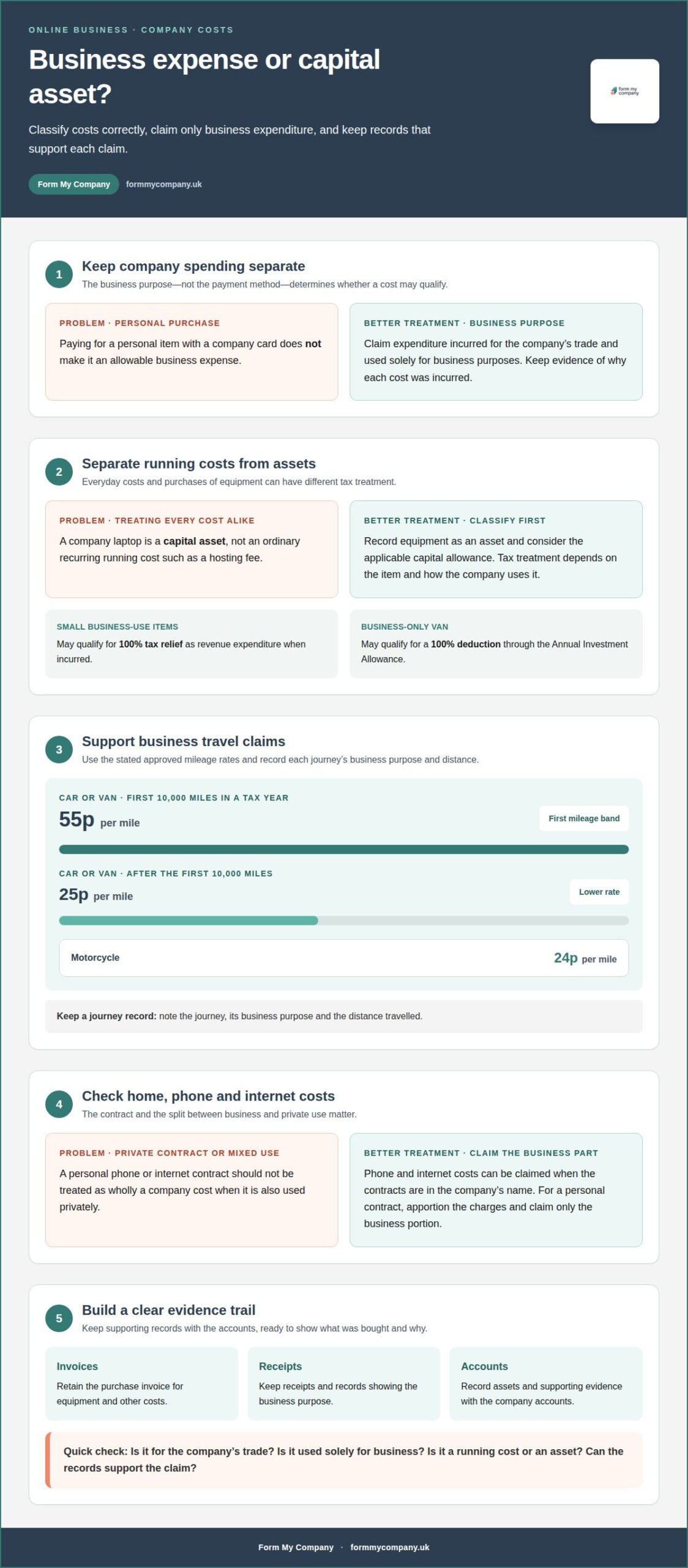
For an online shop, costs such as stock, packaging, platform fees and advertising may support trading. Claim only expenditure incurred for the company’s business and used solely for business purposes. Paying for a personal purchase with a company card does not make it allowable. Keep invoices, receipts and records showing the business purpose of each cost.
Separate everyday expenses from capital purchases. A laptop bought for the company is a capital asset, not an ordinary running cost, although capital allowances may provide tax relief. Small items bought for business use may qualify for 100% tax relief as revenue expenditure when incurred. A van bought exclusively for business use may qualify for a 100% deduction through the Annual Investment Allowance.
Classify equipment before calculating taxable profit. For example, record a computer bought for the business as an asset and consider the applicable capital allowance, rather than treating it like a recurring hosting fee. Tax treatment depends on the item and how the company uses it. Keep the purchase invoice and supporting records with the accounts.
Business travel has its own rules. A company can use the approved car or van mileage rate of 55 pence per mile for the first 10,000 miles in a tax year, then 25 pence per mile after that. The motorcycle rate is 24 pence per mile. Record the journey, business purpose and distance, so the director can support the claim.
Pension contributions can form part of company tax planning. HM Revenue & Customs states the annual limit for pension contributions is £60,000. A company may make pension payments for a director and claim tax relief on premiums paid, subject to applicable limits. Keep contribution records and distinguish company payments from personal contributions.
Disposals need separate consideration. Business Asset Disposal Relief may apply to qualifying gains when a company or its shares are sold. The stated lifetime limit on qualifying gains is £1 million. For a company disposal to potentially qualify, the stated shareholding condition is ownership of more than 5% of a trading company. Eligibility depends on the relevant conditions, so treat a planned sale as a distinct tax decision.
Issuing shares can bring capital into an online business without a conventional loan. New shareholders receive an ownership interest, which can affect control and the future distribution of profits. Before issuing shares, consider how much capital the company needs, the proposed share allocation and the effect on existing shareholders. Record the transaction in the company’s statutory and financial records.
A company may need to register for VAT when its taxable turnover reaches the applicable threshold. An online business below that threshold may also choose to register; VAT then affects how it charges customers and accounts for VAT on eligible business purchases. A VAT registration service can help with the registration process.
What is a limited company?
A limited company is a legal entity separate from the people who own and run it. Shareholders own shares, while directors manage the company. A UK private limited company typically needs at least one director. For an online business, this structure keeps company assets and obligations distinct from a director’s personal finances.
After incorporation, the company must prepare annual accounts, file a confirmation statement with Companies House, submit a company tax return to HMRC, pay any Corporation Tax due and keep financial records. Accountancy, software and banking can add ongoing costs, depending on how the business operates. Assess a limited company for online business tax benefits alongside these administrative commitments.
Home-working costs need a clear business basis. A director could claim £6 per week without receipts for home expenses up to 6 April 2026. Phone and internet costs can be claimed when contracts are in the company’s name. If a contract is personal, apportion the charges and claim only the business portion. Keep records that distinguish business use from private use.
Advertising costs may qualify when incurred to obtain business. Website development or maintenance may also qualify if it meets the wholly-and-exclusively test. For example, product-page work for an online shop may support sales activity. Keep invoices and records that explain the business purpose, particularly if the website also contains personal material or is used privately.
Some costs arise before trading begins. A limited company can claim qualifying start-up costs incurred up to seven years before it starts trading, provided they relate to the business. Keep evidence of what was purchased, when the cost arose and how it supported the company’s trade. This helps distinguish genuine preparation costs from personal expenditure.
For sales to customers in the EU or elsewhere overseas, tax treatment depends on the type of sale and how orders are fulfilled. Record overseas transactions separately, including customer locations and delivery arrangements. These details help identify relevant VAT considerations as the business sells across borders.
Company ownership also brings formal responsibilities. Directors manage company records and filing duties, and company money must remain separate from personal spending. Paying directors or employees involves tax and National Insurance Contributions considerations. When weighing a limited company for online business tax benefits, include these obligations in your decision about how to operate.
How allowable expenses reduce taxable profit and Corporation Tax
A limited company calculates taxable profit from its income and allowable business costs. The resulting company profit is assessed separately from the director’s personal income.
Expenses and taxable profits
Allowable expenses are costs incurred wholly and exclusively to run the company’s business. They reduce the profit on which Corporation Tax is calculated. For an online retailer, eligible costs might include advertising or accountancy work connected with the company’s accounts. Keep invoices and records showing the business purpose, then include the costs in the accounts. This helps distinguish business expenditure from personal spending and capital purchases.
Not every payment reduces taxable profit. Business entertainment is generally not an allowable expense, so a client meal cannot automatically be deducted simply because it accompanied a business conversation. The tax treatment of donations can depend on how they are made, so check whether a payment qualifies before treating it as a deduction. Classify each cost correctly: do not treat an unsupported or disallowed expense as a tax deduction.
Corporation Tax on company profits
Corporation Tax is charged on a limited company’s taxable profits, while income tax and National Insurance apply to employees’ and officeholders’ earnings. Company profit and a director’s personal income are calculated separately. The company’s accounts record income and allowable costs; salary payments are company expenditure and earnings for the recipient.
A company can generally deduct employee and director salaries, along with the employer National Insurance Contributions it pays, from company profits. Those payments also bring PAYE and National Insurance responsibilities. For example, a director’s salary affects both the company’s profit calculation and the director’s personal pay records, so it must be recorded consistently.
Keep the company’s accounts precise. Record sales income, allowable operating costs, salaries and employer National Insurance Contributions in the correct categories. This creates a clear trail from trading activity to taxable profit and helps support the company tax return. If a cost has a personal element, separate that portion rather than treating the full payment as business expenditure.
Tax relief can involve more than Corporation Tax. A limited company may be able to claim allowances, expenses and reliefs that reduce Corporation Tax, VAT or National Insurance Contributions. These are separate calculations: a cost that affects taxable profit does not automatically reduce every tax the company pays. Review each claim under the relevant tax category and retain supporting documents.
For an online business, monitor income, costs and profit as trading changes. Higher sales can increase profit, while eligible expenses can reduce the taxable amount. Before preparing accounts, compare the records with bank transactions and supplier invoices. Do not include personal spending or assume a cash payment is deductible just because the company paid it.
Tax planning and financial efficiency
Plan how the company will retain or distribute profit before deciding what to pay yourself. Salary, dividends, pension contributions and borrowing have different tax and record-keeping effects. The right balance depends on company profits, personal income and the business’s cash needs, so review these figures together rather than treating one payment method as a complete tax plan.
Annual profits around £25,000 to £30,000 may make operating as a limited company more tax efficient, depending on the tax rates and allowances available. This is a guide, not a universal threshold. Compare the company’s expected profit with the cost and administration of incorporation, then consider how much income you need personally and whether profits should remain in the business.
Dividends are distributions from company profits, not salary for work. HM Revenue & Customs states the tax-free dividend allowance is £500. Any dividend decision should account for available distributable profits and the shareholder’s wider income. Keep dividend records with company accounts, and distinguish distributions from salary payments in bookkeeping and personal tax reporting.
Salary can provide regular personal income, but it creates payroll and National Insurance considerations for the company and employee. If family members work for the business, their pay should be commercially reasonable for the duties they perform; excessive amounts may be disallowed. Record their role, work and payments clearly so the company can show how each salary relates to genuine business responsibilities.
Funding choices affect cash flow and liability. A company loan can help pay for stock, advertising or development, but the repayment terms and interest affect the business’s finances. A loan from the company to a director needs particular care: if it remains unpaid nine months after the company year-end, the company may incur a tax charge of 35.75%. Record advances, repayments and balances accurately.
Companies House filings also shape the privacy and administration trade-off. A limited company must file annual accounts and an annual confirmation statement, and company information becomes part of its public record. The company’s accounts and confirmation statement are separate filings, so keeping a filing calendar helps avoid overlooking either responsibility. A confirmation statement filing service can assist with that specific Companies House requirement.
Financial efficiency means keeping enough working capital for upcoming bills, not simply minimising tax. Before declaring dividends, consider supplier invoices, tax payments, planned stock purchases and other company commitments. Review cash flow alongside profit: a profitable online shop can still face pressure if customer receipts arrive after bills fall due. Base decisions on current accounts and realistic trading forecasts.
Reasons a business may operate as a limited company
A UK online business may choose a limited company to separate business finances from its owners’ personal finances. Potential tax benefits depend on how the company records costs, retains profits and pays income to its owners. Weigh them against filing duties and the time needed to manage company records.
A limited company for online business tax benefits may suit an owner who wants to plan company and personal finances separately. A sole trader pays tax on business profits as personal income; a company pays Corporation Tax on taxable profits, while directors’ earnings are taxed separately. This can make planning more flexible, but the outcome depends on profits, income taken and the company’s circumstances.
Online businesses may need to reinvest in stock, advertising, software or website development. Retaining profits can keep funds available for these costs instead of distributing all available profit to shareholders. For example, an ecommerce company might keep funds in the business to increase stock ahead of a sales period. That decision should also account for bills and other commitments.
A limited company for online business tax benefits may also be relevant when a venture plans to raise capital by issuing shares. New investment could fund product development, stock or improvements to an online sales platform. Issuing shares changes ownership proportions, so founders should consider how the proposed allocation affects existing shareholders and decision-making.
A separate company structure can provide a clearer framework as an online business adds owners, employees or suppliers. Company accounts record trading activity, while defined roles help clarify who makes business decisions. This can support a move from occasional sales to a more organised operation, particularly when founders want formal arrangements for ownership and responsibilities.
There are trade-offs. A limited company must keep accounting records, prepare annual accounts, file with Companies House and submit a company tax return to HMRC. These duties take time and may involve accountancy or administrative costs. A sole trader with straightforward trading activity may prefer less formal administration if incorporation does not meet a clear business need.
Choose a structure that fits how the business earns, spends and plans to grow. Consider expected profits, reinvestment needs, the number of owners and the record-keeping workload. If incorporation fits those priorities, company formation is a practical next step.
Form My Company
Form My Company helps entrepreneurs establish a UK company when they are ready to move from planning to registration. If you have weighed the tax treatment of expenses against filing and record-keeping responsibilities, the next step is choosing a suitable structure and formation package.
Formation options include the Digital Package, Digital & Print Package and Entrepreneurs Choice Package. For businesses considering a partnership structure instead, Limited Liability Partnership (LLP) Formation is also available. Choose an option that matches the structure you have selected and the formation support you need.
Bring your decision about the business structure into the formation process, so the registration reflects how you plan to operate. For help taking that next step, contact Form My Company.
Choose a structure that supports your next move
Before incorporating, consider what you want the business to make possible next. You might be preparing to bring in a co-owner, retain funds for growth or create a clearer boundary between personal and business finances. These priorities can help you decide whether a limited company for online business tax benefits fits your plans, alongside the time and administration company ownership requires.
Make the decision with your business model in view, not tax treatment alone. The way you sell, reinvest and draw income can change as your online business develops, so choose a structure you can manage as it grows. Your circumstances determine whether incorporation is the right fit.
If you’re ready to take the next step, contact Form My Company to discuss company formation options. A clear starting point can help you move forward with confidence.
Frequently Asked Questions
What are allowable expenses?
Allowable expenses are business costs that meet the rules for deduction when calculating taxable profit. For an online seller, a payment processor’s transaction charge may relate directly to customer orders, while a family streaming subscription is personal. Keep the invoice or transaction record and note the business purpose. Whether a cost qualifies depends on why it was incurred and whether it serves the company’s trade.
What is the UK Corporation Tax rate for limited companies in 2026?
Corporation Tax is calculated on a company’s taxable profits, but the applicable rate depends on the company’s position under the rules for 2026. The tax due therefore cannot be worked out from turnover alone: allowable deductions and the relevant rate both matter. Use the company’s accounting figures to establish taxable profit, then apply the rate that fits the company’s circumstances when preparing its tax calculation.
How does taking income as salary versus dividends affect UK tax and National Insurance?
Salary is employment income processed through PAYE, with National Insurance considerations; dividends are distributions to shareholders, not payment for work. For example, a director receiving both needs separate payroll and dividend records. Their overall tax position also depends on other personal income and the applicable dividend rules. A dividend is not a simple substitute for salary: the company needs sufficient distributable profits before declaring one.
How do limited company taxes compare with sole trader taxes at different profit levels in the UK?
A sole trader pays tax on business profits as personal income, while a limited company pays Corporation Tax on taxable profits and the owner is taxed separately on income taken out. At lower profits, company administration may weigh more heavily; at higher profits, retaining funds or choosing how to draw income can affect the comparison. Consider expected profits, personal withdrawals and compliance workload together.
Can a UK limited company claim business expenses and capital allowances for an online business?
Yes. A company can claim qualifying trading costs and may claim capital allowances on eligible business assets. For example, marketplace selling fees relate to making online sales, while a computer used by the company may need to be treated as a capital asset. Keep purchase records and distinguish assets from recurring costs. Private use affects whether, or how much of, a cost can be claimed for the business.
What are the costs and steps to set up and maintain a UK limited company?
Setting up involves choosing a company name, deciding who will be director and shareholder, and submitting the incorporation application to Companies House. After registration, organise company records and track filing dates. The company must prepare annual accounts, file a confirmation statement, submit a company tax return to HMRC and pay any Corporation Tax due. Ongoing accountancy, software and administrative costs depend on the company’s needs.
How are online sales to customers in the EU and overseas taxed for a UK limited company?
Tax treatment depends on the type of sale and how orders are fulfilled. Keep records of customer locations and delivery arrangements to identify relevant VAT considerations.