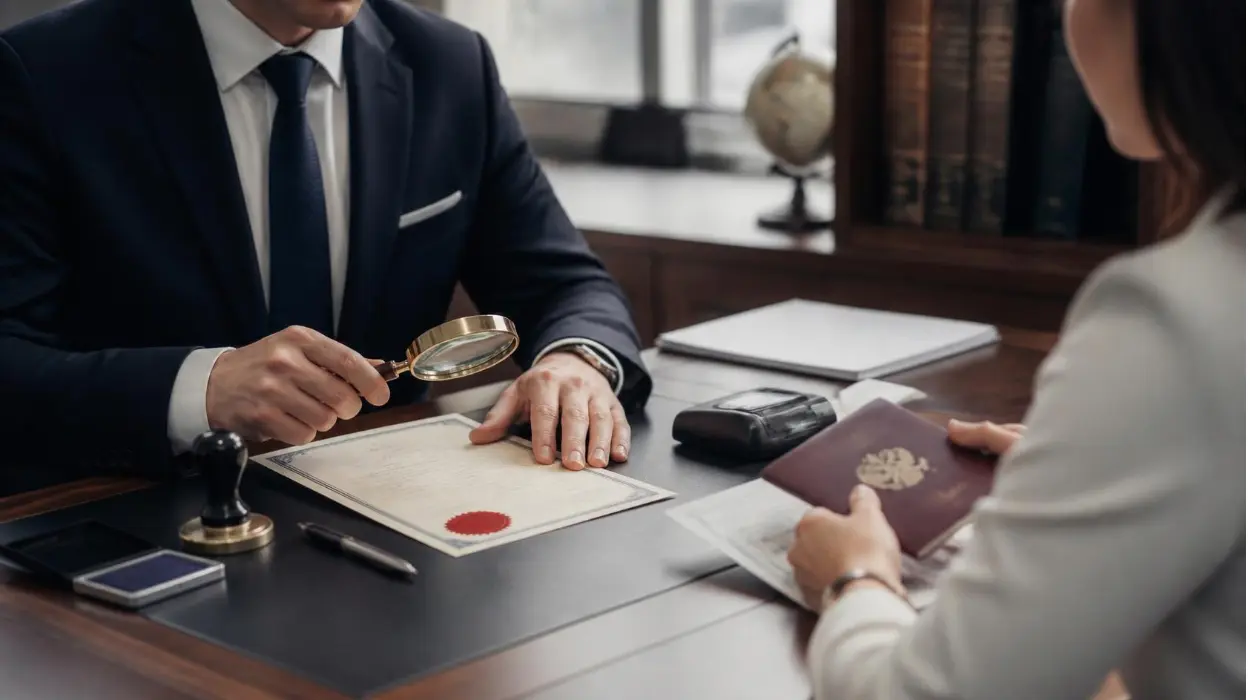
A qualified UK solicitor or a registered public notary signs and verifies a document before it receives an apostille. These authorized legal professionals witness signatures, authenticate credentials, and validate official certificates to meet strict international legal compliance standards.
Who is legally authorized to sign and verify documents for an apostille?
A registered UK solicitor or a public notary holds the legal authority to sign and verify documents before submission. These licensed professionals examine official records, confirm individual identities, and apply their official seals to satisfy international legal frameworks.
Official document verification requires a regulated professional who operates under strict legal oversight. When documents cross international borders, foreign governments demand absolute proof of authenticity. A UK solicitor provides this verification by checking original certificates against government databases. Public notaries perform identical functions with specialized jurisdiction over international paperwork. Both professionals examine physical signatures to ensure complete regulatory compliance. Legal authorities refuse unverified documents because fraud prevention remains a top priority. Independent certification protects businesses from costly legal disputes abroad. Professional verification creates a secure chain of custody for every piece of paper. Two primary professionals handle this task: UK solicitors and public notaries.
What specific documents require prior verification before legalization?
Corporate certificates, educational diplomas, and personal vital records require prior verification before legalization. These specific paperwork categories undergo rigorous authentication checks to confirm their authenticity and legal standing.
Corporate documents require extensive validation before foreign authorities accept them. Three document types dominate this process: certificate of incorporation documents, memorandum of association records, and board resolution papers. Educational certificates also demand careful inspection by legal professionals. Two common educational items include university degree certificates and professional qualification transcripts. Personal vital records complete the primary verification categories. Three personal items include birth certificates, marriage certificates, and criminal record check disclosures. Each document type follows a distinct validation path defined by UK law. Legal experts review these papers to prevent fraudulent submissions to foreign registries. Thorough vetting ensures that international bodies recognize the legal weight of every file.
How does a solicitor authenticate corporate and personal paperwork?
A solicitor authenticates corporate and personal paperwork by cross-referencing official databases, witnessing live signatures, and comparing physical seals. This meticulous inspection process guarantees total accuracy before the paperwork reaches government offices.
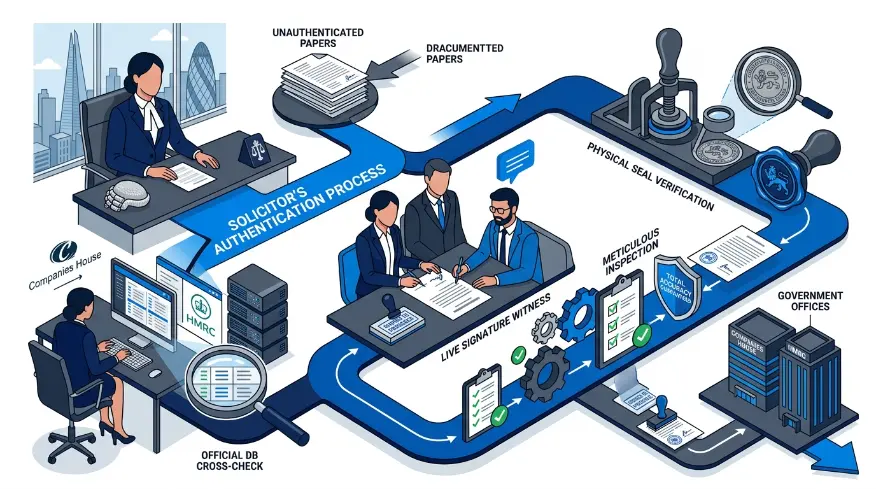
Verification begins when the solicitor examines the original paperwork under strict lighting conditions. The legal professional inspects watermarks, security threads, and embossed stamps. Three verification steps include identity confirmation, signature witnessing, and database cross-referencing. When corporate directors submit paperwork, solicitors check company registration numbers against official records. This process aligns with strict UK compliance frameworks to eliminate corporate fraud. Personal documents receive similar scrutiny through government-issued identification checks. Once the solicitor confirms legitimacy, they draft a formal certificate of authentication. This certificate bears the wet-ink signature and official seal of the legal practitioner. Foreign embassies rely on these verified signatures to grant legal recognition. Organizations seeking professional assistance can explore our Apostilled Documents service for streamlined legal processing.
Why is independent legal verification mandatory for international acceptance?
Independent legal verification is mandatory for international acceptance because foreign institutions cannot verify foreign domestic records independently. Legal seals bridge jurisdictional gaps and establish absolute trust between different nations.
International law relies on a chain of verified authority to maintain global order. Foreign courts lack direct access to local UK municipal and corporate databases. Independent solicitors act as trusted intermediaries who validate records across international borders. This verification removes the burden of proof from foreign government officials. When an official sees a solicitor’s seal, they recognize a universally understood symbol of authenticity. Without this step, foreign agencies would reject unverified papers immediately. Compliance frameworks require this intermediary validation to prevent international document tampering. Businesses expanding overseas benefit greatly from understanding What to Do Before You Submit a Document for Apostille? to ensure smooth cross-border transactions. Structured legal preparation reduces administrative delays significantly.
What happens after the solicitor completes the verification process?
After the solicitor completes the verification process, the authenticated document goes to the Foreign, Commonwealth and Development Office. This government department attaches the final apostille certificate to complete the international legalization chain.
Government authorities take over once the solicitor finishes the initial authentication stage. The Foreign, Commonwealth and Development Office receives the solicitor-verified document for final processing. Three operational phases govern this state department review: digital submission, physical inspection, and certificate attachment. State officials verify the solicitor’s signature against an internal database of registered UK legal practitioners. Once officials confirm the signature match, they securely bind the apostille certificate to the document. This final stamp transforms the domestic record into an internationally recognized legal instrument. Businesses aiming for a seamless experience often choose professional handling. You can learn more about how Want to Get Your Apostille Handled Without the Hassle by Form My Company? simplifies this multi-step regulatory workflow. Expert management ensures complete adherence to international legal standards from start to finish.
Explore our Apostilled Documents guide,
What Is a Paperless Conference and Why Does It Matter?
What Information Should Appear on a Company Stamp?
Frequently Asked Questions
Can a solicitor certify a copy of a document for an apostille?
Yes, a registered UK solicitor can certify true copies of original documents so they qualify for an apostille. Form My Company assists clients by coordinating these legal certifications to ensure swift validation through the Foreign, Commonwealth and Development Office.
How long does it take to get a document verified and apostilled?
Document verification and apostille processing typically takes between 3 to 10 working days depending on the document type and government office workloads. Utilizing professional services through Form My Company helps streamline this timeline by eliminating common administrative errors.
Do foreign documents need UK solicitor verification before an apostille?
Foreign documents generally cannot be verified by UK solicitors unless they have been re-issued or notarized within the United Kingdom. Form My Company reviews foreign paperwork requirements to ensure compliance before international submission.
What is the difference between a notary public and a solicitor for apostilles?
A notary public possesses specialized international jurisdiction specifically designed for cross-border paperwork, whereas a solicitor handles broader domestic and commercial legal matters. Both professional credentials are fully accepted when preparing Apostilled Documents through Form My Company.
Can personal certificates like birth certificates be verified directly?
Personal certificates such as birth, marriage, and death certificates usually require certified copies or direct government registry verification before receiving an apostille. Form My Company manages these specific authentication workflows to guarantee international legal recognition.