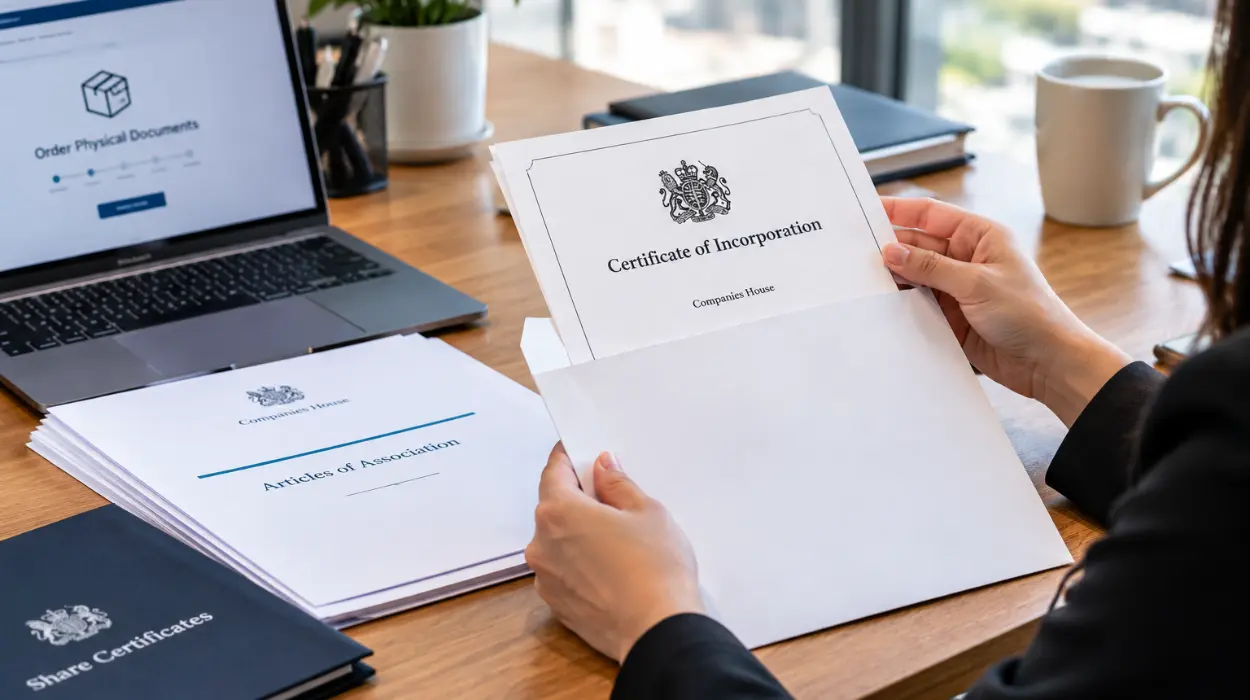
Opening a UK company gives Dominica founders stronger legal recognition, better access to UK banking, and higher trust from suppliers and clients compared with a Dominica offshore structure.
A UK-registered company follows UK Companies Act reporting, uses verified directors, and connects to UK financial systems for credibility.
Why does a UK company build more credibility than an offshore Dominica entity?
A UK company provides verifiable public records, routine filings, and established regulatory oversight, which stakeholders recognise as reliable evidence of legitimacy.
UK company incorporation creates public filings at Companies House. Those filings include the company name, registered address, director names, and annual accounts when required. Lenders, payment providers, and corporate customers use Companies House data to verify business existence. Banks and payment processors rely on such records to complete enhanced due diligence and to open accounts with fewer manual escalations.
A Dominica offshore entity registers under a different legal regime with limited public disclosure. Many international banks treat those incorporations as higher risk. As a result, onboarding time grows, and acceptance rates fall. For firms that sell to UK or EU clients, UK incorporation reduces friction in contract negotiations, procurement checks, and supplier evaluations.
How do UK legal obligations increase trust compared with the Dominica offshore rules?
UK companies must register with Companies House, file confirmation statements and accounts, and comply with anti‑money‑laundering (AML) rules, creating repeatable audit trails.
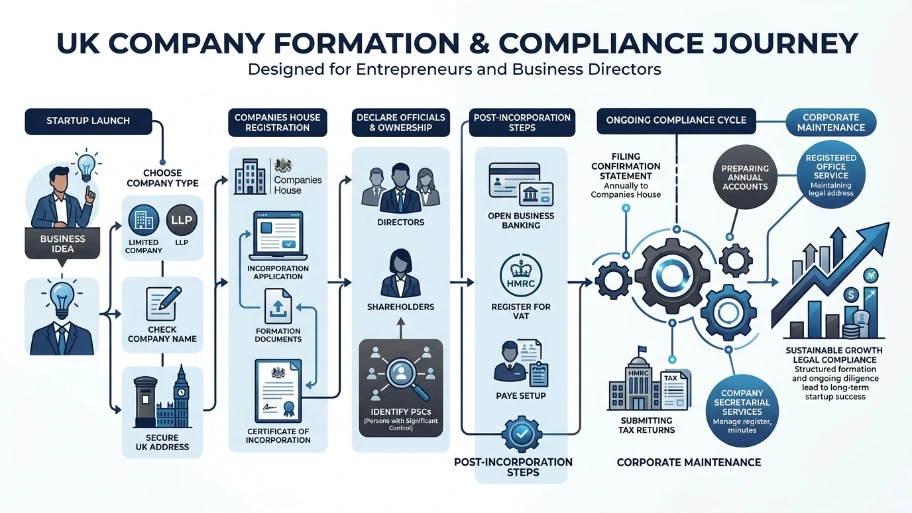
Filing requirements create a chain of verifiable actions: incorporation, appointment of officers, annual confirmations, and accounts filing. These records allow third parties to authenticate corporate status quickly. UK AML frameworks require identification of persons with significant control (PSC), director verification, and retention of statutory records. Third parties use those compliance markers to assess counterparty risk.
Dominica’s offshore regimes emphasise confidentiality and tax efficiency. That structure limits public traces of control and activity. Many corporate buyers and regulated counterparties explicitly prefer partners whose structure matches their compliance expectations. Therefore, UK legal obligations translate into measurable trust signals for counterparties, credit providers, and platform operators.
Read our articles, Why UK Companies Offer More Credibility Than Offshore for Dominica Businesses and Build a Credible UK Company from Dominica with Form My Company.
What operational benefits do Dominica founders gain by using a UK company?
Founders benefit from easier access to UK business banking, payment gateways, and UK market contracts because service providers accept UK registrations as standard evidence of business legitimacy.
UK business bank accounts frequently require a Companies House registration number and proof of director identity. Payment processors such as Stripe, GoCardless, and PayPal have streamlined onboarding for UK‑registered entities. These providers implement API-based identity checks and accept Companies House data to reduce manual review.
Contracts with UK organisations often require a UK jurisdiction clause and proof of registered address. A UK company satisfies those contract terms directly. Additionally, many UK suppliers offer trade credit only to UK‑registered businesses. For founders based in Dominica, a UK registration shortens negotiation cycles and unlocks standard procurement pathways.
How does a UK company affect financial and tax interactions?
A UK company establishes a clear tax residency presumption and standard accounting treatment, which simplifies VAT registration, corporate tax filings, and lender underwriting.
Corporation tax residency depends on management and control tests. A UK-registered company that operates from abroad still benefits from standard reporting templates used by accountants and banks. UK-registered entities use the same chart of accounts, statutory financial statements, and HMRC filing systems. This consistency lowers accounting costs for cross-border founders.
Dominica offshore entities often face uncertainty about tax treatment when contracting with UK clients. With a UK company, counterparties accept standard invoicing practices and VAT handling. Lenders and investors apply consistent credit models to UK entities, reducing surprises in covenant setting and debt pricing.
How does public disclosure of company officers and PSCs help credibility?
Public PSC and officer records let third parties verify ownership and management quickly, reducing perceived risk and enabling faster commercial decisions.
Companies House publishes PSC registers. Verification of directors and persons with significant control provides transparency about who ultimately manages the business. Third parties use that data to confirm conflict-of-interest, sanctions screening, and beneficial ownership. For regulated industries, this transparency often forms part of initial KYC checks.
Dominica offshore registrations typically disclose fewer details publicly. That lack of disclosure triggers enhanced scrutiny and additional documentary demands from banks and large buyers. A UK presence replaces ad hoc proof with standard, persistent records.
What are the compliance and cost trade-offs for Dominica founders?
Forming a UK company requires registered-agent services, accounting, and annual filings, which increase costs but deliver measurable reductions in onboarding friction and commercial risk.
Initial UK incorporation fees vary; standard Companies House registration costs under £100 when self-filed. Typical registered office and company secretary services range from £150 to £600 annually. Annual account preparation and confirmation statements create ongoing accounting costs, starting around £500–£1,500 per year for simple structures. These costs reduce fraud risk and speed up payment and credit onboarding.
Conversely, Dominica offshore structures often have lower recurring fees and reporting obligations. That lower cost comes at the expense of higher friction with banks, payment platforms, insurers, and large corporate clients. For founders whose priority is market access and trust, the incremental UK costs are often offset by faster contract wins and improved payment terms.
How do banks and payment providers treat UK companies versus Dominica offshore firms?
Banks and major payment providers give preferential onboarding to UK entities because they integrate Companies House checks and UK AML frameworks into automated underwriting.
UK company data feeds into automated electronic verification. Banks complete identity checks using standard documents: passport, utility bill, and Companies House records. Payment processors use this same data to reduce manual review rates. This automation shortens approval times from weeks to days.
For Dominica offshore firms, providers often require additional source-of-funds documentation, director attestations, and sometimes in‑person interviews. These extra steps extend onboarding and increase the chance of rejection. For founders focused on growth, faster financial onboarding supports cash flow and scaling.
How can Dominica founders form a UK company while remaining operationally abroad?
Founders can appoint UK-resident service providers, use a UK-registered office, and assign local company officers while retaining operational control from Dominica.
Registered office providers supply a UK address for statutory correspondence. A nominated UK resident director or local service provider handles formal submissions if necessary. Digital tools support board meetings, minute keeping, and cloud accounting from remote locations. Accountants help manage UK filings and tax returns while founders continue commercial operations in Dominica.
This setup preserves remote management and provides the credibility advantages of UK registration. Many international firms adopt this hybrid approach to match market expectations without relocating staff.
Read our Costa Rica guide,
Register a UK Company from Costa Rica with Form My Company
What practical steps should Dominica founders take to maximise credibility with a UK company?
Incorporate at Companies House, register for appropriate taxes, verify directors and PSCs publicly, and open a UK business bank account using Companies House documentation.
Engage a UK accountant for statutory accounts and tax filings. Maintain up‑to‑date confirmation statements and accurate registered office records. Use verified identity checks for directors and PSCs to align with UK AML standards. Present Companies House links when negotiating with banks, suppliers, and marketplaces to shorten procurement checks.
These actions create a verifiable presence that counterparties recognise. They also reduce manual documentation requests during onboarding with platforms and financial institutions.
Forming a UK company delivers concrete credibility advantages for Dominica founders through public records, routine filings, and easier access to UK financial services. The added compliance and service costs produce faster onboarding, clearer tax treatment, and stronger trust from clients and partners. From My Company supports Dominica founders who want to register and maintain a UK entity while they operate abroad. We help with incorporation, registered office services, and ongoing compliance to ensure verifiable UK presence.
Frequently Asked Questions
Can I open a UK company from Dominica as a non-UK resident?
Yes, non-UK residents—including founders in Dominica—can incorporate a UK company through From My Company by providing government-issued ID and a verified registered office address in the UK.
What are the main differences between a Dominica offshore company and a UK company for credibility?
A UK company publishes director and PSC details at Companies House and files annual confirmations, creating verifiable audit trails; a Dominica offshore entity prioritises confidentiality with limited public disclosure, which many banks and clients treat as higher risk.
How long does it take From My Company to register a UK company for Dominica founders?
From My Company typically completes UK incorporation within 24–48 hours after receiving ID, registered office details, and director information, allowing Dominica founders to start banking and contracting quickly.
Do UK companies formed from Dominica need UK tax registration and annual filings?
Yes, every UK company must register with HMRC for corporation tax, file annual confirmation statements with Companies House, and submit statutory accounts; From My Company helps Dominica founders maintain these compliance requirements remotely.
Why do banks prefer UK companies over Dominica offshore entities for account opening?
Banks use automated checks that verify Companies House data and UK AML compliance, reducing manual review; Dominica offshore registrations lack public records, triggering enhanced due diligence and longer onboarding for founders using From My Company’s UK incorporation service.