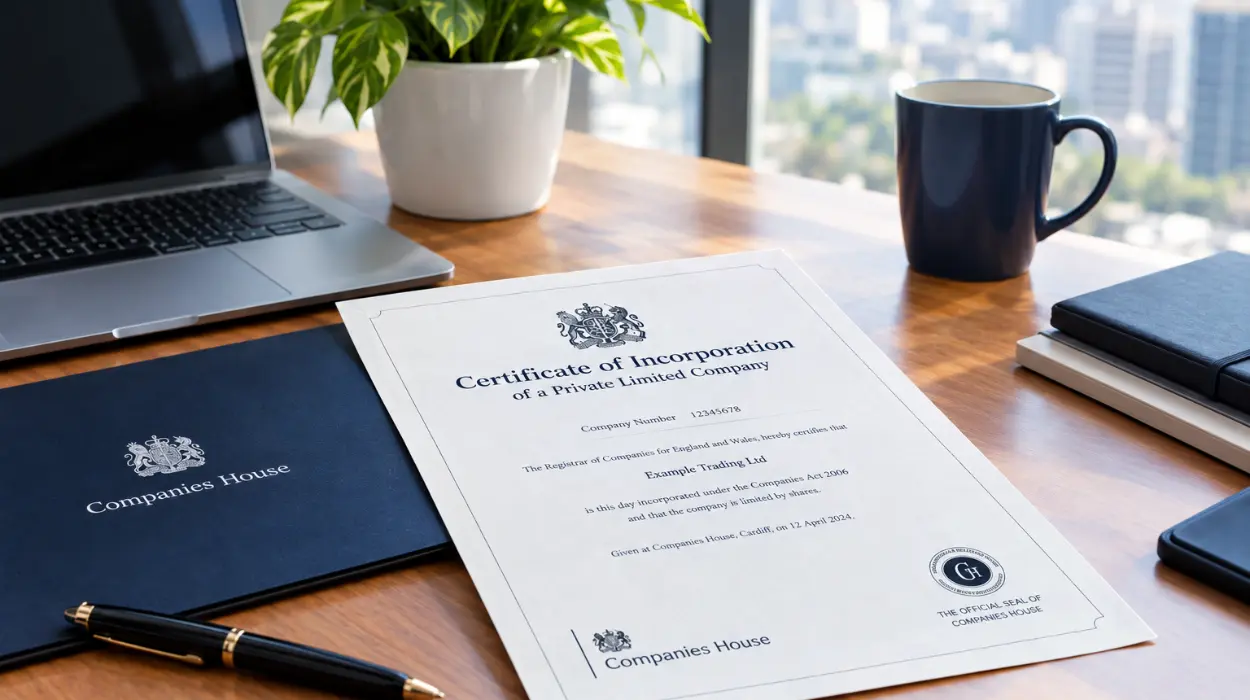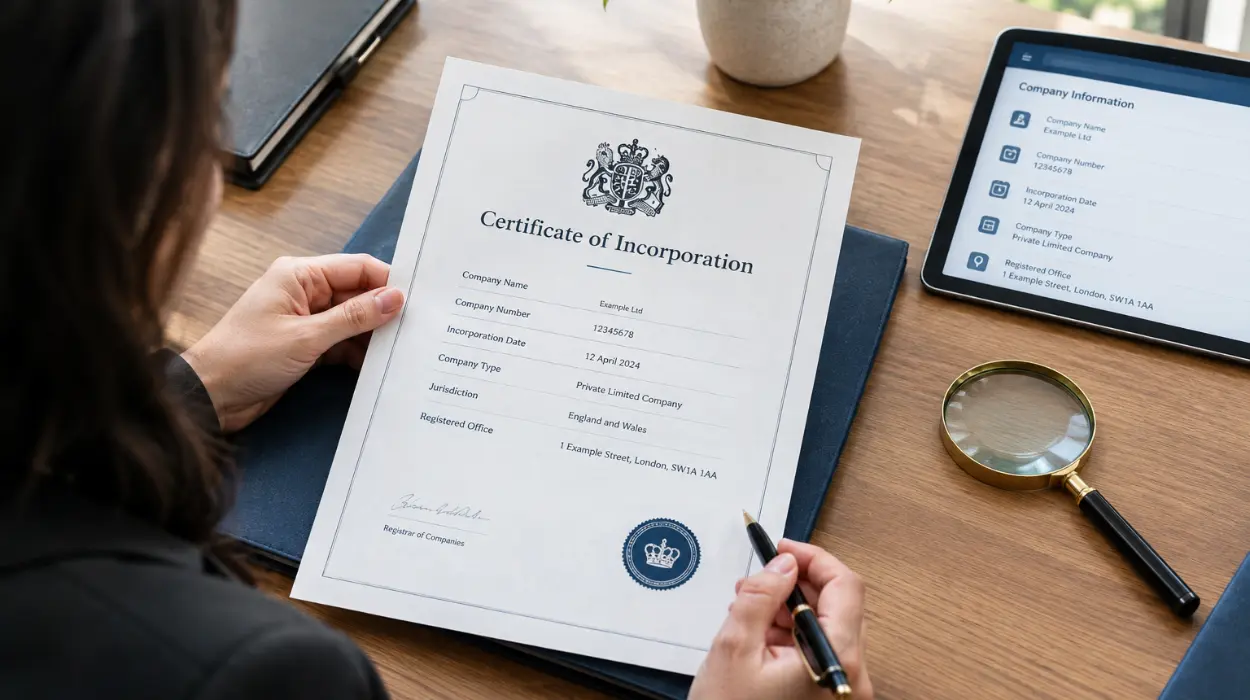
You verify your company’s standing by accessing the official Companies House register to confirm its active registration status, check confirmation statement filings, review annual accounts, and ensure director details match official UK records.
Why Is Verifying Your UK Company Standing Essential for Business Operations?
Verifying company standing protects business operations by proving legal existence, securing financial contracts, confirming regulatory compliance, and preventing corporate identity theft through accurate public register validation.
UK registered businesses must maintain accurate records on the public register to preserve their legal operating status. Lenders, vendors, and corporate partners access Companies House records before signing commercial contracts. If records show overdue filings or incorrect officer details, financial institutions freeze corporate accounts immediately. Regular verification allows directors to catch discrepancies early and resolve administrative errors.
Corporate identity theft increases when public records remain unmonitored for extended periods. Unauthorized individuals attempt to file fraudulent director appointments or change registered office addresses to intercept legal notices. Constant validation ensures your business identity remains secure and compliant with current statutory guidelines. Maintaining up-to-date information prevents sudden compulsory striking-off actions initiated by the registrar.
What Official UK Registers Provide Public Business Data?
Companies House acts as the primary UK register that stores, updates, and publishes official corporate entity records, directorship history, filing accounts, and registered address information for public inspection.
Companies House provides online search tools that offer instant access to over five million business records. Users search by company name or registration number to pull live corporate data. The service displays active status, liquidation proceedings, and historical filing history without requiring subscription fees.
The Insolvency Service maintains separate database entries for directors subject to disqualification orders. cross-referencing Companies House records with insolvency databases confirms whether business officers hold valid management permissions. Land Registry records complement these checks by verifying real estate ownership tied to corporate entities. Combining data from these official government sources creates a comprehensive overview of corporate legitimacy.
Which Core Documents Confirm Your Active Company Status?
A Certificate of Good Standing, an up-to-date Confirmation Statement, current statutory accounts, and an official register of directors collectively confirm a company’s active standing.
The Certificate of Good Standing serves as official proof that a company exists continuously and has filed all required annual documents. Companies House issues this document only when a business maintains compliant accounts and accurate officer lists. Financial institutions require this certificate before opening international bank accounts or approving credit applications.
Annual accounts supply detailed financial records that show solvent trading conditions. The confirmation statement validates current shareholders, registered office locations, and Persons with Significant Control (PSC) details. Discrepancies within these filings trigger red flags during external business audits. Reviewing these documents quarterly prevents operational disruptions caused by missed statutory deadlines.
How Do You Perform a Step-by-Step Companies House Verification Check?
Perform a verification check by searching the online register, validating the nine-character company number, reviewing filing history logs, inspecting officer profiles, and downloading public corporate filings.
Accessing the WebCheck System
Users access the official Companies House search portal through the UK government gateway. Type the exact legal entity name or unique company registration number into the search interface. The system retrieves registered entity records instantly, including active, dissolved, or converted business statuses.
Analyzing Officers and Persons with Significant Control
Review the listed directors, corporate secretaries, and PSC entries to confirm accurate control structures. Verify that appointed individuals match current management records and possess valid residential address notifications on file. Discrepancies in birth months or appointment dates indicate inaccurate filing submissions that require immediate corrective filings.
Inspecting the Filing History Log
Examine the filing history timeline for missing annual accounts or late confirmation statements. Download recent PDF copies of filed documents to check for unauthorized corporate amendments. Consistent, on-time filings demonstrate operational compliance and lower financial risk assessments for external business partners.
How Does Document Inaccuracy Expose Companies to Corporate Fraud?
Inaccurate public documents allow fraudsters to hijack corporate identities, open fraudulent credit lines, alter director structures, and divert legal correspondence away from genuine business owners.
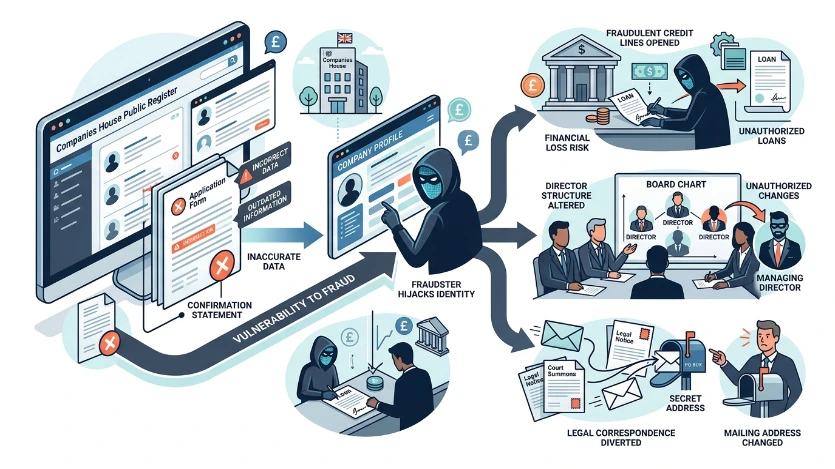
When public registries display outdated office addresses, legal notifications fail to reach true business owners. Criminals exploit these communication gaps by submitting fraudulent paper filings to Companies House. Fraudsters replace legitimate directors with fake names, acquire business loans, and leave original entity owners responsible for accrued debts.
Preventing corporate fraud requires proactive monitoring tools that flag unauthorized public record changes immediately. Organizations secure their statutory records by locking administrative access and implementing real-time filing alerts. Integrating a comprehensive Fraud Protection service ensures immediate notification whenever unauthorized third parties attempt to update public registers.
What Steps Should You Take When Public Records Show Errors?
Correct record errors immediately by submitting statutory rectification forms, notifying Companies House support teams, reporting identity fraud, and updating incorrect officer or address details.
If you discover incorrect information on the register, identify whether the error stems from an administrative mistake or fraudulent activity. Submit Form RP04 to amend incorrect filings or file Form RP07 to remove unauthorized director appointments. Acting swiftly minimizes legal exposure and prevents credit rating agencies from downgrading your commercial credit score.
When fraudulent filings occur, file a formal complaint with the Companies House Fraud Team and notify local law enforcement authorities. Inform your corporate bank managers to block unauthorized account access while corrective filings process. Maintaining direct oversight of all public registry entries ensures corporate reputation remains intact.
How Can Businesses Automate Continuous Compliance and Verification Monitoring?
Businesses automate compliance monitoring by subscribing to real-time register alert systems, employing third-party corporate secretarial software, and scheduling automated quarterly registry audits.
Manual checks leave businesses vulnerable to undetected registry alterations between annual filing dates. Automated software connects to official API frameworks to track filing updates continuously. When unexpected updates occur, system administrators receive automated notification emails within minutes.
Establishing automated workflows ensures confirmation statements and financial accounts are prepared long before legal due dates. Professional management services reduce administrative stress by maintaining corporate registers according to current statutory guidelines. For broader strategies on protecting corporate documentation, explore how Business Continuity: How Secure Documentation Prevents Corporate Fraud secures long-term operational resilience.
Evaluating your long-term security structure allows you to identify administrative vulnerabilities before third parties exploit them. Implementing a robust defense system preserves enterprise value, maintains stakeholder trust, and shields executives from personal liability. Organizations can Prevent Corporate Fraud with Form My Company’s Security Suite to maintain total authority over public filing submissions.
Summary of UK Company Verification Best Practices
Verifying company standing involves four key actions: conducting routine Companies House searches, inspecting PSC registers, reviewing filing history timelines, and setting up automated filing alerts.
Maintaining accurate public records protects your commercial credibility and shields your business from identity theft. Regular audits ensure your company remains fully compliant with UK legal requirements. Form My Company assists business owners by monitoring public records, managing statutory filings, and delivering proactive fraud defense tools.
Explore our Fraud Protection guide,
UK Bank Holidays 2026: Business Planning Guide
Capital Gains Tax on Shares: UK 2026 Guide
Frequently Asked Questions
How does Form My Company protect UK businesses from corporate identity fraud?
Form My Company’s fraud protection service monitors the official Companies House register to detect and prevent unauthorized changes to corporate records. The service sends real-time alerts whenever a filing attempt occurs, allowing business owners to block fraudulent director appointments or address changes immediately.
What is Companies House PROEF and how does it prevent corporate hijacked records?
The Protected Online Filing (PROEF) scheme is a Companies House security measure that restricts filing updates to secure electronic channels using a unique company authentication code. When integrated with Form My Company services, PROEF stops fraudsters from submitting unauthorized paper forms to change directorship details or registered office locations.
How do I know if my UK company details have been fraudulently altered?
You can identify unauthorized changes by conducting routine searches on the official Companies House register or by utilizing automated corporate monitoring tools. Form My Company continuously tracks filing histories and alerts business directors instantly if unapproved confirmation statements, officer updates, or address modifications are submitted.
What steps should a business take if targeted by corporate identity theft?
If corporate fraud occurs, a business must immediately report the unauthorized filing to the Companies House Fraud Team and submit rectification forms such as the RP04 or RP07. Additionally, contacting law enforcement, notifying business bank managers, and utilizing Form My Company’s administrative support helps restore accurate public records and secure financial accounts.
Why is continuous company register monitoring necessary for UK SMEs?
Manual checks often fail to detect fraudulent filings between annual reporting periods, leaving small and medium enterprises vulnerable to identity theft and line-of-credit fraud. Subscribing to continuous monitoring through Form My Company ensures immediate visibility over public records, preserving commercial credit ratings and statutory compliance.