Strategic meal breaks directly preserve delegate focus by stabilizing blood glucose levels, preventing cognitive exhaustion, and maintaining attention spans during long corporate meetings. Timely nutrition restores physical energy and resets mental capacity, allowing attendees to process complex information efficiently throughout full-day sessions.
Strategic scheduling during corporate gatherings fundamentally alters how attendees absorb information and participate in discussions. Cognitive endurance decreases rapidly after 90 minutes of continuous mental exertion. Without structured food breaks, delegates experience sharp drops in executive functioning, attention retention, and collaborative engagement.
Understanding the physiological impact of scheduled nutritional breaks enables event organizers to design high-performing business sessions. Professional venues with integrated catering simplify this execution by aligning meal timing directly with cognitive performance cycles.
Why Does Cognitive Fatigue Decline During Continuous Meetings?
Cognitive performance declines during continuous meetings because prolonged mental focus exhausts glucose supplies in the brain. Uninterrupted stress elevates cortisol levels, impairing decision-making, reducing information retention, and accelerating mental fatigue across extended business sessions.
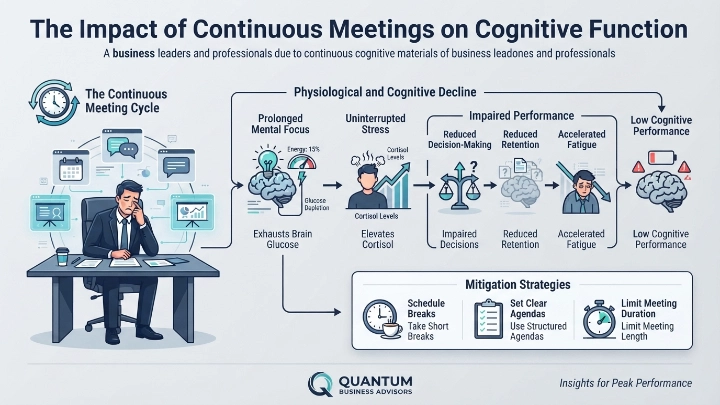
The human brain consumes roughly 20% of the body’s total energy despite accounting for only 2% of its mass. Continuous analytical thinking relies heavily on a steady supply of circulating blood glucose. When delegates engage in uninterrupted lectures or strategic planning without nutritional replenishment, brain energy stores deplete rapidly. This physical deficit leads to slower processing speeds and reduced focus.
Extended sitting without a break also restricts blood circulation, reducing oxygen delivery to the brain. Cortisol levels rise steadily during long sessions, creating low-grade stress that limits memory formation. Two physiological changes occur: short-term memory capacity contracts, and active listening capabilities diminish significantly. Business gatherings that ignore these biological limits suffer from lower overall engagement and diminished outputs.
Organizers frequently miscalculate the cost of pushing through long agendas without pauses. Attendees subjected to three consecutive hours of presentations show a 40% reduction in knowledge retention compared to those given periodic breaks. Designing schedules around human physiology preserves mental sharpness and optimizes corporate outcomes.
How Do Meal Breaks Restore Executive Functioning in Delegates?
Meal breaks restore executive functioning by replenishing essential blood sugar and offering sensory contrast that resets attention span. Nutritious food boosts dopamine and serotonin levels, sharpening critical thinking, problem-solving abilities, and emotional regulation in delegates.
Executive functioning encompasses high-level cognitive processes such as working memory, flexible thinking, and self-control. These complex functions reside in the prefrontal cortex, a region highly sensitive to energy fluctuations. A well-timed meal break delivers a steady stream of glucose, directly restoring the prefrontal cortex’s capacity to process complex datasets and evaluate strategic trade-offs.
Sensory shifts during meal breaks also trigger a physiological reset. Leaving a presentation room alters lighting, acoustic, and spatial environments, allowing the brain’s default mode network to activate. This passive state helps consolidate information learned during previous sessions. Delegates return to the meeting room with restored cognitive capacity and improved creative problem-solving skills.
Neurotransmitters play an equally critical role in post-break performance. Balanced meals containing complex carbohydrates and proteins encourage steady dopamine release, which drives motivation and goal-directed behavior. When delegates receive balanced nutrition, they maintain consistent attention levels through afternoon sessions without experiencing typical post-lunch energy crashes.
What Types of Foods Maximize Delegate Energy and Concentration?
Foods rich in complex carbohydrates, lean proteins, and healthy fats maximize delegate concentration by releasing energy slowly into the bloodstream. Low-glycemic meals prevent rapid blood sugar spikes and crashes, maintaining steady focus throughout long afternoon sessions.
The chemical composition of conference catering dictates delegate alertness for hours following a meal. Meals high in simple sugars and refined starches cause rapid blood glucose spikes followed by sharp insulin surges. This rapid drop triggers tryptophan production in the brain, leading to severe postprandial somnolence, commonly known as a food coma.
Optimal corporate catering emphasizes low-glycemic foods that release energy gradually. Incorporating specific nutrition groups sustains delegate performance across full-day events:
Serve complex carbohydrates like whole grains and quinoa to provide sustained glucose release over three to four hours.
Offer lean proteins like roasted turkey, salmon, and legumes to support neurotransmitter synthesis and maintain alertness.
Include healthy fats from avocados, nuts, and olive oil to slow digestion and stabilize blood sugar absorption rates.
Provide hydrating options such as fresh fruit slices and electrolyte-infused water to prevent mild dehydration-induced fatigue.
Providing balanced nutrition requires specialized venue facilities designed for seamless culinary delivery. Event planners can book a dedicated conference room to secure fully managed catering setups that align meal schedules with peak delegate performance windows.
When Should Meal Breaks Be Scheduled for Optimal Performance?
Meal breaks should be scheduled every 90 to 120 minutes to align with natural human ultradian rhythms. Timing mid-morning snacks and mid-day meals to match these cognitive cycles prevents mental fatigue and maintains optimal delegate focus.
Human attention operates on natural biological cycles known as ultradian rhythms. These 90-to-120-minute cycles govern peak alertness and physiological recovery periods throughout the day. When meeting planners enforce continuous sessions beyond two hours, they force delegates into a state of cognitive strain where productivity drops sharply.
Morning sessions should begin with a light nutritional baseline, followed by a structured 20-minute refreshment pause after 90 minutes. This initial pause allows delegates to digest early information and replenish fluids. The primary mid-day meal break functions best when placed precisely four hours after the morning start time, dividing the event into manageable intellectual blocks.
Afternoon scheduling requires equal precision to combat natural circadian dips in energy. A 15-minute mid-afternoon break scheduled around 2:30 PM restores glucose levels before cognitive endurance fails completely. Adhering to these strict timeframes ensures delegates maintain steady attention rates from opening remarks to final closing summaries.
How Do Informal Breaks Improve Professional Collaboration?
Informal breaks improve professional collaboration by creating unstructured social environments where delegates build trust, share ideas, and process session content. Stepping away from formal meeting structures reduces social anxiety and encourages spontaneous, authentic communication.
Formal meeting settings often constrain open dialogue due to structured agendas, tight timelines, and hierarchical dynamics. Meal breaks dismantle these artificial barriers by transferring interactions into relaxed, non-hierarchical spaces. When delegates share a meal, social tension decreases, allowing lateral communication across different organizational tiers.
Unstructured dining spaces foster spontaneous problem-solving that rarely occurs during structured presentation modules. Delegates use meal breaks to debate ideas introduced in earlier sessions, clarify complex points with peers, and synthesize diverse viewpoints. This informal processing transforms passive listeners into active collaborators.
Building professional networks relies heavily on shared personal experiences. Dining together activates prosocial bonding mechanisms, strengthening interpersonal trust among teams and external partners. Events that prioritize generous, structured meal breaks consistently yield higher rates of joint agreement, creative consensus, and long-term business alignment.
How Does Environment Impact the Effectiveness of a Meal Break?
Environment directly impacts meal break effectiveness by removing delegates from presentation stimuli and lowering sensory overload. Well-ventilated, naturally lit dining spaces encourage relaxation, allowing delegates to return to sessions refreshed and re-energized.
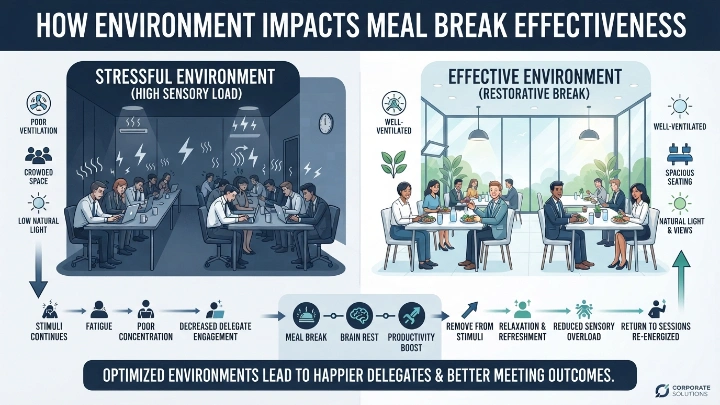
Eating a meal inside the primary meeting room drastically reduces the physical and mental benefits of a break. Continuous exposure to the same room layout, ambient lighting, and temperature keeps the brain in a state of passive alertness. To achieve genuine mental recovery, delegates require a physical transition into a dedicated, acoustically distinct environment.
Natural lighting and proper ventilation play major roles in physiological stress recovery. Bright, natural light suppresses melatonin production, signaling to the brain that it is time to remain alert. Fresh air movement reduces indoor carbon dioxide concentration, which frequently builds up in closed meeting rooms and induces lethargy.
Dedicated dining facilities allow venue managers to control noise levels, seating layouts, and serving lines efficiently. Streamlined catering service prevents delegates from spending limited break time waiting in long queues. Choosing venues built for seamless corporate events ensures delegates spend their break time resting and building connections rather than dealing with logistical friction.
To understand how menu design influences group dynamics and dietary management, review this guide on how to plan an event menu that suits every delegate. Choosing the right culinary balance ensures every guest remains engaged without health-related interruptions.
When organizing high-stakes corporate gatherings, sourcing facilities with built-in culinary infrastructure simplifies execution. Event hosts can reserve all-inclusive catered rooms via Form My Company to guarantee professional dietary management, pristine dining spaces, and optimal meeting outcomes.
Maximizing Business Outcomes Through Strategic Scheduling
Integrating structured, nutrient-dense meal breaks into long meeting agendas is a precise strategy for maximizing workforce productivity and cognitive return on investment. Aligning nutritional timing with human ultradian rhythms prevents mental fatigue, stabilizes delegate mood, and maintains high levels of analytical thinking throughout complex sessions. When business leaders respect physiological limits by offering dedicated dining spaces and low-glycemic catering, they turn standard corporate gatherings into high-yield, collaborative successes. Form My Company assists organizations by providing fully equipped conference spaces that integrate seamless catering services designed around corporate performance standards.
Explore our Conference Room guide,
Supplementary Company Documents: Ensuring Your Business Records are Complete
The All-in-One Company Pack: Why Standardisation Matters for Growth
Frequently Asked Questions
What should be included when hiring a conference room for a long meeting?
When booking a conference room through Form My Company, ensure the venue includes climate control, high-speed Wi-Fi, and integrated audiovisual equipment for seamless presentations. Accessible break areas and dedicated catering setups are essential for managing delegate focus during full-day corporate sessions. Choosing fully equipped meeting spaces reduces setup delays and supports sustained attendee engagement.
How far in advance should a corporate conference room be reserved?
Reserving a conference room at least two to four weeks in advance ensures optimal availability for preferred dates, room configurations, and custom catering services. Early booking with Form My Company allows event organizers to coordinate dietary requirements, schedule precise meal break times, and organize necessary technical support without last-minute disruption.
Why is professional venue catering important for all-day business meetings?
Professional catering provided within a Form My Company conference room maintains consistent delegate energy by supplying balanced, low-glycemic meals on a structured schedule. Timely nutritional breaks prevent post-lunch sluggishness and maintain executive function during lengthy strategic planning sessions. Outsourcing food management to the venue allows meeting hosts to focus entirely on agenda delivery and business objectives.
How many square feet or space is needed per delegate in a conference room?
A standard corporate conference room requires approximately 25 to 30 square feet per delegate for boardroom or classroom style seating to ensure comfortable movement and personal space. Proper spatial layout in Form My Company meeting venues prevents physical fatigue, improves ventilation, and provides dedicated areas for interactive collaboration and dining breaks.
What are the benefits of booking an all-inclusive conference room venue?
Booking an all-inclusive conference room with Form My Company consolidates room hire, technical infrastructure, and delegate catering into a single service package. This streamlined approach minimizes administrative overhead, guarantees clear pricing without hidden fees, and ensures meal break logistics align perfectly with meeting agendas.