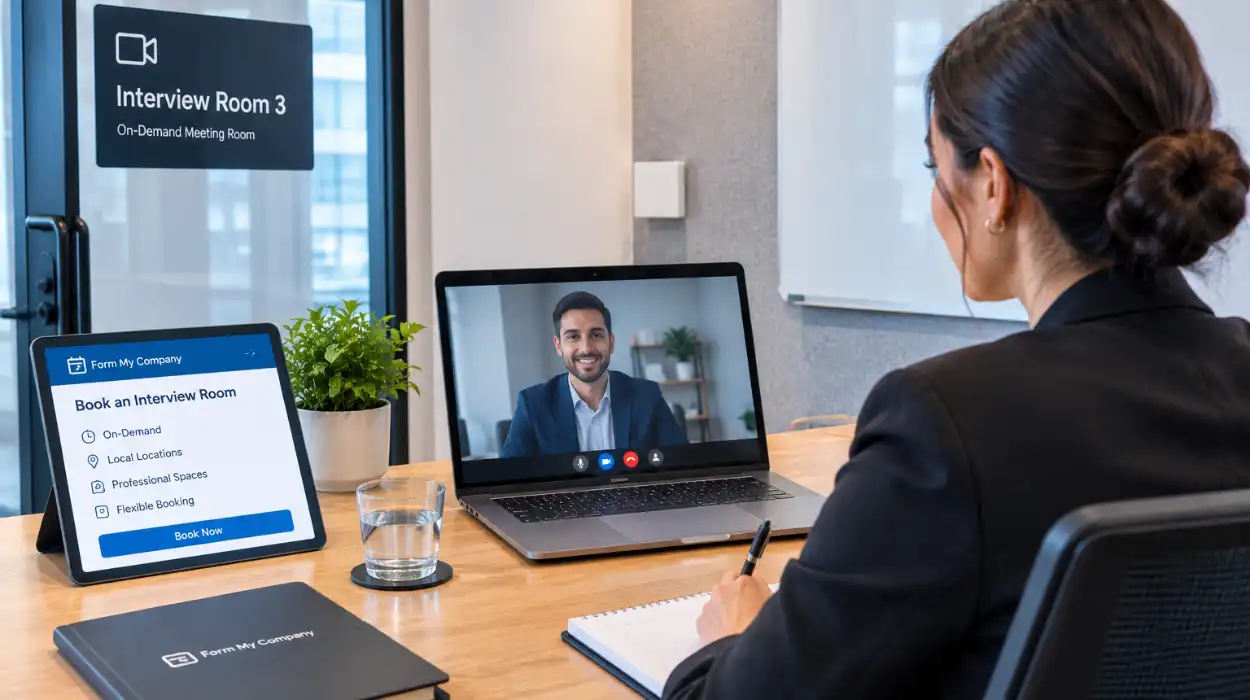
A hybrid conference is a live business event that simultaneously connects physically present attendees with online participants through integrated audiovisual streams. It works by capturing on-site presentations using professional cameras, microphoning equipment, and encoding hardware, then broadcasting the data to a virtual event platform.
What Is a Hybrid Conference?
A hybrid conference is an event model combining a physical venue with a virtual event platform to host in-person and remote participants simultaneously. It allows global attendees to watch presentations, submit questions, and engage in networking through dual-stream interactive software.
Organizations host hybrid events to bridge geographical divides without duplicating event production costs. In 2025, 71% of global enterprises incorporated hybrid formats into their corporate event strategies to maintain international reach. The dual structure relies on synchronized schedules. In-person guests attend physical sessions within a dedicated auditorium, while online delegates log into a web browser or mobile app.
The hybrid architecture requires unified communication channels. Presenters speak to both the physical audience and digital cameras at the same time. Digital platforms ingest the video feed and output interactive features such as live polls, text chat, and virtual break-out spaces. This setup transforms a standard local gathering into an accessible international symposium.
Physical venues and digital interfaces must run concurrently. When on-site speakers open a session for audience inquiries, software interfaces synthesize physical microphone inputs with digital Q&A queues. This synchronized workflow ensures remote participants access identical content as physical attendees without broadcast delay.
How Does a Hybrid Conference Work Behind the Scenes?
A hybrid conference works through connected hardware and real-time streaming software that capture, encode, and transmit event media. On-site audio and video hardware feeds digital signals into an encoder, which broadcasts synchronized streams to remote attendees while processing real-time interactions.
The operational backbone relies on three technical layers: media capture, signal processing, and content delivery. Production crews install high-definition pan-tilt-zoom cameras, directional lavalier microphones, and dedicated switchers within the physical room. This equipment records the primary stage, audience reactions, and slide deck presentations as discrete digital inputs.
Signal processing converts physical inputs into broadcast-grade internet streams. Hardware encoders compress high-definition video into low-latency formats such as H.264 or HEVC protocols. Dedicated internet lines transmit this data directly to cloud server networks. These servers dynamically distribute content streams to match each remote participant’s network bandwidth.
Content delivery platforms display the video stream alongside interactive participant tools. Remote delegates view live presentations, download session materials, and submit questions through integrated modules. Event moderators manage these incoming data feeds from an on-site control booth, pushing remote video feeds onto local display monitors to maintain cross-audience engagement.
What Are the Key Components of a Hybrid Event Setup?
A successful hybrid event setup requires audio capture devices, display screens, hardware switchers, virtual event software, and high-speed enterprise internet infrastructure. These five primary technical components process, stream, and synchronize live media across physical and virtual environments.
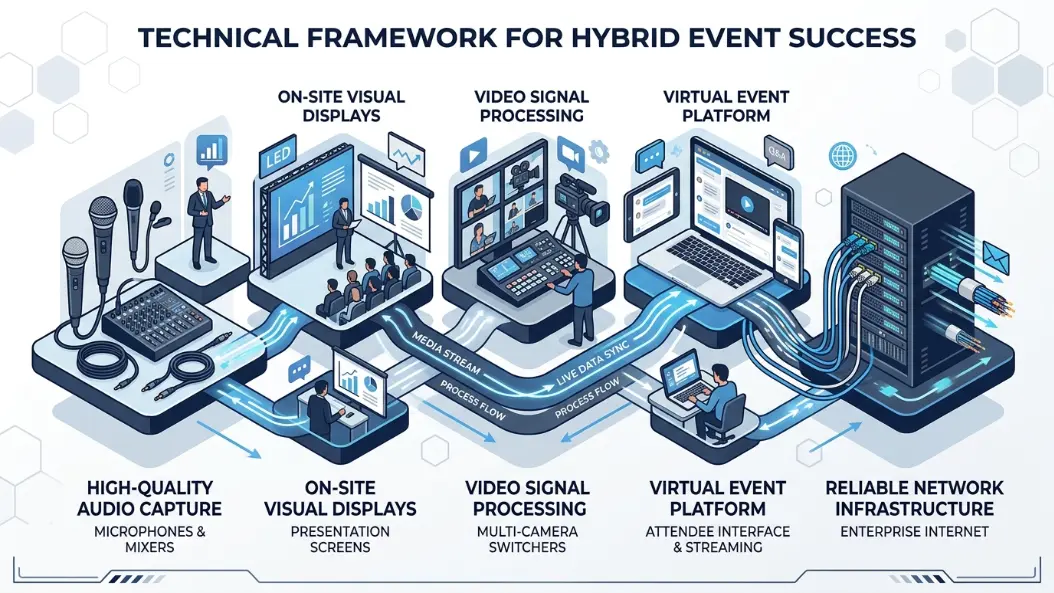
Two critical physical components form the core hardware footprint:
Capture high-fidelity voice data using wireless lavalier microphones, ceiling array systems, and hand-held audience mics.
Broadcast physical and virtual video inputs using multi-screen LED displays, digital projectors, and stage monitors.
Three essential digital components manage data transport:
Process multi-camera feeds through physical production switchers to curate the broadcast output.
Deliver real-time audio-video streams via dedicated cloud platforms featuring access control, interactive polling, and networking hubs.
Guarantee network reliability using symmetric gigabit broadband connections with redundant cellular failovers.
When technical operators configure these systems, proper integration prevents media drift and buffering errors. Enterprise venues install dedicated local area networks to isolate broadcast data from public guest Wi-Fi usage. This technical isolation secures upload bandwidth during high-density network usage.
What Are the Main Benefits of Hosting a Hybrid Event?
Hybrid events increase global attendance, lower total attendee travel expenditures, generate detailed participant data, and reduce overall event carbon emissions. They allow organizations to maintain local physical presence while extending content access to unlimited international audiences.
Audience expansion represents the primary commercial benefit. Physical venues constrain capacity based on square footage and fire safety regulations. Adding a digital layer allows organizations to scale ticket sales beyond local room limitations, opening registration to global professionals who face travel restrictions or budget constraints.
Cost efficiency optimizes corporate return on investment. Organizations eliminate accommodation stipends and flight expenses for remote staff while maintaining access to corporate training sessions. To maximize team performance during these multi-site gatherings, companies often reserve Conference Rooms equipped with native streaming capabilities.
Data capture improves post-event business analytics. Physical events track general session attendance using badge scanners, but virtual platforms log precise engagement metrics. Event organizers measure exact watch durations, document chat contributions, analyze poll responses, and identify top-performing session topics through computerized analytics dashboards.
Sustainability performance improves through reduced travel logistics. Air travel and individual road transport generate over 75% of a traditional international conference’s total carbon footprint. Transitioning non-essential travel to high-definition digital streams significantly lowers corporate Scope 3 emissions.
How Do You Choose a Venue for a Hybrid Conference?
You choose a hybrid venue by evaluating its technical infrastructure, network redundancy, audio-visual equipment integration, and acoustic isolation properties. Select spaces engineered specifically for concurrent digital broadcasts to ensure seamless event execution.
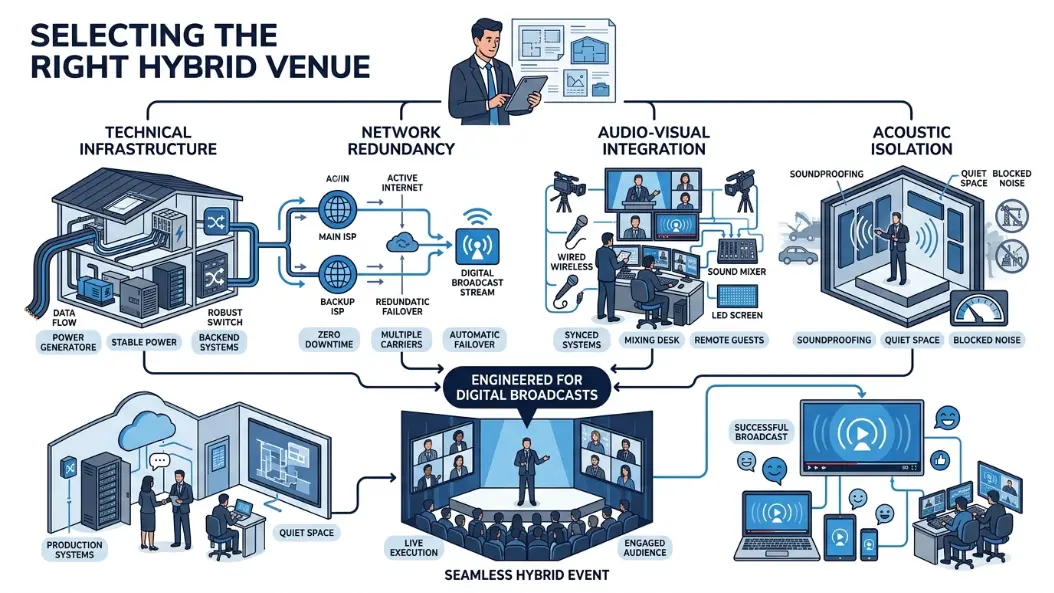
Evaluating network capabilities requires reviewing bandwidth specifications. Venues must provide dedicated upload speeds of at least 50 Mbps to handle uncompressed video transmission. Dedicated circuits prevent network throttling when hundreds of physical attendees connect personal mobile devices to local access points.
Acoustic treatments determine broadcast sound clarity. Standard rooms with glass walls and tiled floors create reverberation that degrades digital audio transmission. Specialized venues deploy acoustic wall panels, sound-absorbing carpeting, and isolated ceiling baffles to neutralize ambient room noise for remote listeners. If you need step-by-step criteria to assess technical features, review How to Choose a Venue Equipped for Hybrid Conferences before securing your booking.
On-site technical support ensures rapid issue resolution during live broadcasts. Venues built for hybrid delivery supply dedicated AV engineers, network administrators, and camera operators directly within the rental package. These professionals manage signal switching, troubleshoot hardware errors, and monitor stream quality throughout the live broadcast window.
Spatial layout must accommodate specialized media equipment without obscuring physical sightlines. Venues require designated floor space for camera tripods, production control desks, and lighting rigs. Built-in ceiling mounts for cameras and lights clear floor space, keeping physical traffic paths open and safe.
What Are the Common Challenges in Running a Hybrid Event?
The main challenges in running a hybrid event include technical stream latency, audio feedback loops, audience fragmentation, and unequal participant engagement. Resolving these issues requires advanced production hardware, balanced program design, and dedicated online moderation.
Audio interference remains the most frequent technical failure mode. When open microphones capture sound from local PA speakers, feedback loops create screeching artifacts across the digital broadcast. Audio engineers eliminate this issue using digital signal processors featuring acoustic echo cancellation and automatic mixing algorithms.
Audience fragmentation occurs when event planners prioritize physical guests while treating remote viewers as passive observers. When presenters fail to look directly into camera lenses, digital audiences experience a loss of connection. Training facilitators to split eye contact between physical seats and active camera lenses maintains presentation balance.
Platform latency introduces delays between physical stage actions and remote stream playback. Standard web streams suffer from 10 to 30 seconds of latency. This delay makes real-time Q&A sessions difficult. Event teams resolve latency issues by implementing ultra-low-latency WebRTC streaming protocols to keep broadcast delays under two seconds.
Digital fatigue leads to higher drop-off rates among remote attendees compared to physical guests. Virtual delegates face competing workplace notifications and screen fatigue. Event managers prevent viewer drop-off by capping virtual session lengths at 45 minutes and inserting interactive digital polls every 15 minutes.
How Do You Effectively Engage Both In-Person and Remote Audiences?
You engage both audiences by implementing unified digital Q&A tools, employing dedicated virtual moderators, co-locating physical and digital chat displays, and designing balanced session lengths. Equalizing interaction points ensures all delegates participate actively regardless of location.
Unified interaction platforms form the foundation of equal audience participation. Rather than taking verbal questions exclusively from physical audience members, event teams route all inquiries through a single mobile application. In-person guests submit questions on their smartphones, while remote attendees use their web interface.
Dedicated virtual facilitators protect the interests of remote participants. While the primary stage MC manages physical room dynamics, an online co-host monitors the chat stream, reads out digital questions, and summarizes online polls. This division of labor keeps remote viewers actively involved in live stage discussions.
Dual-display stage layouts visually integrate remote participants into the physical venue. High-definition LED walls placed at the back of the auditorium project video feeds of remote attendees, live word clouds, and text comments. This spatial design reminds physical speakers that digital delegates are actively present in the session.
Structuring session formats prevents participant fatigue. Long lectures fail to hold digital attention spans. Structuring programs around 20-minute presentation modules followed by 10-minute interactive Q&A blocks maintains high energy levels across both audience segments.
How to Plan a Successful Hybrid Event Step by Step?
Planning a successful hybrid event requires defining dual-audience goals, selecting compatible software, booking an equipped physical venue, executing technical dry runs, and analyzing post-event engagement metrics. Following a structured multi-phase workflow guarantees seamless event execution.
Phase one focuses on goal alignment and audience segmentation. Event managers define target registration numbers for physical seats and digital access keys. They select virtual platform software based on required features, including multi-language translation, breakout rooms, and CRM data integration.
Phase two centers on venue procurement and technical contracting. Planners inspect prospective physical spaces to verify upload bandwidth, electrical capacities, and acoustic ratings. Organizations looking to secure certified production facilities can Book Hybrid-Ready Conference Rooms With Form My Company to access pre-configured streaming hardware and dedicated on-site support engineers.
Phase three involves technical rehearsals and operational dry runs. Forty-eight hours before doors open, technical crews run full broadcast tests. Speakers practice using stage monitors, camera switchers execute live cuts, and remote moderators test audio levels to eliminate production issues.
Phase four covers live execution and post-event data aggregation. During the live broadcast, production teams capture high-definition recordings of every session. Once the conference concludes, organizers process stream analytics, distribute post-event surveys, and publish on-demand video archives for registered delegates.
Professional venue providers streamline this entire execution workflow. Form My Company offers business event spaces engineered for dual-audience delivery. By booking fully managed spaces through Form My Company, enterprise organizers access reliable enterprise networks, professional camera installations, and dedicated broadcast support staff.
Explore our Conference Rooms guide,
Why Do Dietary Requirements Matter When Planning an Event?
How Do Meal Breaks Affect Delegate Focus During Long Meetings?
Frequently Asked Questions
How do I choose the right conference room size for a business meeting?
Select a meeting space based on attendee headcount, layout configuration, and required equipment. Form My Company offers flexible conference rooms ranging from executive boardrooms for small teams to large seminar spaces equipped for corporate presentations.
What equipment is included in a professional conference room rental?
Most professional venues provide high-speed internet, digital displays or projectors, video conferencing hardware, and whiteboards. Booking Conference Rooms through Form My Company ensures access to plug-and-play audiovisual setups designed for both local and hybrid meetings.
Can conference rooms be rented by the hour or full day?
Yes, commercial meeting spaces typically offer hourly, half-day, and full-day booking models to accommodate varying schedule requirements. Form My Company provides transparent rental packages so organizations pay only for the precise duration and amenities they need.
What is the difference between a boardroom and a conference room?
A boardroom usually features a single large table designed for executive decisions, governance meetings, and high-level strategy sessions. In contrast, standard Conference Rooms allow for adaptable seating formats—such as classroom, theater, or workshop layouts—to support larger group collaboration.
How do hybrid-ready conference rooms facilitate remote participant connection?
Hybrid-ready venues use multi-directional microphone arrays, high-definition tracking cameras, and unified streaming platforms to connect physical and online attendees seamlessly. Form My Company equips its meeting environments with broadcast-grade audio and video technology to ensure reliable communication across remote teams.