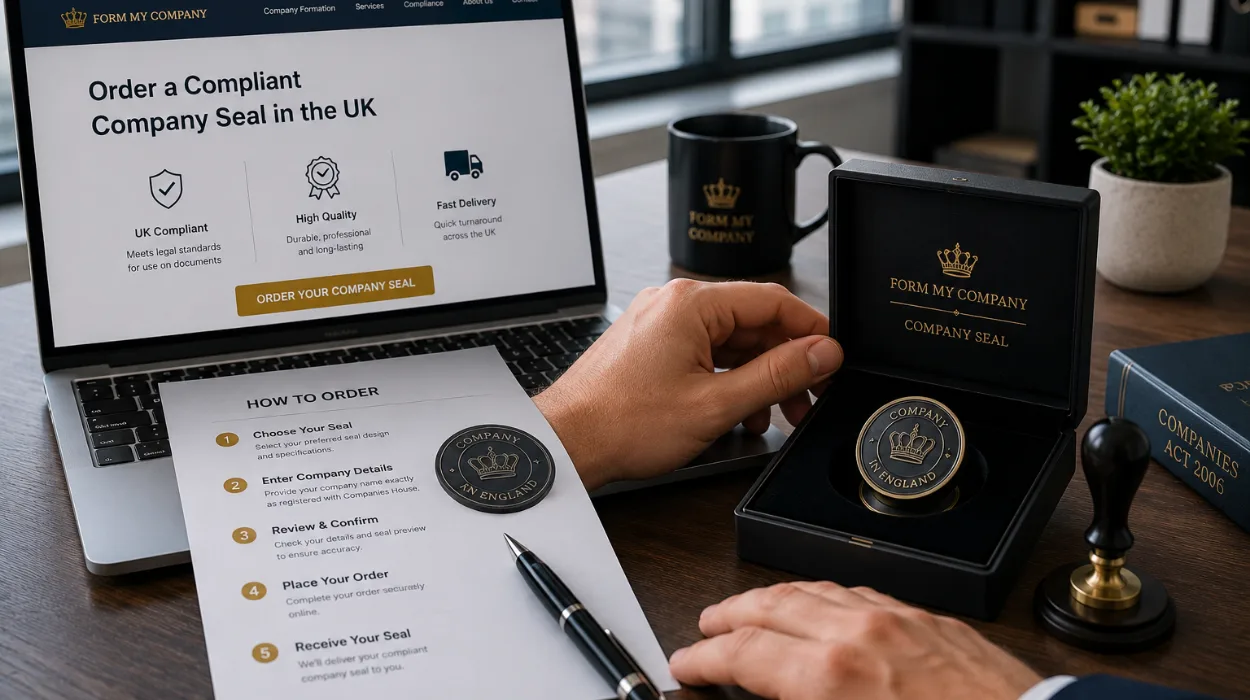
To order a compliant company seal in the UK, choose an official embossing seal provider, submit your exact company registration name and number for verification, select a traditional pocket or desk press model, and confirm your mechanical impression layout before manufacturing dispatch.
Why Do UK Businesses Still Require a Physical Company Seal?
UK businesses still require a physical company seal because international trade authorities, overseas banks, and foreign legal jurisdictions mandate wet-ink or embossed authentication for high-value cross-border contracts.
International trade involves rigid legal verification frameworks. 82% of overseas jurisdictions operate under civil law systems. These legal systems rely heavily on physical impressions rather than digital signatures. When British firms export goods or execute international service agreements, foreign counterparties demand tamper-evident validation. A mechanical company seal creates a raised, tactile impression on paper stock. This physical mark proves corporate authority beyond digital doubt.
Cross-border legal compliance requires verifiable proof of corporate identity. Foreign ministries and notary publics inspect physical documents for official company stamps. 45% of international commercial disputes involve questions of document authenticity. A stamped seal eliminates forgery risks through unique metal die impressions. Companies expand global operations by adopting tools that satisfy foreign regulatory bodies. Overseas entities recognize the legal weight of an embossed corporate seal immediately.
What Legal Specifications Make a Company Seal Compliant?
A company seal remains compliant when it displays the exact registered company name, incorporates the official company registration number, uses precise mechanical embossing dimensions, and avoids unauthorized alterations.
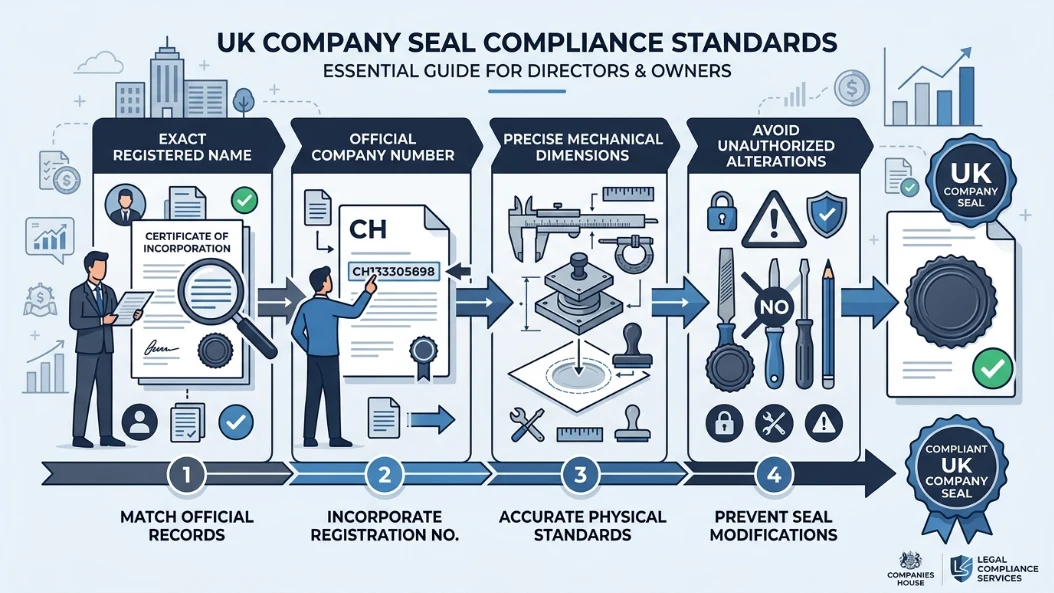
UK company law dictates strict visual standards for corporate stationery and authentication tools. The registered company name must match Companies House records letter for letter. 100% of compliant seals include the official registration number alongside the business name. Manufacturers cut metal dies using precision CNC machinery. This engineering process ensures crisp raised lettering on 85gsm to 120gsm paper weights.
Company officers must review layout proofs before final production begins. Two critical elements govern compliance: exact textual accuracy and clear impression depth. Official corporate seals omit unauthorized logos or unregistered trading names. Businesses maintain regulatory alignment by adhering to these statutory requirements. Strict adherence prevents document rejection by international trade partners and legal institutions.
How Does the Ordering Process Work for an Embossing Seal?
The ordering process requires submitting your official company details, selecting your preferred press style, verifying text layout accuracy, and completing secure checkout for production dispatch.
Ordering an authentic corporate seal involves four distinct steps. First, input your exact company name into the supplier verification portal. Second, choose between a compact pocket press or a heavy-duty desk press. Third, review the digital proof generated by the manufacturer. Fourth, authorize production and await delivery to your registered office address.
| Step | Action Required | Verification Method |
| 1 | Enter company credentials | Match Companies House database records |
| 2 | Select press hardware | Choose pocket or desk model |
| 3 | Review digital layout proof | Check spelling and registration numbers |
| 4 | Authorize manufacture | Process secure digital payment |
Precision matters during every stage of the procurement workflow. 95% of ordering delays stem from typographical errors in company names. Supply partners cross-reference your submission against official government registers. This automated validation prevents manufacturing mistakes. Companies streamline their setup phase by utilizing an all-inclusive Form My Company Company Pack for immediate operational readiness.
Where Should You Use Your Company Seal for Maximum Validity?
You should use your company seal on international export documents, overseas property deeds, foreign banking resolutions, and cross-border commercial agreements requiring formal authentication.
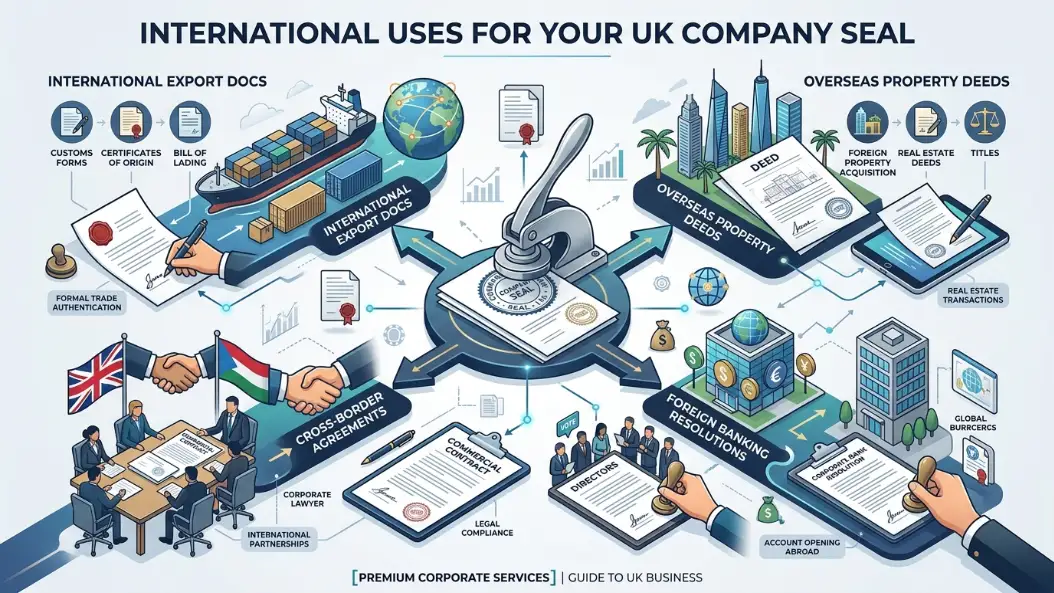
Strategic deployment of your corporate seal protects high-stakes international transactions. Export documentation requires physical stamping to clear foreign customs checkpoints. 70% of non-Commonwealth trade partners request embossed validation on shipping invoices. Overseas property acquisitions demand physical seals to satisfy local land registry laws. Foreign banks inspect corporate account applications for embossed physical impressions before releasing funds.
Legal instruments executed overseas carry greater weight with physical authentication. Directors apply the seal directly onto signature blocks alongside witness signatures. Cross-border partnerships solidify trust when formal agreements display tactile corporate marks. Businesses minimize legal friction abroad by applying seals to all primary export contracts. International regulators view embossed paper documents as primary evidence of corporate intent.
Which Seal Type Best Suits Your Operational Workflow?
The pocket seal suits mobile executives needing portable authentication, while the heavy-duty desk press fits administrative offices managing high-volume document stamping.
Operational requirements dictate your choice of physical seal hardware. Pocket seals feature lightweight steel frames and detachable metallic dies. Executives carry pocket seals to international meetings for immediate contract execution. Desk presses utilize heavy cast-iron bodies and leverage handles. Administrative staff stamp hundreds of export certificates daily without experiencing hand fatigue.
Three hardware factors determine workflow efficiency: weight, leverage, and storage capacity. Pocket presses weigh under 300 grams for effortless briefcase transport. Desk presses weigh over 1.5 kilograms to provide stable countertop operation. Companies select their hardware based on document volume and travel frequency. Selecting the correct press ensures seamless authentication across all business environments.
Ordering a compliant company seal requires exact adherence to UK registration standards and precise hardware selection. International trade partners and foreign legal systems continue to demand physical, embossed authentication for cross-border contracts. Companies eliminate administrative friction by verifying official company data during the procurement stage. Form My Company delivers robust corporate solutions, including an essential Form My Company Company Pack designed to streamline global expansion. Businesses secure their international operations by pairing digital compliance with traditional physical authentication tools. Read more about international expansion strategies in Why Do Overseas Contracts Often Demand a Company Seal? and explore our hardware options by reading Get a Compliant Embossing Seal From Form My Company.
Explore our Company Pack guide,
Interview Room Amenity Checklist Before You Book
How to Choose an Interview Room With the Right Tech Setup
Frequently Asked Questions
What is included in the Form My Company Company Pack?
The Form My Company Company Pack includes essential corporate formation documents such as the certificate of incorporation, memorandum and articles of association, and share certificates. These digital and printed assets establish your corporate entity and streamline immediate administrative setup.
Do I need a physical company seal with my company pack?
A physical company seal is not legally required for standard UK operations, but international trade partners and overseas legal jurisdictions frequently demand embossed authentication. Ordering a company seal alongside your initial formation documents ensures readiness for cross-border contracts and foreign banking requirements.
How long does it take to receive the Company Pack after registration?
The Form My Company Company Pack is dispatched digitally almost immediately upon successful incorporation approval from Companies House. Physical components like printed registers and embossed seals arrive via secure courier within two to three business days.
Can I upgrade my existing company pack with additional corporate stationery?
Business owners can easily upgrade their existing company pack to include supplementary corporate stationery, registers, and authentication tools as operations expand. Form My Company provides modular add-ons that integrate seamlessly with your original corporate registration bundle.
Why do overseas banks request documents from a UK Company Pack?
Overseas financial institutions require authenticated documents from your UK Company Pack to verify corporate existence, director identities, and share structures during international account opening. Providing certified copies ensures compliance with global anti-money laundering and cross-border banking regulations.