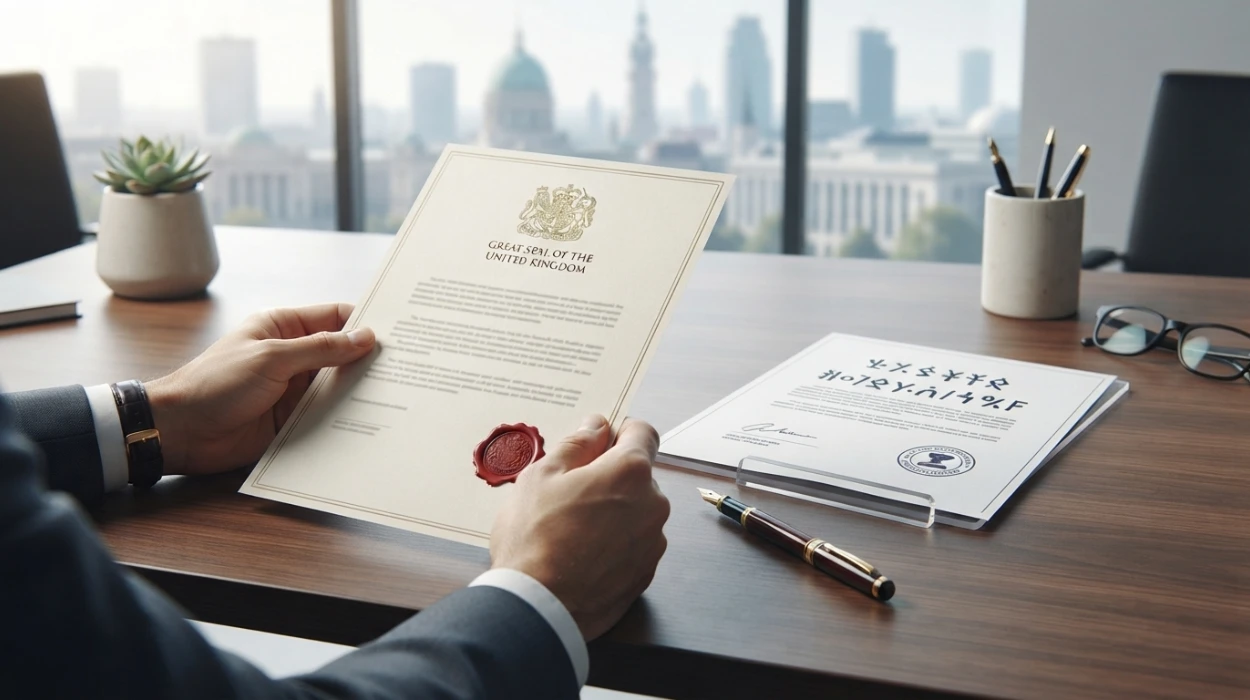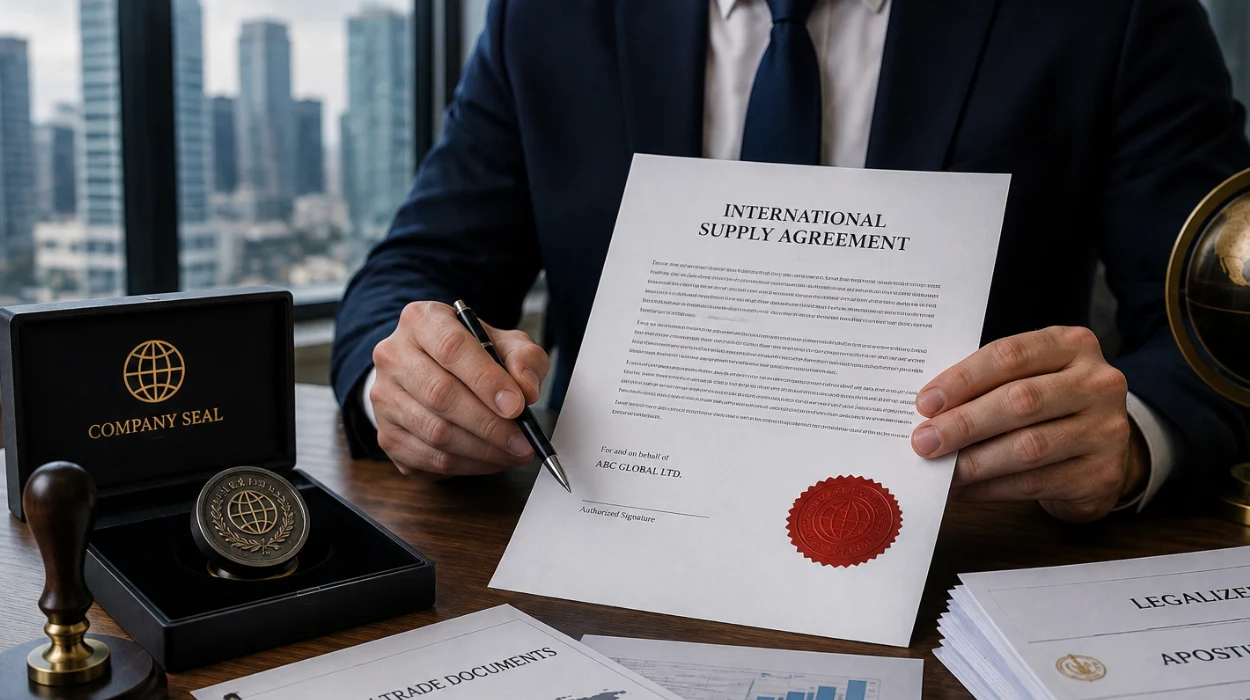
Overseas contracts demand a company seal because international commercial legal frameworks require physical authentication, tamper-proof corporate authorization, and formal verification of corporate identity to prevent international trade fraud across distinct legal jurisdictions.
International trade involves complex legal frameworks across different countries. Overseas partners and foreign regulatory authorities often require a physical company seal on legal agreements. This requirement stems from specific legal traditions in civil law countries. Civil law jurisdictions historically place greater legal weight on physical impressions than on electronic signatures alone. When a corporation executes an agreement across borders, foreign courts look for tangible proof of corporate authority. A mechanical embossing seal or inked stamp provides that visible authentication.
What is a company seal and why does it matter globally?
A company seal is a specialized mechanical embossing device or inked stamp that imprints a corporation’s official name and registration number onto paper documents to signify formal binding authority.
The device creates a permanent raised impression on paper fibers. This physical modification is extremely difficult to forge or replicate without the specific metal die. International entities rely on this mechanical security feature to establish document integrity. When contracts cross national borders, local legal systems evaluate document validity through traditional verification standards. Foreign legal systems recognize physical seals as primary evidence of corporate consensus. Corporations use these devices to signal formal board approval for high-value transactions. Global trade partners view the impression as a guarantee of executive authorization.
Which international jurisdictions require a company seal?
Civil law jurisdictions across continental Europe, parts of Asia, and Latin America frequently mandate company seals for commercial contracts, banking documents, and government filings.
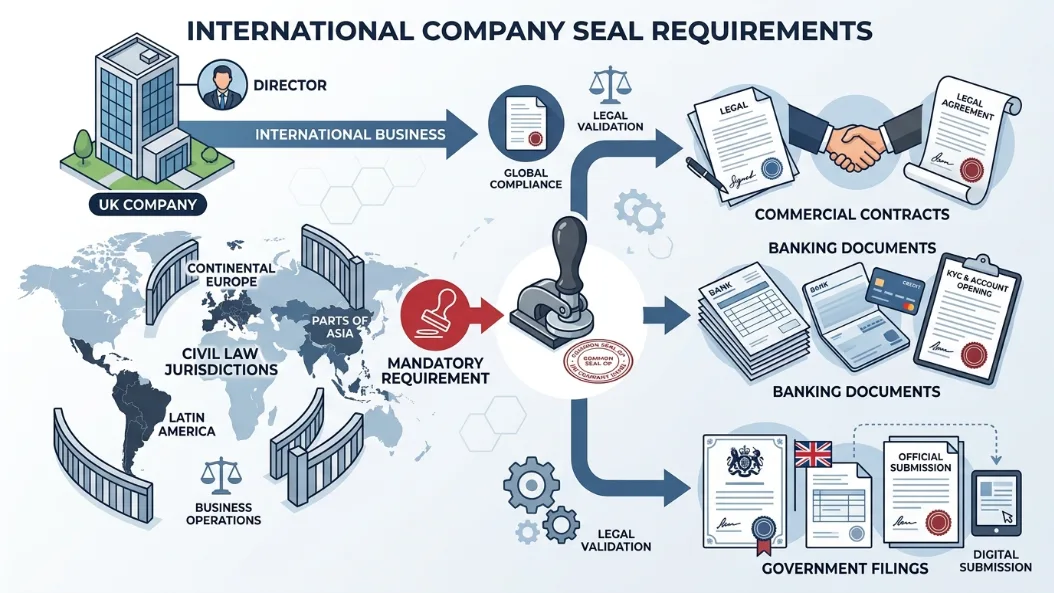
Legal systems operate under two primary frameworks: common law and civil law. Common law jurisdictions like the United Kingdom rely heavily on witness signatures and director sign-offs. Civil law jurisdictions require physical impressions on corporate paperwork to satisfy statutory compliance rules. Foreign authorities in countries like China, Japan, and Germany evaluate commercial agreements through strict formalistic lenses. Overseas trade partners operating in these regions reject unsigned or unsealed documents. Local courts in civil law countries dismiss agreements lacking official corporate stamps during contractual disputes. Businesses engaging in international trade must acquire these physical authentication tools to meet foreign administrative standards.
How do foreign banks and authorities view unsealed documents?
Foreign banks and overseas regulatory authorities treat unsealed foreign documents with heightened skepticism, often delaying financial transactions and rejecting administrative filings due to missing corporate authentication.
International banking institutions enforce strict compliance protocols to prevent financial crime and corporate impersonation. Compliance officers inspect incoming cross-border contracts for traditional markers of executive authority. Documents lacking a physical company seal trigger manual reviews and compliance delays. Foreign government registries refuse to process commercial applications when foreign corporate paperwork lacks official stamps. Overseas administrative bodies demand verified physical proof before issuing operating licenses or trade permits. International transactions stall indefinitely when foreign partners cannot verify document authenticity through recognized physical channels.
Can electronic signatures replace a physical company seal abroad?
Electronic signatures cannot always replace a physical company seal abroad because foreign legal frameworks and traditional overseas institutions still mandate tactile verification methods.
Digital signing platforms operate under advanced cryptographic protocols. Many modern common law economies accept electronic authentication for commercial agreements. Civil law countries maintain rigid administrative traditions requiring wet-ink signatures alongside physical embossed impressions. Foreign courts in specific jurisdictions do not recognize remote digital certificates without corroborating physical validation marks. International trade participants mitigate this risk by combining digital signatures with traditional embossing tools. Corporations secure international agreements by applying both cryptographic verification and physical corporate impressions.
How can businesses secure compliant authentication tools for international trade?
Businesses secure compliant authentication tools by ordering precision-engineered mechanical embossing devices that embed accurate company registration details into physical documents.
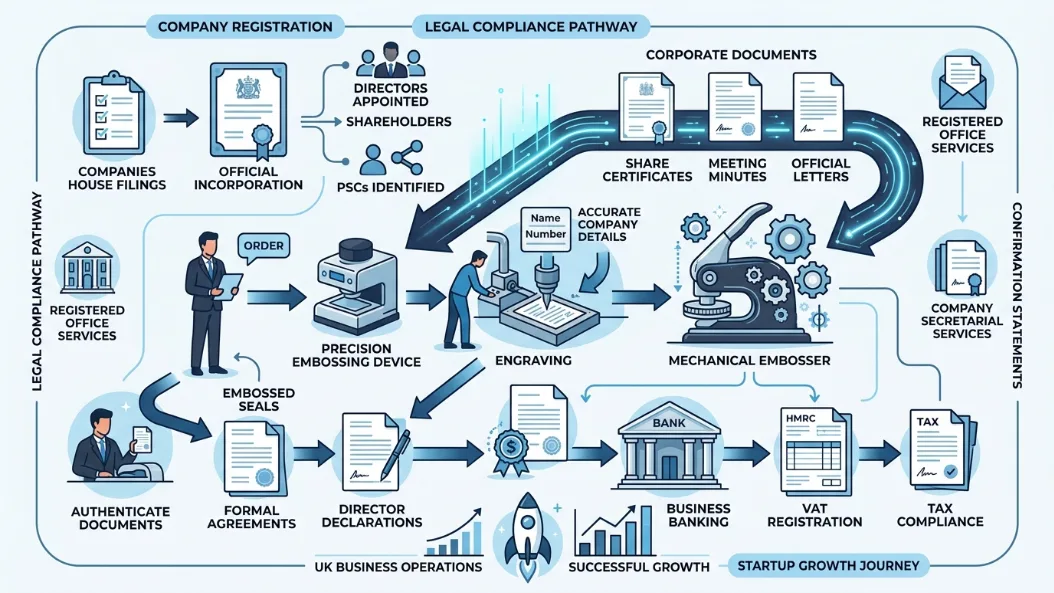
Corporate entities must ensure their authentication devices match official registry records perfectly. Companies acquire these items through specialized providers like Form My Company. Acquiring a proper corporate tool streamlines international expansion and prevents cross-border administrative rejections. Organizations integrate these devices into their standard document execution workflows for foreign transactions. Proper implementation safeguards corporate interests during international legal disputes and regulatory audits.
Businesses expanding into global markets can explore the complete Form My Company Pack to acquire essential corporate documentation and authentication tools. Companies navigating international expansion can also review the guide on How to Order a Compliant Company Seal in the UK to understand manufacturing specifications. Organizations ready to finalize their international trade setup can Get a Compliant Embossing Seal From Form My Company for immediate deployment.
International commercial contracts demand physical company seals to satisfy foreign legal standards, overcome banking skepticism, and establish undeniable corporate authority across civil law jurisdictions. Foreign authorities and overseas trade partners rely on these tactile security features to prevent fraud and verify executive intent. Businesses engaging in global commerce eliminate administrative delays by adopting traditional authentication measures alongside modern digital practices. Form My Company delivers reliable corporate solutions that help enterprises meet international compliance demands efficiently.
Explore our Company Pack guide,
What Makes a Conference Room Accessible for All Delegates?
What Makes an Interview Room Comfortable for Candidates?
Frequently Asked Questions
What is included in the Form My Company Company Pack?
The Form My Company Company Pack includes essential corporate documentation such as printed certificates of incorporation, share certificates, memorandum and articles of association, and a register of members. These comprehensive bundles provide new business owners with all statutory records required to establish operational compliance immediately after UK company formation.
Why do UK businesses need a company formation pack?
UK businesses need a company formation pack to satisfy legal record-keeping requirements mandated by Companies House regulations. Utilizing a structured package from Form My Company ensures that all statutory registers, governance documents, and shareholder certificates are accurately maintained and legally compliant from day one.
Can I include a company seal in my Company Pack order?
Businesses can easily add a physical mechanical embossing seal to their Form My Company Company Pack to authenticate official corporate documents and contracts. This traditional authentication tool ensures that all formal agreements meet domestic and international legal verification standards.
How long does it take to receive the Form My Company Company Pack?
Physical items included in the Form My Company Company Pack are typically dispatched via fast postal delivery services shortly after successful incorporation is confirmed by Companies House. Digital components are made accessible immediately, allowing directors to begin managing corporate administration without delay.
Are the documents in the Company Pack legally binding?
The statutory documents provided within the Form My Company Company Pack are fully legal, binding, and tailored to meet current UK company law standards. Each document is drafted to reflect precise corporate structures, ensuring complete validity during audits, banking applications, and stakeholder reviews.